The honest answer to “which is the poorest city in South Korea” is messier than the listicles that recycle a single 2010 figure want you to believe. Most of them name Daegu, cite one IMF stat from over a decade ago, and quietly swap “city” for “province” halfway through.
So let’s do it properly. Here’s a ranked look at the cities and regions that sit at the bottom of South Korea’s income tables, the actual numbers behind them, and the specific reasons each one fell behind. Spoiler: “poor” in a country with a GDP per capita north of $33,000 means something very different from “poor” almost anywhere else.
TLDR
Among South Korea’s seven major metropolitan cities, Daegu has held the lowest GRDP (gross regional domestic product) per capita for years — a hangover from the collapse of its textile industry. Among the provinces, South Jeolla (Jeollanam-do) and rural pockets of the southwest consistently post the lowest household incomes and the fastest population decline. The pattern underneath all of it is the same: wealth concentrates in the Seoul Capital Area, and everywhere that lost its signature industry — textiles, shipbuilding, coal — got left holding the bag.
Table of Contents
- How you actually measure a “poor” Korean city
- The ranking at a glance
- The poorest cities and regions, one by one
- Why the same places keep falling behind
- What “poor” means in a high-income country
How you actually measure a “poor” Korean city
There are two numbers that get thrown around, and they measure different things.
GRDP per capita is the value of everything produced inside a region divided by its population. It’s an output number, not an income number — which is why Ulsan, home to the world’s largest auto plant and giant shipyards, tops the chart even though plenty of its residents aren’t wealthy. The factories produce enormous value; the workers don’t pocket all of it.
Household income is what people actually take home. This is the better gauge of who’s struggling, and it tells a slightly different story than GRDP.
Then there’s the city-versus-province trap. South Korea has metropolitan cities (Seoul, Busan, Daegu, Incheon, Gwangju, Daejeon, Ulsan) and provinces (the -do regions like Jeollanam-do or Gyeongsangbuk-do) that contain smaller cities and rural counties. A lot of articles cite “South Jeolla as the poorest city,” which is like calling Ohio a city. It’s a province, and it’s poor for different reasons than a struggling metro is.
For this ranking, both Statistics Korea (KOSTAT) and the Bank of Korea’s regional accounts publish the underlying data. We’ll keep cities and provinces in separate lanes.
The ranking at a glance
Here’s the shape of it. Figures are approximate and drawn from recent regional accounts; treat them as the relative picture rather than to-the-won precision.
| Rank | Place | Type | Region | What sank it |
|---|---|---|---|---|
| 1 | Daegu | Metro city | Southeast | Textile industry collapse |
| 2 | Gwangju | Metro city | Southwest | Few large employers, service-heavy |
| 3 | Busan | Metro city | Southeast | Aging population, shipping decline |
| 4 | South Jeolla (Jeollanam-do) | Province | Southwest | Rural depopulation, agriculture |
| 5 | North Jeolla (Jeollabuk-do) | Province | Southwest | Industrial loss, aging farms |
| 6 | Gunsan | City (N. Jeolla) | Southwest | GM plant + shipyard closures |
| 7 | Mokpo | City (S. Jeolla) | Southwest | Port decline, outmigration |
| 8 | Tongyeong | City (S. Gyeongsang) | South coast | Shipbuilding bust |
A few things jump out. The bottom of the metro-city table is dominated by the southeast and southwest, not the capital region. And almost every entry below the metros is a single-industry town that watched its one big employer leave.
The poorest cities and regions, one by one
1. Daegu — the textile city that ran out of thread
Daegu is the city the old stats kept naming, and it has earned the title more honestly than those stale figures suggest. For decades it was the center of Korea’s textile and apparel manufacturing — “Milano of the East” was the marketing line in the 1990s. Then the work went to cheaper labor markets in Southeast Asia and China, and the industry that built the city hollowed out.
What makes Daegu’s case sting is that nothing fully replaced it. Unlike Busan (port, finance, film) or Ulsan (heavy industry), Daegu didn’t pivot into a new high-value sector. Its GRDP per capita has sat at or near the bottom of the metropolitan cities for more than a decade, and its young people leave for Seoul at a rate that keeps the average age climbing. The city is conservative, proud, and economically stuck — a combination that locals talk about openly.
2. Gwangju — a regional hub with no big engine
Gwangju is the largest city in the southwest, the cultural and political heart of the Jeolla region. It’s also persistently near the bottom on output per person. The reason is structural: Gwangju’s economy leans heavily on services, government, and small businesses, without the cluster of giant manufacturers that lift cities like Ulsan or Incheon.
It’s not a dying city — it has a strong arts scene and a major biennale — but a vibrant culture doesn’t show up in GRDP. The decades of underinvestment in the Jeolla region, partly a legacy of old political rivalries that steered industrial money toward the southeast, left Gwangju without the heavy-industry base that defines a high-output Korean city.
3. Busan — big, beloved, and getting old fast
Busan is Korea’s second city and one of the world’s busiest ports, so calling it “poor” needs a footnote. Its problem isn’t output so much as demographics. Busan is aging faster than almost anywhere else in the country, with one of the lowest birth rates among major cities and a steady drain of working-age residents to the capital.
As the workforce shrinks and ages, per-capita economic momentum stalls. The port still moves staggering volumes of cargo, but containers don’t need many people, and the city’s younger generation increasingly sees its future in Seoul. Busan shows up on “poorest” and “fastest-shrinking” lists for the same underlying reason.
4. South Jeolla (Jeollanam-do) — the poorest province by income
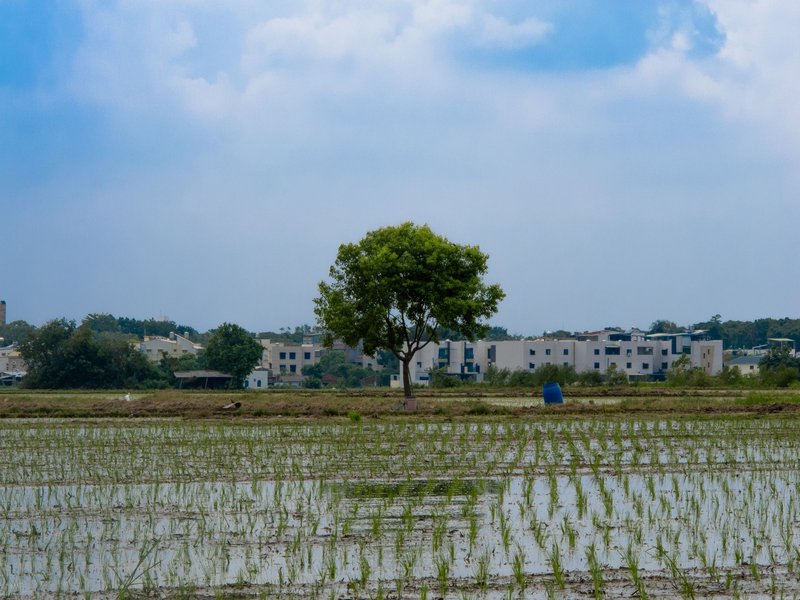
Here’s where the city-versus-province distinction earns its keep. As a province, Jeollanam-do regularly posts among the lowest household incomes in the country. This is the place older articles mean when they fumble the word “city.”
South Jeolla is rural, agricultural, and emptying out. Its counties have some of the highest median ages in South Korea — villages where the school closed years ago because there were no children to fill it. The farming and fishing that sustain the region don’t generate the incomes that office and factory work do in the capital area, and every young person who leaves pushes the average lower.
5. North Jeolla (Jeollabuk-do) — its neighbor’s twin
North Jeolla tells nearly the same story: aging farms, departing youth, and the loss of what industry it had. The two Jeolla provinces together form the clearest example of how Korea’s regional inequality runs along a southwest-versus-capital axis as much as a rich-versus-poor one.
6. Gunsan — a one-two industrial punch
Gunsan, a port city in North Jeolla, is the cautionary tale of single-industry dependence. In 2017 the local Hyundai Heavy Industries shipyard shut down. In 2018, GM Korea closed its Gunsan auto plant, wiping out thousands of direct and supplier jobs in a city that couldn’t absorb the blow. The government designated the area an “industrial crisis response region” — the Korean equivalent of declaring an economic disaster zone.
Gunsan is what happens when the one big employer leaves a town that was built around it. The shops near the plant gates closed. Apartment prices fell. People moved.
7. Mokpo — the port that traffic forgot
Mokpo, on the southwestern tip, was once a thriving port and railway terminus. As shipping consolidated into Busan and Gwangyang and the regional economy slowed, Mokpo’s relevance — and its young population — drained away. It’s a beautiful, slightly faded coastal city, and “faded” is the operative economic word.
8. Tongyeong — the shipbuilding bust on the south coast
Tongyeong, a scenic city on the south coast, rode the shipbuilding boom up and the bust down. When global orders for new vessels collapsed and Korea’s mid-sized shipyards cut back hard, Tongyeong’s yards shed jobs en masse. The tourism the city now markets — island ferries, the old harbor — hasn’t replaced the wages those yards once paid.
Why the same places keep falling behind
Notice the pattern. Four forces explain almost every name on this list.
The Seoul gravity well. Roughly half of South Korea’s population now lives in the Seoul Capital Area, and an outsized share of its high-paying jobs, universities, and capital concentrate there. Every region outside it competes against a black hole that pulls in talent and money. The OECD has repeatedly flagged this geographic concentration as one of Korea’s structural weak points.
Industrial monoculture. Daegu had textiles. Gunsan had GM and a shipyard. Tongyeong had shipbuilding. When a city bets everything on one sector and that sector moves overseas or collapses, there’s no cushion. Diversified cities bend; monoculture cities break.
Aging and depopulation. Korea has one of the world’s lowest birth rates, and the effect lands hardest outside the capital. Provinces like the two Jeollas are aging into a demographic where there simply aren’t enough working-age people to grow an economy. Some rural counties are officially classified as at risk of disappearing.
The southwest’s historical short straw. For decades, industrial investment flowed disproportionately to the southeastern Gyeongsang region while the southwestern Jeolla provinces were passed over — a pattern with roots in mid-20th-century politics. The income gap that opened then never fully closed.
What “poor” means in a high-income country
Here’s the part the ranking can’t show you on its own. South Korea is a wealthy OECD economy with universal health insurance, near-universal literacy, and infrastructure that embarrasses most of the developed world. “Poorest city in South Korea” does not mean slums and deprivation in the way the phrase might land in a different country.
What it means is relative. The gap between the richest and poorest is wide — Seoul’s Gangnam district sits in a different financial universe than a depopulating county in South Jeolla — and that inequality is the real story. The concern that economists actually raise isn’t absolute poverty among the working-age population. It’s elderly poverty, where South Korea has one of the highest rates in the developed world: a large share of Koreans over 65 live below the relative poverty line, and that burden falls heaviest in exactly the aging, rural regions at the bottom of this list.
So if you’re a traveler reading this, here’s the practical takeaway. The “poor” cities on this list — Daegu, Gwangju, Mokpo, Tongyeong — are safe, walkable, and often genuinely lovely to visit. The economics that put them here also make them cheaper, less crowded, and more recognizably Korean than the capital. You’ll eat better and pay less in Mokpo than in Seoul. The poverty here is a story about averages, demographics, and a country that grew so fast in one place that everywhere else is still trying to catch up.