Brazil has more than 200 million people and a city — São Paulo — that holds over 11 million of them. So it’s easy to forget the other end of the scale: municipalities where the entire population could fit inside a single apartment building, where there’s no pharmacy, no gas station, and the mayor probably knows your name.
The smallest of them all is Serra da Saudade, in Minas Gerais. The 2022 Census counted 833 people. That’s it. Fewer residents than a mid-sized high school.
Below you’ll find the definitive ranked list of Brazil’s least populated cities, plus the part most articles skip: what these numbers actually mean, why a “city” of 800 people is still legally a city, and what daily life looks like when your hometown has one of everything and not two of anything.
Table of Contents
- The Quick Answer
- The 15 Smallest Cities in Brazil
- What “City” Actually Means in Brazil
- Serra da Saudade: Life at 833 People
- Borá: The Runner-Up With a Twist
- Smallest by Area vs. Smallest by Population
- Why These Towns Keep Shrinking
- Frequently Asked Questions
The Quick Answer
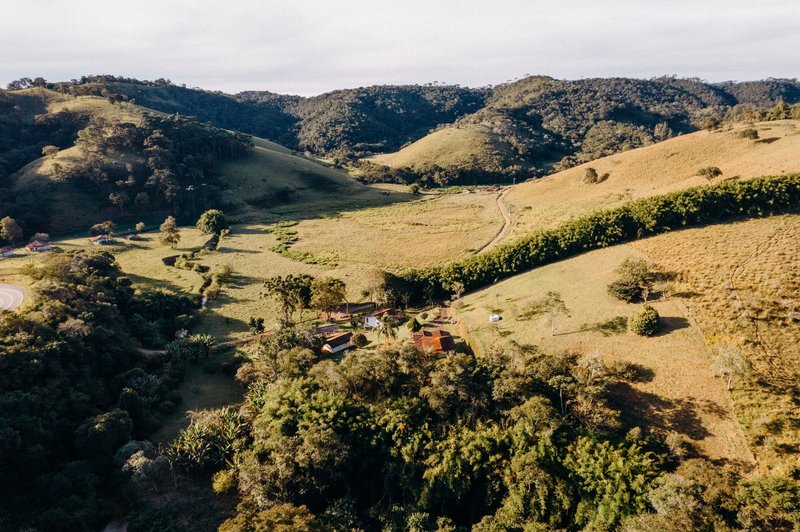
The smallest city in Brazil by population is Serra da Saudade in the state of Minas Gerais, with 833 inhabitants according to the 2022 IBGE Census. Behind it come a cluster of tiny municipalities — Borá, Araguainha, Engenho Velho, and others — most sitting somewhere between 800 and 1,500 residents.
These aren’t villages or neighborhoods in some legal gray zone. Each one is a full município: an officially incorporated city with an elected mayor, a city council, a budget, and a seat at the federal table. They just happen to be very, very small.
The 15 Smallest Cities in Brazil
Here are the least populated municipalities in Brazil, based on the 2022 Census conducted by the Brazilian Institute of Geography and Statistics (IBGE). Population figures are rounded to the official count.
| Rank | City | State | Population (2022) |
|---|---|---|---|
| 1 | Serra da Saudade | Minas Gerais | 833 |
| 2 | Borá | São Paulo | 836 |
| 3 | Araguainha | Mato Grosso | 952 |
| 4 | Engenho Velho | Rio Grande do Sul | 882 |
| 5 | Cedro do Abaeté | Minas Gerais | 1,062 |
| 6 | Anhanguera | Goiás | 1,020 |
| 7 | Miguel Leão | Piauí | 1,075 |
| 8 | Oliveira de Fátima | Tocantins | 1,037 |
| 9 | União da Serra | Rio Grande do Sul | 1,200 |
| 10 | Nova Castilho | São Paulo | 1,128 |
| 11 | Lagoinha do Piauí | Piauí | 1,447 |
| 12 | André da Rocha | Rio Grande do Sul | 1,168 |
| 13 | Flor da Serra do Sul | Paraná | 4,500 |
| 14 | Santa Cecília do Sul | Rio Grande do Sul | 1,476 |
| 15 | Pedra Branca do Amapari | Amapá | — |
A few things jump out. The South — Rio Grande do Sul especially — is overrepresented, a legacy of small farming colonies that were each granted municipal status decades ago. Minas Gerais holds both the number one spot and several others. And the populations cluster tightly: the gap between first and tenth place is barely 300 people.
The rankings also shuffle slightly depending on the census year. Serra da Saudade and Borá have traded the top spot before — in earlier counts Borá was officially the smallest. As of 2022, Serra da Saudade holds the crown.
What “City” Actually Means in Brazil
This is the piece almost every list leaves out, and it’s the key to understanding why a town of 833 counts as a city.
In Brazil, the unit that matters is the município — usually translated as “municipality,” though it functions like a county that contains a city. Every município has a sede (a seat, the main urban center), which is legally designated a cidade (city). It doesn’t matter how few people live there. The moment a municipality is created, its seat becomes a city by definition.
So Serra da Saudade isn’t a “small town that got called a city by accident.” It’s the urban seat of the Município de Serra da Saudade, and Brazilian law makes that a city full stop. There’s no population threshold to clear, no charter to earn.
This is different from the United States, where incorporation depends on residents petitioning and meeting minimum requirements. In Brazil, the structure is top-down: states create municipalities, and each one comes with a ready-made city at its center.
It also explains the apparent contradiction in headlines like “the city with no pharmacy.” A place can hold the full legal weight of a city — its own government, its own budget line in Brasília — while having fewer services than a single suburban strip mall.
Serra da Saudade: Life at 833 People
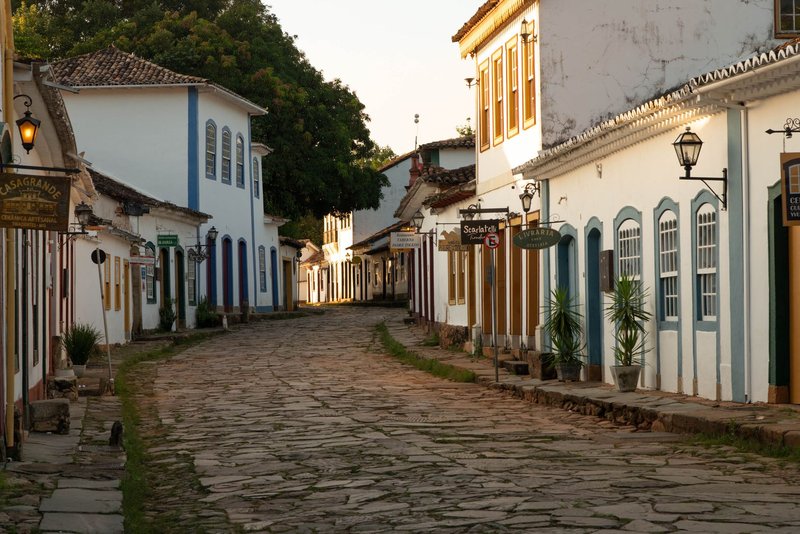
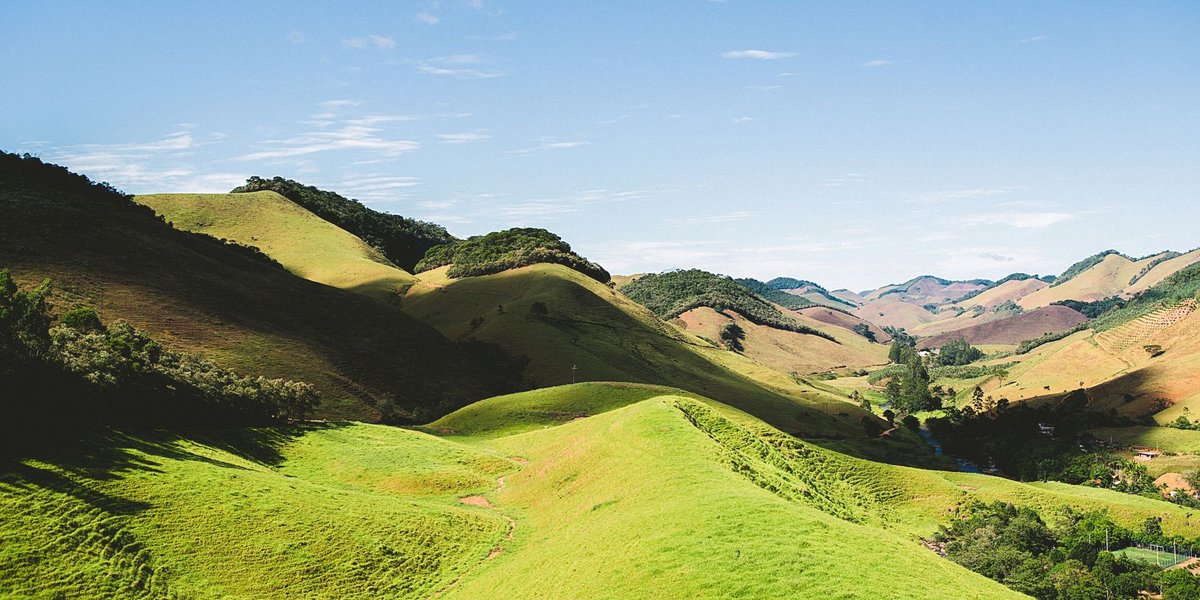
Serra da Saudade sits in the Alto São Francisco region of Minas Gerais, roughly 250 kilometers west of the state capital, Belo Horizonte. The name translates, poetically, to something like “Mountain of Longing.”
The economy runs almost entirely on the public sector. With so few residents and almost no private industry, the city hall is the largest employer in town — teachers, health workers, administrative staff, maintenance crews. A significant share of working-age residents draw a municipal salary or a pension. When the biggest business in town is the government, the local budget is the local economy.
What the town doesn’t have tells the story better than what it does. No gas station — you fill up in the next municipality over. No pharmacy of the kind you’d recognize, no college, no hospital. Basic healthcare runs through a small clinic; anything serious means a drive. Groceries come from a handful of small shops.
What it does have is the thing people in São Paulo pay therapists to find: quiet. Almost no crime, no traffic, neighbors who’ve known each other for three generations. The trade-off is real in both directions — peace on one side, the slow drain of young people leaving for opportunity on the other.
Borá: The Runner-Up With a Twist
For years, Borá in inland São Paulo state held the title of Brazil’s smallest city, and it still sits at the very top of the list with 836 residents. It’s about 400 kilometers from the city of São Paulo, surrounded by sugarcane and farmland.
Borá’s claim to fame is double: not only is it among the least populated, it’s also one of the smallest municipalities by area in São Paulo state. Tiny footprint, tiny population — a municipality you could walk across in an afternoon.
Like Serra da Saudade, its economy leans heavily on agriculture and the public payroll. And like Serra da Saudade, it’s the kind of place where the census-takers don’t need long to finish the job.
Smallest by Area vs. Smallest by Population
Population and land area are two different rankings, and conflating them is a common mistake.
The smallest municipality by area in Brazil is generally cited as Santa Cruz de Minas, also in Minas Gerais, at just over 3 square kilometers — yet it has more than 8,000 residents, making it densely packed rather than empty. It’s small and crowded.
Compare that to a place like Araguainha in Mato Grosso: under 1,000 people spread across a much larger area, so it feels genuinely remote and sparse.
The point is that “smallest city” depends entirely on what you’re measuring:
- By population: Serra da Saudade (833) leads.
- By area: Santa Cruz de Minas (~3.5 km²) leads, but it’s not lightly populated at all.
- By density: the loneliest places are the low-population, large-area towns of the interior and the Amazon fringe.
When a headline says “smallest city,” it almost always means population — but it’s worth knowing the distinction, because the area champions are a completely different set of places.
Why These Towns Keep Shrinking
The story behind the numbers is rural-to-urban migration, and it’s been running for decades. Brazil urbanized fast in the second half of the 20th century. Mechanized agriculture meant farms needed fewer hands. Young people followed jobs, universities, and hospitals to the cities and didn’t come back.
For a municipality of 800, even a handful of families leaving moves the needle. Birth rates have fallen nationwide, and in towns with no college and few private jobs, the under-30 crowd has every incentive to move on. The 2022 Census recorded population declines in many of these smallest municipalities compared to a decade earlier. Zoom out and the contrast is striking: some of these towns hold fewer residents than a single city block, even as the least populated countries in all of South America still count their populations in the hundreds of thousands.
There’s a fiscal wrinkle too. Brazilian municipalities receive federal transfer funds partly based on population through a mechanism called the Fundo de Participação dos Municípios. Falling below certain population bands can mean less money — which makes it even harder for tiny towns to offer the services that might convince people to stay. It’s a quiet downward spiral, and it’s why the list of smallest cities tends to feature the same names year after year, each one a little smaller than before.
Frequently Asked Questions
What is the smallest city in Brazil? Serra da Saudade, in Minas Gerais, with 833 residents according to the 2022 Census. It’s the least populated of Brazil’s roughly 5,570 municipalities.
Is Borá or Serra da Saudade the smallest? As of the 2022 Census, Serra da Saudade (833) edges out Borá (836) for the smallest population. In earlier counts Borá held the title, so you’ll see both named depending on the data’s date.
How many cities does Brazil have? Brazil has approximately 5,570 municipalities, each with a legally designated city as its seat — from São Paulo’s millions down to Serra da Saudade’s 833.
Why is a town of 833 people called a city? In Brazil, the seat of every municipality is legally a cidade (city) regardless of population. There’s no minimum size requirement, unlike the incorporation process in countries such as the United States.
What is the smallest city in Brazil by area? Santa Cruz de Minas, in Minas Gerais, at roughly 3.5 square kilometers — though it has more than 8,000 residents, so it’s small in footprint but not in population.
Do these small cities have their own governments? Yes. Each is a full municipality with an elected mayor (prefeito), a city council (câmara de vereadores), and its own budget, no matter how few people live there.