Most lists of Lebanon’s lakes hand you a stack of pretty photos and leave you to figure out the hard part: can you actually swim there, how long is the drive, and is it even worth going in March? This one answers that. Lebanon is a small country with a surprising amount of standing water — high-altitude glacial pools, Roman-era springs, a giant Bekaa Valley reservoir, and hike-in swimming holes that stay cold all summer. Some are an hour from Beirut. Some need a 4×4 and a willingness to ask a shepherd for directions.
Below are twelve lakes worth the effort, ranked loosely by how much they reward the drive. For each one you get the practical stuff: where it is, how to get there, whether you can swim or hike, the season that actually works, and what it costs.
Table of Contents
- Quick comparison table
- 1. Chouwen Lake
- 2. Lake Qaraoun
- 3. Yammouneh Lake
- 4. Ouyoun Orghosh
- 5. Chabrouh Reservoir
- 6. Taanayel Lake
- 7. Ammiq Wetland
- 8. Ouyoun El-Samak
- 9. Lake Afqa
- 10. Bnachii Lake
- 11. Balou’ Bal’a
- 12. Qattine Azar
- Planning tips before you go
Quick comparison table
| Lake | Drive from Beirut | Swimming | Best season | Entry |
|---|---|---|---|---|
| Chouwen | ~1 hr + 45 min hike | Yes (cold) | May–Oct | Free / small parking fee |
| Qaraoun | ~1 hr 20 min | No (polluted) | Spring–Fall | Free (viewpoints) |
| Yammouneh | ~2 hr | Limited | May–Sept | Free |
| Ouyoun Orghosh | ~2 hr | Shallow wading | Jun–Sept | Free |
| Chabrouh | ~1 hr | No (drinking supply) | May–Oct | Free |
| Taanayel | ~50 min | No | Year-round | Free |
| Ammiq | ~1 hr 15 min | No (protected) | Spring/Fall (birds) | Small fee |
| Ouyoun El-Samak | ~1 hr 45 min | Cold pools | Jun–Sept | Free |
| Afqa | ~1 hr 30 min | Cold, rocky | Apr–Jun (waterfall) | Free |
| Bnachii | ~2 hr | Yes | Summer | Free |
| Balou’ Bal’a | ~2 hr 15 min | No (sinkhole) | May–Jun | Free |
| Qattine Azar | ~1 hr 45 min | Yes | Summer | Free |
1. Chouwen Lake
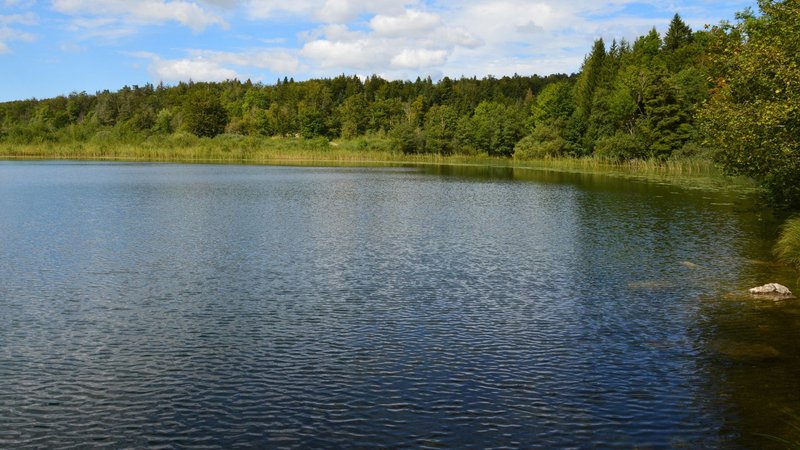
Chouwen is the one most people mean when they say “let’s go swimming in a lake.” It sits in the Nahr Ibrahim valley below Jeita, reachable from the village of Yahchouch above Byblos. You can’t drive to it — you park, then hike down through pine and oak for 30 to 45 minutes on a rocky trail. That descent is exactly why the water stays clean and the crowds stay manageable on weekdays.
The lake is really a series of emerald pools formed by small dams along the river, fed by springs that keep it cold even in August. People jump from the lower rocks, but the water is genuinely chilly and the footing is slick, so ease in rather than diving blind into an unfamiliar pool. Go on a weekday if you can; summer weekends bring a steady line of hikers down the same narrow path. Wear actual shoes, not flip-flops, and bring water, because the climb back up in afternoon heat is the part everyone underestimates.
Season: late May through October. Earlier than that and the river runs high and cold from snowmelt.
2. Lake Qaraoun
Qaraoun is Lebanon’s largest body of water, an artificial reservoir created in 1959 when the Litani River was dammed in the southern Bekaa Valley. It’s a genuine landscape — 12 square kilometers of water ringed by the Mount Lebanon and Anti-Lebanon ranges — and it photographs beautifully from the surrounding hills.
Here’s the honest part: don’t swim in it. Qaraoun has struggled for years with agricultural runoff and untreated wastewater feeding toxic cyanobacteria blooms that turn stretches of the surface green in late summer. It’s a place to look at, not get into. Come for the drive along the Bekaa, the views from the western ridge, and the cluster of trout restaurants near the dam. Pair it with a winery visit — you’re in the heart of Lebanese wine country, with Château Kefraya and others within a short drive. Spring, when the surrounding valley is green and the water level is high, is the best time to see it at its most striking.
3. Yammouneh Lake
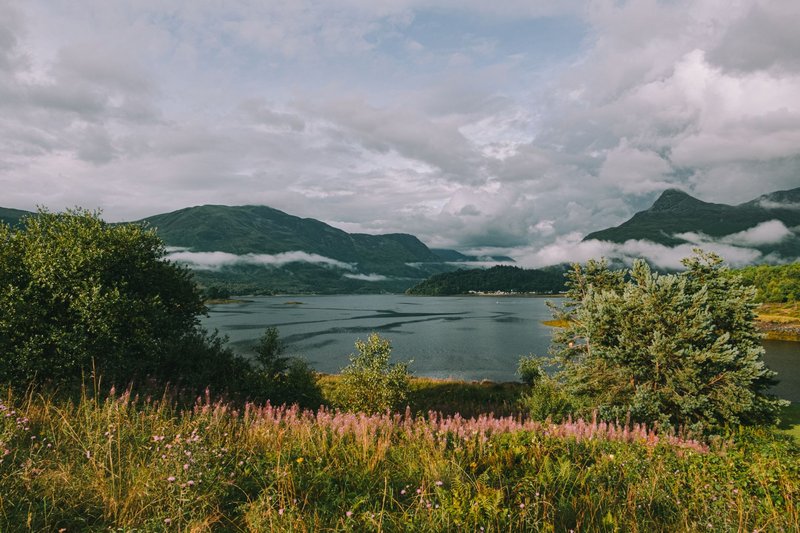
Yammouneh sits at around 1,400 meters on the western flank of the Bekaa, and it’s a lake with a split personality: full and blue in spring, shrinking to a fraction of itself by late summer as the snowmelt that feeds it runs out. It’s been a sacred site since antiquity — there’s a Roman temple ruin nearby and an old shrine, and the surrounding nature reserve protects oak forest and wetland.
The lake’s claim to fame for naturalists is the Levantine minnow, a small fish endemic to this watershed, which makes the wetland ecologically more interesting than its size suggests. Swimming is limited and the shallows get muddy, so most visitors come to walk the reserve, picnic, and see the temple rather than to take a dip. Go in May or June, when the water is at its highest and the apple orchards on the drive up are in bloom. By September there may be more meadow than lake.
4. Ouyoun Orghosh
Ouyoun Orghosh (“the springs of Orghosh”) is a small high-altitude lake near Aïnata in the mountains above Baalbek, sitting above 1,800 meters near the cedar slopes. It’s fed by mountain springs, and the setting is the draw: bare alpine ridges, grazing flocks, and a stillness you don’t get at the busier swimming spots.
The water is shallow and cold — fine for wading on a hot day but not a real swimming lake. What you come for is the high-country air and the picnic. There’s a cluster of seasonal restaurants nearby serving grilled meat and mezze, and the lake is a popular weekend escape for families from the Bekaa. Because of the altitude, the season is short: July and August are reliable, while June and September can be cold and windy. The road up is paved but winding, so allow more time than the distance suggests.
5. Chabrouh Reservoir
Chabrouh is a dam reservoir above Faraya, in the Kfardebian area, completed in 2007 to supply drinking water to Beirut and the surrounding region. Set at roughly 1,650 meters against the Kesrouan mountains, it’s one of the most photogenic stops on this list — a clean curve of blue water below ski-country peaks.
Because it’s a drinking-water supply, swimming is prohibited, and the rule is taken seriously. The appeal is the loop walk around the rim, the mountain backdrop, and how easy it is to reach: under an hour and a half from Beirut, on the same road you’d take to the Faraya ski resorts. It works as a summer counterpart to a winter you already know. Come between late May and October, after the snow clears the access road and before it returns. In winter the whole area is given over to skiing, and the reservoir often sits frozen or snowbound.
6. Taanayel Lake
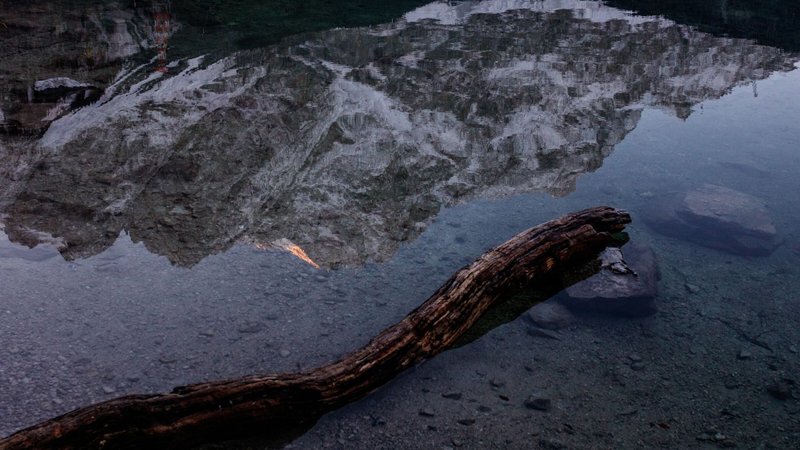
Taanayel is the easy one — the lake you bring people who don’t hike. It sits on the Taanayel estate in the central Bekaa, a former Jesuit farm now run as a working dairy and ecotourism site, and the lake is a calm, tree-lined pool with a flat walking path around it. No descent, no 4×4, no altitude. Just a gentle loop under poplars with the Bekaa mountains reflected in the water.
You can’t swim, but that’s not why anyone comes. The draw is the walk, the resident and migratory birds along the shore, and the farm shop selling labneh, cheese, and produce made on site. It’s stroller-friendly and genuinely pleasant year-round, which is rare on this list — the reflections are best on a still morning, and autumn turns the poplars gold. It’s also the most reliable rainy-day or off-season option, since nothing about it depends on snowmelt or summer heat.
7. Ammiq Wetland
Ammiq isn’t a swimming lake — it’s the largest remaining wetland in Lebanon and one of the most important bird sites in the country. Set on the western Bekaa floor below the Barouk cedar forest, it’s a Ramsar-listed wetland of international importance and a UNESCO biosphere reserve, which tells you what it’s for: birds, not bathing.
This is the stop for anyone who travels with binoculars. Ammiq sits on a major migration corridor between Europe and Africa, and in spring and autumn it fills with storks, herons, ducks, and raptors moving through. The water expands in winter and spring and contracts in summer, so timing matters — the migration shoulder seasons are the payoff. There’s a small entry arrangement and a few hides and trails; the nearby Tawlet Ammiq restaurant does a farm-to-table Bekaa spread that’s worth building the day around. Go for the birds, stay for the lunch.
8. Ouyoun El-Samak
Ouyoun El-Samak (“springs of the fish”) lies in the mountains of the Akkar–Bsharri highlands, a cluster of cold spring-fed pools at high elevation. It’s less developed and less visited than the Kesrouan spots, which is the appeal for people who want the mountains without the weekend crowds.
The water is cold and clear, coming straight from the springs, and there are shallow pools you can get into on a hot day. Around it you’ll find high pasture, a few seasonal eateries, and the kind of quiet that makes the long drive feel earned. The season is short and tied to altitude: July and August are the safe bet, and even then the water stays bracing. The access roads can be rough, so a higher-clearance vehicle helps and a local pointing you the right way helps even more.
9. Lake Afqa
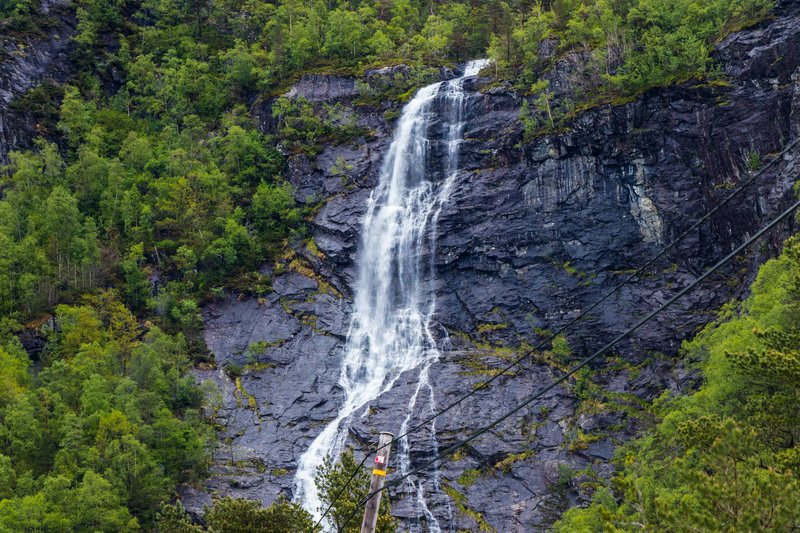
Afqa is where the Nahr Ibrahim is born — a powerful spring gushing out of a cave at the base of a limestone cliff, feeding a small lake and a waterfall below the ruins of a Roman temple to Astarte. It’s one of the most dramatic water sites in Lebanon, steeped in mythology as the place tied to the legend of Adonis and Astarte, the river that supposedly ran red each spring with iron-rich runoff.
Timing is everything here. Come in April through early June, when snowmelt sends a torrent out of the cave and over the falls. By late summer the spring slows to a trickle and the spectacle is gone. The pools are cold and the rocks are rough, so this is more a wading-and-photographing site than a swimming one. The drive up the Nahr Ibrahim valley from Byblos is itself part of the experience, passing the same gorge that holds Chouwen lower down.
10. Bnachii Lake
Bnachii is a small lake above Zgharta in the north, set in pine forest at around 1,300 meters near the resort town of Ehden. It’s an artificial lake built as part of a leisure and recreation area, which means it’s one of the few places on this list set up for actually getting in the water.
There’s swimming, pedal boats, lakeside cafés, and a pine-shaded park — the whole thing is geared toward families spending a summer day rather than hikers chasing a remote pool. That makes it less wild than Chouwen or Ouyoun El-Samak, but a lot more comfortable if you’ve got kids or a crowd. It pairs naturally with a visit to Ehden and the nearby Horsh Ehden nature reserve, one of the country’s best-preserved cedar and fir forests. Summer is the season; the facilities largely close down in the cold months.
11. Balou’ Bal’a
Balou’ Bal’a is the strange one. Near Tannourine in the north, it’s a massive natural sinkhole — a “three bridges chasm” where a seasonal waterfall plunges hundreds of meters into a collapsed cave, with natural rock bridges layered across the void. There’s water, but you’re not swimming in it; you’re looking down into one of the most geologically dramatic spots in the Middle East.
Go in May or early June, right after the snowmelt, when the waterfall is actually running — the whole point is the cascade dropping into the abyss, and by midsummer it dries up. Reaching the bottom involves a steep, exposed scramble down to the bridges that’s genuinely sketchy in wet conditions, so plenty of visitors stop at the upper viewpoints and still get the view. Wear grippy shoes, go with someone who’s done it, and don’t push the descent if the rock is slick. This is a sightseeing stop with a serious wow factor, not a casual picnic lake.
12. Qattine Azar
Qattine Azar is a lesser-known mountain lake in the Bsharri district of the north, set high in the Qadisha region near the cedar country. It’s small, spring-fed, and quiet — the kind of place that doesn’t make most listicles, which is exactly its appeal.
You can swim in the cold water, and the high setting keeps it refreshing through the hottest weeks. There’s not much infrastructure, so bring your own food and shade, and treat it as a stop on a wider loop through the Qadisha Valley and the Cedars of God rather than a destination on its own. Summer is the only realistic window given the altitude. If you’ve already done the famous spots and want a northern lake without a crowd, this is the one to ask locals about.
Planning tips before you go
A few things that make the difference between a good lake day and a frustrating one in Lebanon:
- Go on weekdays. The swimming spots — Chouwen especially — get busy on summer weekends. A Tuesday gives you the same water with a fraction of the people.
- Match the lake to the season. Snowmelt-fed sites like Afqa, Balou’ Bal’a, and Yammouneh are spectacular in spring and underwhelming by late summer. High-altitude pools like Ouyoun Orghosh only really work in July and August.
- Don’t trust your GPS on the last stretch. Mountain roads to places like Ouyoun El-Samak and Qattine Azar are poorly mapped. Ask in the nearest village; people will point you right.
- Respect the no-swim rules. Qaraoun has real water-quality problems, and Chabrouh is drinking water for Beirut. Those rules exist for a reason.
- Bring proper shoes. Half these lakes require a hike or a scramble. Flip-flops will ruin your day and possibly your ankle.
Lebanon packs an unusual range of lakes into a small footprint — reservoirs and Roman springs, family swimming parks and remote alpine pools, a sinkhole that swallows a waterfall. Pick by what you actually want out of the day, time it to the season, and most of these are an easy drive from Beirut or Tripoli. The water’s been here a long time. It’s worth the trip up the mountain to see it.