Poland has 17 UNESCO World Heritage Sites, and the count matters because most lists you’ll find online still say 15 or 16. Two are natural, fifteen are cultural, and the very first one was inscribed in 1978, the year UNESCO published its inaugural list. Poland made the cut alongside the Galápagos and Yellowstone.
What follows isn’t just the list. It’s the list organized the way you’d actually travel it, with the nearest city, whether you need a tour booked in advance, how long each site eats out of your day, and which ones cluster close enough to do in a single trip. Three of these sites straddle international borders, which is the kind of detail that changes a route.
Table of Contents
- The quick answer: all 17 at a glance
- Royal cities and rebuilt old towns
- Castles and fortified heritage
- Salt and the mining underground
- Sacred timber and pilgrimage landscapes
- Memory: Auschwitz-Birkenau
- Modernist and landscape landmarks
- Poland’s wild forests
- If you only have 3 days
The quick answer: all 17 at a glance
| # | Site | Year | Nearest hub | Type |
|---|---|---|---|---|
| 1 | Historic Centre of Kraków | 1978 | Kraków | Cultural |
| 2 | Wieliczka & Bochnia Salt Mines | 1978 | Kraków | Cultural |
| 3 | Auschwitz-Birkenau | 1979 | Kraków / Oświęcim | Cultural |
| 4 | Białowieża Forest | 1979 | Białystok | Natural |
| 5 | Historic Centre of Warsaw | 1980 | Warsaw | Cultural |
| 6 | Old City of Zamość | 1992 | Lublin | Cultural |
| 7 | Medieval Town of Toruń | 1997 | Toruń | Cultural |
| 8 | Malbork Castle | 1997 | Gdańsk | Cultural |
| 9 | Kalwaria Zebrzydowska | 1999 | Kraków | Cultural |
| 10 | Churches of Peace, Jawor & Świdnica | 2001 | Wrocław | Cultural |
| 11 | Wooden Churches of Southern Lesser Poland | 2003 | Kraków | Cultural |
| 12 | Muskauer Park | 2004 | Wrocław / Cottbus | Cultural |
| 13 | Centennial Hall, Wrocław | 2006 | Wrocław | Cultural |
| 14 | Wooden Tserkvas of the Carpathians | 2013 | Krosno / Rzeszów | Cultural |
| 15 | Tarnowskie Góry Mine | 2017 | Katowice | Cultural |
| 16 | Krzemionki Flint Mines | 2019 | Ostrowiec Świętokrzyski | Cultural |
| 17 | Carpathian Beech Forests (Bieszczady) | 2021 | Sanok | Natural |
The geography is lopsided in your favor. Kraków alone puts four sites within an hour’s drive, which is why most people who “do UNESCO Poland” do it from there.
Royal cities and rebuilt old towns
1. Historic Centre of Kraków
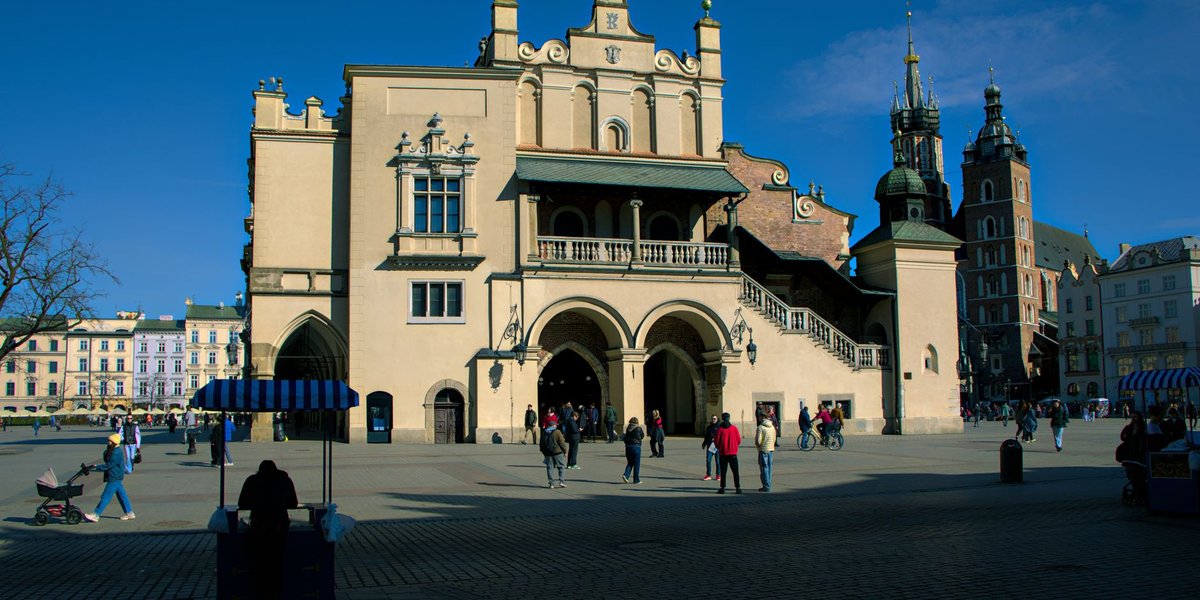
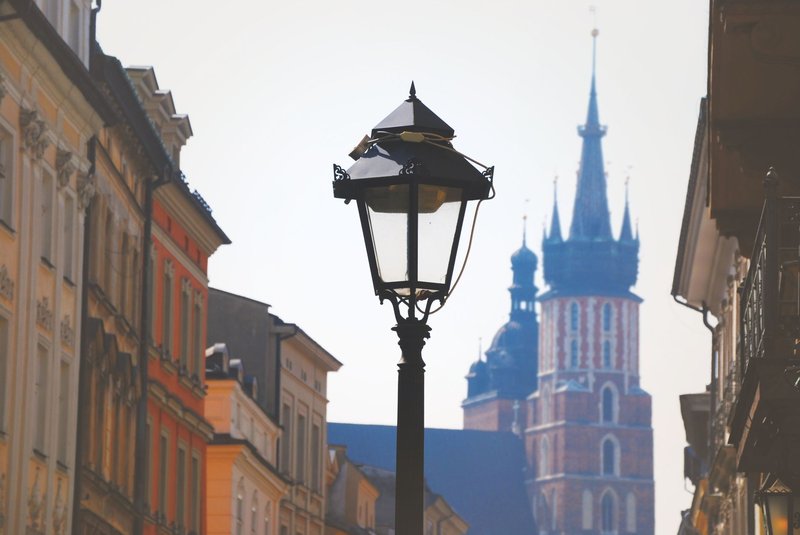
Kraków’s Main Market Square is the largest medieval town square in Europe, roughly 200 metres on each side, and it has never been bombed flat and rebuilt the way Warsaw’s was. That’s the thing to understand here: this is original. The Cloth Hall has run as a covered market since the 14th century, and on the hour a trumpeter plays the hejnał from the tower of St. Mary’s Basilica, cutting off mid-note to mark a 13th-century trumpeter shot through the throat by a Mongol arrow. Add Wawel Castle and the old Jewish quarter of Kazimierz and you need a full day, minimum. Spend enough time here and you start to see why Kraków tops so many expat shortlists, trams, cheap pierogi, and all the trade-offs of actually living there included. The royal route from the square up to Wawel is walkable in twenty minutes if you don’t stop, which you will.
5. Historic Centre of Warsaw
Warsaw’s Old Town is on this list for a reason almost no other site shares: it’s a reconstruction. The Nazis deliberately razed about 85% of the city after the 1944 Warsaw Uprising, and the citizens rebuilt the old town from paintings, photographs, and architectural drawings through the 1950s. UNESCO inscribed it in 1980 precisely as an “outstanding example” of near-total reconstruction. Walk the Market Square and the Royal Castle knowing the patina is younger than it looks, and the achievement gets more impressive, not less.
6. Old City of Zamość
Zamość is a 16th-century “ideal city,” designed in one go by the Italian architect Bernardo Morando for the nobleman Jan Zamoyski. Renaissance theory put on the ground: a perfect grid, an arcaded Great Market Square, fortified walls, all built to a single plan rather than grown over centuries. It sits out east near Lublin, well off the standard tourist loop, which is exactly why the arcades feel lived-in rather than staged. Budget half a day plus the drive.
7. Medieval Town of Toruń
Toruń survived the wars intact, so its Gothic brick churches and merchant houses are the real medieval article. This is Copernicus’s hometown, and you can visit the house where he was likely born. It’s also the spiritual home of Polish gingerbread, pierniki, baked here since the Middle Ages. Sitting on the Vistula between Warsaw and Gdańsk, Toruń makes an easy break on a north-south drive. Half a day covers the old town.
Castles and fortified heritage
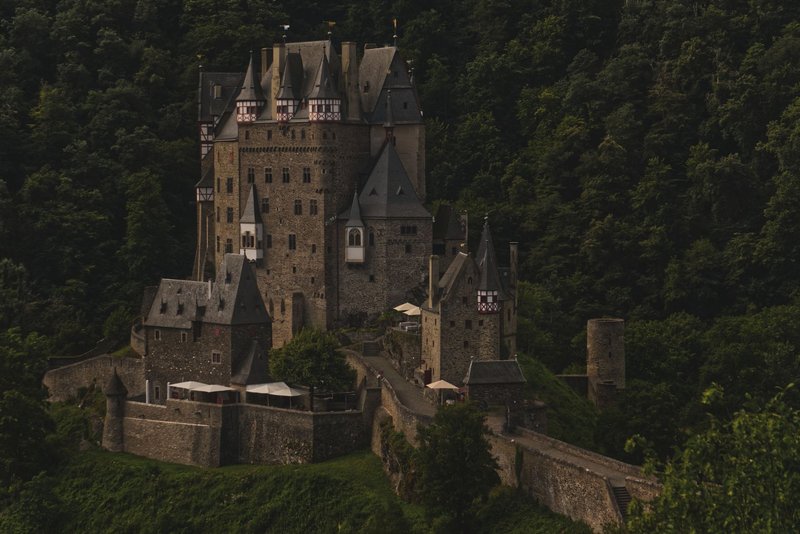
8. Castle of the Teutonic Order in Malbork
Malbork is the largest castle in the world by land area, a sprawling red-brick fortress the Teutonic Knights began in the 13th century as their order’s headquarters. Three castles nested inside one set of walls, all in brick, all reflected in the Nogat River. It’s about an hour southeast of Gdańsk, which makes it a natural day trip if you’re on the Baltic coast. Give it three to four hours; the audio-guided route is long and the upper castle alone is a maze.
Salt and the mining underground
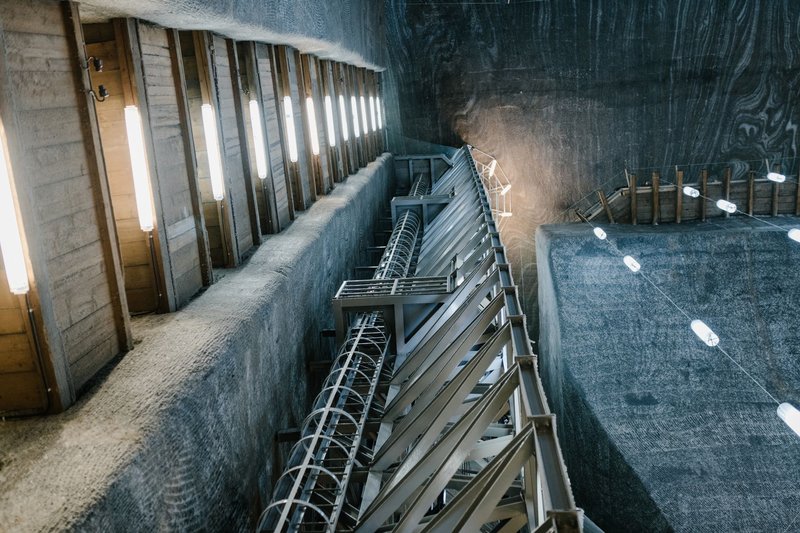
2. Wieliczka and Bochnia Royal Salt Mines
This was one of the first twelve sites ever placed on the World Heritage List, in 1978. The Wieliczka mine, about 10 km from central Kraków, ran continuously from the 13th century into the 2000s, and over that time miners carved an entire underground world from rock salt: chapels, chandeliers, statues, and the astonishing St. Kinga’s Chapel, a full church hewn from salt 101 metres below ground. You can only go down on a guided tour, and tickets are timed, so book ahead in summer. The standard tourist route is around two hours and involves 380 steps down at the start. Bochnia, an older sister mine, was added to the inscription in 2013.
15. Tarnowskie Góry Lead-Silver-Zinc Mine
Less famous and all the better for it, this Silesian site near Katowice protects an underground lead, silver, and zinc mine alongside a remarkable system of tunnels and channels built to manage groundwater. The engineering, not the bling, is the point: this water-management network helped supply the region for centuries. You can take a boat through a flooded section of the underground galleries, which is not something most heritage lists offer.
16. Krzemionki Prehistoric Striped Flint Mining Region
Krzemionki is a Neolithic flint mine, roughly 4,000 to 5,000 years old, where prehistoric people dug shafts and galleries to extract distinctive banded “striped flint” for axes and tools. The 2019 inscription covers one of the best-preserved prehistoric underground mining complexes in Europe. It’s near Ostrowiec Świętokrzyski in central Poland, and a guided route takes you down into the original Stone Age galleries.
Sacred timber and pilgrimage landscapes
9. Kalwaria Zebrzydowska
A Mannerist architectural and landscape park from the early 17th century, Kalwaria pairs a Bernardine monastery with dozens of chapels scattered across a hilly, symbolic landscape meant to evoke Jerusalem. It’s still a major pilgrimage site, busiest during Holy Week. About 35 km southwest of Kraków, it slots neatly onto a day that also includes Wieliczka or Wadowice.
10. Churches of Peace in Jawor and Świdnica
After the Peace of Westphalia ended the Thirty Years’ War in 1648, Protestants in Catholic-ruled Silesia were grudgingly allowed churches on impossible terms: no stone, no nails, no bell tower, and they had to be built within a year. The result, in Jawor and Świdnica, is the largest timber-framed religious buildings in Europe, packed with painted galleries that seat thousands. Both are in Lower Silesia, an easy add-on from Wrocław, and close enough to the frontier that they fold neatly into a wider loop taking in the historic towns of the Czech Republic just across the border.
11. Wooden Churches of Southern Lesser Poland
Six Gothic wooden Roman Catholic churches, built with horizontal log construction and standing since the late Middle Ages, scattered across villages like Dębno, Haczów, and Sękowa in the south. Haczów’s church is one of the largest and oldest timber Gothic structures in Europe. These are spread out, so unless you’re a dedicated churchgoer, picking one or two near your route makes more sense than chasing all six.
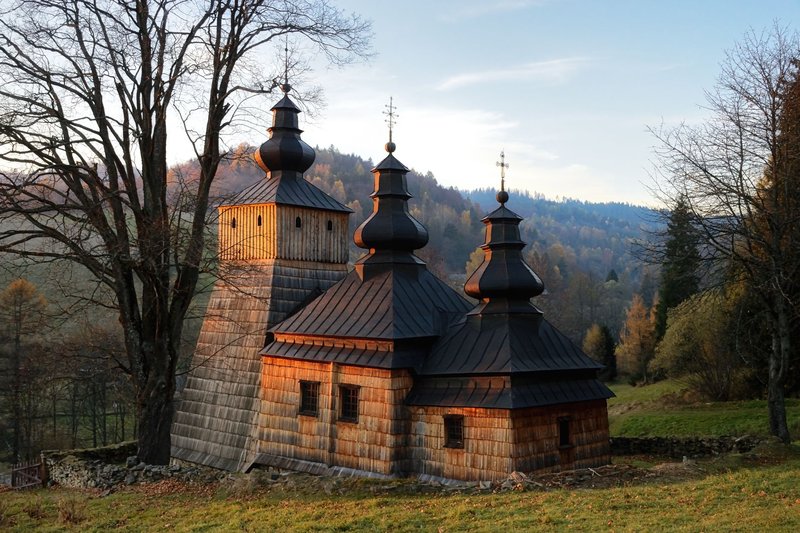
14. Wooden Tserkvas of the Carpathian Region
This is a transnational site shared with Ukraine: sixteen wooden Orthodox and Greek Catholic churches, eight on each side of the border. The Polish tserkvas sit in the southeastern Carpathian foothills near Krosno and the Bieszczady. Their tiered, onion-domed silhouettes mark a cultural meeting point between Latin and Byzantine Christianity. They pair naturally with the beech forests at the bottom of this list, since both live in the same remote corner of the country.
Memory: Auschwitz-Birkenau
3. Auschwitz-Birkenau
The only site here that isn’t a destination in the usual sense. Auschwitz-Birkenau is the preserved German Nazi concentration and extermination camp where more than a million people, the vast majority Jews, were murdered. It sits near Oświęcim, about 70 km west of Kraków, and entry is free but requires a timed ticket booked in advance; during peak hours a guided tour is mandatory. Plan for at least three and a half hours to see both the Auschwitz I and Birkenau sites, and plan your day around the emotional weight of it. This is not a stop to slot between a salt mine and lunch.
Modernist and landscape landmarks
13. Centennial Hall in Wrocław
A jolt of the modern after all that brick and timber. Max Berg’s Centennial Hall, finished in 1913, was a pioneering work of reinforced-concrete architecture, with a ribbed dome 65 metres across that was the largest of its kind at the time. It still functions as an events venue, and it’s an easy walk-up in Wrocław, which makes it the most painless inscription on this whole list to tick off.
12. Muskauer Park
A vast English-style landscape garden laid out in the 1810s by Prince Hermann von Pückler-Muskau, straddling the Lusatian Neisse River so that part of it is in Poland and part in Germany. You can walk a bridge across the river and across the border inside the park itself. The Polish side is reached from the town of Łęknica, far west near the German frontier, well out of the way of everything else on this list.
Poland’s wild forests
4. Białowieża Forest
The last large fragment of the primeval lowland forest that once blanketed the European Plain, and the home of the European bison, the żubr, the continent’s heaviest land animal, brought back from the brink of extinction here. The forest straddles the Belarus border, and the strictly protected core can only be entered with a licensed guide. It’s far northeast, near Białystok, a genuine detour, but the only place in Europe you can walk through forest that has never been cleared. The UNESCO listing covers both the Polish and Belarusian halves.
17. Ancient and Primeval Beech Forests (Bieszczady)
The newest piece of Poland’s World Heritage map, added in 2021 as part of a sprawling transnational beech-forest site that now spans 18 countries. The Polish components lie in the wild Bieszczady mountains in the far southeast, a thinly populated range of rounded grassy peaks called połoniny and old-growth beech stands. Pair it with the Carpathian tserkvas and you have a reason to explore Poland’s least-touristed corner.
If you only have 3 days
Base yourself in Kraków and you can hit four sites without ever sleeping anywhere else.
- Day 1: Historic Centre of Kraków. The square, Wawel, Kazimierz, on foot.
- Day 2: Auschwitz-Birkenau in the morning (book the timed ticket weeks ahead), Wieliczka Salt Mine in the afternoon on the way back. They’re on roughly the same axis west and south of the city.
- Day 3: Kalwaria Zebrzydowska and, if you want a fifth, one of the wooden churches of Lesser Poland on the same southern loop.
That’s the efficient core. The rest of Poland’s seventeen reward a longer trip: Wrocław for two more sites in a single city, Toruń and Malbork on a northern run toward Gdańsk, and the far east, Białowieża, Zamość, the Bieszczady, for travelers who’d rather have the place to themselves than tick boxes fast.