Most “historical places in Singapore” lists hand you the same dozen sites in a shuffled order, slap a stock photo on each, and call it a day. The problem isn’t the sites — Raffles Hotel and the Sultan Mosque earned their reputations. The problem is that nobody tells you how to string them together, which ones are free, or which ones you can actually walk between before lunch.
So here’s a different version. Twenty-one sites sorted into the categories that matter when you’re planning a day: colonial landmarks, religious heritage, WWII and military sites, civic buildings, and ethnic-quarter history. Each entry gives you the historical hook plus the logistics — address, nearest MRT, hours, and what it costs to get in. At the end there’s a half-day walking route through the Civic District that chains seven of them together.
Singapore packs roughly two centuries of dense, layered history into an island smaller than New York City. You can stand on a spot where a British general signed the largest surrender in British military history, walk ten minutes, and end up in a Hokkien temple built by sailors who came ashore in the 1840s grateful to have survived the South China Sea. That compression is the whole point. Use it.
Table of Contents
- Colonial Landmarks
- Religious Heritage
- WWII and Military Sites
- Civic and Government Buildings
- Ethnic-Quarter Heritage
- A Half-Day Civic District Walking Route
- Practical Tips for Visiting
Colonial Landmarks
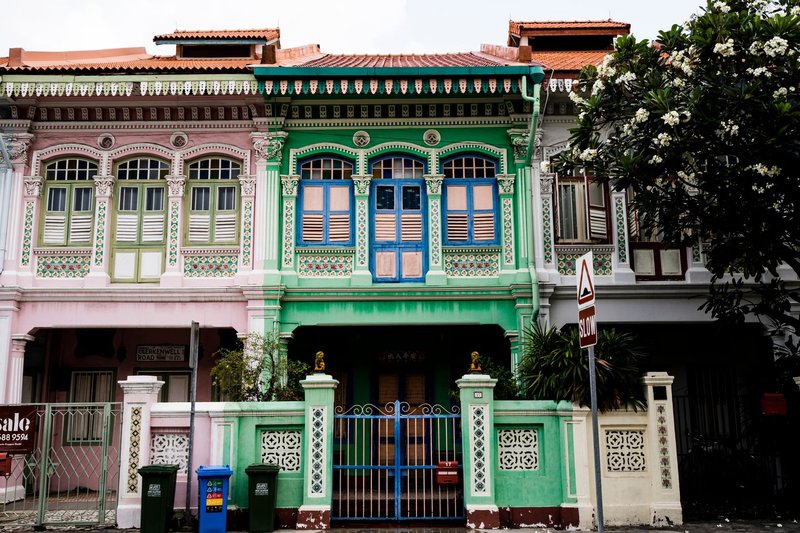
This is the layer most visitors picture first: the white-and-cream facades, the cricket green, the buildings the British put up to run a port that made them rich.
1. Raffles Hotel
Opened in 1887 by the Sarkies brothers, Raffles is the colonial hotel that every other colonial hotel in Asia gets compared to. The Singapore Sling was invented at the Long Bar around 1915, and the bar is still the one place in spotless Singapore where you’re not just allowed but expected to drop peanut shells on the floor. The hotel was gazetted as a National Monument in 1987 and reopened in 2019 after a multi-year restoration. You don’t need to be a guest to walk the arcades and the lobby — though the dress code is enforced in the bars.
- Address: 1 Beach Road
- Nearest MRT: Esplanade (CC3) or City Hall (NS25/EW13)
- Hours: Public areas daily; Long Bar typically 11am–10:30pm
- Entry: Free to wander the grounds; a Singapore Sling runs around S$39
2. The Fullerton Hotel
Before it was a luxury hotel, this was the General Post Office, completed in 1928 with a colonnade of Doric columns heavy enough to look like a Roman bank. It also housed the Singapore Club and, during the war, served as a makeshift hospital. The building sits right at the mouth of the Singapore River, so it doubles as a vantage point for the Merlion across the water.
- Address: 1 Fullerton Square
- Nearest MRT: Raffles Place (NS26/EW14)
- Hours: Lobby accessible daily
- Entry: Free to enter the lobby and riverfront
3. The National Gallery Singapore
Two of the country’s most important colonial buildings — the former Supreme Court (1939) and City Hall (1929) — were knitted together into a single art museum that opened in 2015. City Hall is where Lord Louis Mountbatten accepted the Japanese surrender in 1945, and where Singapore later declared self-governance. The rooftop has one of the best free-ish skyline views in the city, and you can still see the old courtrooms and holding cells preserved inside.
- Address: 1 St Andrew’s Road
- Nearest MRT: City Hall (NS25/EW13)
- Hours: Daily 10am–7pm
- Entry: Free for Singaporeans/PRs; around S$20 for tourists
4. Old Hill Street Police Station
You’ll recognize it before you know its name — it’s the heritage building with 927 windows painted in a full rainbow of colors. Built in 1934, it was once the largest government building in Singapore and held a police station and barracks. Today it houses government ministries, but the central atrium hosts rotating art exhibitions you can walk into for free.
- Address: 140 Hill Street
- Nearest MRT: Clarke Quay (NE5)
- Hours: Exhibition atrium typically Mon–Fri, daytime hours
- Entry: Free
5. CHIJMES
A former Catholic convent and school — the Convent of the Holy Infant Jesus — converted into a dining and events complex. The Gothic-revival chapel, completed in 1904, has stained glass shipped from Belgium and is now a popular wedding venue. There was a “Gate of Hope” at the original convent where desperate families would leave babies they couldn’t keep; the nuns took them in. The cloisters now hold restaurants and bars, which is jarring or charming depending on your mood.
- Address: 30 Victoria Street
- Nearest MRT: City Hall (NS25/EW13)
- Hours: Grounds open daily; venues vary
- Entry: Free to walk the grounds
Religious Heritage
Singapore’s port pulled in traders, laborers, and pilgrims from across Asia, and they built their gods houses. Several of these are among the oldest surviving structures on the island.
6. Thian Hock Keng Temple
The oldest Hokkien temple in Singapore, completed in 1842 on what was then the waterfront — sailors came straight off their ships to thank Mazu, the sea goddess, for safe passage. The whole thing was built without a single nail, using traditional southern-Chinese joinery, and the materials were imported from China. Look up at the roof ridge for the dragons and phoenixes in cut-porcelain mosaic. A National Monument since 1973.
- Address: 158 Telok Ayer Street
- Nearest MRT: Telok Ayer (DT18)
- Hours: Daily 7:30am–5:30pm
- Entry: Free
7. Sri Mariamman Temple
Singapore’s oldest Hindu temple, founded in 1827 and rebuilt in its current form over the following decades. The gopuram (the tiered entrance tower) is stacked with brightly painted figures of deities and is the photo everyone takes. Every October or November, the temple hosts Theemithi, a fire-walking festival where devotees cross a pit of glowing coals. Sitting in the middle of Chinatown, it’s a reminder that these “ethnic quarters” were never as tidy as the names suggest.
- Address: 244 South Bridge Road
- Nearest MRT: Maxwell (TE18) or Chinatown (NE4/DT19)
- Hours: Daily, generally 7am–12pm and 6pm–9pm
- Entry: Free; small fee for cameras
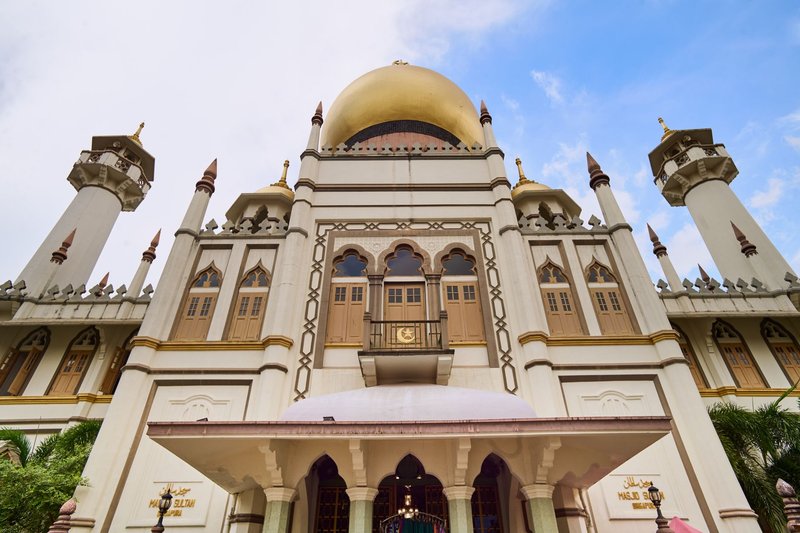
8. Sultan Mosque (Masjid Sultan)
The golden domes are visible from the end of Bussorah Street, framed like a postcard. The current mosque was built between 1924 and 1928, replacing an earlier 1820s structure funded partly by Stamford Raffles and the East India Company. Look closely at the base of the main dome: it’s ringed with the ends of glass bottles, donated by poorer Muslims so they too could contribute to the building. The spiritual heart of Kampong Glam and a National Monument since 1975.
- Address: 3 Muscat Street
- Nearest MRT: Bugis (DT14/EW12)
- Hours: Daily, with non-worshipper visiting windows (typically 10am–12pm, 2pm–4pm)
- Entry: Free; modest dress required, robes provided
9. Hajjah Fatimah Mosque
The one with the leaning minaret — Singapore’s own Tower of Pisa, tilting about six degrees. Built in 1846 and named after a wealthy Malaccan-born businesswoman who funded it after her home was twice robbed and once burned; she built a mosque on the site instead. The minaret’s tilt is widely attributed to the soft ground it was built on. Quieter than the Sultan Mosque and worth the short detour.
- Address: 4001 Beach Road
- Nearest MRT: Lavender (EW11) or Nicoll Highway (CC5)
- Hours: Daily, outside prayer times
- Entry: Free; modest dress required
10. St Andrew’s Cathedral
The largest cathedral in Singapore, finished in 1862 in a gleaming white Gothic-revival style. The brilliance of the exterior comes from “Madras chunam,” a plaster made from lime, egg whites, sugar, and coconut husk, polished to a shine. During the fall of Singapore in 1942 it served as an emergency hospital. It sits right on the Padang, so it slots neatly into a Civic District walk.
- Address: 11 St Andrew’s Road
- Nearest MRT: City Hall (NS25/EW13)
- Hours: Daily, generally 9am–5pm
- Entry: Free
WWII and Military Sites
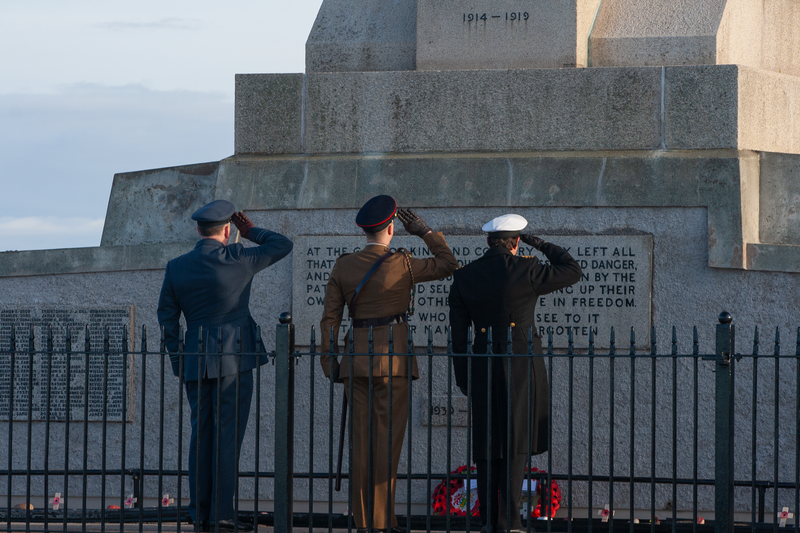
The Japanese occupation from 1942 to 1945 is the hinge of modern Singaporean history, and these are the places where you feel it most directly.
11. The Battle Box
A bunker complex 9 meters underground beneath Fort Canning Hill, this was the British Far East Command’s operations center. On 15 February 1942, Lieutenant-General Arthur Percival made the decision here to surrender Singapore to the Japanese — around 85,000 Allied troops, the largest surrender in British military history. Winston Churchill called it the worst disaster in British history. The site is now a guided museum with the rooms recreated.
- Address: 2 Cox Terrace, Fort Canning Park
- Nearest MRT: Fort Canning (DT20) or Dhoby Ghaut (NS24/NE6/CC1)
- Hours: Guided tours, typically Tue–Sun; book ahead
- Entry: Around S$25 for adults
12. Fort Siloso
Singapore’s only surviving coastal fort, on Sentosa, built by the British in the 1880s to guard the western approach to the harbor. Its big guns famously pointed seaward, which is why the myth persists that they were “useless” against a Japanese army that came overland through Malaya — the reality is more complicated, since several guns could and did turn to fire inland. You can walk through the tunnels, gun emplacements, and bunkers, and the Fort Siloso Skywalk gives you a canopy-level view on the way in.
- Address: Siloso Road, Sentosa Island
- Nearest MRT: HarbourFront (NE1/CC29), then Sentosa Express to Beach Station
- Hours: Daily 10am–6pm
- Entry: Fort is free; Sentosa island admission applies
13. Changi Chapel and Museum
A museum dedicated to the prisoners of war and civilians interned at Changi during the occupation. The replica chapel honors the POWs who built original chapels to keep faith and morale alive. The collection includes the Changi Murals story and personal artifacts smuggled out of the camps. It’s restrained and moving rather than spectacular, and it reopened after a refresh in 2021.
- Address: 1000 Upper Changi Road North
- Nearest MRT: Tampines (EW2/DT32), then bus
- Hours: Tue–Sun 9:30am–5:30pm
- Entry: Free for Singaporeans/PRs; around S$8 for tourists
14. Former Ford Factory
This was the first Ford car assembly plant in Southeast Asia, and on 15 February 1942 it became the room where Percival formally signed the surrender to General Yamashita. The Art Deco facade is preserved, and inside is a National Archives exhibition on the occupation years, built around oral histories from people who lived through it.
- Address: 351 Upper Bukit Timah Road
- Nearest MRT: Hillview (DT3)
- Hours: Tue–Sun 9am–5:30pm
- Entry: Free for Singaporeans/PRs; around S$3 for tourists
15. Civilian War Memorial
Four white pillars rising 61 meters, locally nicknamed “the chopsticks,” each representing one of Singapore’s main ethnic communities — Chinese, Malay, Indian, and Eurasian — united in shared loss. It was unveiled in 1967 and remains beneath it where remains of civilian victims of the occupation were reinterred. A memorial service is held here every 15 February. Quick to visit, sitting in War Memorial Park off Beach Road.
- Address: War Memorial Park, Beach Road
- Nearest MRT: City Hall (NS25/EW13) or Esplanade (CC3)
- Hours: Open public space, daily
- Entry: Free
Civic and Government Buildings
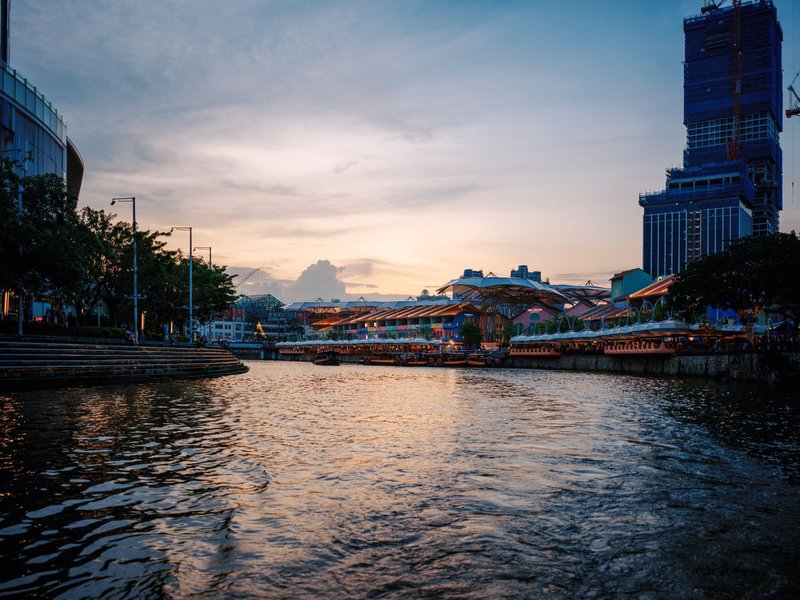
The institutions of the young nation, and the river around which the whole settlement grew.
16. Victoria Theatre and Concert Hall
The oldest performing arts venue in Singapore, with the Town Hall section dating to 1862 and the Memorial Hall and clock tower added in 1905 to honor Queen Victoria. It’s where the People’s Action Party was inaugurated in 1954, making it a literal birthplace of modern Singaporean politics. Restored and reopened in 2014, it’s still an active concert venue.
- Address: 9 Empress Place
- Nearest MRT: Raffles Place (NS26/EW14) or City Hall (NS25/EW13)
- Hours: Lobby and exterior accessible; performances ticketed
- Entry: Free to view the exterior and grounds
17. The Padang
Not a building but a field — and one of the most historically loaded patches of grass in the country. This is where colonial Singapore played cricket, where the Japanese herded European civilians before marching them off to Changi in 1942, and where Singapore’s first National Day Parade was held in 1966, the early years of what is now one of the world’s few independent city-states. It was gazetted as a National Monument in 2022, the first open green space to receive the designation. Flanked by the cricket and recreation clubs, with the National Gallery on one side.
- Address: Connaught Drive / St Andrew’s Road
- Nearest MRT: City Hall (NS25/EW13)
- Hours: Open space; not always accessible during events
- Entry: Free
18. Cavenagh Bridge
The oldest bridge in Singapore in its original form, opened in 1870 and named after the last India-appointed governor. It’s a suspension bridge built in Glasgow and shipped over in pieces. A police sign at one end still forbids cattle and vehicles over 3 hundredweight from crossing — a genuine colonial-era relic, not a reproduction. Now pedestrian-only, it links the Fullerton to the Asian Civilisations Museum.
- Address: Crossing the Singapore River near Empress Place
- Nearest MRT: Raffles Place (NS26/EW14)
- Hours: Open 24 hours
- Entry: Free
Ethnic-Quarter Heritage
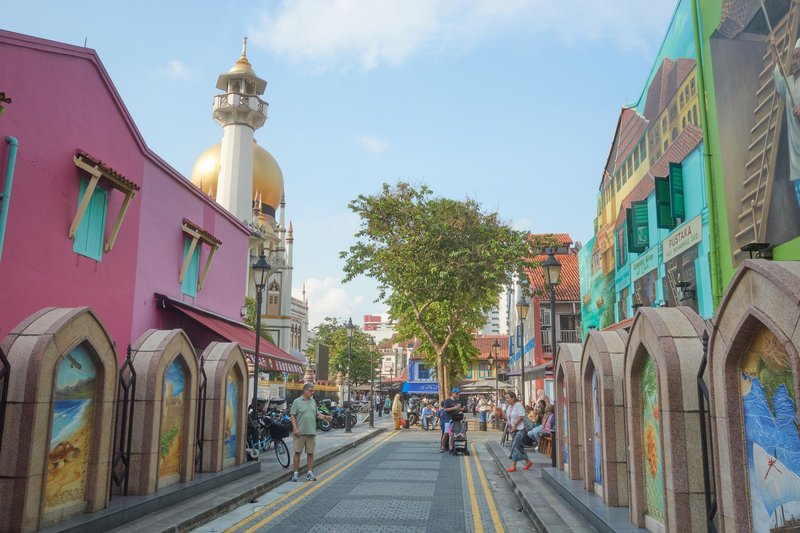
The districts where Singapore’s immigrant communities settled, each with its own museum that tells the story from the inside.
19. Sun Yat Sen Nanyang Memorial Hall
A villa in the Balestier district that served as Sun Yat Sen’s Southeast Asian revolutionary base in the early 1900s, where plans for the overthrow of China’s Qing dynasty were coordinated. The building, also called Wan Qing Yuan, is a National Monument and now a museum on the role of Singapore’s Chinese community in the 1911 revolution. Often skipped by tourists, which is exactly why it’s worth your time.
- Address: 12 Tai Gin Road
- Nearest MRT: Toa Payoh (NS19), then bus, or Novena (NS20)
- Hours: Tue–Sun 10am–5pm
- Entry: Free for Singaporeans/PRs; around S$6 for tourists
20. Malay Heritage Centre (Istana Kampong Glam)
The former palace of the Malay royalty, built in the 1840s on land granted to Sultan Hussein Shah under the treaty that handed Singapore to the British. It anchors Kampong Glam, the historic Malay-Muslim quarter, and houses a museum on Malay culture and the kampong’s history. (Check current status before going, as the centre has undergone revamp periods.) The surrounding streets — Haji Lane, Arab Street — are the most atmospheric in the city.
- Address: 85 Sultan Gate
- Nearest MRT: Bugis (DT14/EW12)
- Hours: Tue–Sun, daytime (verify before visiting)
- Entry: Modest fee; free for Singaporeans/PRs
21. Baba House
A meticulously restored 1890s Peranakan terrace house, run by the National University of Singapore, that recreates the home of a wealthy Straits Chinese family around 1928. Unlike a typical museum, you visit by guided tour through rooms staged as if the family stepped out moments ago — the ancestral altar, the blue facade, the inlaid furniture. It’s the single best way to understand Peranakan culture, the hybrid Chinese-Malay heritage unique to this part of the world. Book well ahead; group sizes are tiny.
- Address: 157 Neil Road
- Nearest MRT: Outram Park (EW16/NE3/TE17) or Maxwell (TE18)
- Hours: By guided tour, several days a week; reservation required
- Entry: Around S$15
A Half-Day Civic District Walking Route
Here’s how to chain the densest cluster into one easy morning. Everything below is within a 15-minute walk of the next stop.
- Start at City Hall MRT. Walk to St Andrew’s Cathedral (stop 10) — five minutes, gates open early.
- Cross to the National Gallery (stop 3) and the Padang (stop 17) right beside it. Do the gallery’s history wing and rooftop, or just admire the exteriors if you’re short on time.
- Walk to the Civilian War Memorial (stop 15) in War Memorial Park, then over to Raffles Hotel (stop 1) for a look at the lobby.
- Head south through the Civic District to Old Hill Street Police Station (stop 4) — the rainbow windows — and continue down to the river.
- Cross Cavenagh Bridge (stop 18) to the Fullerton Hotel (stop 2) and the riverfront.
- Finish with lunch at CHIJMES (stop 5) or in the river quays.
That’s seven historical sites, about three to four hours at a relaxed pace, almost all of it free. Add the Battle Box (stop 11) at Fort Canning if you want one ticketed, deeper stop — it’s a ten-minute walk from Old Hill Street.
Practical Tips for Visiting
Dress for the temples and mosques. Shoulders and knees covered. The Sultan Mosque and others lend robes, but bringing a light scarf saves you the wait.
Free vs. paid. Most religious sites and many civic buildings are free. The ticketed standouts worth paying for are the Battle Box and Baba House — both are tour-only and genuinely add context you can’t get from reading a plaque. National museums are usually free for Singaporeans and PRs and a few dollars for tourists.
Beat the heat. Singapore is equatorial and humid year-round. Start by 9am, build in air-conditioned indoor stops (the National Gallery, museums) for the midday peak, and carry water. Singapore’s tap water is safe to drink, so refill rather than buy.
Use the MRT. The network is clean, cheap, and reaches nearly every site here. A contactless card or your phone’s transit card works at the gates — no need for paper tickets. For the official heritage context behind many of these National Monuments, the National Heritage Board maintains detailed records and trail maps.
Time the festivals. If you can, line your visit up with Theemithi at Sri Mariamman, Hari Raya in Kampong Glam, or the 15 February memorial service at the Civilian War Memorial. The sites stop being monuments and start being living places.
Singapore rewards the traveler who looks past the skyline. The same density that makes the city feel hyper-modern means its history is stacked just as tightly — a 1842 temple in the shadow of a bank tower, a surrender bunker under a hilltop park. Walk it slowly and the two centuries fall into place.