Idaho doesn’t have a national park. Not one. Search “national parks in Idaho” and you’ll land on a dozen listicles that dodge that fact by padding the list with state parks and scenic byways — which is a little dishonest, because what Idaho actually has is better than most people realize once you know where to look.
The state holds six National Park Service units: a lava field that looks like the surface of the moon, a granite reserve where the California Trail’s wagon ruts are still visible, a fossil bed that produced one of the most complete horse skeletons ever found, a WWII incarceration site, a scattered historical park tied to the Nez Perce, and a corner of Yellowstone itself. None of them get the crowds of Zion or Yosemite. All of them are worth the detour.
Contents
- TLDR: Idaho’s National Park Sites at a Glance
- National Park vs. Monument vs. Historic Site
- Idaho’s 6 National Park Service Sites
- A 4-Day Idaho National Parks Road Trip
TLDR: Idaho’s National Park Sites at a Glance
Idaho has zero full national parks but six NPS-managed sites, plus a wedge of Yellowstone in its northeast corner. The must-see is Craters of the Moon National Monument — a 618-square-mile lava field near Arco that NASA used to train Apollo astronauts. Second pick is City of Rocks National Reserve, a granite climbing mecca near the Utah border. If you’re routing a trip, base it around southern Idaho: Craters of the Moon, City of Rocks, Hagerman Fossil Beds, and Minidoka can all be strung together in four days out of Twin Falls or Boise. Nez Perce National Historical Park sits far north near Lewiston and is really its own trip. Yellowstone’s Idaho sliver has no road access — you reach the park through Montana or Wyoming even when you’re staying in Idaho Falls.
National Park vs. Monument vs. Historic Site
The confusion is fair. Congress designates national parks, and it’s a slow, deliberate process usually reserved for large, ecologically significant landscapes — that’s why there are only 63 in the entire country. National monuments protect something more specific — a landform, a fossil deposit, a historic structure — and a president can create one unilaterally under the Antiquities Act, which is how Craters of the Moon and Hagerman Fossil Beds both came to exist. National historic sites and historical parks preserve a place tied to a specific event or era, like Minidoka’s incarceration camp. A national reserve, which is what City of Rocks is, is a rarer hybrid: the NPS and the state co-manage it, which is why you’ll see cattle grazing near the climbing routes.
None of these carry less legal protection than “national park” — the label just describes what’s being protected and how it got that way.
Idaho’s 6 National Park Service Sites
1. Craters of the Moon National Monument & Preserve
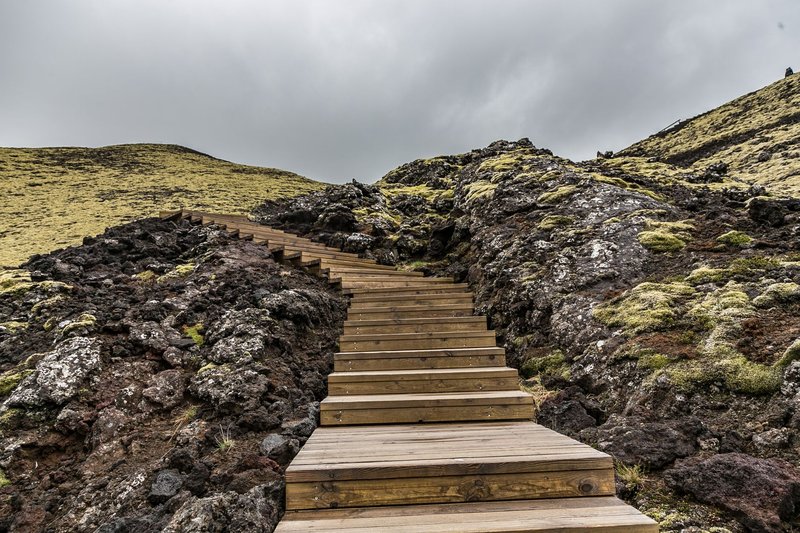
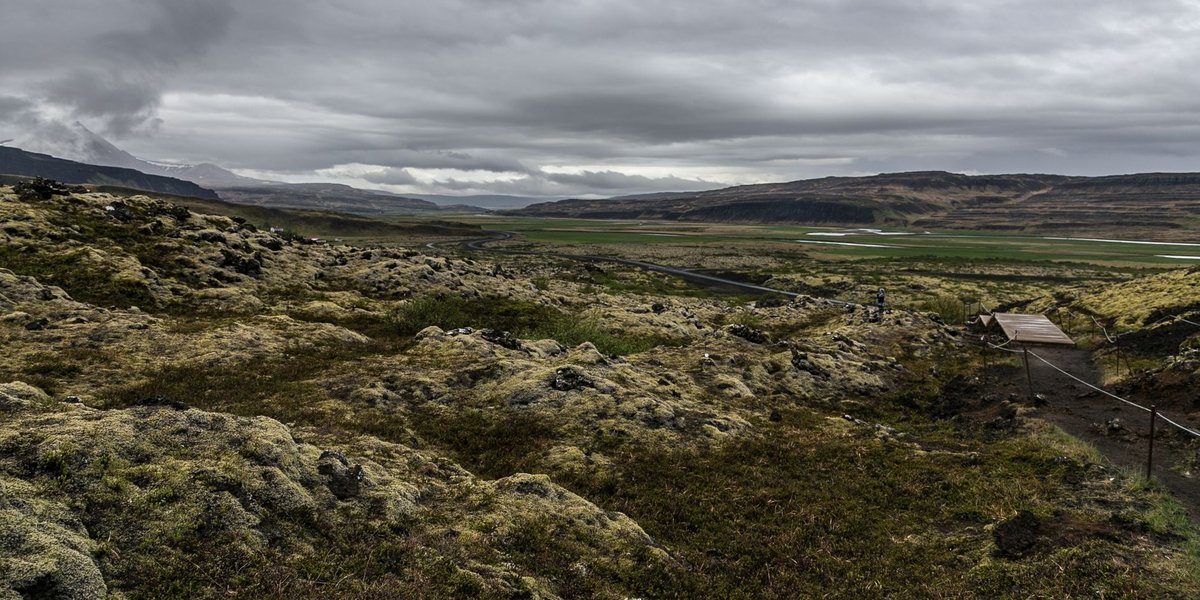
This is the one to build a trip around. Craters of the Moon sits on the Snake River Plain about 18 miles southwest of Arco, and it’s the product of eight major eruptive periods over the last 15,000 years — the most recent lava flow is roughly 2,000 years old, geologically an eyeblink. The 7-mile Loop Drive hits the highlights: Devils Orchard, the Spatter Cones, and Inferno Cone, a 90-second climb up a cinder hill that dumps you at a 360-degree view of black rock stretching to the horizon.
Bring more water than you think you need. Lava rock radiates heat, and by July the ground temperature on the trails can run well above the air temperature. Spring and fall are the sweet spot — wildflowers push up through the cinder in May and June, and fall brings cool hiking weather with none of the summer crowds. The Loop Road usually closes for the season by early November and reopens in spring once plowing allows, though the visitor center stays open year-round and cross-country skiing is an option in winter.
Entrance runs around $20 per vehicle for a 7-day pass, covered by an America the Beautiful pass. Lava Flow Campground sits inside the monument, first-come-first-served with no reservations, and it fills up on summer weekends. From Boise, it’s about 180 miles and just under 3 hours via US-20; from Twin Falls, closer to 90 miles.
2. City of Rocks National Reserve
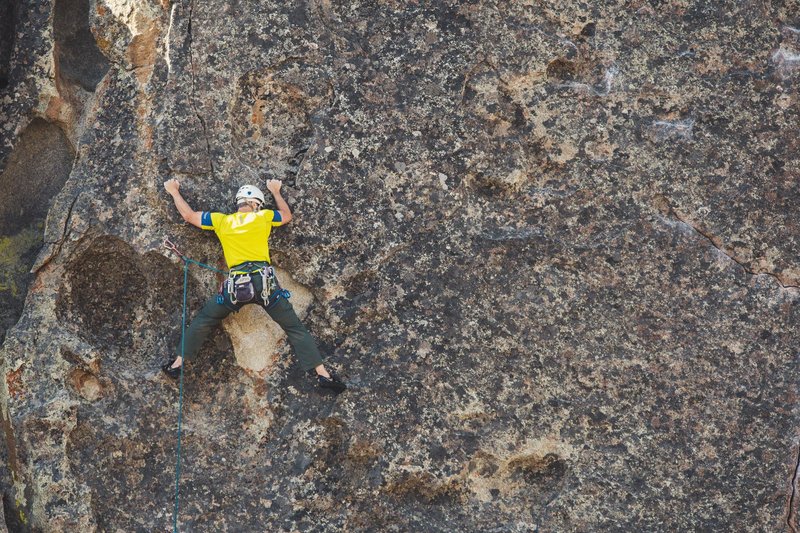
City of Rocks sits near Almo, hard against the Utah border, and it’s less a park than a 14,000-acre stone city — granite spires up to 60 stories tall, some of them older than the Rocky Mountains. Climbers know it as one of the best traditional and sport climbing destinations in the country, with well over 1,000 bolted routes. Non-climbers come for a different reason: the California Trail cut straight through here in the 1840s and 50s, and you can still read pioneer names painted in axle grease on Register Rock.
Because it’s jointly managed by the NPS and Idaho State Parks, the rules are looser than a typical monument — there’s no entrance fee to drive through, though camping and some day-use areas carry charges, generally in the $14–$25 range depending on the site. Spring and fall are best; summer heat on bare granite gets brutal by early afternoon, and the reserve is popular enough during peak climbing season that campsites go fast. It’s about 100 miles south of Twin Falls through Oakley, or roughly 200 miles from Boise — pair it with Craters of the Moon for a two-site loop through southern Idaho’s high desert.
3. Hagerman Fossil Beds National Monument
Hagerman is the quiet one on this list, and it deserves more attention than it gets. The Hagerman Horse Quarry produced the most complete Equus simplicidens skeletons ever found — the species is now Idaho’s official state fossil — along with fossils from more than 200 other Pliocene-era species, all preserved in bluffs above the Snake River. There’s no dinosaur-park spectacle here; the appeal is quieter, closer to a working paleontology site with a small visitor center in the town of Hagerman that displays casts of the horse skeletons.
Entry is free, and the visitor center is an easy stop rather than a destination in itself — most people spend an hour or two. It sits about 40 miles northwest of Twin Falls on US-30, close enough to fold into a Snake River Canyon detour along with Thousand Springs and Shoshone Falls, neither of which is NPS-managed but both of which are five minutes off the same road.
4. Minidoka National Historic Site
Minidoka preserves one of ten camps where the U.S. government incarcerated more than 13,000 Japanese Americans during World War II, most of them from the Pacific Northwest, none of them charged with a crime. What remains is stark by design: a reconstructed guard tower, root cellar ruins, the honor roll listing residents who served in the U.S. military while their families remained behind fencing. The National Park Service’s Minidoka history page is worth reading before you go — the self-guided walking tour lands differently once you know the specifics of who was held here and why.
There’s no entrance fee. Plan on an hour for the walking tour, longer if you read every interpretive panel. It sits near Jerome, about 20 miles from Twin Falls, making it the easiest add-on to a Snake River Canyon day.
5. Nez Perce National Historical Park
Nez Perce National Historical Park is the outlier here, and it’s worth knowing that going in: instead of one site, it’s 38 locations scattered across Idaho, Montana, Oregon, and Washington, tracing Nez Perce (Nimíipuu) history and the 1877 flight toward Canada. The main visitor center sits near Spalding, just east of Lewiston in Idaho’s panhandle, and includes exhibits on tribal culture that predate the conflict by centuries.
This one doesn’t fit neatly into a southern Idaho loop — Lewiston is roughly 280 miles and 5.5 hours north of Boise, closer to Spokane than to Twin Falls. Treat it as its own trip, ideally paired with Hells Canyon or a Clearwater River drive, rather than trying to bolt it onto the Craters-City of Rocks-Hagerman circuit.
6. Yellowstone’s Idaho Corner
Technically, a piece of Yellowstone — the first national park ever designated, in 1872 — sits inside Idaho’s borders: a roadless sliver along the park’s southwest edge. There’s no ranger station, no trailhead, no way to drive in from the Idaho side. What Idaho does offer is the approach. Staying in Idaho Falls or Rexburg and driving into the park via West Yellowstone, Montana, is a well-worn regional habit, and it’s genuinely the fastest way in if you’re already in eastern Idaho. From Idaho Falls, it’s about 110 miles and just under 2 hours up US-20 to the West Entrance. The NPS Yellowstone fee page lists the standard vehicle pass at $35 for seven days.
A 4-Day Idaho National Parks Road Trip
This route strings together the four sites that actually cluster geographically — Nez Perce and the Yellowstone approach both live too far outside this loop to include without adding two extra driving days.
Day 1: Boise to Craters of the Moon. Drive out via US-20 (about 3 hours), spend the afternoon on the Loop Drive, and camp at Lava Flow Campground or stay in Arco, the small town just outside the monument entrance.
Day 2: Craters of the Moon to Twin Falls, with a Hagerman detour. Head south, stop at Hagerman Fossil Beds on the way, and spend the evening in Twin Falls — Shoshone Falls, a genuine “Niagara of the West” moment, is a 10-minute drive from downtown and not to be skipped even though it’s not NPS land.
Day 3: Minidoka, then City of Rocks. Minidoka is a quick morning stop northeast of Twin Falls; from there, cut south toward Oakley and Almo for the afternoon and camp inside City of Rocks. Bring climbing gear if you have it — even a couple of easy routes on the granite are worth the detour for non-climbers.
Day 4: City of Rocks back to Boise. The return drive is around 3.5 to 4 hours depending on your route. Build in slack — the last stretch through the Snake River Plain has almost no services once you leave the interstate.
Four days covers four of the six sites without rushing any of them. If Yellowstone’s Idaho approach or Nez Perce matter to you, treat them as separate trips built around Idaho Falls and Lewiston respectively — trying to chain all six into one loop turns a road trip into a delivery route, and you’ll remember none of it.