Table of Contents
- Why Belarus Doesn’t Speak With One Voice
- The Four Dialect Groups, Broken Down
- What Each Dialect Actually Sounds Like
- Trasianka: The Tongue Almost 40% of Belarusians Actually Speak
- Where You’d Actually Run Into Each Dialect
- Is Belarusian Dying Out?
- The Short Version
Why Belarus Doesn’t Speak With One Voice
Search “dialects in Belarus” and you’ll get one of two things: a Wikipedia stub so thin it barely qualifies as an article, or a buried subsection at the bottom of a much longer piece about the Belarusian language as a whole — phonology charts, census tables, alphabet history, and then, almost as an afterthought, two paragraphs on dialects. Nobody has actually sat down and explained what the dialects are, where they came from, or what they sound like. That’s the gap this piece fills.
Belarus’s dialect map isn’t random. It’s the fossil record of centuries of shifting borders. The territory spent stretches of its history split between the Grand Duchy of Lithuania, the Polish-Lithuanian Commonwealth, and the Russian Empire, and each region absorbed different neighbors’ speech patterns — Polish and Lithuanian influence in the west, Russian influence in the east, and a distinct marsh-country dialect in the south that some linguists don’t even classify as Belarusian at all. Linguists have long pointed to a rough boundary line running from Ashmyany near the Lithuanian border, through Minsk, down to Babruysk and Homyel, splitting the country’s speech into two broad camps before you even get to the exceptions.
Then, on top of the traditional dialects, Soviet-era Russification added a fifth wrinkle: a mixed Belarusian-Russian vernacular called Trasianka that a huge share of the country actually speaks day to day. More on that below — it’s the part of this story every other article skips.
The Four Dialect Groups, Broken Down
Belarusian dialectologists generally recognize four groups. Two are the main event, one is a transitional zone that gave the standard language its backbone, and one is arguably its own thing entirely.
- Northeastern (Паўночна-ўсходняе) — spoken across the Vitsebsk region and the northern half of the Mahilyow region. Strong, consistent dzekanye and tsekanye: soft “d” and “t” sounds shift toward “dz” and “ts” before front vowels, so дзень (day) sounds nothing like the Russian день. This is the dialect zone closest to the Russian border, and it shows.
- Southwestern (Паўднёва-заходняе) — spoken across the Hrodna and Brest regions and southern Minsk region. Weaker or inconsistent dzekanye, a distinctly hard “r,” and noticeably more Polish and Lithuanian loanwords (see Dialects in Poland), a legacy of centuries under Polish-Lithuanian rule. This is the dialect zone that feels furthest from Russian.
- Middle Belarusian (transitional) — a band running roughly through Minsk, Maladzyechna, and Slutsk, blending Northeastern and Southwestern features. This isn’t a minor footnote: the 19th and 20th century codifiers who built the modern literary standard leaned heavily on these transitional dialects, which is why standard Belarusian doesn’t map cleanly onto either “pure” regional variety.
- West Polesian (Заходнепалескае) — spoken in the Pinsk Marshes and the far southwest of the Brest region. This one’s the outlier. Some linguists treat it as a Belarusian dialect group; others argue it’s a distinct transitional variety between Belarusian and Ukrainian, and a small movement in the 1980s even tried to codify it as its own literary “Polesian” micro-language. Either way, it doesn’t sound like the rest of the country.
Here’s how the pronunciation actually splits:
| Feature | Northeastern | Southwestern | West Polesian |
|---|---|---|---|
| Dzekanye/tsekanye | Strong and consistent | Weak or absent in places | Weak, closer to Ukrainian patterns |
| R sound | Softer, more variable | Consistently hard “r” | Hard “r,” Ukrainian-influenced |
| Akanye (unstressed o → a) | Strong | Moderate | Moderate, with vowel patterns closer to Ukrainian |
| Outside influence | Russian | Polish, Lithuanian | Ukrainian |
What Each Dialect Actually Sounds Like
Akanye is the feature that trips up newcomers most, and it’s worth understanding because standard Belarusian already has it baked in — unlike Russian, where akanye is a dialect feature, Belarusian made it official. In an akanye system, unstressed “o” collapses toward “a.” So малако (milk) doesn’t come out “mo-la-KO,” it comes out closer to “ma-la-KO,” with the first two vowels flattened. The dialects differ in how aggressively they apply this: Northeastern speech pushes it hardest, flattening even more unstressed vowels around the stressed syllable, while Southwestern and West Polesian speech is comparatively gentler.
Dzekanye is the other tell. Take a word like дзядзька (uncle) — in a strong-dzekanye Northeastern village, the “dz” sound is unmistakable and consistent. Move southwest and you’ll hear speakers soften or drop it in casual speech, landing closer to a plain “d.” Combine that with the hard-versus-soft “r” split — Southwestern speakers keep their “r” hard and rolled in words like гавару (I say), where Northeastern pronunciation can soften it — and two Belarusians from opposite ends of the country can sound like they’re speaking related but distinguishable varieties of the same language, roughly the way a Glaswegian and a Cornish speaker both speak English.
Trasianka: The Tongue Almost 40% of Belarusians Actually Speak
This is the part no competing article touches, and it’s arguably more relevant to understanding modern Belarus than the four traditional dialects combined.
Trasianka — literally “low-quality mixed hay,” a name that tells you exactly how it’s regarded by purists — is an unstructured, spoken blend of Belarusian and Russian that emerged from decades of Soviet-era urbanization and Russification. Rural Belarusian speakers moving to cities for work, schooled in Russian and surrounded by Russian media, didn’t so much switch languages as blend them, sentence by sentence, without any formal grammar governing which parts come from which. It’s not a creole with fixed rules. It’s closer to what happens when two closely related languages get pressed together for two generations under an education system that actively favored one of them.
Surveys have found that up to 38% of Belarusians consider Trasianka their native tongue — a bigger share than speaks standard literary Belarusian at home. That number alone should reframe how you think about “the Belarusian language”: the dialects described above are regional variants of a minority home language, while Trasianka is what actually fills the gap between Belarusian villages and Russian-speaking cities for a huge portion of the population. Standard Belarusian, meanwhile, functions almost like a second, more formal register — the language of culture, of the 2020 protest movement, of nationalist identity — layered on top of daily speech that’s often neither fully Belarusian nor fully Russian.
Where You’d Actually Run Into Each Dialect
Minsk itself won’t get you far with any of this. The capital runs on Russian and Trasianka in daily life; standard literary Belarusian shows up on signage, in cultural institutions, and among a self-consciously Belarusian-speaking minority, but it’s not the street language.
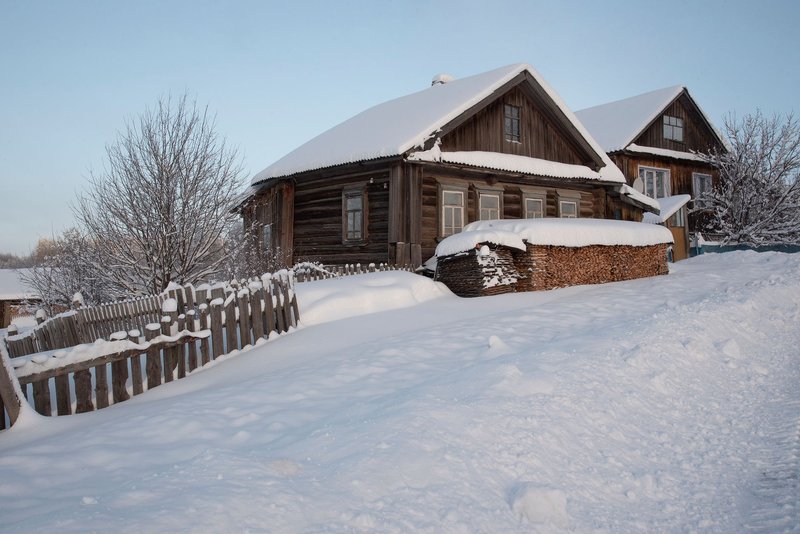
Head northeast toward Vitsebsk and rural Mahilyow region and you’re in Northeastern-dialect country — older villagers are your best bet for hearing it in something close to its traditional form, since Russian dominates institutional life there too. Head west toward Hrodna, near the Polish and Lithuanian borders, and Southwestern speech patterns turn up alongside a visibly different built environment: Catholic churches, Polish-language signage in places, a different architectural rhythm than the Orthodox east.
The most distinct pocket is the Pinsk Marshes in the far southwest — Polesia. This is Europe’s largest wetland system, historically isolated by literal geography, and its West Polesian speech survived in relative isolation the way island dialects often do. It comes bundled with a genuinely different regional culture: distinct folk costume, boat-based transport through the marshes, and a local identity that predates modern national borders. If you want to hear a dialect that sounds meaningfully different from what’s taught in a Belarusian textbook, this is where you’d go looking, ideally with a local guide, since it’s not exactly set up for casual tourism.
Is Belarusian Dying Out?
Not dead, but not healthy either. Russian is the dominant language of government, business, and daily urban life, and the CIA World Factbook lists Belarusian and Russian as co-official languages, with Russian functioning as the practical default across most institutions. UNESCO classifies Belarusian as “vulnerable” in its Atlas of the World’s Languages in Danger, a status shared by other indigenous languages in Belarus, the category for languages still spoken by children in some settings but losing ground overall — not on the brink of extinction, but not secure.
That said, the language carries outsized symbolic weight right now. Since the 2020 protest movement, speaking standard Belarusian in public has become something closer to a political statement than a neutral choice, and independent Belarusian-language media, publishing, and education efforts have grown even as the state has cracked down on them. The regional dialects covered here are a separate, slower-moving story — mostly retreating with each generation that moves to a city and switches to Russian or Trasianka — but the standard language itself is having an unusually visible moment for something UNESCO calls vulnerable.
The Short Version
Belarus splits into two main dialect zones — Northeastern, with strong dzekanye and Russian-leaning sounds, and Southwestern, with a hard “r” and Polish-Lithuanian influence — plus a Middle Belarusian transitional band that shaped the literary standard, and a West Polesian outlier in the marshes that some linguists barely count as Belarusian at all. Layered over all four is Trasianka, the unstructured Belarusian-Russian blend that more people actually speak at home than any single traditional dialect. If you’re tracing family roots, learning the language, or just curious why the “Belarusian” you hear in Minsk sounds nothing like what your grandmother spoke in a Vitsebsk village, that gap between the textbook language, the regional dialects, and Trasianka is the whole answer.