Islamabad’s Numbeo crime index has, in recent years, sat lower than several well-known Western cities — a fact that surprises most people who’ve never been to Pakistan and pictures the whole country through a decade-old news cycle. That gap between reputation and reality is the actual story here, and it’s why “is Pakistan safe” is the wrong question. The right one is which city, and which part of it.
TLDR
Islamabad is Pakistan’s safest major city by a clear margin — planned layout, heavy diplomatic-zone security, and a lower crime index than Lahore, Rawalpindi, or Karachi. Lahore and Rawalpindi come next, both livable and touristable if you stick to the established districts (DHA, Gulberg, the Cantonment areas). Karachi is the outlier: a massive, economically vital port city with real safety variance between neighborhoods like Clifton and DHA versus the older downtown core. None of these cities is risk-free. All of them are more manageable than most travel forums make them sound.
Table of Contents
- How We Ranked These Cities
- Safest Cities in Pakistan Compared
- Islamabad
- Lahore
- Rawalpindi
- Karachi
- A Note on Women’s and Family Safety
- Tourist vs. Expat: Different Questions
- FAQ
How We Ranked These Cities
The main public data source for city-level crime comparison in Pakistan is Numbeo’s crowd-sourced Crime Index, which is built from resident-submitted perception surveys rather than official police statistics. That’s a real limitation — sample sizes for Pakistani cities are smaller than for, say, London or Toronto, and perception surveys skew toward whoever bothers to fill them out. We’ve weighted it against on-the-ground reporting, U.S. State Department travel guidance, and UK government travel advice, which draws on consular incident reports rather than survey responses.
The two don’t always agree, and where they diverge, we say so.
Safest Cities in Pakistan Compared
| City | Relative Crime Level | Policing Presence | Cost of Living | Best For |
|---|---|---|---|---|
| Islamabad | Low | Heavy, especially Red Zone/diplomatic enclave | High (for Pakistan) | Expats, families, remote workers |
| Lahore | Moderate | Strong in DHA/Cantonment, thinner in the old city | Moderate | Culture, food, students |
| Rawalpindi | Moderate | Strong near the Cantonment, weaker in the old bazaar districts | Low–moderate | Budget travelers, Islamabad commuters |
| Karachi | Moderate–high, highly area-dependent | Strong in Clifton/DHA, inconsistent elsewhere | Moderate–high | Business travel, port-city curiosity |
Islamabad
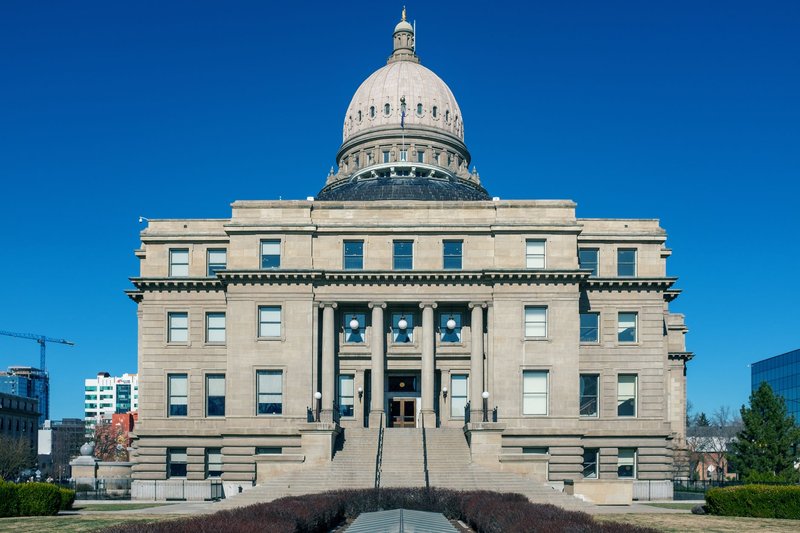
Islamabad was built from scratch in the 1960s as a planned capital, and it shows — wide sector grids, embassy security perimeters, and a population that’s disproportionately government workers, diplomats, and university staff. That’s not an accident of geography; it’s the point of the city.
The sectors most expats and long-stay visitors land in are F-6, F-7, F-8, and E-7 — leafy, low-density, walking distance to Jinnah Super Market and the Margalla Hills trailheads. The Diplomatic Enclave, home to most embassies, is arguably the most locked-down civilian district in the country, with checkpoints that slow traffic but also mean almost nothing happens there unnoticed.
The trade-off is dullness. Islamabad has genuine safety and genuinely limited nightlife — most restaurants close early, alcohol is restricted to a handful of licensed venues, and the city goes quiet by 10 p.m. If you want safety with an edge of chaos, this isn’t it. If you want to walk to a market at night without thinking twice, it’s the best option in the country.
Lahore
Lahore is Pakistan’s cultural capital, and it reads that way immediately — Mughal architecture in the old city, a food scene built around Gawalmandi and MM Alam Road, and a university population that keeps the energy up past dark. It’s also bigger and denser than Islamabad, which means more crime variance by district.
DHA (Defence Housing Authority) and Gulberg are the neighborhoods where most business travelers and long-term expats settle: gated-adjacent, well-lit, with private security common at residential compounds. The Walled City — genuinely worth visiting for the Badshahi Mosque and Lahore Fort — has more foot traffic, more petty theft risk, and less street lighting once the tourist shops close. Go during the day, and go with a plan rather than wandering after dusk.
Lahore’s traffic, not its crime rate, is what actually derails most visitors’ trips. Budget more transit time than you’d expect for the distance on a map.
Rawalpindi
Rawalpindi is Islamabad’s older, grittier twin — connected by a metro line and functionally one metropolitan area, but a different city in character. The Cantonment area, home to Pakistan’s military headquarters, is one of the more tightly secured zones in the country by default. Saddar Bazaar and the old city core are dense, commercial, and lower-risk for violent crime than they look, though pickpocketing in crowded market lanes is a real, unglamorous nuisance.
Most travelers use Rawalpindi as a cheaper base for exploring Islamabad, or as a jumping-off point north toward Murree and the hill stations. That dual role — capital-adjacent but working-class in cost — is what makes it worth its own entry rather than a footnote to Islamabad.
Karachi
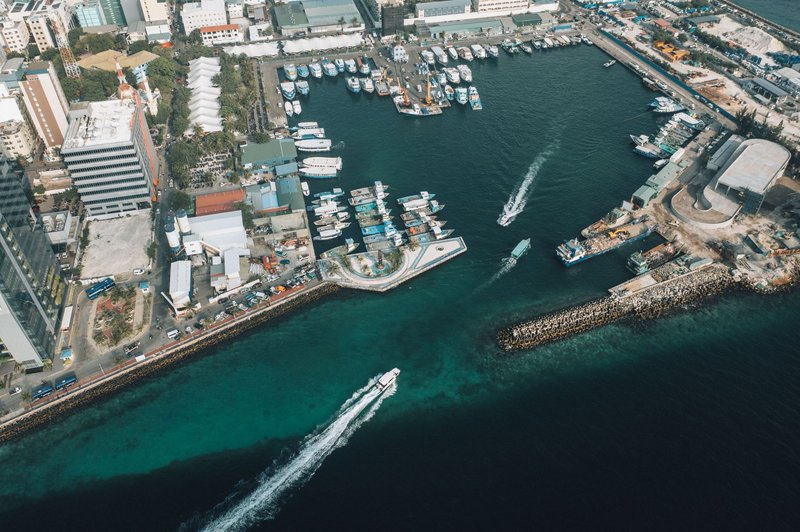
Karachi is where the “safest cities” conversation gets genuinely complicated, because it’s not one city safety-wise — it’s several, stitched together. Clifton and DHA, along the coast, are where the business class lives and where most international arrivals staying long-term end up: private security, better infrastructure, restaurants that stay open late. Move inland toward Lyari or the older downtown districts and the calculus changes fast, with higher rates of street crime and a policing presence that’s thinner relative to the population density.
Karachi is also Pakistan’s economic engine — its port handles the bulk of the country’s trade — which means business travelers end up there regardless of how the safety comparison to Islamabad shakes out. The realistic approach isn’t avoiding Karachi; it’s knowing which half of the map you’re in.
A Note on Women’s and Family Safety
This is the piece most city rankings skip, and it matters more than the aggregate crime index. Solo women travelers and relocating families face a different risk profile than the general “is this city safe” question captures — street harassment is a more consistent concern than violent crime in all four cities, and it varies by neighborhood even more sharply than theft or assault rates do.
Islamabad’s F-sectors and Lahore’s DHA are consistently the areas where women report the most comfortable experience walking alone during the day. After dark, ride-hailing apps (Careem and Uber both operate in all four cities) are the default move for solo travelers of any gender, not just a precaution — traffic and lighting make walking after 9 or 10 p.m. impractical regardless of crime rate. Families relocating for work tend to cluster in the same handful of expat-adjacent sectors and societies for exactly this reason: it’s less about crime statistics and more about school access, compound security, and a support network of other relocated families.
Tourist vs. Expat: Different Questions
A two-week tourist and a family relocating for a two-year contract are optimizing for different things, and conflating them is where a lot of “safest cities” content goes wrong.
Tourists care about tourist-zone safety at tourist hours — is the Lahore Fort area fine at 2 p.m. on a Saturday, is a taxi from the airport reliable, is the hotel district secure. On that measure, Islamabad, Lahore’s DHA/old-city daytime areas, and Karachi’s Clifton corridor all hold up fine.
Expats and relocating families care about sustained, everyday safety: school commutes, grocery runs after dark, medical access, and how a neighborhood behaves on an ordinary Tuesday rather than a guided-tour Saturday. That’s a slower, more granular question, and it’s why Islamabad — boring by tourist standards — tends to win the expat conversation outright. Predictability, not excitement, is what you want for eighteen months in a new country.
FAQ
Is Pakistan safe for tourists in 2026? For the established circuits — Islamabad, Lahore’s historic core, the northern hill stations reached via Rawalpindi — yes, with the same situational awareness you’d use in any dense, unfamiliar city. Government travel advisories from the US and UK still flag specific regions (parts of Balochistan, areas near the Afghan border, and portions of Khyber Pakhtunkhwa) for elevated risk, and those warnings are worth taking seriously; they don’t apply to the cities covered here.
What is the safest city in Pakistan to live in? Islamabad, by most available measures — lower crime index, heavier security infrastructure, and a population skewed toward government and diplomatic work that correlates with lower street crime. It’s also the most expensive and the least eventful, which is a trade some people don’t want to make.
Which Pakistani city ranks safest for tourists specifically, versus long-term living? Lahore edges out Islamabad for short tourist visits because there’s simply more to see within a compact, well-trafficked historic zone. Islamabad wins for anything longer than a couple of weeks, once the calculus shifts from “what’s safe during daylight sightseeing hours” to “what’s safe as a daily routine.”
Is Karachi safe to visit? Coastal Karachi — Clifton, DHA, the Sea View corridor — is manageable for business travel and short visits with basic precautions. The wider city has more crime variance than Islamabad or Lahore, and locals will generally tell you exactly which neighborhoods to skip if you ask.
How accurate is the Numbeo crime index for Pakistani cities? Directionally useful, not precise. It’s built on self-reported perception surveys with smaller sample sizes than Numbeo collects for major Western cities, so treat the ranking (Islamabad safer than Lahore, safer than Karachi) as more reliable than any specific number. Cross-referencing with the State Department advisory and the Institute for Economics & Peace’s Global Peace Index gives a fuller picture than any single source.