Most lists on this topic stop at ten and call it a day. That leaves out Namibia, the Central African Republic, Egypt, Libya, and a handful of others whose renaming stories are, honestly, the more interesting ones. This is the fuller list — 24 countries, with the year each change took effect, the mechanism behind it, and the specific political moment that triggered it. There’s also a timeline for the chronological view nobody else bothers to build, and a section on the disputes that are still unresolved right now.
Table of Contents
- The Full List at a Glance
- Independence-Era Renamings
- Later Political Renamings
- Timeline: Every Rename in Order
- How a Country Actually Changes Its Name
- Countries That Kept Their Colonial Names
- Naming Disputes That Are Still Unresolved
The Full List at a Glance
Here’s the short version, for anyone who just wants the answer before reading the reasoning.
| Former Name | Current Name | Year | Why |
|---|---|---|---|
| Gold Coast | Ghana | 1957 | Independence; named for the medieval Ghana Empire |
| Middle Congo | Republic of the Congo | 1960 | Independence from France |
| Belgian Congo | Zaire, then Democratic Republic of the Congo | 1971 / 1997 | Mobutu’s “authenticité” campaign, then his overthrow |
| Ubangi-Shari | Central African Republic | 1958 | Descriptive colonial name dropped ahead of independence |
| Dahomey | Benin | 1975 | New Marxist-Leninist government, symbolic break from monarchy |
| Upper Volta | Burkina Faso | 1984 | Thomas Sankara’s revolutionary government |
| Southern Rhodesia | Zimbabwe | 1980 | Independence; named for the Great Zimbabwe ruins |
| Nyasaland | Malawi | 1964 | Independence; named for Lake Malawi |
| Bechuanaland | Botswana | 1966 | Independence; named for the Batswana people |
| Basutoland | Lesotho | 1966 | Independence; named for the Basotho people |
| Swaziland | Eswatini | 2018 | Royal decree, to avoid confusion with Switzerland and reclaim the Swazi name |
| French Somaliland | Djibouti | 1977 | Independence |
| Portuguese East Africa | Mozambique | 1975 | Independence; named for Mozambique Island |
| Portuguese West Africa | Angola | 1975 | Independence; named for the Ndongo royal title “ngola” |
| South West Africa | Namibia | 1968 / 1990 | UN-recognized name ahead of independence from South Africa |
| Tanganyika & Zanzibar | Tanzania | 1964 | Union of the two territories |
| Northern Rhodesia | Zambia | 1964 | Independence; named for the Zambezi River |
| French Sudan | Mali | 1960 | Independence; named for the Mali Empire |
| Spanish Guinea | Equatorial Guinea | 1968 | Independence |
| Portuguese Guinea | Guinea-Bissau | 1974 | Independence; capital added to distinguish from neighboring Guinea |
| Ivory Coast | Côte d’Ivoire | 1986 | Government requested one standardized name in all languages |
| Cape Verde | Cabo Verde | 2013 | Same standardization request, Portuguese form only |
| Kingdom of Libya | State of Libya | 1969–2011 | Series of coups and civil war |
| United Arab Republic | Arab Republic of Egypt | 1971 | New constitution after the union with Syria dissolved |
Independence-Era Renamings
These are the names that got dropped the moment a colony became a country — no drama, no decree years later, just a new government picking a name that meant something to the people living there instead of the people who’d drawn the borders.
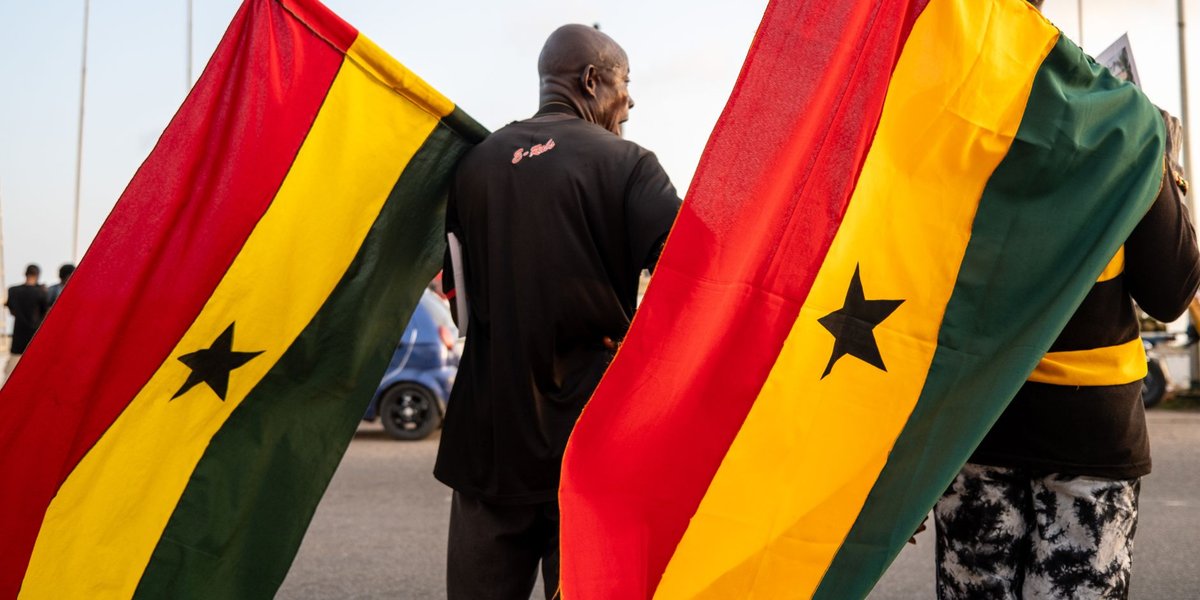
Gold Coast → Ghana (1957). The first sub-Saharan African colony to gain independence, and Kwame Nkrumah picked a name with weight behind it: the medieval Ghana Empire, which actually sat hundreds of miles to the northwest, in what’s now Mali and Mauritania. Nkrumah wasn’t claiming geographic continuity — he was claiming inheritance, telling the world that modern Ghana descended from a pre-colonial African power, not from a British trading post named for the gold that got shipped out of it.
Middle Congo → Republic of the Congo (1960). Independence from France produced a country everyone calls Congo-Brazzaville in practice, precisely because there’s a second, larger Congo next door with the same core name.
Ubangi-Shari → Central African Republic (1958). The French colonial name literally described two rivers. When the territory became an autonomous republic within the French Community in 1958, ahead of full independence in 1960, the new government chose a name that described the country’s position on the continent instead of its waterways.
Nyasaland → Malawi (1964). Named for Lake Malawi, which forms the country’s entire eastern border — “nyasa” is itself an older regional word for “lake,” so the colonial name was, in effect, “Lake-land.”
Bechuanaland → Botswana (1966). Named for the Batswana, the country’s dominant ethnic group; “Botswana” translates roughly to “land of the Tswana.”
Basutoland → Lesotho (1966). Same pattern: named for the Basotho people rather than a British administrative label.
French Somaliland → Djibouti (1977). The territory had already been renamed once mid-century, to the “French Territory of the Afars and Issas,” before independence settled on Djibouti, taken from the capital city.
Portuguese East Africa → Mozambique (1975). The name comes from Ilha de Moçambique, an island off the northern coast that Portuguese traders used as a naming reference for the whole territory long before “Mozambique” meant the mainland nation it does today.
Portuguese West Africa → Angola (1975). From “ngola,” the royal title used by rulers of the Ndongo Kingdom, which Portuguese colonizers first encountered in the 16th century and eventually applied to the entire colony.
South West Africa → Namibia. This one has an unusual timeline. The UN General Assembly formally adopted the name Namibia in 1968 — more than two decades before the country actually became independent from South Africa in 1990. The name existed at the UN before the country it named was free.
Tanganyika and Zanzibar → Tanzania (1964). Not a rename so much as a merger: mainland Tanganyika and the island nation of Zanzibar united into a single republic and needed a single name, so they combined pieces of both — “Tan” and “Zan” — into Tanzania.
Northern Rhodesia → Zambia (1964). Named for the Zambezi River, dropping the reference to Cecil Rhodes entirely, unlike its southern neighbor, which took longer to make the same break.
French Sudan → Mali (1960). Named for the Mali Empire, the 13th-century West African power whose wealth — largely from gold — is still the reference point for “richest person in history” conversations involving Mansa Musa.
Spanish Guinea → Equatorial Guinea (1968). Straightforward independence rename, distinguishing the country from the two other “Guineas” on the same stretch of coast.
Portuguese Guinea → Guinea-Bissau (1974). With Guinea (formerly French Guinea) and Equatorial Guinea already using the plain name, the newly independent Portuguese Guinea added its capital, Bissau, to avoid a three-way naming collision that persists in casual conversation to this day.
Later Political Renamings
Not every rename happened at the independence finish line. These came later, driven by a coup, a revolutionary government, or a monarch’s decision — and they tend to be the ones people actually remember, because they involved an existing, functioning state changing its name mid-stream.
Belgian Congo → Zaire → Democratic Republic of the Congo. The country now called the DRC has worn three names since 1960. At independence it was the Republic of the Congo (Léopoldville), renamed Democratic Republic of the Congo in 1964, then rebranded entirely as Zaire in 1971 when President Mobutu Sese Seko launched his “authenticité” campaign — stripping European names from people, places, and the country itself. When Laurent-Désiré Kabila’s forces overthrew Mobutu in 1997, one of the new government’s first acts was reverting to the Democratic Republic of the Congo. The U.S. government’s own background file on the country still lists “Zaire” as a former name, decades later.
Dahomey → Benin (1975). After a 1972 military coup brought a Marxist-Leninist government to power under Mathieu Kérékou, the country dropped “Dahomey” — the name of the pre-colonial kingdom centered in the south — in favor of “Benin,” taken from the historic Bight of Benin. It’s a genuinely confusing choice, since the far larger and better-known Benin Empire actually sat in what’s now Nigeria, not the country that carries the name today.
Upper Volta → Burkina Faso (1984). Thomas Sankara, the revolutionary captain who took power in a 1983 coup, renamed the country the following year. “Burkina Faso” combines Mòoré and Dioula, the country’s two dominant languages, to mean roughly “land of upright people” or “land of the incorruptible” — a direct rejection of the French colonial name, which just described the country’s position on the Volta River.
Southern Rhodesia → Zimbabwe (1980). The territory passed through a chaotic sequence — Rhodesia after a 1965 unilateral independence declaration, briefly “Zimbabwe Rhodesia” in 1979 under a transitional government — before settling on Zimbabwe at full independence in 1980, named for the stone ruins of Great Zimbabwe, the medieval city that once anchored a powerful regional trading state.
Swaziland → Eswatini (2018). King Mswati III announced the change during celebrations marking 50 years of independence, and it took effect that April. “Eswatini” means “land of the Swazis” and does two things at once: it drops the last vestige of British colonial naming, and it stops people from confusing the kingdom with Switzerland — a mix-up the king specifically cited when he made the announcement. So, why did Eswatini change its name from Swaziland? Officially, both reasons; practically, most reporting on the decision leans on the confusion angle, since it’s the one that comes up in nearly every conversation with someone outside the region. Background on the kingdom, including the former name, is documented in the CIA World Factbook’s Eswatini entry.
Kingdom of Libya → State of Libya (1969–2011). Libya’s name has tracked its government almost exactly: Kingdom of Libya under King Idris until Muammar Gaddafi’s 1969 coup produced the Libyan Arab Republic, which Gaddafi rebranded again in 1977 as the Great Socialist People’s Libyan Arab Jamahiriya — “jamahiriya” being a term he coined to mean, roughly, “state of the masses.” After the 2011 civil war and Gaddafi’s death, the National Transitional Council adopted the plain “State of Libya,” which remains the official name.
United Arab Republic → Arab Republic of Egypt (1971). Egypt and Syria merged into the United Arab Republic in 1958. Syria seceded in 1961, but Egypt kept the name for another decade before adopting a new constitution in 1971 and formally becoming the Arab Republic of Egypt.
Ivory Coast → Côte d’Ivoire (1986). This one’s a different kind of change: the government of Félix Houphouët-Boigny didn’t rename the country — it asked the rest of the world to stop translating its name. The request was that every language, including English, use “Côte d’Ivoire” rather than a local translation like “Ivory Coast.” The UN and most formal bodies complied. English-language media, by and large, still hasn’t.
Cape Verde → Cabo Verde (2013). Same playbook as Côte d’Ivoire: the government asked for the Portuguese form to be used universally rather than translated, and the UN adopted “Cabo Verde” as the official English short form that year.
Timeline: Every Rename in Order
The chronological view makes something visible that the alphabetical list hides: renaming came in two distinct waves, with a long, quiet gap in between.
- 1957 — Gold Coast becomes Ghana
- 1958 — Ubangi-Shari becomes the Central African Republic
- 1960 — Middle Congo becomes the Republic of the Congo; French Sudan becomes Mali; Belgian Congo becomes the Republic of the Congo (Léopoldville)
- 1964 — Nyasaland becomes Malawi; Northern Rhodesia becomes Zambia; Tanganyika and Zanzibar unite as Tanzania; Congo (Léopoldville) becomes the Democratic Republic of the Congo
- 1966 — Bechuanaland becomes Botswana; Basutoland becomes Lesotho
- 1968 — Spanish Guinea becomes Equatorial Guinea; the UN adopts “Namibia” for South West Africa, though independence is still 22 years off
- 1969 — Kingdom of Libya becomes the Libyan Arab Republic
- 1971 — Democratic Republic of the Congo becomes Zaire; United Arab Republic becomes the Arab Republic of Egypt
- 1974 — Portuguese Guinea becomes Guinea-Bissau
- 1975 — Portuguese East Africa becomes Mozambique; Portuguese West Africa becomes Angola; Dahomey becomes Benin
- 1977 — French Somaliland becomes Djibouti; Libya becomes the Great Socialist People’s Libyan Arab Jamahiriya
- 1980 — Southern Rhodesia becomes Zimbabwe
- 1984 — Upper Volta becomes Burkina Faso
- 1986 — Ivory Coast becomes Côte d’Ivoire (international usage)
- 1990 — Namibia becomes independent, 22 years after the UN adopted its name
- 1997 — Zaire becomes the Democratic Republic of the Congo, again
- 2011 — Libya becomes the State of Libya
- 2013 — Cape Verde becomes Cabo Verde (international usage)
- 2018 — Swaziland becomes Eswatini
Almost everything clusters in two windows: the 1957–1980 wave of decolonization, and a scattered handful of later, politically driven changes — 1984, 1986, 2011, 2013, 2018 — each tied to a specific regime or a specific request, not a continent-wide pattern.
How a Country Actually Changes Its Name
A country can’t just start calling itself something new and expect the change to stick internationally. There’s a real, if informal, process behind it, and it splits into three tracks depending on when and why the change happens.
Independence-era renaming is the simplest track. A colony becomes a sovereign state, its founding constitution names the new country, and the name gets locked in the moment the state applies for UN membership under that name. No separate “renaming” step exists because there was never an established country to rename — Ghana didn’t rename itself; it was born named Ghana.
Later political renaming is messier, because an existing, internationally recognized state has to get everyone to update their records. The head of state or governing body issues a decree or constitutional amendment — a royal proclamation for Eswatini, a revolutionary decree for Burkina Faso, a new constitution for Egypt and Libya. The government then formally notifies the UN Secretariat, which updates its official list of member states and terminology, cross-referenced with the work of the UN Group of Experts on Geographical Names, the body that maintains standardized country and place names for international use. From there, the International Organization for Standardization updates the ISO 3166 country code list — the two- and three-letter codes used everywhere from airline booking systems to internet domains — and individual governments update their own diplomatic references at their own pace. That lag is why some organizations, media outlets, and everyday maps kept printing “Zaire” or “Swaziland” for months or years after the official switch.
Translation standardization is the odd category out, because the country’s actual name never changes — only the version other languages are asked to use. Côte d’Ivoire and Cabo Verde both fall here: their governments didn’t rename the country, they asked the world to stop translating it. Legally, nothing about the state changed. Practically, it’s had the same effect as a full rename on how the rest of the world refers to them, at least in official contexts.
Countries That Kept Their Colonial Names
Renaming wasn’t universal, and most African nations never seriously pursued it. Kenya kept the name given to it under British administration, itself borrowed from Mount Kenya. Nigeria’s name was coined in 1897 by Flora Shaw, a British journalist who later married the colonial administrator Frederick Lugard — she suggested “Nigeria” as shorthand for the territories along the Niger River, and it stuck through independence and beyond. Cameroon traces its name to Portuguese explorers who called the Wouri River estuary “Rio dos Camarões” — river of prawns — after the shrimp they found there.
None of these countries formally rejected a renaming proposal the way a legislature votes down a bill; there’s no dramatic failed-referendum story to tell. The more accurate read is that independence-era leaders in these cases judged the practical cost of a rename — new maps, new passports, new diplomatic paperwork, confusion for citizens — against a symbolic gain that didn’t feel urgent enough to chase. Ghana and Burkina Faso decided the symbolism was worth the cost. Kenya and Nigeria decided it wasn’t.
Naming Disputes That Are Still Unresolved
Two situations on the continent involve a name that’s disputed right now, not settled decades ago.
Western Sahara. The territory is claimed by Morocco, which administers most of it and refers to it as its “Southern Provinces,” and by the Sahrawi Arab Democratic Republic, a government-in-exile recognized by the African Union and a shrinking number of individual states. There’s no single accepted name because there’s no single accepted government — the naming dispute is really a sovereignty dispute wearing a naming dispute’s clothes.
Somaliland. The territory declared independence from Somalia in 1991 and has functioned as a de facto separate state since, with its own currency, government, and passports, under the name Republic of Somaliland. No UN member state formally recognizes it as separate from Somalia, which means “Somaliland” exists as a real, working name for a place the international system still officially files under a different country.
Both cases share the same underlying lesson: a name change only fully takes hold once the international community — the UN, individual governments, standards bodies — agrees to use it. Everything else is a country calling itself something and waiting to see who else picks it up.
Twenty-four names, three different mechanisms, and two disputes still working themselves out. The pattern that holds across all of it: a rename sticks when it says something true about who’s actually running the place, and it drags when the world hasn’t caught up yet — sometimes, as with Namibia, by more than two decades.