TLDR
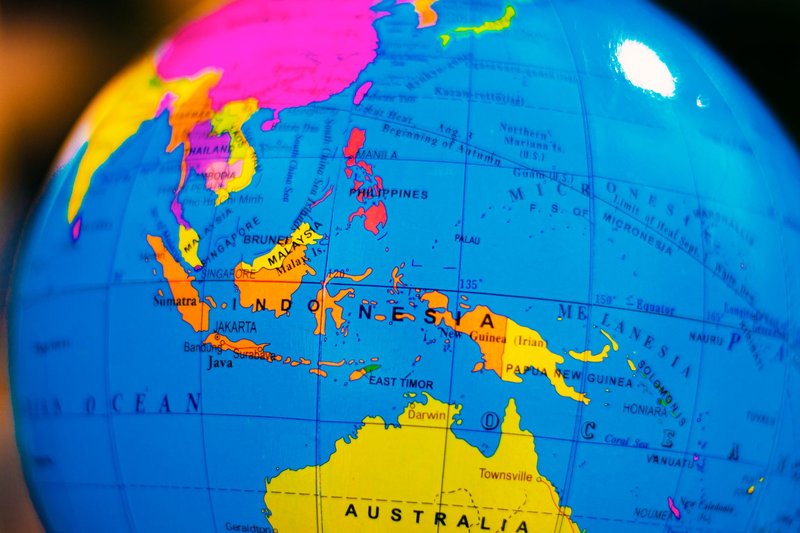
Oceania has 14 fully sovereign countries plus two self-governing states in free association with New Zealand, and each one has its own capital. Here’s the full list, grouped by sub-region:
- Australasia: Canberra (Australia), Wellington (New Zealand)
- Melanesia: Suva (Fiji), Port Moresby (Papua New Guinea), Honiara (Solomon Islands), Port Vila (Vanuatu)
- Micronesia: Tarawa (Kiribati), Palikir (Federated States of Micronesia), Ngerulmud (Palau), Majuro (Marshall Islands), Yaren (Nauru)
- Polynesia: Apia (Samoa), Nukuʻalofa (Tonga), Funafuti (Tuvalu), Avarua (Cook Islands), Alofi (Niue)
Keep reading for the details, the outliers, and which of these capitals you can walk across in under twenty minutes.
Table of Contents
Most “capitals of Oceania” pages you’ll find online are Wikipedia tables — accurate, but built for lookup, not for actually understanding the region. Oceania isn’t one landmass with sixteen cities scattered across it. It’s four distinct sub-regions, each with its own colonial history, geography, and reason its capital ended up where it did. Some of these capitals were purpose-built compromises. Some are atolls a few feet above sea level. One of them technically isn’t even an official capital.
Here’s the list, organized the way the region actually breaks down.
Australasia
The two heavyweight economies of the region, and the only two Oceania capitals most people could name without checking.
Canberra, Australia — Not Sydney, and that’s the whole story. When Australia federated in 1901, Sydney and Melbourne both wanted to be the capital, and neither side would concede. The compromise was to build a brand-new city roughly halfway between them. American architect Walter Burley Griffin won the international design competition in 1912, and Canberra grew up around an artificial lake that still carries his name. It’s a planned city in the most literal sense — laid out in geometric zones, low-rise by law, and still smaller in population than several Sydney suburbs.
Wellington, New Zealand — The world’s southernmost national capital, sitting at the bottom of the North Island where Cook Strait funnels wind straight through downtown. Locals call it “Windy Wellington” for good reason; average wind speeds here are among the highest of any capital city on the planet. It replaced Auckland as capital in 1865, largely because it sat closer to the geographic center of the country and was easier for South Island politicians to reach.
Melanesia
Melanesia’s capitals share a pattern: colonial-era port cities that grew because ships needed somewhere to dock, not because anyone planned a metropolis.
Suva, Fiji — Built around one of the best natural harbors in the South Pacific, which is exactly why the British moved Fiji’s colonial capital here from Levuka in 1877. Suva is also one of the wettest capital cities on Earth, catching moisture off the Koro Sea most of the year. It functions as the de facto hub for the entire South Pacific — regional bodies, foreign embassies, and university campuses cluster here because there’s simply nowhere else in Melanesia with the same infrastructure.
Port Moresby, Papua New Guinea — PNG’s terrain is so mountainous and roadless that its own capital has no highway connection to the rest of the country. You fly to Port Moresby, or you don’t get there. That isolation shapes everything about how the country runs, from freight costs to how disconnected the capital can feel from the highlands provinces it governs.
Honiara, Solomon Islands — Sits on Guadalcanal, the island that gave its name to one of the Pacific theater’s bloodiest WWII campaigns. The city itself only became the capital in 1952, after the war left the old capital, Tulagi, in ruins. Honiara grew out of an American military base — the airstrip the Allies built to retake the island became the core of the city’s infrastructure.
Port Vila, Vanuatu — A former joint French-British colony (the “New Hebrides”), which is why Port Vila still runs on a mix of French and English, plus Bislama, the local creole. The dual colonial legacy shows up in the street signs, the school system, and the fact that Vanuatu didn’t gain independence until 1980 — later than most of its Melanesian neighbors.
Micronesia
This is where the list gets genuinely strange — atoll capitals, a purpose-built government complex with almost no residents, and a country with no legally designated capital at all.
Tarawa (South Tarawa), Kiribati — Kiribati is the only country on Earth that sits in all four hemispheres, its territory scattered across roughly 3.4 million square kilometers of ocean, according to the CIA World Factbook. South Tarawa, the capital atoll, is barely above sea level in places and holds close to half the nation’s entire population on a strip of land you could walk the width of in a few minutes. It was also the site of the Battle of Tarawa in 1943, one of the costliest amphibious assaults of the Pacific War.
Palikir, Federated States of Micronesia — A purpose-built capital on the island of Pohnpei, chosen in 1989 to replace the old colonial center of Kolonia. Palikir was designed to be neutral ground among the FSM’s four states, which is a polite way of saying no single island wanted another island’s town running the show.
Ngerulmud, Palau — One of the least populated capital cities in the world. Palau moved its capital here from Koror in 2006, building a government complex on Babeldaob island specifically to house it. Most Palauans still live and work in Koror, the old capital, which remains the country’s actual commercial and population center — Ngerulmud exists almost entirely to hold government buildings.
Majuro, Marshall Islands — A narrow atoll capital where more than half the Marshall Islands’ population lives, packed onto a strip of land in places barely wider than the road running through it. Like Tarawa and Funafuti, Majuro sits only a few feet above sea level, which makes it one of the most frequently cited examples in conversations about climate-driven relocation.
Yaren, Nauru — Technically, Nauru has no official capital. Yaren is simply where the parliament and government offices sit, and it’s treated as the capital by convention. Nauru itself is the world’s smallest island nation and, per the CIA World Factbook, one of the smallest republics on the planet by both size and population — a single former phosphate-mining island a bit over 21 square kilometers total.
Polynesia
Polynesia’s capitals split into two categories: islands with real elevation and a monarchy or two, and low-lying atolls that show up constantly in discussions about rising sea levels.
Apia, Samoa — Author Robert Louis Stevenson spent his final years here and is buried on Mount Vaea, overlooking the harbor. Apia has a genuinely mixed identity — German colonial administration until World War I, then New Zealand control until independence in 1962, which makes it one of the older independent capitals in the Pacific.
Nukuʻalofa, Tonga — Tonga is the only country in Oceania that was never formally colonized, and Nukuʻalofa is the seat of the region’s last remaining monarchy. The royal palace, a white wooden Victorian-style building from 1867, still sits on the waterfront in the middle of the city.
Funafuti, Tuvalu — Possibly the most cited capital in the world when people talk about climate change and sea level rise. Tuvalu’s highest point sits about 4.5 meters above sea level, and Funafuti’s airstrip doubles as the town’s main public gathering space when planes aren’t landing — soccer games, markets, and evening walks all happen on the runway.
Avarua, Cook Islands — The Cook Islands govern themselves in free association with New Zealand rather than as a fully independent UN member state, which is why you’ll sometimes see them left off “sovereign countries” lists. Avarua, on Rarotonga, still functions like a small national capital in every practical sense — its own parliament, its own currency arrangements, its own passport rules for residency.
Alofi, Niue — One of the smallest capitals on the planet by population, home to a small fraction of Niue’s already tiny population of roughly 1,700 people. Like the Cook Islands, Niue is self-governing in free association with New Zealand, and most Niueans actually live in New Zealand itself rather than on the island.
Quick reference table
| Country | Capital | Sub-region |
|---|---|---|
| Australia | Canberra | Australasia |
| New Zealand | Wellington | Australasia |
| Fiji | Suva | Melanesia |
| Papua New Guinea | Port Moresby | Melanesia |
| Solomon Islands | Honiara | Melanesia |
| Vanuatu | Port Vila | Melanesia |
| Kiribati | Tarawa | Micronesia |
| Micronesia (Federated States of) | Palikir | Micronesia |
| Palau | Ngerulmud | Micronesia |
| Marshall Islands | Majuro | Micronesia |
| Nauru | Yaren | Micronesia |
| Samoa | Apia | Polynesia |
| Tonga | Nukuʻalofa | Polynesia |
| Tuvalu | Funafuti | Polynesia |
| Cook Islands | Avarua | Polynesia |
| Niue | Alofi | Polynesia |
The superlatives
If you only remember a handful of facts from this list, these are the ones worth keeping:
- Smallest capital by population: Ngerulmud, Palau — built to hold government offices, not people.
- Most remote from its own country: Port Moresby, Papua New Guinea — no road links to the rest of the nation.
- Newest capital: Ngerulmud again, formally established in 2006.
- Most at risk from sea level rise: Funafuti, Tuvalu, and Majuro, Marshall Islands, both sit a few meters above the ocean at their highest points. The CIA World Factbook lists Tuvalu’s highest elevation at just 4.5 meters.
- Only capital without official status: Yaren, Nauru — a seat of government by convention, not by law.
Oceania’s capitals don’t follow one template because the region itself never had one. Some are colonial leftovers, some are political compromises, and a couple exist mostly on paper. That’s the actual story behind the list — not just which city goes with which country, but why each one ended up being the answer.