Google “how many UNESCO World Heritage Sites does Brazil have” and you’ll get a different answer depending on which page loads first: 20, 22, 24, 26. Some of that is outdated pages that never got updated after a new inscription. Some of it is people counting a single multi-country site as either one listing or two. Either way, it’s a bad way to start planning a trip around them.
The real number, per UNESCO’s official register for Brazil, is 23. Fifteen cultural, seven natural, one mixed. Here’s the complete list, grouped the way UNESCO itself groups them, with the practical detail — nearest airport, best season, how much time to actually budget — that most reference pages skip entirely.
TL;DR: Brazil has 23 UNESCO World Heritage Sites: 15 cultural (colonial towns, modernist landmarks, archaeological sites), 7 natural (rainforest, wetland, and coastal reserves), and 1 mixed site that counts as both. They cluster geographically into a handful of regions, which matters more than the raw list once you’re actually booking flights.
Table of Contents
- How Many World Heritage Sites Does Brazil Actually Have?
- Why the Count Keeps Shifting
- Cultural World Heritage Sites in Brazil
- Natural World Heritage Sites in Brazil
- Brazil’s One Mixed World Heritage Site
- Grouping the Sites Into an Actual Trip
How Many World Heritage Sites Does Brazil Actually Have?
Twenty-three, as of the most recent inscription cycle. That breaks down as 15 cultural sites, 7 natural sites, and 1 mixed site — the Paraty and Ilha Grande property, which is the only one in Brazil recognized for both its cultural and natural significance at once.
The confusion in search results usually comes from one of three things: a page that was written before the most recent addition, a source that splits the Jesuit Missions of the Guaranis into “Brazil’s site” and “Argentina’s site” separately (it’s one transboundary listing, shared with Argentina), or a tourism blog that folds in Brazil’s Tentative List — sites nominated but not yet inscribed — as if they already count.
Why the Count Keeps Shifting
UNESCO’s World Heritage List is a living document. Sites get added most years at the annual World Heritage Committee session, and older articles simply don’t get revised afterward. Ouro Preto was Brazil’s first inscription back in 1980; the most recent addition, Sítio Roberto Burle Marx in Rio de Janeiro, came decades later in 2021. A page written in 2019 will confidently tell you Brazil has 21 sites, and it isn’t wrong — it’s just frozen in time.
There’s also a real methodological split. Some directories count the Jesuit Missions as two entries because the ruins sit on both sides of the Brazil-Argentina border. UNESCO counts it once, as a single transnational property. That single choice accounts for a chunk of the “20 vs. 22” discrepancy you’ll see across different lists.
Cultural World Heritage Sites in Brazil
Brazil’s cultural sites skew heavily toward colonial-era towns from the gold and sugar booms, plus a cluster of 20th-century modernist landmarks that reflect the country’s more recent architectural ambitions.
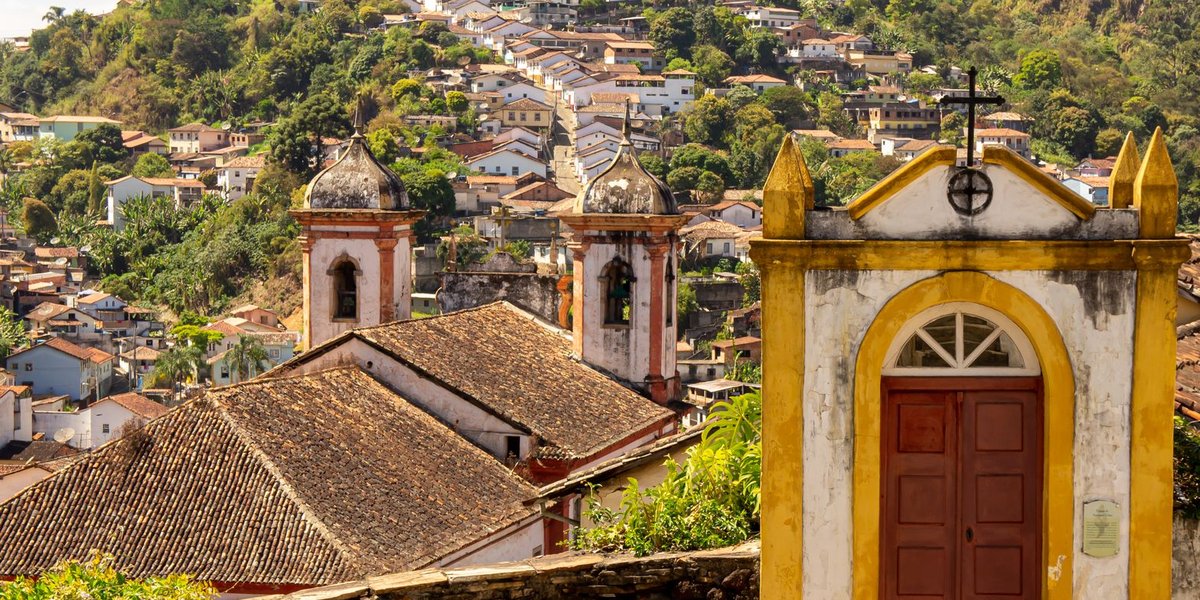
1. Historic Town of Ouro Preto — Brazil’s first inscription, and still one of its best. The former gold-rush capital of Minas Gerais is packed with baroque churches carved by Aleijadinho, the mixed-race sculptor whose work defines Brazilian baroque. Get there: fly into Belo Horizonte (Confins), then a 90-minute drive. Best time: April–September, dry season. Time needed: a full day, two if you want the surrounding towns.
2. Historic Centre of Olinda — Hillside colonial town next to Recife, known for cobblestone streets, pastel façades, and one of Brazil’s most raucous pre-Lenten Carnival scenes. Get there: Recife airport, then a 20-minute taxi. Best time: outside Carnival (Feb–March) if you want it quiet; during it if you don’t. Time needed: half a day.
3. Ruins of São Miguel das Missões (Jesuit Missions of the Guaranis) — The Brazilian half of a transnational site shared with Argentina: red sandstone ruins of a 17th-century Jesuit reduction where Guarani communities and missionaries built a self-governing settlement that outlasted colonial persecution by decades. Get there: nearest airport is Santo Ângelo, Rio Grande do Sul. Best time: April–October. Time needed: half a day, remote enough that most visitors combine it with the Argentine ruins across the border.
4. Historic Centre of Salvador de Bahia — Brazil’s first colonial capital, and arguably its most Afro-Brazilian city culturally. The Pelourinho district’s technicolor buildings sit atop a former slave market square, a history the city addresses more directly now than it used to. Get there: Salvador international airport. Best time: year-round, avoid peak Carnival crowds unless that’s the point. Time needed: two to three days.
5. Sanctuary of Bom Jesus do Congonhas — A pilgrimage church outside Belo Horizonte, famous for Aleijadinho’s twelve soapstone Old Testament prophet statues lining the churchyard steps — carved, according to tradition, after he’d lost the use of his hands to illness and had chisels strapped to his wrists. Get there: 90 minutes from Belo Horizonte, often paired with Ouro Preto. Best time: dry season, April–September. Time needed: two to three hours.
6. Brasília — The only 20th-century planned capital on the World Heritage List, built from scratch in under four years and inscribed just 27 years after it opened — unusually fast for UNESCO, which typically wants more historical distance. Oscar Niemeyer’s curved concrete buildings still look like nothing else in the country. Get there: Brasília international airport, direct from most major Brazilian cities. Best time: May–September, dry season. Time needed: a full day for the main civic axis.
7. Serra da Capivara National Park — Technically a national park, but inscribed as a cultural site because of its rock art: thousands of paintings up to 25,000 years old that have fueled a genuine academic fight over when humans first reached the Americas. Get there: fly into Petrolina, then drive roughly three hours to São Raimundo Nonato. Best time: May–September, dry season — this is caatinga scrubland, brutally hot otherwise. Time needed: two full days to see multiple sites within the park.
8. Historic Centre of São Luís — A Portuguese colonial center in Maranhão with a distinctly French footprint — it’s the only Brazilian city founded by the French, in 1612, before Portugal took it over. Known for hand-painted Portuguese azulejo tiles covering entire building façades. Get there: São Luís airport. Best time: July–December, drier months. Time needed: a full day.
9. Historic Centre of Diamantina — A diamond-mining boomtown in the Minas Gerais highlands, birthplace of former Brazilian president Juscelino Kubitschek, who later commissioned Brasília. Get there: drive from Belo Horizonte, roughly 3.5 hours. Best time: April–September. Time needed: a full day.
10. Historic Centre of the Town of Goiás — A gold-rush town in the central highlands that lost its capital status to Goiânia in 1937 and, as a result, kept its 18th-century layout largely intact instead of getting modernized over. Get there: roughly two hours from Goiânia airport. Best time: May–September. Time needed: a full day.
11. Historic Centre of the Town of São Cristóvão — Brazil’s fourth-oldest city, in Sergipe, with a well-preserved colonial square that predates most of what tourists associate with “colonial Brazil.” Get there: 25 minutes from Aracaju airport. Best time: year-round. Time needed: half a day.
12. Rio de Janeiro: Carioca Landscapes Between the Mountain and the Sea — An unusual inscription: it protects the relationship between Rio’s built environment and its natural setting — Sugarloaf, Corcovado, Tijuca Forest, Copacabana — rather than any single monument. Get there: Rio’s Galeão or Santos Dumont airports. Best time: April–June or September–November, shoulder seasons. Time needed: at least three days to cover the full designated area.
13. Pampulha Modern Ensemble — A lakeside complex in Belo Horizonte designed by a young Oscar Niemeyer in 1943, before Brasília made him famous. The Church of São Francisco de Assis, with its swooping concrete roof, scandalized the Catholic archdiocese enough that it wasn’t consecrated for over a decade. Get there: within Belo Horizonte, 20 minutes from downtown. Best time: year-round. Time needed: half a day.
14. Valongo Wharf Archaeological Site — Excavated in 2011 during subway construction, this Rio dock is where an estimated 900,000 enslaved Africans were forcibly landed in Brazil — more than any single site in the Americas. It’s a somber, essential counterpoint to Rio’s beach-postcard image. Get there: downtown Rio, near the port. Best time: year-round. Time needed: one to two hours.
15. Sítio Roberto Burle Marx — The former home and working garden of Brazil’s most influential landscape architect, who designed Copacabana’s wave-pattern sidewalks. The property functions as a living plant collection, with roughly 3,500 species he cultivated over five decades. Get there: Barra da Tijuca, Rio de Janeiro, visits by scheduled tour only. Best time: year-round, book ahead. Time needed: two to three hours.
Natural World Heritage Sites in Brazil
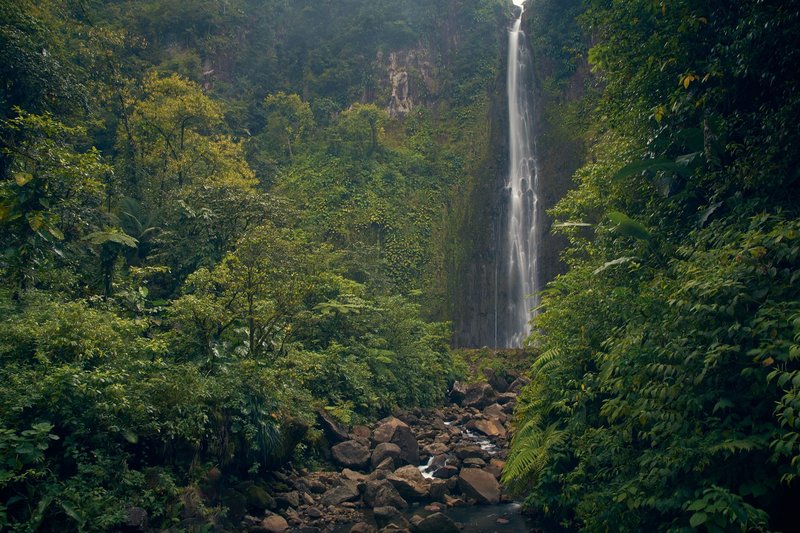
Brazil’s natural sites protect a disproportionate share of the planet’s biodiversity — the Amazon, the Pantanal wetlands, and the Atlantic Forest corridor between them are each internationally recognized as biodiversity hotspots in their own right.
16. Iguaçu National Park — Home to Iguaçu Falls, a system of roughly 275 individual waterfalls spanning nearly 3 kilometers, wider by a significant margin than Niagara. The Brazilian side gives you the panoramic view; the Argentine side across the border gets you closer to the water. Get there: Foz do Iguaçu airport. Best time: year-round, though the falls run fuller after the rainy season (November–March). Time needed: one full day.
17. Discovery Coast Atlantic Forest Reserves — Protected forest fragments along the southern Bahia coast, near where Portuguese explorers first landed in Brazil in 1500. Get there: Porto Seguro airport. Best time: September–March. Time needed: a day trip from Porto Seguro or Trancoso.
18. Atlantic Forest Southeast Reserves — A larger reserve complex spanning São Paulo and Paraná states, protecting one of the most fragmented and endangered rainforest biomes on the planet — less than 15% of the original Atlantic Forest still stands. Get there: São Paulo or Curitiba airports, then drive to specific reserve entrances. Best time: April–September, drier months. Time needed: two or more days depending on which reserve unit you visit.
19. Central Amazon Conservation Complex — The largest protected area in the Amazon Basin, centered on the meeting point of blackwater and whitewater rivers near Manaus, and home to pink river dolphins, jaguars, and manatees. Get there: Manaus international airport, then boat transfer. Best time: July–November, low-water season, when wildlife concentrates near remaining water sources. Time needed: three to five days minimum given the travel logistics.
20. Pantanal Conservation Area — A slice of the world’s largest tropical wetland, recognized under the Ramsar Convention for its wetland significance as well as by UNESCO, and generally considered the best place on Earth to actually see a wild jaguar rather than just hope for one. Get there: Cuiabá airport, then a lodge transfer, often several hours by road. Best time: July–September, dry season, when wildlife clusters around shrinking water sources. Time needed: three to four days.
21. Brazilian Atlantic Islands: Fernando de Noronha and Atol das Rocas Reserves — A volcanic archipelago 220 miles off Brazil’s northeast coast with some of the clearest water in the South Atlantic and a strict daily visitor cap enforced through an environmental preservation tax. Get there: Fernando de Noronha has its own small airport, connecting via Recife or Natal. Best time: August–December, calmer seas and better underwater visibility. Time needed: four to five days to justify the trip and tax.
22. Cerrado Protected Areas: Chapada dos Veadeiros and Emas National Parks — Two separate parks protecting Brazil’s tropical savanna biome, known for table-top mountains, natural crystal-clear pools, and a firefly mating display in Emas so distinctive that biologists travel there specifically to study it. Get there: Chapada dos Veadeiros is roughly 3.5 hours from Brasília; Emas is more remote, near Mineiros, Goiás. Best time: May–September, dry season, for both hiking and firefly viewing (which peaks around November, just outside dry season). Time needed: two to three days per park.
Brazil’s One Mixed World Heritage Site
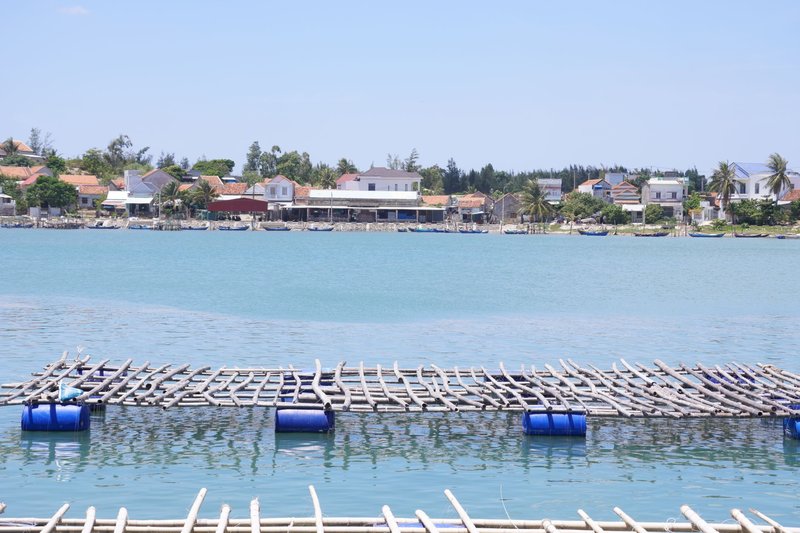
23. Paraty and Ilha Grande – Culture and Biodiversity — The only Brazilian site inscribed as mixed, meaning UNESCO recognized it for cultural and natural criteria simultaneously. Paraty is a preserved 18th-century gold-route port town between Rio and São Paulo; Ilha Grande, just offshore, protects a stretch of largely intact Atlantic Forest and coastline that development skipped mainly because it spent decades as a prison-island quarantine zone. Get there: roughly 4 hours by road from either Rio or São Paulo. Best time: April–October, outside the wettest summer months. Time needed: two to three days to cover both the town and the island.
Grouping the Sites Into an Actual Trip
Most lists stop at 23 bullet points. That’s not actually how you’d plan around them, because these sites cluster geographically into a few workable regions rather than spreading evenly across a country the size of the continental US.
Minas Gerais colonial circuit: Ouro Preto, Congonhas, and Diamantina sit within a few hours of Belo Horizonte and each other. Pampulha is inside Belo Horizonte proper. Four sites, one regional base, roughly four days.
Rio de Janeiro cluster: the Carioca Landscapes, Valongo Wharf, and Sítio Roberto Burle Marx are all within the city. Paraty and Ilha Grande are a half-day drive south. Five sites — nearly a quarter of the national list — reachable from a single airport.
Northeast heritage route: Salvador, Olinda, São Luís, and São Cristóvão string along the coast, though the distances between them are large enough that this cluster works better as separate trips than one continuous route.
The remote naturalist trip: Central Amazon, Pantanal, and Fernando de Noronha don’t cluster with anything — each requires its own dedicated trip, its own dry-season timing, and its own budget. Treat them as standalone expeditions rather than stops on a broader itinerary.
Twenty-three sites, four practical groupings. That’s the version of this list that’s actually useful once you close the browser tab and open a flight search.