Table of Contents
- TLDR
- The short colonial timeline
- Eritrea: the deepest imprint
- Somalia: an elite language that lost its base
- Ethiopia: five years, a thinner legacy
- Libya: erased faster than the others
- Country-by-country comparison
- The loanwords that outlasted the empire
- Where the connection lives now
TLDR
Four African countries carry Italy’s colonial fingerprint: Libya, Eritrea, Ethiopia, and Somalia. Italian never became a native first language for the general population in any of them — it was the language of administration, school, and commerce, spoken as a second language by an educated minority. Eritrea kept the deepest connection, with Italian-run schools operating in Asmara into the 2000s and a language institute reopened there in 2023. Somalia had the widest reach at its peak, with Italian as the university’s teaching language into the 1980s, but almost none of that survives among people under 50. Ethiopia’s Italian period lasted only five years (1936–1941), so the linguistic mark is the thinnest of the four. Libya’s Italian community was expelled outright in 1970, and its Italian speakers today number in the low hundreds, mostly descendants of that diaspora reunion program. What actually endures everywhere: loanwords baked into daily vocabulary, Italian-style coffee culture, and diaspora communities in Italy that keep the connection alive from the other direction.
The short colonial timeline
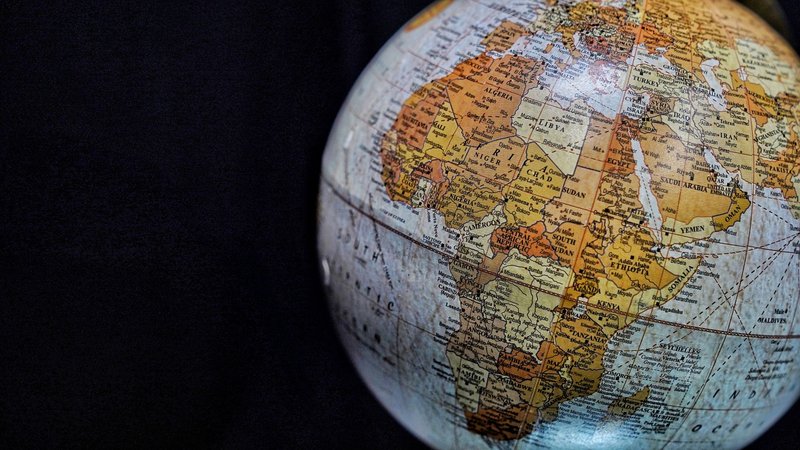
Italy came to African colonization late and left it in worse shape than it found it. Unlike Britain or France, Italy never built a colonial administration that outlasted the empire — it lost every African territory within a five-year military collapse between 1941 and 1943, then formally renounced its claims in the 1947 Paris Peace Treaty.
The territories, in order of acquisition: Eritrea (from 1890), Italian Somaliland (from 1889, formalized 1908), Libya (from 1911), and Ethiopia — briefly, after the Second Italo-Ethiopian War, folded into “Italian East Africa” alongside Eritrea and Somaliland from 1936 to 1941. British forces broke Italian control of East Africa after the Battle of Gondar in November 1941, though guerrilla resistance dragged into 1943. Libya fell the same year, with Allied administration taking over from 1943 until Libyan independence in 1951.
Somalia is the outlier on the timeline. Italy didn’t fully lose it — the UN handed it back as a trusteeship in 1950, on the condition that Italy prepare it for self-rule within a decade. That trusteeship, and the Italian-medium schooling that came with it, ran until Somalia’s independence on July 1, 1960.
None of that history is contested. What’s missing from most “Italian-speaking countries” roundups is what happened to the language after the flags came down — and that’s where the four countries actually diverge.
Eritrea: the deepest imprint
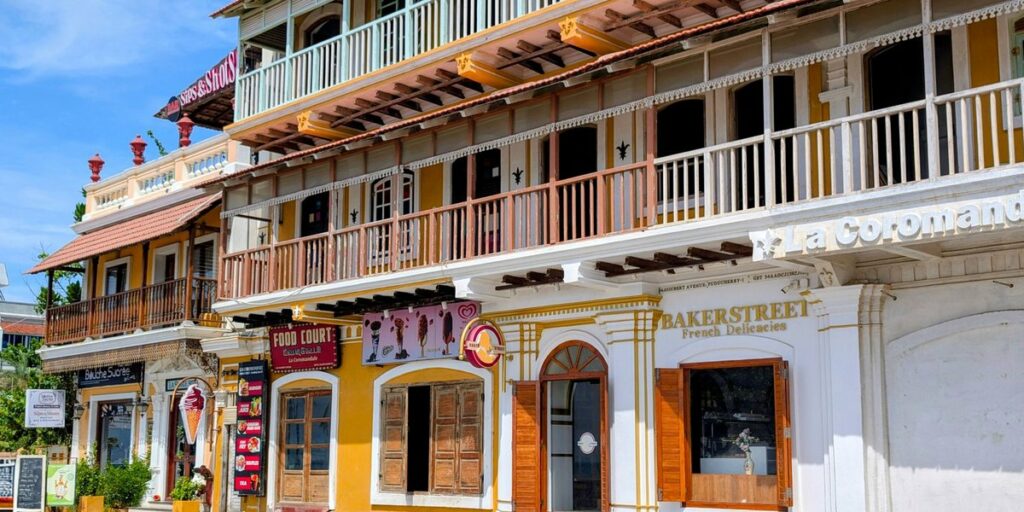
Eritrea was Italy’s first African colony and its longest-held, and the linguistic residue shows it. Italian functioned as a working second language for Eritrea’s urban, educated class well past independence in 1993, and Asmara — the capital — is still an Art Deco open-air museum of Italian-built cinemas, garages, and cafés.
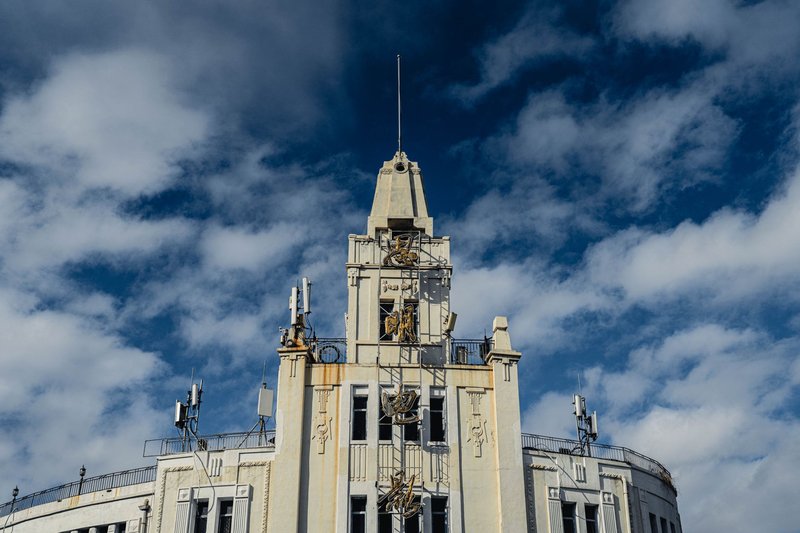
The clearest evidence of staying power: the Istituto Italiano Statale Omnicomprensivo di Asmara, a full Italian curriculum school, operated continuously for decades before finally closing in 2020 amid funding disputes between Rome and Asmara. That closure looked like the end of the line — until 2023, when the Italian embassy and the Dante Alighieri Society reopened free Italian courses at Asmara’s “Casa degli Italiani,” reporting strong local demand from Eritreans with no direct colonial-era connection to the language at all. It’s a rare case of a colonial language getting a second life on its own merits, not out of nostalgia.
Somalia: an elite language that lost its base
Somalia had, on paper, the most Italian-fluent population of any of the four territories at independence — and today it has the least to show for it among younger generations. Italian was the sole medium of instruction at Somali National University into the 1980s, covering nine of twelve faculties. A whole generation of Mogadishu’s professional class studied Dante in the original and drove Fiats around town.
Then came the 1969 coup, the 1991 state collapse, and three decades where keeping schools open at all took priority over which language they ran in. Italian didn’t get replaced by policy so much as it stopped getting taught. What’s left is generational: people over roughly 55 who came up through the old system still speak it, and the language barely registers below that line. A 2022 push by an Italian NGO to reintroduce Italian in Somali schools was publicly criticized in Somali media as a colonial-language revival — a reminder that the language still carries political weight there, decades after anyone last needed it to get a university degree.

Ethiopia: five years, a thinner legacy
Ethiopia belongs on this list for a different reason than the other three: it was never a settled colony in the way Eritrea or Somalia were. Italy’s occupation, following the 1935–36 invasion, lasted five years before British-led forces restored Emperor Haile Selassie in 1941 — Ethiopia is also the only one of the four that had already handed Italy a defeat once before, at the Battle of Adwa in 1896, which delayed the colonization by four decades.
Five years wasn’t enough to build the kind of institutional Italian presence that took root in Eritrea over five decades. Italian loanwords entered Amharic, but in smaller numbers than in Tigrinya or Somali, and no equivalent of Asmara’s Italian school network ever became permanent in Addis Ababa. What Ethiopia does share with its neighbors is the diaspora side of the relationship: Ethiopian-Italian trade and cultural ties have stayed active well beyond what the short occupation would predict, largely carried by post-1991 migration rather than colonial-era institutions.
Libya: erased faster than the others
Libya’s Italian chapter ended more abruptly, and more completely, than any of the others. At its peak in the late 1930s, roughly 110,000 Italian settlers lived in Libya — about 13% of the population — concentrated in Tripoli and Benghazi. That community survived the 1943 Allied takeover and Libya’s 1951 independence more or less intact, still running businesses and farms two decades later.
Then, in July 1970, Muammar Gaddafi’s government issued a decree confiscating Italian-owned property and gave the roughly 20,000 remaining Italian residents until October to leave the country. It was a clean break, not a fade-out. By 2006, the Italian embassy in Tripoli counted only about 1,000 original Libyan-Italians left, mostly elderly. Libya’s Arabic absorbed a set of Italian technical and everyday loanwords — car parts, food terms, construction vocabulary — but there’s no living population of Italian speakers there in any meaningful number, and hasn’t been for over fifty years.
Country-by-country comparison
| Country | Colonial period | Italian lost official status | Peak Italian presence | Estimated Italian speakers today |
|---|---|---|---|---|
| Eritrea | 1890–1941 | 1941 (military defeat); 1947 (treaty) | Urban elite, full school system into 2020 | Tens of thousands, mostly 50+ and urban |
| Somalia | 1889–1941, trusteeship 1950–1960 | 1960 (independence) | University-educated class through the 1980s | Small, concentrated in 55+ generation |
| Ethiopia | 1936–1941 | 1941 | Limited, five-year occupation only | Very small, mostly loanword-level influence |
| Libya | 1911–1943 | 1943 (Allied takeover); 1970 (expulsion) | ~110,000 settlers, 1930s | Well under 1,000, mostly elderly diaspora returnees |
The loanwords that outlasted the empire
The language didn’t survive as a spoken tongue for most people, but it survived as vocabulary — the part of a colonial language that’s hardest to scrub out because nobody thinks of it as foreign anymore. Tigrinya picked up words like makina (car, from macchina), banka (bank, from banca), and siminti (cement, from cemento). Research on Somali’s Italian and English borrowings documents a much larger set absorbed into Somali, spanning administration, food, and mechanics — a reflection of how much deeper Italian penetrated daily Somali life at its peak compared with Amharic, which took on noticeably fewer terms.
None of this requires anyone to have studied Italian. That’s the point — loanwords are the residue that survives even after the schools close and the last fluent generation dies out.
Where the connection lives now
The most active Italian-Africa language connection today doesn’t run through classrooms in Asmara or Mogadishu at all — it runs through Italy itself. Eritrean and Ethiopian migration to Italy accelerated sharply during Eritrea’s independence war (1961–1991) and its aftermath, and Italy became a preferred destination specifically because of the existing historical and family ties. Second-generation Eritrean-Italians in Milan now navigate an identity that runs in the opposite direction from the colonial relationship — Italian as a first language learned in Italy, with Tigrinya or Amharic as the inherited second one.
That reversal is worth sitting with. A century ago, Italian arrived in the Horn of Africa as an imposed administrative language for a colonized population. Today, in Milan and Rome, it’s Tigrinya and Amharic doing the surviving as heritage languages, carried by communities whose grandparents were on the other side of that original arrangement. The map of “Italian-speaking Africa” was never really about Africa holding onto Italian — it was about how briefly, and how unevenly, the language ever took hold there in the first place.