Table of Contents
- European, Not Brazilian
- Quick-Reference Table
- At the Airport or Train Station
- At the Café
- At the Restaurant
- At the Pharmacy
- Checking Into (and Out of) Your Hotel
- Etiquette That Actually Matters
- False Friends That Will Trip You Up
- When Your Phrasebook Fails, Your Phone Won’t
- Take It With You
European, Not Brazilian
Type “learn Portuguese” into any app store and you’ll get Brazilian Portuguese by default — different vowel sounds, different slang, a completely different rhythm. If you’re heading to Lisbon or Porto and not São Paulo, that’s the wrong dialect. European Portuguese swallows unstressed vowels (Portuguese speakers famously sound like they’re speaking with their mouths half-closed), uses “tu” and “você” differently than Brazilians do, and has its own vocabulary for everyday things — a bus is an “autocarro” here, not an “ônibus.”
Every phrase below is European Portuguese, the version you’ll actually hear on the street.
Quick-Reference Table
Bookmark this section. It’s the ten phrases that get you through 90% of tourist interactions.
| English | Portuguese | Say it like |
|---|---|---|
| Hello | Olá | oh-LAH |
| Please | Por favor | poor fah-VOR |
| Thank you (said by a man) | Obrigado | oh-bree-GAH-doo |
| Thank you (said by a woman) | Obrigada | oh-bree-GAH-dah |
| Excuse me / Sorry | Desculpe | desh-KOOL-peh |
| Do you speak English? | Fala inglês? | FAH-lah een-GLEHSH |
| How much is it? | Quanto custa? | KWAN-too KOOSH-tah |
| The bill, please | A conta, se faz favor | ah KON-tah seh fash fah-VOR |
| Where is the bathroom? | Onde é a casa de banho? | ON-jeh eh ah KAH-zah deh BAH-nyoo |
| I don’t understand | Não percebo | now per-SEH-boo |
Note that “obrigado” changes with the speaker’s gender, not the listener’s — a woman always says “obrigada,” regardless of who she’s thanking. It’s one of the first things that trips up beginners, and locals notice when you get it right.
At the Airport or Train Station
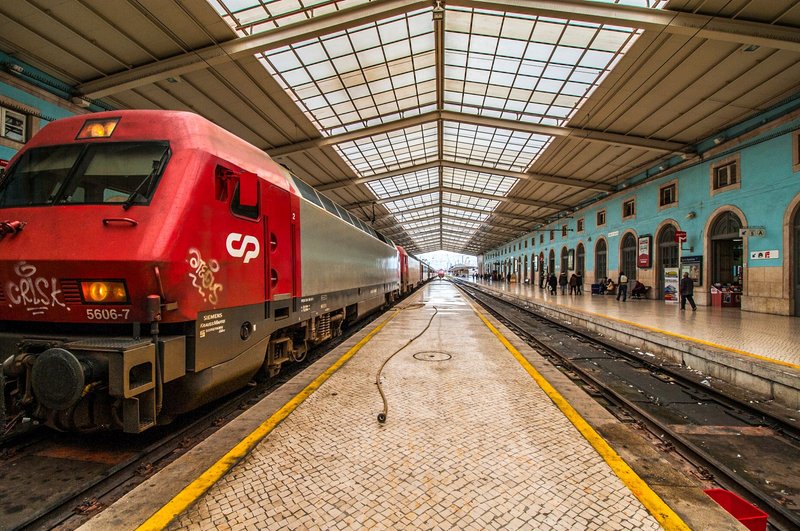
Portuguese train stations post departures on large boards but announce platform changes only in Portuguese, so knowing a handful of transit words saves real stress.
- Platform — Cais (kaish)
- Ticket — Bilhete (bee-LYET)
- Departure / Arrival — Partida / Chegada (par-TEE-dah / sheh-GAH-dah)
- Is this the train to Porto? — Este é o comboio para o Porto? (ESHT eh oo kom-BOY-oo PAH-rah oo POR-too)
- One ticket to Lisbon, please — Um bilhete para Lisboa, se faz favor (oom bee-LYET PAH-rah leezh-BOH-ah seh fash fah-VOR)
Portugal calls a train a “comboio,” not the Spanish “tren” — a small but common mix-up for anyone bouncing between the two countries. CP, the national rail operator, runs a bilingual app and website, which is worth downloading before you land since ticket machines at smaller stations are Portuguese-only.
At the Café
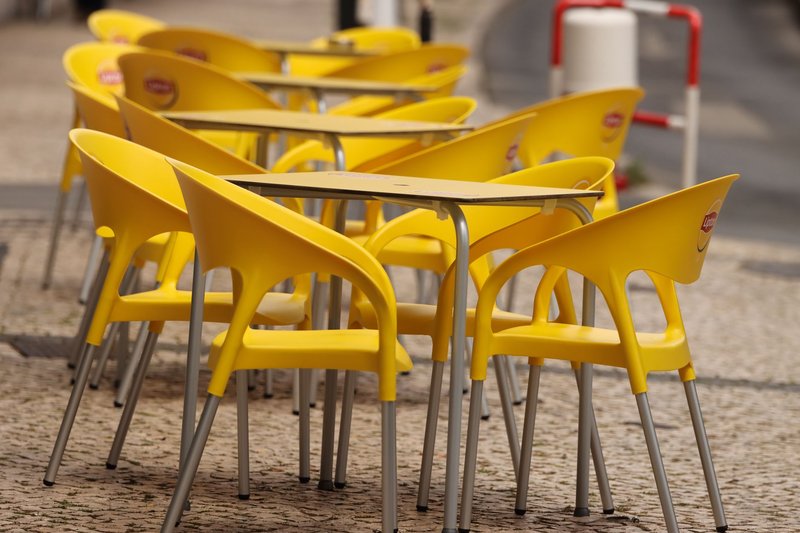
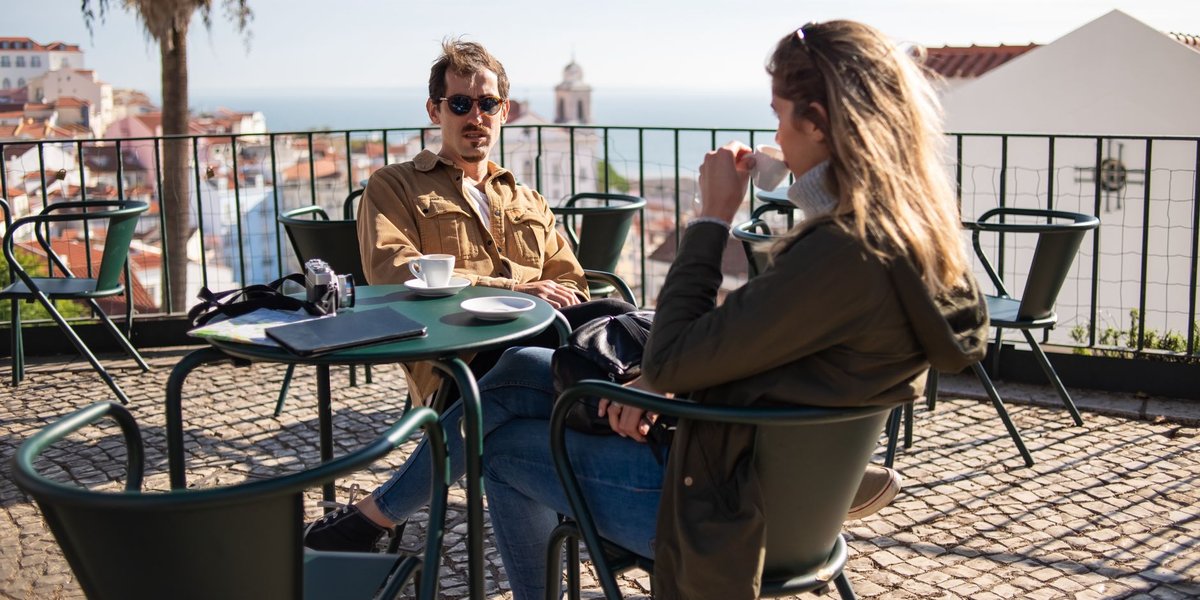
Coffee culture here has its own vocabulary, and it changes depending on which city you’re in — this is the regional quirk almost no phrasebook mentions. Order a small, strong espresso in Lisbon and locals call it a “bica.” Ask for the same drink in Porto and you’ll get blank stares unless you say “cimbalino,” a name that stuck from the old Cimbali espresso machines. Both mean the same thing: a shot of espresso, no milk.
- Coffee (Lisbon term for espresso) — Uma bica (OO-mah BEE-kah)
- Coffee (Porto term for espresso) — Um cimbalino (oom seem-bah-LEE-noo)
- Coffee with a little milk — Um garoto (oom gah-ROH-too)
- Latte-style coffee — Uma meia de leite (OO-mah MAY-ah deh LAY-teh)
- Pastry case, please, I’ll point — Posso ver os bolos? (POH-soo vehr oosh BOH-loosh)
- To take away — Para levar (PAH-rah leh-VAR)
Standing at the counter is cheaper than sitting at a table — many cafés charge a small seating surcharge, so if you’re in a hurry and price-conscious, drink your bica standing up like the locals do.
At the Restaurant
Restaurant Portuguese rewards a little preparation, because menus rarely translate the good stuff.
- Table for two, please — Uma mesa para dois, se faz favor (OO-mah MEH-zah PAH-rah doysh)
- What do you recommend? — O que recomenda? (oo keh reh-koo-MEN-dah)
- I’m vegetarian — Sou vegetariano/a (soh veh-zheh-tah-ree-AH-noo/nah)
- Water, still/sparkling — Água, sem gás / com gás (AH-gwah sem gash / kom gash)
- The bill, please — A conta, se faz favor (ah KON-tah seh fash fah-VOR)
- It was delicious — Estava delicioso (shTAH-vah deh-lee-see-OH-zoo)
One thing that surprises first-timers: unrequested bread, olives, or cheese (“couvert”) often lands on the table before you’ve ordered anything. It’s not free — you’re charged only for what you eat, and you can wave it away if you don’t want it. Nobody will be offended either way.
At the Pharmacy
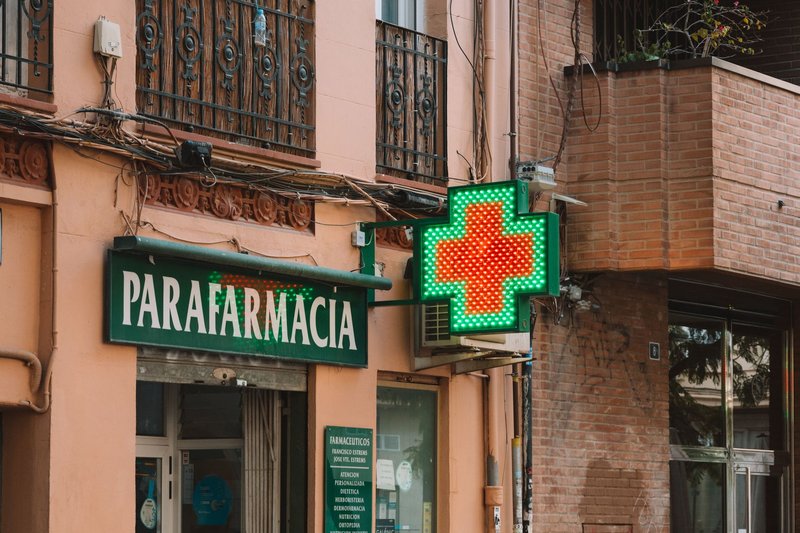
Pharmacies (“farmácias,” marked with a green cross) handle far more than prescriptions in Portugal — pharmacists routinely give advice for minor ailments that would send you to a doctor elsewhere.
- Pharmacy — Farmácia (far-MAH-see-ah)
- I have a headache — Tenho dor de cabeça (TEH-nyoo dor deh kah-BEH-sah)
- I need something for… — Preciso de algo para… (preh-SEE-zoo deh AL-goo PAH-rah)
- Sunscreen — Protetor solar (proh-teh-TOR soh-LAR)
- Do you have this without a prescription? — Tem isto sem receita? (teng EESH-too seng reh-SAY-tah)
If you’re an EU citizen, a European Health Insurance Card covers state-provided medical care in Portugal at local rates — the European Commission’s guidance explains what it covers before you travel. Everyone else should check their travel insurance covers Portugal specifically, since some policies exclude Schengen countries by default.
Checking Into (and Out of) Your Hotel
- I have a reservation — Tenho uma reserva (TEH-nyoo OO-mah reh-ZER-vah)
- What time is checkout? — A que horas é o checkout? (ah keh OH-rash eh oo check-out)
- Is breakfast included? — O pequeno-almoço está incluído? (oo peh-KEH-noo al-MOH-soo shTAH een-kloo-EE-doo)
- Could you call me a taxi? — Pode chamar-me um táxi? (POHD shah-MAR-meh oom TAK-see)
- Is there Wi-Fi? — Há Wi-Fi? (ah wai-fai)
Front desk staff at hotels and mid-range guesthouses speak English at a near-universal rate in tourist areas, so this section matters less for survival and more for the goodwill that comes from trying.
Etiquette That Actually Matters
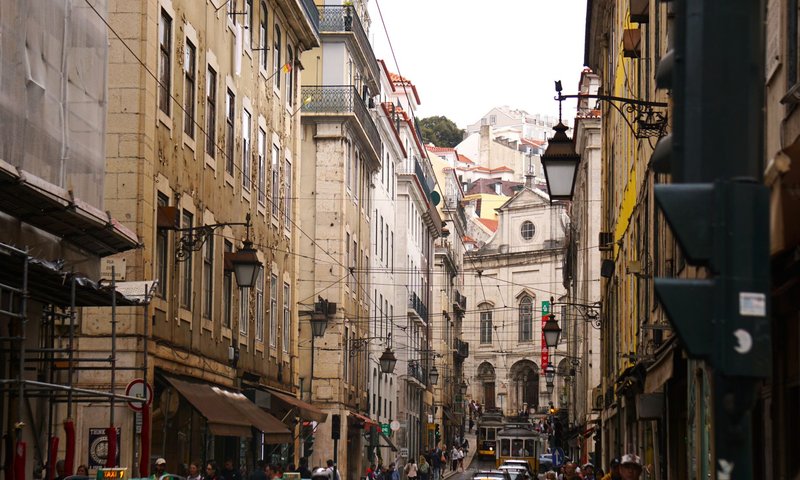
Skip the grammar and get the social cues right instead — this is what actually reads as respectful.
Greetings: Two kisses on the cheek (starting right) between women, and between men and women who already know each other. A handshake for first meetings or business settings. Men greeting men shake hands, they don’t kiss.
Obrigado vs. obrigada: The word changes based on the speaker’s gender, never the listener’s. Get this backwards and you’ll be corrected gently, more than once.
Tipping: Not obligatory and not expected the way it is in the US. Rounding up the bill or leaving 5–10% for good restaurant service is generous and appreciated, not required. Taxi drivers and cafés don’t expect anything extra. Portugal’s official tourism authority publishes broader trip-planning guidance if you want country-specific norms beyond tipping.
Volume and pace: Portuguese conversation, especially in Lisbon, runs quieter and slower than Spanish or Italian. Matching that register — not talking loudly, not rushing a transaction — goes further than any specific phrase.
Language pride: Portugal is not Spain, and assuming Spanish will get you by (even though many Portuguese understand it) can land as a small insult. Attempting Portuguese first, even badly, lands well. The Instituto Camões, Portugal’s government body for promoting the language abroad, is a legitimate resource if you want to go beyond survival phrases after your trip.
False Friends That Will Trip You Up
Some Portuguese words look like English or Spanish words and mean something else entirely. These cause more confusion than any pronunciation issue.
- Pretendo doesn’t mean “pretend” — it means “I intend to.”
- Puxe on a door (meaning “pull”) looks like “push” to English speakers and sends everyone into the door the wrong way.
- Constipado doesn’t mean constipated — it means you have a cold. Telling a pharmacist you’re “constipado” when you mean congested is a normal, harmless mix-up, but worth knowing in advance.
- Esquisito doesn’t mean exquisite — it means weird or strange.
- Novela isn’t a novel — it’s a soap opera.
None of these will cause real trouble, but recognizing them means you won’t misread a sign or agree to something you didn’t intend to.
When Your Phrasebook Fails, Your Phone Won’t
Memorized phrases get you through predictable moments. For everything else — a pharmacist explaining dosage, a landlord describing a Wi-Fi router, a train conductor announcing a platform change — a translation app is the actual backup plan, not a failure state.
Download the offline Portuguese pack for Google Translate before you leave home; Portugal’s rural regions and the Azores have patchy signal in places. The camera translation feature handles menus and signage instantly, which covers a huge share of what a phrasebook can’t — restaurant menus rarely list every dish a phrasebook anticipates. For anything involving money, medicine, or legal paperwork, don’t rely on a rough translation alone — ask the person to write it down or point to a number.
Take It With You
The phrases above cover the moments that actually happen on a trip to Portugal: getting off a train, ordering a coffee the local way, explaining a headache to a pharmacist, tipping correctly without overdoing it. Print the quick-reference table near the top of this post, fold it into your passport wallet, and you’ve got the ten phrases that carry the most weight without a phone battery to worry about.
Learn “obrigado” or “obrigada” correctly, order your bica like you’ve done it before, and you’ll get warmer service than most tourists — not because the words are magic, but because trying, in the right dialect, still means something in Portugal.