
Belgium doesn’t have a language. It has three, and which one you need changes the moment you cross a regional line you probably can’t see. Pack a phrasebook built for “French” or “Dutch” and you’ll get half the country wrong.
Quick Answer
Flanders (Antwerp, Ghent, Bruges) speaks Dutch. Wallonia (Liège, Namur, the Ardennes) speaks French. Brussels is officially bilingual, French and Dutch both, with English doing most of the actual heavy lifting. A tiny sliver in the east, bordering Germany, speaks German. Learn “hello,” “please,” “thank you,” and “the bill, please” in whichever one applies to where you’re standing, and you’re most of the way there.
Table of Contents
- Which Language Do You Actually Need
- Do Belgians Speak English?
- The Brussels Bilingual Sign Thing, Explained
- Greetings and Small Talk
- Ordering Food and Drink
- Getting Around
- Shopping and Money
- Emergencies
- Bonus: German for the East Cantons
- Three Scripts You’ll Actually Use
- Offline Backup for the Ardennes
Which Language Do You Actually Need
Belgium runs on three official languages split across four language areas: Dutch in the north, French in the south, German in a small eastern strip, and a bilingual French-Dutch zone in Brussels, according to Belgium’s official government portal. Roughly 60% of the population speaks Dutch as a first language, about 39% speaks French, and under 1% speaks German.
Here’s the version that actually matters when you’re planning an itinerary:
- Flanders (Antwerp, Ghent, Bruges, Leuven): Dutch. Locals call it Flemish, which is Dutch with a regional accent and a handful of local words — not a separate language, whatever a guidebook from the 1990s told you.
- Wallonia (Liège, Namur, Charleroi, the Ardennes): French.
- Brussels-Capital Region: Officially both French and Dutch, with French dominant in daily use and English filling most of the gaps a tourist hits.
- The East Cantons (Eupen, Malmedy, St. Vith): German. This region gets skipped by nearly every phrasebook, which is a mistake if you’re driving from Cologne into the Ardennes — you’ll pass through it.
Cross from Flanders into Wallonia and the language switches at the regional border, not gradually. Road signs, restaurant menus, and the language a shopkeeper defaults to all flip. Brussels sits in the middle, technically inside Flanders geographically but administratively its own bilingual island.
Do Belgians Speak English?
In tourist-facing spots — hotels, restaurants, museums, train stations — yes, comfortably. Belgium consistently ranks among the strongest non-native English-speaking countries in Europe, and younger Belgians in particular switch to English easily once they clock an accent.
That doesn’t mean English is the default. Opening with “hello” or “bonjour” in the local language, even badly, changes the tone of the interaction before you’ve said anything else. It signals you know you’re a guest in someone else’s country, not the other way around. A Flemish waiter who gets “spreekt u Engels?” instead of English cold-started will usually warm up fast.
The Brussels Bilingual Sign Thing, Explained
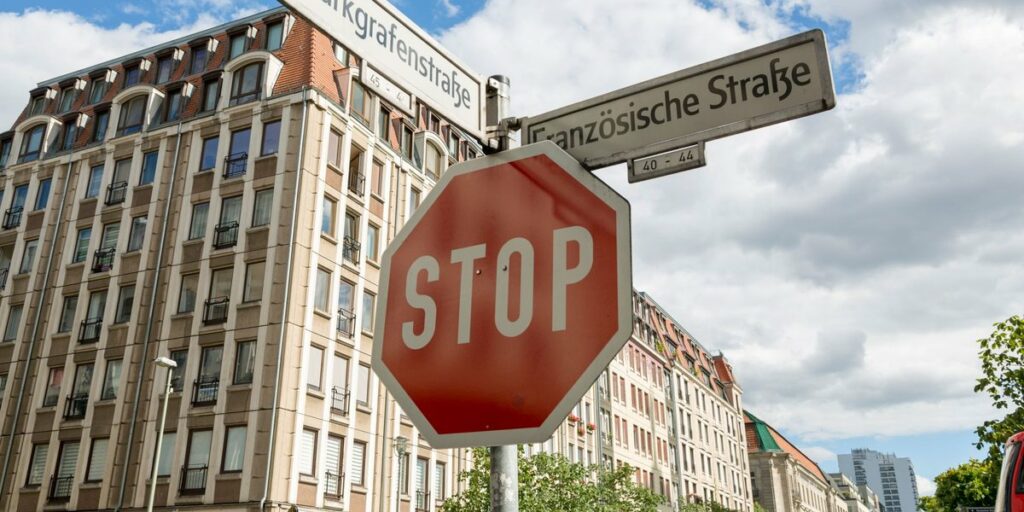
Walk around central Brussels and every street sign carries two names, one French and one Dutch, stacked or side by side. Rue des Sables is also Zandstraat. Grand-Place is also Grote Markt. Neither is a translation error — Brussels legally requires both languages on public signage, a policy that goes back to the 19th century.
It trips up first-time visitors mostly on maps and GPS apps, which sometimes default to one language and leave you hunting for a street that’s right in front of you under a different name. If a direction someone gives you doesn’t match what your map app is showing, check whether you’re comparing a French name against a Dutch one before assuming you’re lost.
Greetings and Small Talk

| English | Dutch (Flanders) | French (Wallonia/Brussels) |
|---|---|---|
| Hello | Hallo (HAH-loh) | Bonjour (bon-ZHOOR) |
| Good evening | Goedenavond (KHOO-duh-nah-vont) | Bonsoir (bon-SWAHR) |
| Please | Alstublieft (ALS-too-bleeft) | S’il vous plaît (seel voo PLEH) |
| Thank you | Dank u wel (dahnk oo vel) | Merci (mehr-SEE) |
| Yes / No | Ja / Nee (yah / nay) | Oui / Non (wee / noh) |
| Excuse me | Pardon (par-DON) | Pardon (par-DOHN) |
| Do you speak English? | Spreekt u Engels? (spraykt oo ENG-uhls) | Parlez-vous anglais? (par-lay voo ahn-GLEH) |
| Goodbye | Tot ziens (tot zeens) | Au revoir (oh ruh-VWAR) |
Dutch speakers will generally understand “merci” — it’s crept into casual Flemish the way “okay” has crept into everything. It doesn’t work the other direction; a French speaker in Wallonia won’t necessarily follow Dutch.
Ordering Food and Drink
Belgian dining runs on a handful of key phrases that cover cafés, frituurs, and sit-down restaurants alike.
| English | Dutch | French |
|---|---|---|
| A table for two | Een tafel voor twee (ayn TAH-fuhl vor tvay) | Une table pour deux (oon TAH-bl poor duh) |
| The menu, please | De kaart, alstublieft (duh kahrt als-too-bleeft) | La carte, s’il vous plaît (lah kart seel voo pleh) |
| I would like… | Ik wil graag… (ik vil khrahkh) | Je voudrais… (zhuh voo-DREH) |
| Fries with mayonnaise | Friet met mayonaise (freet met mah-yo-NEH-zuh) | Frites avec mayonnaise (freet ah-vek mah-yo-NEZ) |
| The bill, please | De rekening, alstublieft (duh RAY-kuh-ning) | L’addition, s’il vous plaît (lah-dee-see-OHN) |
| Cheers | Proost (prohst) | Santé (sahn-TAY) |
A few things no phrasebook tells you: order fries as “frieten” in Flanders or “frites” in Wallonia, never “French fries” — the fries are Belgian, the name is a historical accident nobody here appreciates being reminded of. Asking for a portion “speciaal” gets you mayo, ketchup, and raw onion piled on top, which is the local default, not a novelty topping.
Getting Around

| English | Dutch | French |
|---|---|---|
| Where is…? | Waar is…? (vahr is) | Où est…? (oo eh) |
| Train station | Het station (huht stah-SHON) | La gare (lah gahr) |
| One ticket to… | Een kaartje naar… (ayn KAHR-chuh nahr) | Un billet pour… (uhn bee-YEH poor) |
| Platform | Perron (peh-RON) | Quai (kay) |
| Is this the train to…? | Is dit de trein naar…? (is dit duh trine nahr) | Est-ce le train pour…? (es luh trahn poor) |
Belgium’s train network is small enough that you can cross the entire country in under three hours, and the national operator, SNCB-NMBS, sells tickets at station counters, ticket machines, and ATMs in addition to the app, per its official sales channels page — worth knowing if you land at a station with no working machine and no signal, which happens more than the tourism board would like.
Shopping and Money
| English | Dutch | French |
|---|---|---|
| How much does this cost? | Hoeveel kost dit? (HOO-vayl kost dit) | Combien ça coûte? (kom-bee-AHN sah koot) |
| Do you accept cards? | Accepteert u kaarten? (ahk-sep-TAYRT oo KAHR-tuhn) | Acceptez-vous les cartes? (ahk-sep-tay voo lay kart) |
| Too expensive | Te duur (tuh dewr) | Trop cher (troh shair) |
Contactless is standard almost everywhere, including small chocolate shops and market stalls, so cash isn’t the necessity it used to be. Bring some anyway for rural markets in the Ardennes and small-town frituurs that still run cash-only.
Emergencies
| English | Dutch | French |
|---|---|---|
| Help! | Help! | Au secours! (oh suh-KOOR) |
| Call the police | Bel de politie (bel duh poh-LEE-tsee) | Appelez la police (ah-play lah poh-LEES) |
| I need a doctor | Ik heb een dokter nodig (ik hep ayn DOK-tuhr NOH-dikh) | J’ai besoin d’un médecin (zhay buh-ZWAHN duhn mayd-SAHN) |
| Where is the hospital? | Waar is het ziekenhuis? (vahr is huht ZEE-kuhn-house) | Où est l’hôpital? (oo eh loh-pee-TAHL) |
The general emergency number across Belgium is 112, and it works the same everywhere regardless of which region or language zone you’re in. Say it in English if that’s all you’ve got — emergency dispatchers are trained for exactly that.
Bonus: German for the East Cantons
The German-speaking Community sits in the hills near Eupen, Malmedy, and St. Vith, home to roughly 77,500 people, under 1% of Belgium’s population, according to European Commission education data on the region. It’s easy to drive through without noticing you’ve left French-speaking Wallonia, since the road signs are the only real signal.
| English | German |
|---|---|
| Hello | Guten Tag (GOO-ten tahk) |
| Please | Bitte (BIT-uh) |
| Thank you | Danke (DAHN-kuh) |
| Where is…? | Wo ist…? (voh ist) |
| The bill, please | Die Rechnung, bitte (dee REKH-noong BIT-uh) |
If you’re routing through the Ardennes from Germany or Luxembourg, this is the pocket of Belgium where German gets you further than French.
Three Scripts You’ll Actually Use
Isolated vocabulary is fine until you’re standing at a counter mid-sentence. These are the actual exchanges you’ll have.
At the frituur (Flanders): You: “Een friet met mayonaise, alstublieft.” (A fries with mayo, please.) Vendor: “Speciaal?” (With everything?) You: “Ja, graag.” (Yes, please.) — or “Nee, gewoon mayonaise” (No, just mayo) if you want to skip the onion.
Asking directions in Brussels: You: “Pardon, waar is het Grote Markt?” or “Pardon, où est la Grand-Place?” Local: gives directions, possibly switching to English mid-sentence once they hear your accent. You: “Dank u wel” or “Merci beaucoup” — match whichever language they answered in, not the one you asked in, if they switched.
Buying a train ticket: You: “Een kaartje naar Brugge, enkele reis.” (A ticket to Bruges, one way.) — or “Un billet pour Bruges, aller simple.” Clerk: confirms the platform and departure time. You: “Welk perron?” or “Quel quai?” (Which platform?)
Offline Backup for the Ardennes
Signal gets patchy fast once you leave the cities, especially in the Ardennes forests and the rural stretches of the East Cantons. Download the Dutch, French, and German offline packs in your translation app before you leave the hotel Wi-Fi, not when you’re already standing in a farmhouse gîte with one bar. It’s a two-minute step that saves you from pointing at a menu and hoping.