TLDR
Equatorial Guinea joined the UNESCO World Heritage Convention in 2010 and, sixteen years later, has inscribed exactly nothing — no sites, no tentative list, not even a draft submission. It’s one of a small handful of countries with zero heritage recognition despite ratifying the treaty. The reasons are political, not a lack of material: Malabo Cathedral, Monte Alén National Park, and the islands of Corisco and Annobón would all be credible candidates if anyone in Malabo bothered to file the paperwork.
Table of Contents
- Why the Search Comes Up Empty
- What’s Actually Missing: The Nomination Process
- The Sites That Would Make a Tentative List
- Why This Might Never Change
If you searched for “World Heritage Sites in Equatorial Guinea” expecting a list, stop scrolling — there isn’t one. Not because the country lacks anything worth protecting, but because it has never asked UNESCO to look.
Why the Search Comes Up Empty
Equatorial Guinea ratified the World Heritage Convention in 2010. That’s the treaty that lets a country nominate sites for inscription. Ratifying it is step one of a process that usually runs: sign the convention, submit a tentative list of candidate sites, then formally nominate individual sites for evaluation by UNESCO’s advisory bodies.
Equatorial Guinea did step one and stopped. No tentative list has ever been filed with the World Heritage Centre. No site has ever gone to formal nomination. Compare that to neighboring Gabon, which has three inscribed sites and used its Lopé-Okanda ecosystem — rainforest, savanna, and Iron Age archaeology — to anchor a national tourism strategy. Equatorial Guinea has comparable rainforest and its own archaeological record, and none of it is on paper anywhere UNESCO would see it.
This isn’t a data gap you can fix by searching harder. Even Wikipedia’s “List of World Heritage Sites” articles skip the country entirely — the Guinea page that occasionally surfaces in search results is for the Republic of Guinea, a different country roughly 2,000 kilometers away on the West African coast. Equatorial Guinea and Guinea share a name pattern and nothing else, and that confusion is a big part of why so many “landmarks” listicles about this country exist without a single one using the words “World Heritage.”
What’s Actually Missing: The Nomination Process
A tentative list isn’t red tape for its own sake. It requires a government ministry to commission site surveys, write comparative justifications against similar inscribed sites worldwide, and maintain the bureaucratic infrastructure to shepherd nominations through a review process that can take a decade. Small, oil-wealthy, low-tourism-volume states without an established heritage ministry often just never start.
Equatorial Guinea checks every box for that pattern. Government resources are concentrated on the oil and gas sector that has dominated the economy since the 1990s. Heritage preservation, when it happens, tends to be ad hoc — a cathedral restoration here, a national park designation there — rather than part of a UNESCO-facing strategy. There’s also a diplomatic dimension: World Heritage nominations invite international scrutiny of a site’s management and surrounding land use, and a government less interested in outside oversight has less incentive to invite it.
None of that means the country lacks heritage-worthy places. It means nobody has done the paperwork.
The Sites That Would Make a Tentative List
Here’s what a realistic Equatorial Guinea tentative list would look like, built from the same criteria UNESCO uses elsewhere in the region: outstanding natural value, architectural or historical significance, and a story that isn’t duplicated by an already-inscribed site nearby.
Malabo Cathedral
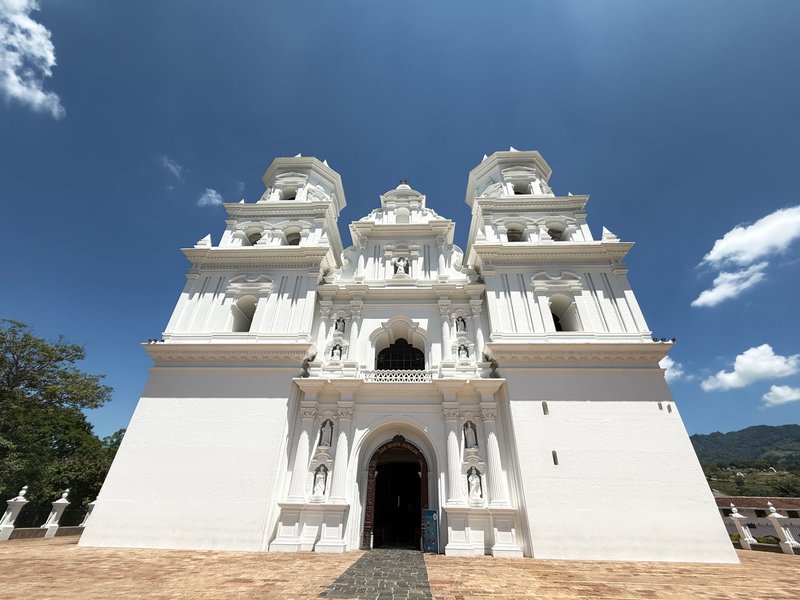
St. Elizabeth’s Cathedral broke ground in 1887, while the country was still Spanish Guinea, and wasn’t consecrated until 1916 — a 29-year build funded jointly by local congregations, businesses, and the colonial government. The neo-Gothic design came from Spanish architect Luis Segarra Llairadó, and Catalan architect Antoni Gaudí is credited with contributing to elements of the plan — which would make it one of the few buildings outside Spain to carry his fingerprints. Its twin towers run about 40 meters, and the peach-colored façade dominates Malabo’s Independencia Avenue.
A 2020 fire during restoration work damaged the structure, which actually strengthens the case for heritage status rather than weakening it — UNESCO recognition often follows a preservation crisis, not precedes one.
Monte Alén National Park
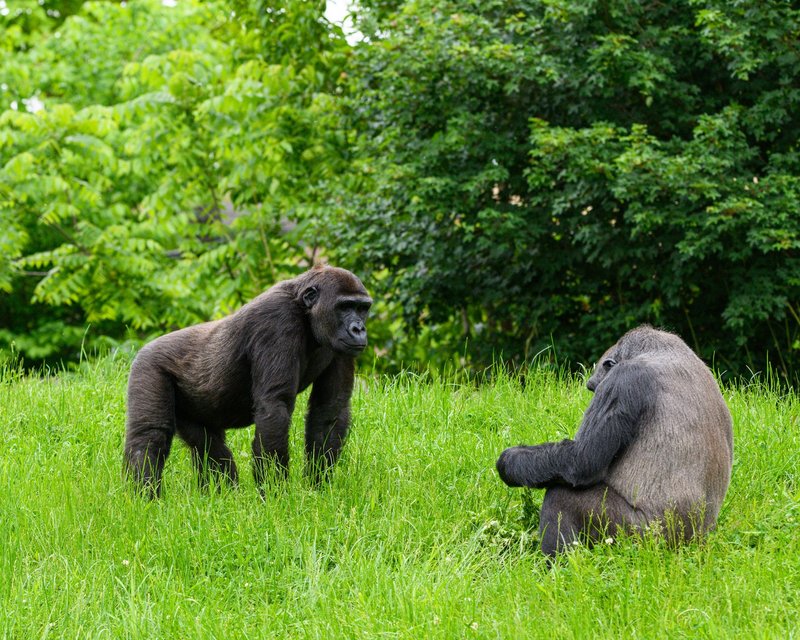
At roughly 200,000 hectares of unbroken primary rainforest on the mainland (Río Muni), Monte Alén is the largest protected area in the country and holds a species list that would be the headline of any nomination: 16 primate species including western lowland gorillas, forest elephants, forest buffalo, and over 300 recorded bird species. The terrain climbs from 300 to 1,250 meters, which is enough elevation range to stack several distinct forest ecosystems inside one park boundary.
The IUCN Red List classifies the western lowland gorilla as Critically Endangered, and researchers monitoring the park describe the wider Monte Alén–Monts de Cristal–Abanga landscape, which stretches into neighboring Gabon, as an area of exceptional importance for great ape conservation. A peer-reviewed occupancy study on the park’s mandrill population found habitat use closely tracking distance from human settlement — the kind of baseline data UNESCO evaluators expect to see before considering a natural heritage nomination, and Monte Alén already has it. That’s the sort of transboundary ecological argument UNESCO has used before to justify natural heritage listings, and it’s sitting right there, unclaimed.
Corisco Island
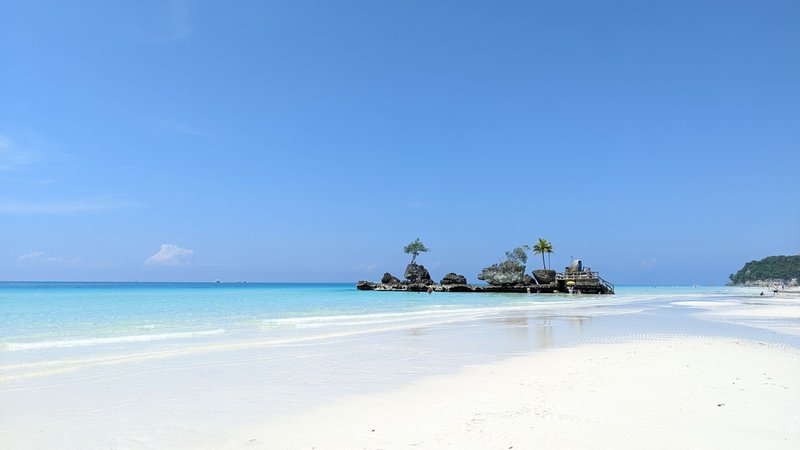
Corisco is small — you can walk its signature sandbar, Punta Hokko, at low tide with open water on both sides — but its history carries more weight than its size suggests. Spain acquired it in 1843 through an agreement with the Benga king Bonkoro I, and it later served as a base for early Protestant missionary work into the Río Muni interior, including missionary Robert Hamill Nassau’s first African posting. The old Spanish Mission House still stands.
What makes Corisco a plausible nomination isn’t the beaches alone — plenty of West African islands have those — it’s the combination of an intact 19th-century mission settlement with a still-functioning Benga cultural presence, which is a harder pairing to find.
Annobón Island
Annobón sits nearly 400 kilometers south of the mainland, closer to São Tomé than to the rest of Equatorial Guinea, and its isolation is the whole story. Portuguese navigators landed there on New Year’s Day 1473 and named it “Anno Bom.” Spain took it over via the 1778 Treaty of El Pardo, and the population that developed — descendants of enslaved Africans brought by Portuguese settlers — speaks Fa d’Ambu, a Portuguese-based creole found nowhere else on Earth in quite that form.
That linguistic isolation is a legitimate heritage argument on its own. UNESCO has inscribed sites specifically for endangered creole and language-contact cultures elsewhere; Annobón’s Fa d’Ambu-speaking community, shaped by five centuries of near-total separation from the mainland, fits the pattern.
Pico Basilé
Bioko Island’s Pico Basilé tops out at 3,011 meters, making it the highest point in the country and the summit of the largest of three overlapping shield volcanoes that built the island. It last erupted in 1923, which keeps it in the “dormant, not extinct” category that draws volcanologists, and on a clear day the view north reaches Mount Cameroon across the water.
The mountain already carries national park status, which gives any future nomination a head start — the conservation framework exists, it just hasn’t been packaged for a UNESCO audience.
Bata’s Colonial Core
Bata, the mainland’s largest city, grew up as a colonial timber, coffee, and cocoa port, and its Spanish-era core still shows it. The city’s cathedral, built between 1951 and 1954 in neo-Gothic style, is one of the country’s largest churches and a clear architectural sibling to Malabo’s — a matched pair that, submitted together, would make a stronger nomination than either building alone. Bata’s broader streetscape mixes that colonial commercial architecture with the postwar Fang cultural influence that shaped the city’s growth, a blend you don’t get in Malabo, which developed along different lines as the administrative capital.
Why This Might Never Change
None of these seven sites will show up on an actual UNESCO list anytime soon, and it’s worth being honest about why: nominating a site is expensive, slow, and invites the kind of external monitoring that Equatorial Guinea’s government has historically avoided. A 1993 incident on Annobón, where the central government expelled foreign humanitarian workers and isolated the island after unrest, is the kind of episode that doesn’t pair well with the international access UNESCO site management expects.
So the practical answer to “what are the World Heritage Sites in Equatorial Guinea” stays the same it’s been since 2010: there aren’t any. But if you’re planning a trip and want to see what a future tentative list would send you to, Malabo Cathedral and Monte Alén are the two most accessible starting points — one a 20-minute walk from most Malabo hotels, the other a multi-day expedition that current visitor numbers suggest almost nobody outside primate researchers actually makes.