Table of Contents
- The quick numbers
- Who counts as Emirati, and how few of them there are
- Indians, Pakistanis, and the South Asian majority
- Filipinos, Egyptians, and the rest of the expat mix
- Ajam Emiratis: the UAE’s Persian bloodline
- Afro-Emiratis: African roots older than the country itself
- The Bedouin tribes behind the ruling families
- How the UAE got this way
- Where the numbers go next
The quick numbers
Ask ten people what percentage of the UAE is Emirati and you’ll get ten different answers, mostly because the sources they’re pulling from disagree by double digits. Here’s the version that holds up against the most recent government and demographic data:
| Group | Share of total population |
|---|---|
| Emirati citizens | ~11–12% |
| South Asian (Indian, Pakistani, Bangladeshi, Nepali, Sri Lankan) | ~60–65% |
| Filipino | ~5–6% |
| Iranian | ~4–5% |
| Egyptian and other Arab | ~7–8% |
| Western, African, and other | remainder |
Fewer than one in eight people you pass on a Dubai street or in an Abu Dhabi mall is actually a UAE citizen. Everyone else is there on a work visa, a family visa, or — increasingly — a Golden Visa, and the mix of where they came from is more specific and more interesting than the “expat melting pot” cliché suggests.
Who counts as Emirati, and how few of them there are

The UAE’s own population is small enough that most estimates put it just over 1.3 million people, against a total resident population north of 11 million. That ratio — roughly one citizen for every eight residents — is the most lopsided of any country with a comparable population, and it’s the reason nearly everything else on this page exists: visa policy, Emiratisation quotas, even the way Emirati families talk about “us” and “everyone else.”
Emirati citizenship isn’t something you can apply your way into. It passes through the father’s line, with narrow exceptions, and the country has kept naturalization tight even as its population exploded around it. That scarcity is deliberate. Citizenship in the UAE comes with subsidized housing, free healthcare, guaranteed public-sector jobs, and a say in a political system expats have no access to — benefits the government has been careful not to dilute.
Emiratis themselves aren’t a single homogenous group either. The population includes descendants of coastal pearling and trading families, inland Bedouin tribes, and — as later sections cover — communities with Persian and African ancestry that trace back centuries before the country’s 1971 founding.
Indians, Pakistanis, and the South Asian majority
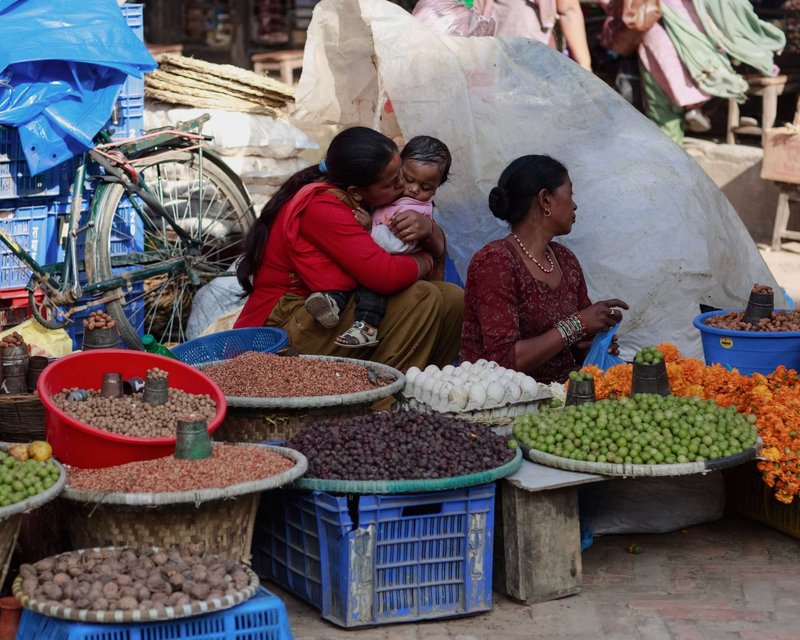
Indians are the single largest nationality group in the UAE — not just the largest expat group, the largest group, period. Estimates for 2026 put the Indian community at roughly 4.4 million people, or close to 38% of everyone in the country. That’s more than triple the entire Emirati population.
Pakistanis make up the next-largest bloc, followed by Bangladeshis, with smaller but well-established Nepali and Sri Lankan communities rounding things out. Combined, South Asians account for close to two-thirds of the UAE’s total population — the demographic backbone of everything from the construction sites that built Dubai’s skyline to the taxi fleets, hospitals, and IT departments that keep it running.
This isn’t a recent shift. Indian traders were doing business on the Trucial Coast before oil, back when pearling was the economy. What changed after the 1970s was scale: labor migration from South Asia went from steady to enormous almost overnight, and it never really slowed down.
Filipinos, Egyptians, and the rest of the expat mix
Filipinos are the next-largest single nationality after the big three South Asian groups, at somewhere around 5–6% of the population — concentrated heavily in hospitality, healthcare, retail, and domestic work, industries where Filipino workers have a strong regional reputation that keeps demand high.
Egyptians and other Arab nationalities (Jordanians, Lebanese, Syrians, Sudanese) make up another meaningful slice, often in white-collar roles — education, media, finance, government-adjacent consulting — where shared language and cultural familiarity with Gulf norms matter. Western expats (British, American, European, Australian) are a smaller share numerically than most outsiders assume, concentrated in Dubai and Abu Dhabi’s finance, aviation, and luxury sectors, and disproportionately visible relative to their actual numbers because of where they tend to live and socialize.
Ajam Emiratis: the UAE’s Persian bloodline
The Ajam are Emiratis of Iranian descent — not recent Iranian migrants, but families who’ve been settled on the Arabian side of the Gulf for generations, many tracing back to Fars and Hormozgan provinces on Iran’s southern coast. “Ajam” is the historical Arabic term for Persians, and Ajam communities are old enough in cities like Dubai and Sharjah that their presence predates the UAE as a country by a long way.
The Ajam population intersects with one of the region’s quieter demographic issues: statelessness. A significant share of the UAE’s Bedoon — long-term residents without recognized citizenship, often because their families arrived before strict nationality laws were formalized — are of Ajam background. Some hold passports from Comoros under an arrangement between the two governments, a workaround that grants a legal nationality without granting UAE citizenship itself.
Separately, and more recently, Iranian nationals make up their own distinct expat community — an estimated 4–5% of the population — running businesses in Dubai’s trading districts, a presence built on centuries of cross-Gulf commerce that the Ajam and Iranian expat communities both descend from, even though the two groups are legally and socially distinct.
Afro-Emiratis: African roots older than the country itself
Afro-Emiratis are citizens of full or partial Black African descent, concentrated more heavily in the Northern Emirates — Sharjah, Ajman, Ras Al Khaimah — than in Abu Dhabi or Dubai. Their ancestry traces to several distinct histories layered on top of each other: centuries of Indian Ocean trade that connected the Arabian Peninsula to East Africa, the historical slave trade that brought enslaved Africans to the Gulf before its abolition in the region in the mid-20th century, and later voluntary migration for trade and work.
What makes the Afro-Emirati community distinct from, say, African expats currently living in the UAE is generational depth — these are families who’ve held Emirati citizenship, spoken Emirati Arabic as a first language, and identified as Emirati for multiple generations. It’s a community that rarely shows up in the “UAE population by nationality” breakdowns that dominate search results, because citizenship data doesn’t track ethnicity within the citizen population — but it’s a real and long-standing part of who counts as Emirati.
The Bedouin tribes behind the ruling families
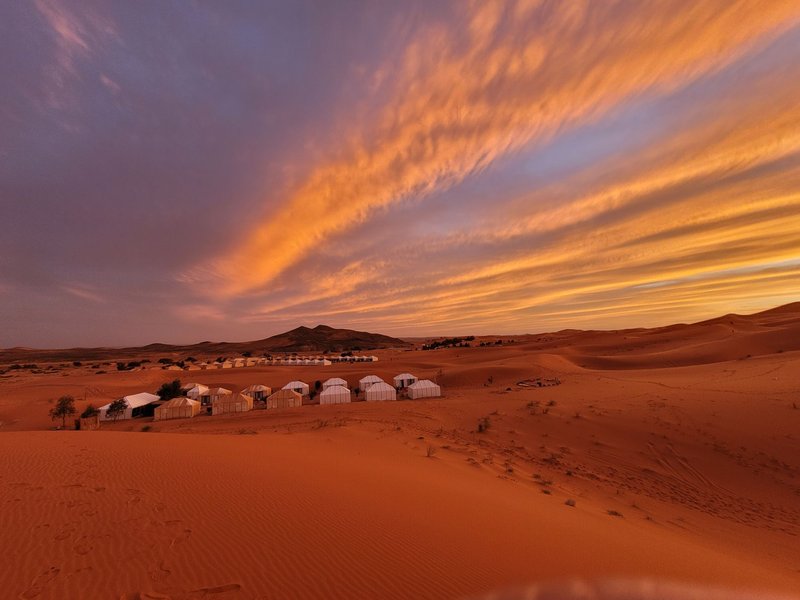
Before oil, before pearling towns grew into cities, the interior of what’s now the UAE was Bedouin territory — nomadic and semi-nomadic tribal confederations moving between seasonal grazing land and coastal settlements. The most consequential of these is the Bani Yas confederation, whose constituent families founded and still lead both Abu Dhabi (the Al Nahyan family) and Dubai (the Al Maktoum family).
Most Emiratis with Bedouin ancestry have been urbanized for two or three generations now — settled in cities, working in government or business, driving SUVs instead of riding camels between wells. But tribal identity hasn’t dissolved the way it has in some other Gulf states. Tribal affiliation still shapes social networks, marriage patterns, and informal influence in ways that outsiders rarely see but that matter enormously within Emirati society itself. Camel racing, falconry, and desert gatherings aren’t tourist theater — they’re maintained specifically because they’re the visible remnants of an identity families are actively working to keep alive.
How the UAE got this way
The demographic imbalance that defines the UAE today has a specific starting point: oil. Abu Dhabi’s first major offshore field, Umm Shaif, began production in 1962, and the revenue that followed funded an infrastructure and construction boom that the tiny local population couldn’t possibly staff on its own.
The UAE’s formation in 1971, uniting seven emirates under one federation, accelerated the same trend nationally. Ports, roads, airports, and eventually entire cities needed to be built essentially from scratch, and the labor came overwhelmingly from the Indian subcontinent, where wages were a fraction of what Gulf construction paid. What started as a temporary labor solution became permanent: workers stayed, brought families under sponsorship visas, and built communities that are now multi-generational even without a path to citizenship.
That’s the piece that trips people up. A South Asian family can live in Dubai for fifty years, across three generations, and their grandchildren will still not be Emirati citizens. The UAE’s citizenship model was built for a small, stable local population, not for the scale of migration its own economy created — which is exactly the tension the next section gets into.
Where the numbers go next
The UAE government is aware the citizen-to-resident ratio is unusual, and two policies are actively trying to shift it — in different directions.
Emiratisation pushes citizens into the private-sector workforce. Companies with 50 or more employees have to grow their Emirati headcount in skilled roles by 2% a year, and since 2024 the requirement has extended down to companies with as few as 20 workers, who must now hire and retain at least one Emirati citizen, rising to two by 2025. It’s working, slowly — the Ministry of Human Resources and Emiratisation reported more than 136,000 Emiratis employed across 28,000 private companies by April 2025, a figure that barely existed a decade ago.
The Golden Visa pulls the opposite direction. Launched in 2019 and steadily expanded since, it offers long-term residency — five or ten years, renewable, without the usual employer sponsorship requirement — to investors, entrepreneurs, top students, and specialists in fields the UAE wants to retain. Dubai alone issued roughly 158,000 Golden Visas in 2023, more than triple the number from just two years earlier, and the largest recipient groups have consistently included Indian, Pakistani, and Russian nationals. It’s a policy that deepens exactly the kind of long-term, multi-generational expat presence Emiratisation is trying to balance against.
Neither policy is going to flip the UAE’s demographic makeup in the near term — the population math is too lopsided for that. But together they say something clear about where the country is headed: not toward fewer expats, and not toward more citizens by birthright, but toward a more selective, more permanent version of the same mix that’s defined the country since the oil-era population boom began. The people who came to build the UAE are increasingly the people the UAE is trying to keep.