Table of Contents
- TLDR
- The Two Official UNESCO Sites
- Ohrid: Where Natural and Cultural Heritage Meet
- The Mavrovo Beech Forests
- North Macedonia’s Tentative List: The Off-the-Beaten-Path Four
- Planning a Trip Around All of It
TLDR
North Macedonia has two UNESCO World Heritage Sites. The Natural and Cultural Heritage of the Ohrid Region, inscribed in 1979 and 1980, covers Lake Ohrid and the old town on its shore. The beech forests of Mavrovo National Park joined the transnational Ancient and Primeval Beech Forests site in 2021. Beyond those two, four more sites sit on the country’s tentative list: the Kokino archaeoastronomical site, the rock formations of Markovi Kuli, the 12th-century Church of St. George in Kurbinovo, and Slatinski Izvor cave. None of the four are inscribed yet, which is exactly why they’re worth visiting now, before a UNESCO plaque changes the entry fee and the parking situation.
The Two Official UNESCO Sites
Most countries with a small UNESCO count have sites scattered across the map. North Macedonia’s two are both reachable from Skopje in a single day, which makes this one of the more efficient heritage circuits in the Balkans. One is a lake town with 1,500 years of continuous religious and civic architecture stacked on a hillside. The other is a sliver of forest that’s never been logged, ever, which is a stranger thing to say about a patch of Europe than it sounds.
Ohrid: Where Natural and Cultural Heritage Meet
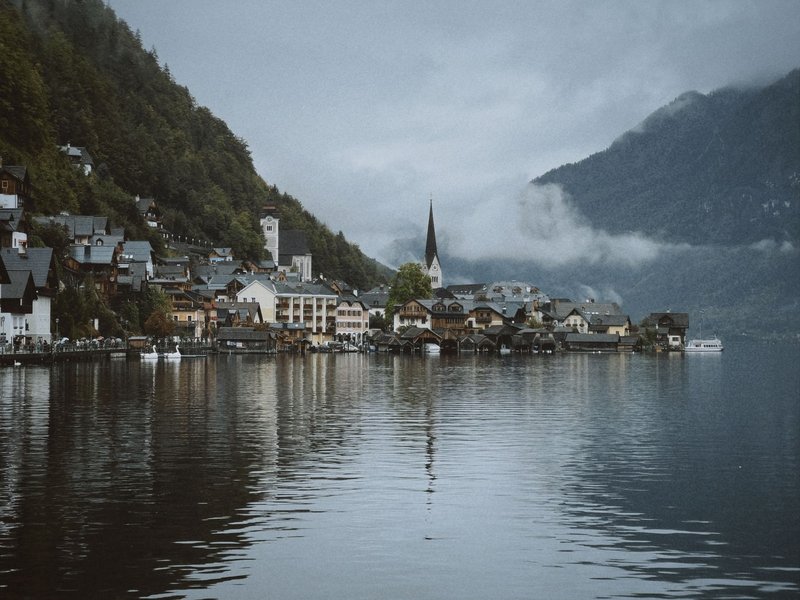
Ohrid is one of the few places on the World Heritage List inscribed twice over, once for nature and once for culture, and the two reasons don’t compete for your attention so much as trade off by the hour. Lake Ohrid is among the oldest lakes on the planet, old enough that it’s developed its own endemic species found nowhere else, including a trout the locals will insist you order grilled, not fried. UNESCO’s official listing for the Ohrid region covers both the lake ecosystem and the townscape above it, a rare dual designation that reflects how tightly the two are bound: the town’s monasteries were built to look out over the water, not away from it.
The old town itself is a stack of Ottoman-era houses climbing toward Samuil’s Fortress, with the 9th-century Plaošnik complex and the cliffside Church of St. John at Kaneo doing most of the postcard work. Kaneo in particular photographs better at golden hour than any building has a right to, perched on a rock ledge with the lake dropping away beneath it. Ohrid was also, less famously, an early center of Slavic literacy — the Ohrid Literary School operated here in the 9th and 10th centuries, which is part of why the town carries the cultural half of its designation alongside the natural one.
Getting there from Skopje: Buses run roughly every three hours from Skopje’s Transporten Centar, with Classic Company operating the route. The road trip covers about 174 km and takes just over three hours by bus. Driving yourself cuts that to around two hours and 40 minutes, and gives you the option to stop at Mavrovo on the way, since the drive threads near the national park.
Best time to visit: Late May through June, or September. July and August bring lake-town crowds and Skopje-adjacent heat; the shoulder months keep the water swimmable without the Ohrid Summer Festival traffic jams.
Entrance and access: The town itself is free to wander. Individual monuments — Plaošnik, the fortress, St. Sophia — charge small separate entrance fees, usually under 100 denars each, and most keep daytime hours that shrink outside peak season.
The Mavrovo Beech Forests
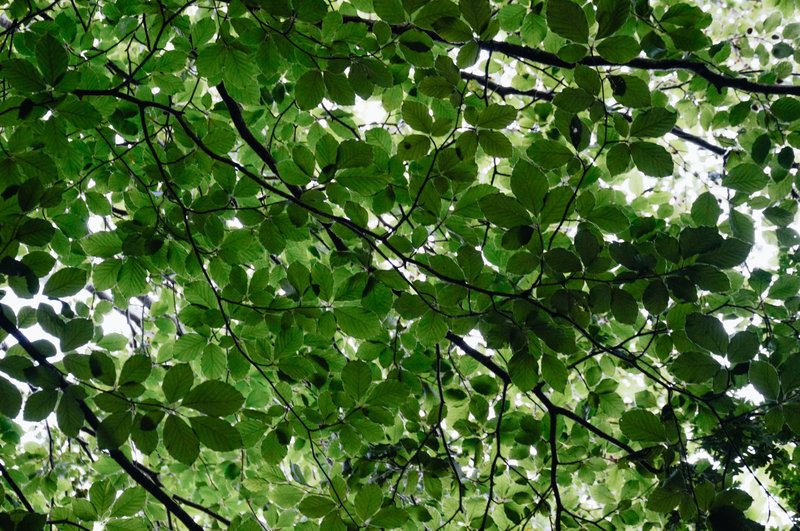
The beech forest component in Mavrovo National Park joined the Ancient and Primeval Beech Forests of the Carpathians and Other Regions of Europe in 2021, part of a wave that added six new countries to a transnational site spanning 18 nations. The North Macedonian portion sits in the valley of the Dlaboka River, near Mavrovo and Rostuša, and what makes it worth the detour isn’t just old trees — it’s what the trees prove. These stands demonstrate how beech recolonized Europe after the last ice age, spreading from isolated glacial refuges into the continuous forest cover we’d recognize today. Nobody’s cut this particular patch since, which means the canopy structure, deadwood, and undergrowth all read as a working ecosystem rather than a managed one.
Mavrovo National Park itself is North Macedonia’s largest, and the beech component is a slice of a much bigger landscape that includes Mavrovo Lake, the Bistra and Korab mountain ranges, and ski infrastructure that gets surprisingly serious use in winter. The forest sections aren’t fenced off or ticketed the way a museum site would be — you’re walking through working park trails that happen to pass through a World Heritage component, which is a very different experience from Ohrid’s monument-hopping.
Getting there from Skopje: Around 1.5 hours by car to Mavrovo Lake, closer to two hours if you’re heading deeper into the park toward the forest trails near Rostuša. Public transport exists but runs thin — most visitors drive or book a tour that combines Mavrovo with the Ohrid road trip, since the park sits roughly on the way.
Best time to visit: Late spring through early autumn for hiking the beech stands, since winter turns the same roads into ski-resort traffic heading for Mavrovo’s slopes. September gives you the forest at its most legible — decent light, thin crowds, and the undergrowth still green enough to see what’s growing under the canopy.
Access: No entrance fee to the forest sections themselves. A local guide is worth it here specifically, since the UNESCO-listed stands aren’t sign-posted as such within the wider park — without someone who knows the boundary, you’ll hike past the World Heritage component without realizing you were in it.
North Macedonia’s Tentative List: The Off-the-Beaten-Path Four
Four more sites are sitting on North Macedonia’s tentative list, which is UNESCO’s waiting room — a formal step before a full nomination, and no guarantee one ever comes. That’s the appeal. These are places locals will tell you about before a search engine will.
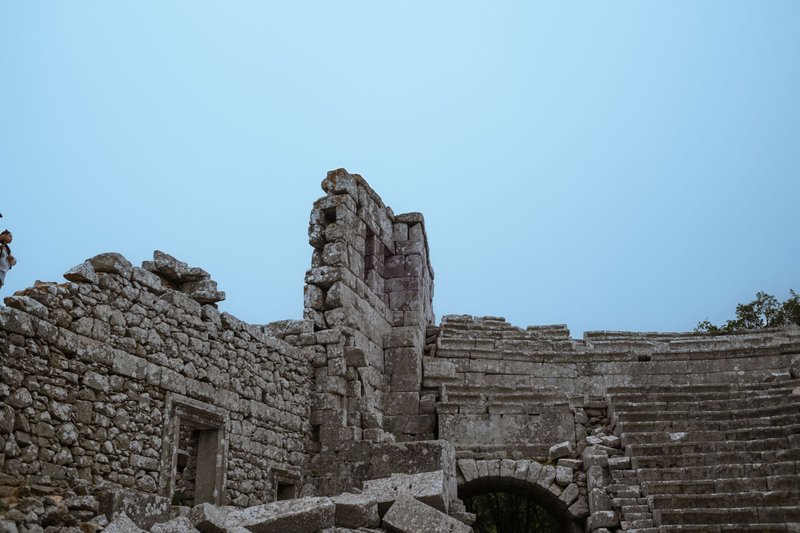
Kokino is a Bronze Age archaeoastronomical observatory, about 3,800 years old, discovered almost by accident in 2001 when an amateur archaeologist noticed the stone markings lined up with the solstices. It sits atop a volcanic outcrop called Tatićev Kamen, roughly 75 km from Skopje and 35 km from Kumanovo, at 1,030 meters. The drive takes about 90 minutes, and the last stretch is unpaved and better walked than driven. There’s no public transport that gets you the whole way, so this is a rental-car or organized-tour destination — often bundled with the eroded stone formations at Kuklica and the old town of Kratovo, both nearby.
Markovi Kuli, above the town of Prilep, is a granite formation shaped by millennia of erosion into towers and domes that medieval builders then used as a natural fortress. The rock itself is the nominated feature — UNESCO’s interest is in the geology as much as the ruins on top of it, a concentration of denudation landforms that isn’t replicated elsewhere in the region. It’s an easy half-day add-on if you’re routing between Skopje and Ohrid through the southern highway rather than the direct road.
The Church of St. George in Kurbinovo is a single-room 12th-century church near Lake Prespa, about two kilometers outside the village it’s named for, in the Resen municipality south of Ohrid. What earns it a place on the tentative list isn’t the architecture — it’s the frescoes. Painted in 1191, they’re considered one of the finest surviving examples of Byzantine wall painting from that period, with an expressive, almost proto-Renaissance handling of figures that art historians still write papers about. It keeps limited hours and a caretaker with the key, so this is a call-ahead visit, not a drop-in.
Slatinski Izvor is a cave system tied to the karst hydrology of the region, less developed for tourism than the other three and correspondingly harder to visit without local knowledge. If you’re building a trip around Prespa and the southern lakes, it’s worth asking a local guide whether access is feasible that season — cave conditions and opening arrangements shift more than built heritage does.
Planning a Trip Around All of It
Skopje works as a hub for exactly one of the two inscribed sites and two of the four tentative ones — Kokino and Markovi Kuli both sit within a half-day radius. Ohrid and Kurbinovo cluster together in the southwest, near Lake Prespa, which makes a natural two-to-three-day loop: drive from Skopje to Mavrovo, continue to Ohrid, detour to Prespa and Kurbinovo, then loop back. Budget a full week if you want all six sites without rushing the ones — like Ohrid — that reward slowing down.
None of this requires the logistics a lot of Balkan itineraries do. North Macedonia is small enough that a rental car turns the whole list into a loop rather than a series of separate trips, and outside of Ohrid’s high season, you’ll mostly have these places to yourself — which, for a tentative-list site nobody’s marketing yet, is sort of the point. For more on what draws visitors to the region, see 10 reasons to visit North Macedonia.