Table of Contents
- TL;DR
- Turkish Is Official, But It’s Not the Only Story
- How Turkey Ended Up With So Many Languages
- The Minority Languages, By the Numbers
- Where You’ll Actually Hear Each Language
- Does Anyone Speak English in Turkey?
- Useful Turkish Phrases for Travelers
- FAQ
TL;DR
Turkish is the sole official language of Turkey, spoken as a first language by roughly 85–90% of the population. Outside that majority, Kurdish (mostly the Kurmanji dialect) is the largest minority language, spoken by an estimated 12–15% of the country, concentrated in the southeast. Smaller communities speak Zazaki, Arabic, Laz, Armenian, Greek, and Ladino, each tied to a specific region or history. English isn’t official and isn’t widely spoken outside tourist zones and major cities — plan accordingly if you’re heading into rural Anatolia.
Turkish Is Official, But It’s Not the Only Story
Ask most people what language Turkey speaks and you’ll get one answer: Turkish. That’s correct, as far as it goes. Turkish has been the sole official language of the Republic since its founding in 1923, it’s what appears on road signs and government forms, and it’s the first language of the overwhelming majority of the country’s roughly 85 million people.
What that single answer hides is a country that’s linguistically busier than its official policy suggests. Turkey doesn’t collect census data on ethnicity or home language — hasn’t since 1965 — so every figure you’ll read for minority languages, including the ones in this piece, is an estimate pieced together from surveys, academic fieldwork, and advocacy group reporting. Nobody has an exact number. But the pattern is clear enough: step outside Istanbul’s tourist core or a resort town on the Aegean, and you’ll run into languages that have nothing to do with Turkish’s Central Asian roots — languages that predate the Turkish Republic by centuries, in some cases by millennia.
How Turkey Ended Up With So Many Languages
The short version: Turkey sits on top of the Ottoman Empire, and the Ottoman Empire was never a one-language operation.
At its height, the Ottoman state governed Arabic speakers in the Levant, Greek speakers in Anatolia and the Balkans, Armenian speakers across eastern Anatolia, Kurdish speakers in the mountains along the Persian border, and Ladino-speaking Sephardic Jews who’d settled in Istanbul and Thessaloniki after fleeing Spain in 1492. The administrative language, Ottoman Turkish, was itself a hybrid — written in Arabic script and stuffed with Persian and Arabic vocabulary, closer to a court dialect than something ordinary people spoke at home.
When Mustafa Kemal Atatürk founded the Republic in 1923, unifying the language was a deliberate nation-building project, not an accident. The 1928 alphabet reform swapped Arabic script for a modified Latin one in a matter of months — cafés and government offices ran adult literacy classes on street corners to catch people up. A parallel campaign, sometimes called Öztürkçe, pushed to strip Arabic and Persian loanwords out of everyday Turkish and replace them with revived or invented Turkic roots. It’s why modern Turkish reads as noticeably more “Turkic” than the Ottoman documents that came before it.
Minority languages didn’t disappear during this period, but they were pushed hard into private life. Kurdish broadcasting was banned outright until 1991, and Kurdish-language education remained restricted for decades after that. Some of those restrictions have loosened since — Kurdish-language elective classes entered public schools in 2012, and a Kurdish-language state TV channel has existed since 2009 — but the Council of Europe’s Charter for Regional or Minority Languages, the main international framework for protecting languages like these, is one Turkey has never signed.
The Minority Languages, By the Numbers
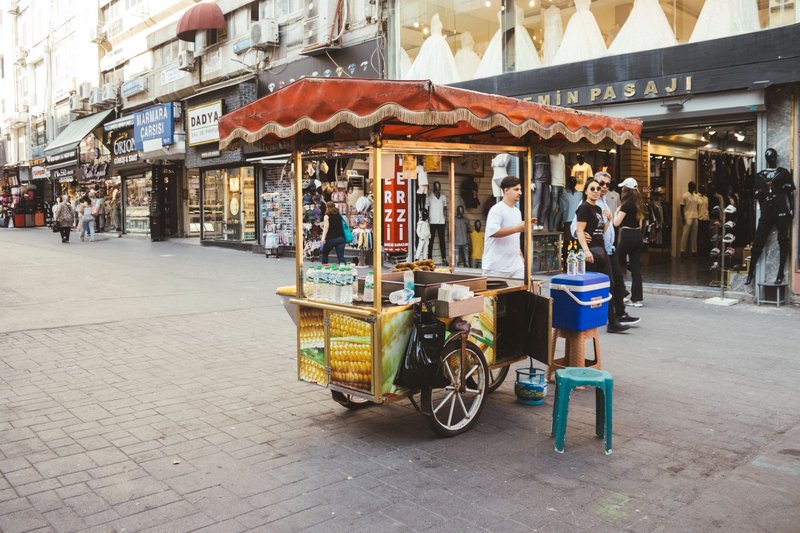
Here’s the rough breakdown of who speaks what, based on the best available estimates:
| Language | Estimated speakers | Where |
|---|---|---|
| Turkish | ~72–75 million | Nationwide |
| Kurdish (Kurmanji) | ~10–13 million | Southeast Anatolia, plus migrant communities in Istanbul |
| Zazaki | ~1.5–2.5 million | Eastern Anatolia (Tunceli, Bingöl, Diyarbakır provinces) |
| Arabic | ~1–3 million (plus millions of Syrian refugees) | Hatay, Mardin, Şanlıurfa near the Syrian border |
| Laz | Tens of thousands to ~200,000, mostly elderly | Black Sea coast (Rize, Artvin) |
| Armenian | ~50,000–70,000 | Istanbul |
| Greek (Rumca) | A few thousand, mostly elderly | Istanbul, Gökçeada (Imbros) |
| Ladino | Under 5,000, mostly elderly | Istanbul |
A few things worth pointing out about that table. First, Kurdish and Zazaki are often lumped together under “Kurdish” in casual reporting, but linguists treat them as distinct languages that aren’t mutually intelligible — a Kurmanji speaker and a Zaza speaker can’t just talk to each other by default. Second, the numbers get smaller as the languages get older in Turkey. Ladino has been spoken in Istanbul since 1492, longer than Turkish has been the language of a Turkish Republic, and it’s now down to a handful of thousand speakers, most of them elderly — the kind of trajectory that gets a language classified as “severely endangered” on UNESCO’s Atlas of the World’s Languages in Danger. Laz and Greek are on similar paths.
Where You’ll Actually Hear Each Language
Language in Turkey tracks geography closely, and knowing the map changes what you’ll notice on the ground.
Istanbul is the outlier — a city where you can hear five or six of these languages in a single afternoon without trying. It’s home to what’s left of the Armenian, Greek, and Ladino-speaking communities, plus a large internal-migrant Kurdish population that arrived over decades of movement from the southeast.
Southeastern Anatolia — the provinces bordering Iraq and Syria, including Diyarbakır, Şanlıurfa, and Mardin — is where Kurdish is the majority language in daily life, even though Turkish remains what’s used in schools, courts, and government offices. Diyarbakır in particular functions as the cultural capital of Kurdish Turkey.
The Black Sea coast, especially around Rize and Artvin, is Laz country. Laz is a Caucasian language unrelated to Turkish, and it survives mostly among older residents in mountain villages — younger generations increasingly grow up speaking Turkish first.
Hatay province, tucked into Turkey’s southeastern corner and historically part of Syria until a 1939 annexation, has a long-standing Arabic-speaking population that predates the current Syrian refugee crisis by generations. That’s separate from the roughly 3 million Syrian refugees now living across Turkey, who’ve added a substantial temporary Arabic-speaking population to cities well outside Hatay.
Does Anyone Speak English in Turkey?
Not as much as you might expect, and it depends heavily on where you are.
In Istanbul’s tourist neighborhoods, along the Aegean and Mediterranean resort strips, and in Cappadocia’s balloon-and-cave-hotel circuit, English gets you through most interactions — hotel staff, tour operators, and restaurant servers in those areas deal with English-speaking travelers daily. Step outside that circuit, into a mid-size Anatolian city or a rural town, and English drops off fast. Menus go Turkish-only, bus station staff won’t have it, and pointing and a translation app become your actual toolkit.
Turkey has consistently ranked in the “low proficiency” band on English-proficiency indices that track adult populations across the world, sitting well behind most of Western and Northern Europe. Younger, urban, and university-educated Turks are the exception — English is taught in schools from an early age and is common in white-collar workplaces — but that’s a specific demographic slice, not the national default.
Useful Turkish Phrases for Travelers
You don’t need fluency. A handful of phrases, used consistently, changes how people treat you — it signals effort, and effort gets rewarded with patience.
- Merhaba (mer-ha-BA) — Hello
- Teşekkürler (teh-shek-kur-LER) — Thank you
- Lütfen (LUT-fen) — Please
- Evet / Hayır (eh-VET / ha-YUHR) — Yes / No
- Nerede? (NEH-reh-deh) — Where is it?
- Ne kadar? (neh ka-DAR) — How much?
- Afiyet olsun (ah-fee-YET ol-sun) — Said before or after a meal, roughly “enjoy your food”
- Hoşça kalın (hosh-CHA ka-luhn) — Goodbye (said by the person leaving)
One habit worth picking up: Turkish uses a dotless ı and a dotted i as two separate letters, which is why “Kapalıçarşı” (the Grand Bazaar) doesn’t sound the way it looks to an English reader. Google Translate’s camera function handles menus and signage better than trying to sound out unfamiliar words on the fly.
FAQ
What is the official language of Turkey? Turkish, and it has been the sole official language since the Republic’s founding in 1923. The constitution doesn’t recognize any regional or minority language for official use.
Is Kurdish illegal in Turkey? No, not since restrictions eased starting in the early 1990s. Kurdish is legal to speak, publish, and broadcast, and Kurdish-language elective courses have been available in public schools since 2012. It’s still not an official language, and it’s not the medium of instruction in mainstream public education.
Do people in Turkey speak Arabic? A meaningful minority does, concentrated in Hatay, Mardin, and Şanlıurfa provinces near the Syrian border, independent of the several million Syrian refugees who’ve settled across the country since 2011 and speak Arabic as well.
Should I learn any Turkish before visiting? It’s not required in tourist areas, but a few basic phrases go a long way outside Istanbul, Antalya, and Cappadocia, where English proficiency drops off. Even a handful of words changes how locals respond to you.
Is Turkish a hard language to learn? For English speakers, yes, relatively — it’s an agglutinative language that builds words by stacking suffixes, and it shares almost no vocabulary roots with English or other Romance/Germanic languages. Its grammar logic sits closer to Finnish or Hungarian than to anything in Western Europe, a legacy of Turkish’s Central Asian origins rather than the Arabic and Persian vocabulary it absorbed under the Ottomans.