TLDR
Laos is home to roughly 80 living languages packed into a country of about 7.5 million people, spread across four unrelated language families: Tai-Kadai (Lao, the official language), Austroasiatic (Khmu and other upland groups), Hmong-Mien (Hmong, Iu Mien), and Tibeto-Burman (Akha, Phunoi, and other small northern groups). Lao and Khmu are secure. Most of the rest — especially the Tibeto-Burman languages spoken by a few thousand people each near the Chinese and Myanmar borders — are endangered, some critically.
Table of Contents
- Why Laos Ended Up This Linguistically Crowded
- The Four Language Families, at a Glance
- Lao: The Lowland Majority Language
- Khmu and the Austroasiatic Uplands
- Hmong-Mien: The Nineteenth-Century Arrivals
- Tibeto-Burman: Small, Isolated, and Fading Fast
- Why Some Languages Are Disappearing and Others Aren’t
- Where Travelers Actually Encounter This Diversity
Why Laos Ended Up This Linguistically Crowded
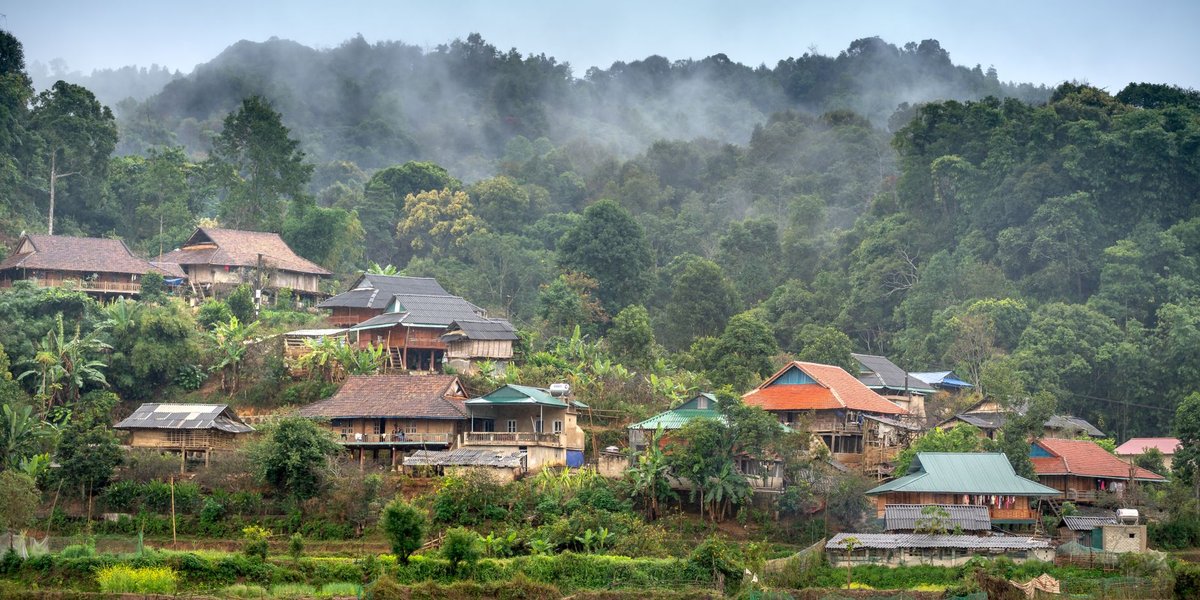
Laos is landlocked, mountainous, and sits at the point where mainland Southeast Asia’s major migration routes converge. That geography did the sorting. Tai-speaking groups moved down river valleys from the north over the last millennium and took the lowlands. Austroasiatic-speaking peoples were already there before them, pushed into the surrounding hills. Hmong and Mien communities arrived later still, in the 1800s, filtering down from southern China and settling the highest ridgelines where lowland farming doesn’t work. Small Tibeto-Burman groups occupy the far northern provinces, wedged against the borders of China, Myanmar, and Vietnam, often numbering in the low thousands.
The result is a country the Lao government has historically described through three broad bands rather than a language list: Lao Loum (lowland Lao), Lao Theung (midland/upland), and Lao Soung (highland). It’s a geographic shorthand, not a linguistic one — each band contains multiple unrelated language families — but it explains why altitude in Laos correlates almost perfectly with which language family you’ll hear.
The Four Language Families, at a Glance
None of these families are related to each other. A Khmu speaker and a Hmong speaker, both from Laos, have no more linguistic common ground than an English speaker and a Finnish speaker.
| Family | Example languages | Rough speaker base in Laos | Typical elevation | Status |
|---|---|---|---|---|
| Tai-Kadai | Lao, Tai Dam, Tai Lue, Phuan | Majority (Lao alone ~3–4 million first-language speakers) | Lowland river valleys | Secure |
| Austroasiatic (Mon-Khmer) | Khmu, Katang, Makong, Brao | Khmu alone in the hundreds of thousands; dozens of smaller languages | Midland uplands | Mixed — Khmu secure, most others endangered |
| Hmong-Mien | Hmong, Iu Mien | Several hundred thousand combined | High ridgelines | Hmong relatively stable, Iu Mien shrinking |
| Tibeto-Burman | Akha, Phunoi, Sila, Lahu | Tens of thousands total, many languages under 5,000 speakers | Far north, near China/Myanmar border | Mostly endangered to critically endangered |
Lao: The Lowland Majority Language
Lao is a Tai-Kadai language, part of the same broader family as Thai — close enough that Lao and Thai speakers can often follow each other’s speech with some effort, particularly since Lao speakers in border regions grow up watching Thai television. It’s the language of government, education, and the Mekong River towns where most of the country’s population lives.
But “Lao” isn’t one uniform thing either. The Tai-Kadai family in Laos includes Tai Dam (Black Tai), historically concentrated around Houaphanh province and carried into diaspora communities as far as Iowa after resettlement following the Secret War; Tai Lue, spoken in the far north near the Chinese border; and Phuan, spoken by descendants of a group resettled from what’s now Xiangkhouang province. These are related to standard Lao but distinct enough that speakers don’t automatically understand each other on first contact.
Khmu and the Austroasiatic Uplands
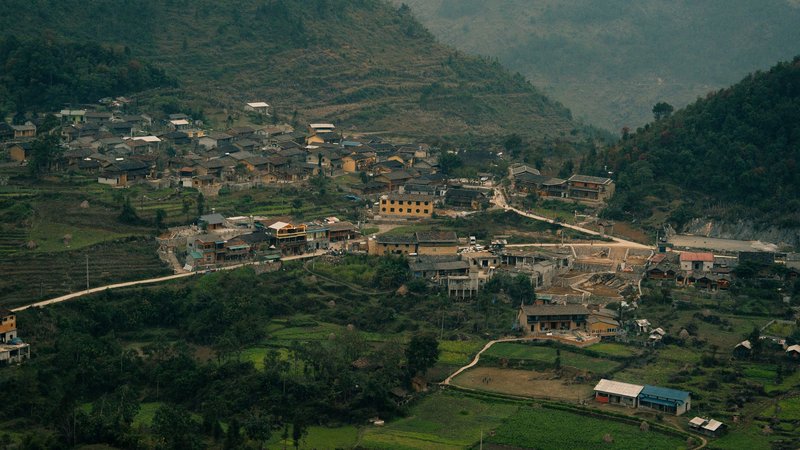
Khmu is the largest Austroasiatic language in Laos and the biggest minority language in the country by speaker count — likely in the range of 600,000 to 700,000 people, concentrated in the northern and central uplands. It belongs to the same broad Mon-Khmer branch as Vietnamese and Khmer — a language family extensively represented in neighboring Cambodia — though the relationship is distant enough that mutual intelligibility doesn’t exist.
What keeps Khmu comparatively healthy is scale and geography: Khmu communities are large enough and clustered tightly enough in the uplands of provinces like Luang Prabang and Oudomxay that the language gets passed down without much competition from Lao at home, even where children learn Lao at school.
The rest of the Austroasiatic family in Laos looks nothing like that. Katang, Makong, Talieng, Brao, and dozens of other named languages each serve a single district or a cluster of villages, sometimes just a few thousand speakers, sometimes fewer than a thousand. Ethnologue’s country profile for Laos lists 86 documented languages total — most of that number comes from this long tail of small Austroasiatic tongues that rarely show up outside academic linguistics.
Hmong-Mien: The Nineteenth-Century Arrivals
Hmong and Iu Mien (sometimes called Yao) are the two living branches of the Hmong-Mien family in Laos, and they arrived comparatively recently — migrating out of southern China through the 1800s and settling the highest terrain available, typically above 1,000 meters, where opium and later maize became the cash crops that sustained highland economies.
Hmong is the more numerous of the two, with several hundred thousand speakers in Laos and large diaspora populations in the United States, France, and Australia following resettlement after 1975. The language carries a strong clan-based social structure into its vocabulary and naming conventions, and unlike most minority languages in the country, it has an active writing system — the Romanized Popular Alphabet developed by missionaries in the 1950s — which has helped it survive displacement better than most.
Iu Mien is smaller and more fragmented, spoken in scattered communities across the northern provinces, and shows more of the generational drop-off typical of Laos’s less populous minority languages: grandparents fluent, parents bilingual, children increasingly Lao-dominant.
Tibeto-Burman: Small, Isolated, and Fading Fast
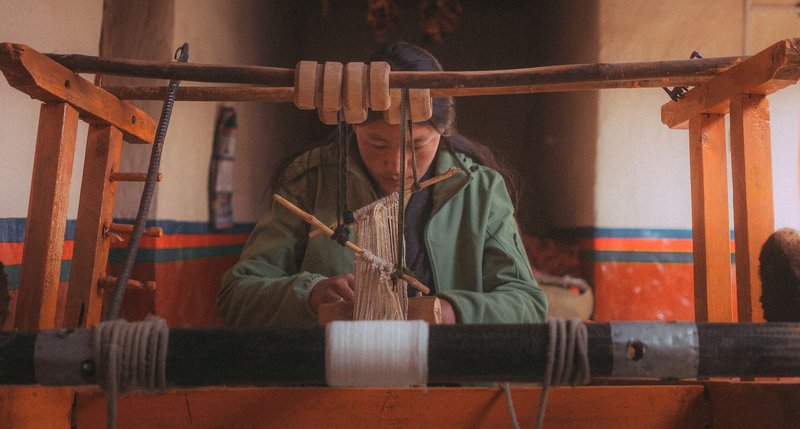
The fourth family is also the most fragile. Tibeto-Burman languages in Laos — Akha, Phunoi, Sila, Lahu, and several others — are concentrated almost entirely in Phongsaly and Luang Namtha provinces, the northernmost tip of the country where borders with China and Myanmar blur.
Akha is the largest of this group inside Laos, with tens of thousands of speakers, though the majority of the global Akha population actually lives across the border in Myanmar, Thailand, and China’s Yunnan province — Laos holds a minority share of a minority language. Phunoi and Sila are smaller still, each numbering in the low thousands, spoken in a handful of villages with little institutional support and no writing tradition. Academic work on the region, including a chapter by linguist N.J. Enfield published through the Max Planck Institute, has noted how thin the documentation is for exactly this cluster of languages — there simply hasn’t been enough fieldwork to know, in some cases, how many fluent speakers remain.
Why Some Languages Are Disappearing and Others Aren’t
Two things separate a secure language from an endangered one in Laos: population size and the upland-lowland divide. Lao dominates because it’s the language of school, government paperwork, and the Mekong towns where economic opportunity concentrates. Khmu and Hmong survive in reasonable health because both have large enough speaker bases and cohesive enough communities that transmission from parent to child hasn’t broken down.
Everything smaller sits on a fault line. A language spoken by three villages has no buffer — one generation of kids bussed to a district school where instruction is in Lao, one wave of resettlement out of a remote area for infrastructure access, and the chain of transmission snaps within a decade. UNESCO’s World Atlas of Languages lists multiple Laos minority languages as vulnerable to critically endangered, and the pattern tracks almost exactly with elevation and isolation: the higher and more remote the community, the smaller the language, and the fewer resources exist to document it before it’s gone.
Lack of a writing system compounds the problem. Hmong’s survival owes a real debt to having a standardized script; most of the small Austroasiatic and Tibeto-Burman languages in the north never got one, which means each language exists only in the memory of its remaining speakers. When linguists talk about “undocumented” languages in Laos, this is what they mean — not obscure academic curiosities, but living knowledge with no backup copy.
Where Travelers Actually Encounter This Diversity
Most visitors to Laos hear only Lao and English, concentrated in Luang Prabang, Vientiane, and the riverside towns built around tourism. The linguistic variety described here lives in the provinces those itineraries skip: the weekly markets of Phongsaly and Luang Namtha, where Akha, Hmong, and Tai Lue vendors trade in a rotating mix of languages before switching to Lao for outsiders; the trekking routes out of Nong Khiaw and Muang Sing, which pass through Khmu and Hmong villages where Lao is a second language at best for older residents.
None of this is staged for visitors — it’s just what the market day sounds like. Travelers who venture into the northern uplands on a homestay or trek are, whether they register it or not, moving through four language families in the space of a single day’s walk.
Laos packs an outsized amount of linguistic history into a small population, and most of it survives in places well off the standard Mekong-river circuit. The Tai-Kadai lowlands get the tourism infrastructure. The Austroasiatic, Hmong-Mien, and Tibeto-Burman uplands hold the harder-to-reach, and increasingly harder-to-hear, half of the story.