Table of Contents
- TLDR
- Sharm El-Sheikh
- El Gouna
- Dahab
- Hurghada
- Luxor
- Aswan
- Alexandria
- Siwa Oasis
- Cairo
- How These Cities Compare
Most “is Egypt safe” guides answer a different question than the one you’re actually asking. You don’t need three thousand words on pickpocket tactics in Khan el-Khalili — you need to know where to book. This is that list.
TLDR
For most travelers, especially first-timers and families, the Red Sea resort towns — Sharm El-Sheikh, El Gouna, and Hurghada — are the safest bet: gated properties, dedicated tourist police, and low walking-around crime. Solo travelers and divers do well in Dahab, which is smaller and more watched-over than its size suggests. Luxor and Aswan are safe for daytime sightseeing with basic street sense. Cairo is safe by big-city standards, but where you stay matters — Zamalek, Garden City, and Maadi are a different city than Downtown after dark.
Sharm El-Sheikh
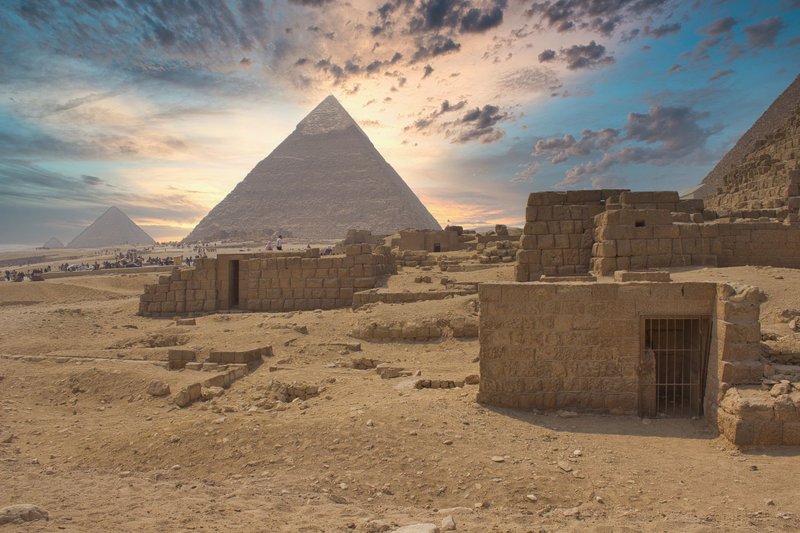
Sharm has spent the last decade rebuilding its reputation, and it worked. After the 2015 Metrojet bombing, Egypt poured resources into securing the resort corridor along Naama Bay and Nabq — airport screening got tighter, and the tourist police presence along the hotel strip is now some of the densest in the country. The U.S. State Department rates the resort zone separately from the rest of the Sinai Peninsula, which matters: North Sinai carries a Level 4 “Do Not Travel” designation, but that advisory explicitly excludes Sharm, treated by the U.S. State Department as a contained, air-accessible destination with its own security perimeter.
Practically, that means most visitors never see a checkpoint that isn’t reassuring — hotel entrances screen bags, and the walk between resorts and the Naama Bay strip is well-lit and constantly patrolled. Petty theft happens at the same low rate you’d expect at any large resort. The bigger risk here isn’t crime, it’s the reef: Ras Mohammed National Park draws divers who underestimate the currents.
El Gouna
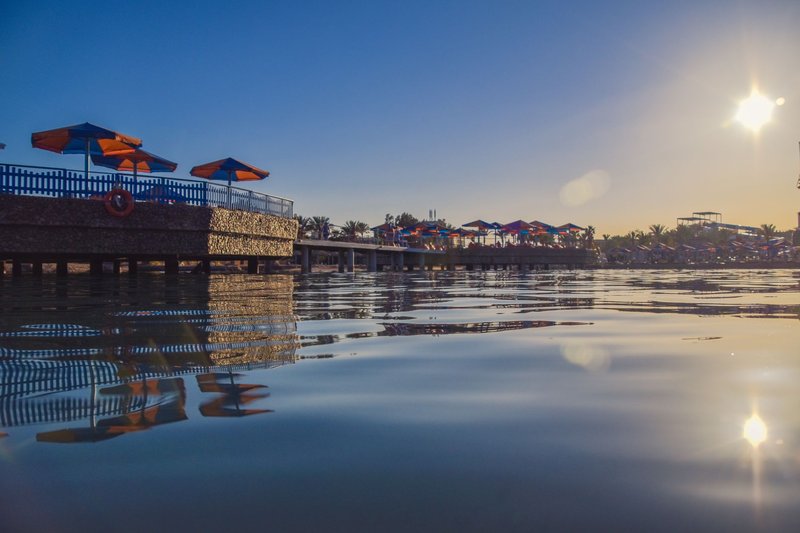
El Gouna is a private, planned town built by the Sawiris family in the 1990s, and it shows in the security model: a single road in, a checkpoint at the entrance, and lagoon-front development that’s gated by design rather than by afterthought. There’s no old town to wander into unexpectedly, no unlit backstreet shortcut. Golf carts outnumber taxis. It’s the closest thing in Egypt to a resort with a moat.
That controlled layout is exactly why families and repeat visitors gravitate here over Hurghada — you trade some grit and local color for predictability. Kitesurfers know El Gouna for the wind; everyone else knows it for how little there is to worry about once you’re inside the gate.
Dahab
Dahab doesn’t get the security infrastructure of Sharm, an hour and a half up the coast, and it doesn’t need it. The town is small enough that the dive shop owners, restaurant staff, and Bedouin guides who run it know each other, and by extension, know who doesn’t belong. It’s built around a single waterfront promenade — the Mashraba — which means there’s really only one street to get lost on, and it’s full of people at all hours.
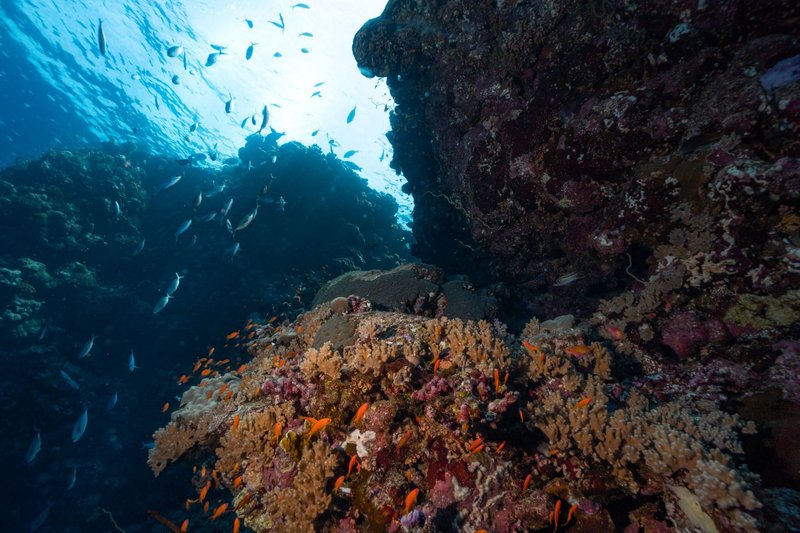
The UK’s Foreign, Commonwealth & Development Office treats Dahab as one of the Sinai resort towns reachable without triggering its broader Sinai advisories, alongside Sharm. The Blue Hole draws experienced divers and, every so often, a fatality from someone diving past their certification — the town’s danger is decompression sickness, not crime.
Hurghada
Hurghada is bigger and less curated than El Gouna, which makes it marginally less contained but also more interesting if you want an actual town rather than a resort compound. Split it into three zones. El Kawther and the New Hurghada resort strip run north along the coast — new construction, gated hotels, the safest and blandest part of town. Sekalla is the walkable tourist core: restaurants, dive shops, the marina, heavily trafficked and heavily policed. Dahar, the old town inland, is where actual Hurghada residents live and shop — safe to visit, thinner on English signage, and the place to go if the resort strip is starting to feel like it could be anywhere.
Scooter and quad-bike accidents are the realistic risk here, not theft. Desert safari operators vary wildly in how seriously they take safety briefings — book through your hotel rather than a street tout.
Luxor
Luxor runs on tourism revenue in a way that makes the tourist police presence almost oppressive — checkpoints on the roads to the Valley of the Kings, guards stationed at every major temple. Split the city by the river. The East Bank, where Luxor Temple, Karnak, the Corniche, and the Winter Palace Hotel sit, is dense with hotels, restaurants, and foot traffic well into the evening — the safest few blocks in Upper Egypt. The West Bank, home to the Valley of the Kings, Valley of the Queens, and Hatshepsut’s temple, is quieter and more spread out: farming villages, unlit stretches between sites, and taxis that are less consistently metered. It’s not dangerous, but it rewards arranging transport in advance rather than flagging something down at dusk.
The felucca captains and calèche drivers who approach you near the temples are mostly just aggressive salesmen, not a safety issue — a firm “la, shukran” (no, thanks) ends it.
Aswan
Aswan is smaller, slower, and noticeably more relaxed than Luxor — less hassle from touts, fewer scams, a genuinely calm waterfront where the felucca sailors are more interested in the wind than the sale. The Nubian villages on Elephantine Island and the west bank are safe to walk through during the day and welcoming in a way that isn’t performative; a lot of visitors rank Aswan as their favorite stop in the country for exactly that reason.
The one thing worth knowing: night trains and buses running the long stretch between Aswan and Cairo have had occasional reports of theft from luggage racks. Book a private cabin or fly if you’re carrying anything you’d mind losing.
Alexandria
Alexandria reads differently from the rest of Egypt because it barely reads as “tourist Egypt” at all — it’s a working Mediterranean port city with a corniche, a university population, and a fraction of the hustle you get in Cairo or Luxor. Scams built around Pharaonic sites simply aren’t a local industry here the way they are further south, because most of Alexandria’s crowds are Egyptian, not foreign.
Stick to the coastal Corniche, the Bibliotheca Alexandrina area, and the Anfushi and Kom El Dikka districts near the main sights, and you’re walking through one of the more relaxed big-city environments in the country. As with any large port city, exercise normal caution around the train station and busy market streets after dark.
Siwa Oasis
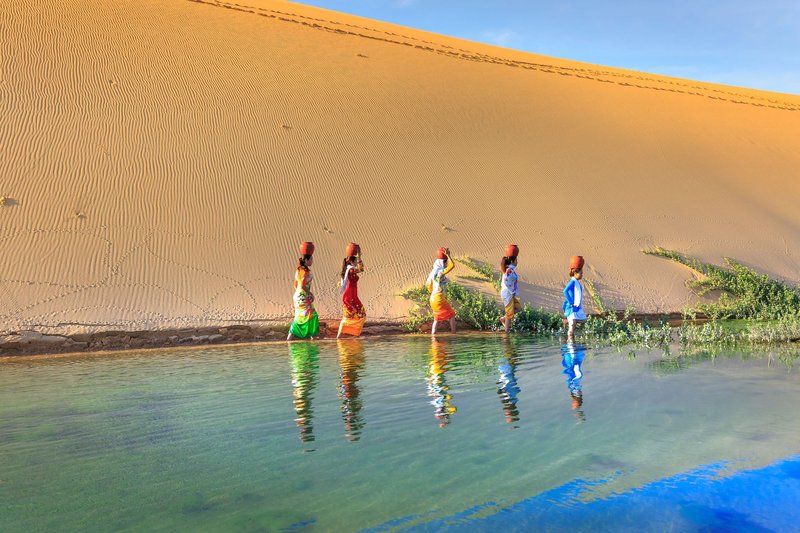
Siwa is remote enough — an eight-hour drive from Cairo, closer to the Libyan border than to any other town on this list — that its safety comes largely from isolation and community structure rather than policing. It’s a small, close-knit Amazigh (Berber) community built around a single main road, salt lakes, and date palm groves, and outsiders are conspicuous in a way that makes them looked-after rather than targeted.
The caveat is the road in: government convoy requirements have eased in recent years but can still apply depending on the current security assessment, so check conditions before you plan a self-drive route, and go with an organized transfer if one is offered.
Cairo
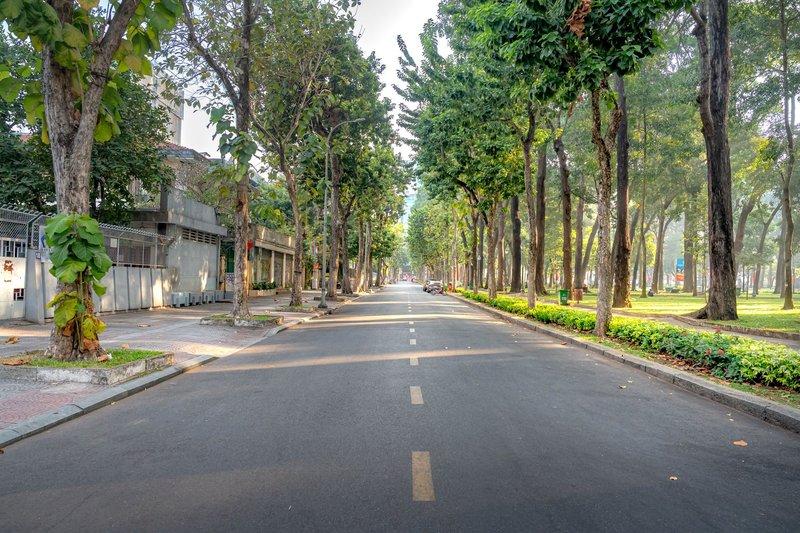
Cairo is safe for the volume of visitors it gets — millions a year — but it’s the one city on this list where neighborhood choice genuinely changes your experience, not just your view. Zamalek, the leafy island district on the Nile, has embassies, expat cafes, and quiet residential streets; it’s the default recommendation for first-time visitors for a reason. Garden City, home to the U.S. Embassy, is similarly calm and walkable. Maadi, a southern suburb with international schools and tree-lined avenues, is where much of Cairo’s long-term expat community actually lives.
Downtown Cairo (Wust al-Balad) is a different register entirely: dense, loud, and where most reports of aggressive touting, inflated taxi fares, and harassment of women travelers concentrate, particularly around Tahrir Square and the approaches to Khan el-Khalili bazaar. None of that amounts to a serious crime risk in the way it would in a comparably sized city in the Americas — Egypt’s violent crime rate against tourists is low, and the State Department’s Level 2 rating for Egypt overall reflects “increased caution,” not avoidance — but Downtown is where you tighten up, keep valuables zipped, and negotiate every fare before you get in the cab.
How These Cities Compare
| City | Vibe | Best For |
|---|---|---|
| Sharm El-Sheikh | Polished resort strip, heavy security | Families, first-timers |
| El Gouna | Gated, planned, low-key luxury | Families, repeat visitors |
| Dahab | Laid-back beach town, one main street | Solo travelers, divers |
| Hurghada | Larger resort town with a real old quarter | Budget travelers, nightlife |
| Luxor | Temple-dense, tourist-police-heavy | History-focused first-timers |
| Aswan | Slow, riverside, low-hassle | Solo female travelers, culture |
| Alexandria | Mediterranean port city, local crowds | Independent travelers |
| Siwa Oasis | Remote desert community | Off-grid, adventurous travelers |
| Cairo (Zamalek/Garden City/Maadi) | Leafy, embassy-district calm | Expats, longer stays |
Where you land on this list has less to do with Egypt’s overall safety — which is solid, if you read past the headlines — and more to do with what kind of trip you’re actually taking. A family wants El Gouna’s checkpoint at the gate. A solo diver wants Dahab’s one crowded street. Someone chasing the temples wants Luxor’s East Bank and a driver booked ahead for the West.