The Mediterranean is a geologically active crossroads where tectonic plates meet beneath islands and coastal ranges. From volcanic islands to calderas near major cities, the region’s eruptions and unrest have shaped landscapes and influenced settlements for millennia.
There are 11 Active volcanoes in the Mediterranean, ranging from Campi Flegrei to Vulcano; for each, Country/region,Last eruption (year),Elevation (m) are listed, which you’ll find below.
How is volcanic activity in the Mediterranean monitored?
Monitoring combines local seismic networks, GPS and satellite imagery, gas sampling and occasional marine surveys; national observatories (and European partnerships) track swarms, ground deformation and gas changes to warn of unrest and inform hazard maps.
Should people worry about visiting or living near these volcanoes?
Risk varies by site—some are long-dormant while others, like Campi Flegrei, warrant close attention—so follow local authority guidance, check recent alerts before travel, and respect exclusion zones and safety advice to reduce exposure.
Active Volcanoes in the Mediterranean
| Name | Country/region | Last eruption (year) | Elevation (m) |
|---|---|---|---|
| Etna | Italy (Sicily) | ongoing | 3,329 |
| Stromboli | Italy (Aeolian Islands) | ongoing | 924 |
| Vulcano | Italy (Aeolian Islands) | 1890 | 499 |
| Vesuvius | Italy (Campania) | 1944 | 1,281 |
| Campi Flegrei | Italy (Campania, Naples area) | 1538 | 458 |
| Ischia | Italy (Ischia Island, Campania) | 1302 | 789 |
| Santorini (Thera) | Greece (Cyclades) | 1950 | 567 |
| Nisyros | Greece (Dodecanese) | 1888 | 698 |
| Methana | Greece (Peloponnese peninsula) | ~230 BCE | 740 |
| Kolumbo (submarine) | Greece (NE of Santorini) | 1650 | −505 |
| Ferdinandea (Graham Island) | Italy (Sicily Channel) | 1831 | −8 |
Images and Descriptions
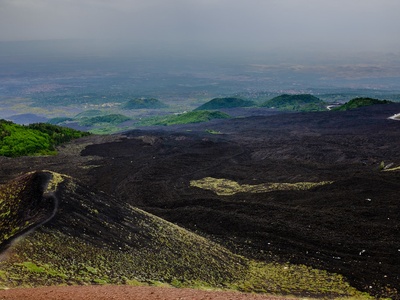
Etna
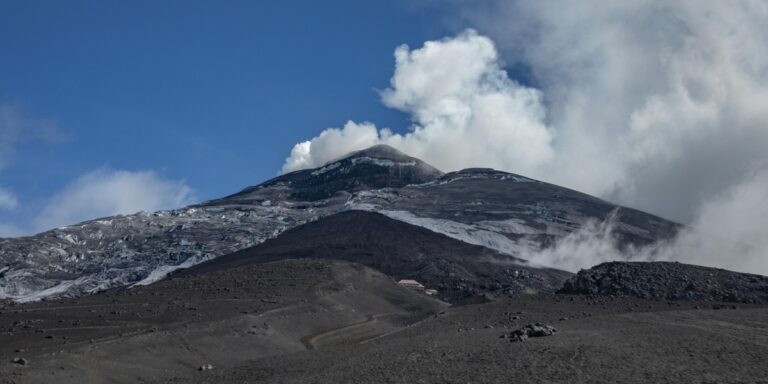
Europe’s most active volcano on Sicily, Etna produces frequent lava flows and ash plumes. Its persistent eruptions threaten nearby towns, airports and agriculture, making it both a scientific hotspot and a major regional hazard for Catania and surrounding communities.
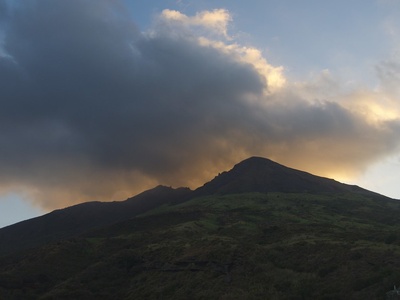
Stromboli
Stromboli erupts almost continuously with mild “Strombolian” explosions that throw glowing bombs and ash. It’s famous to tourists and volcanologists; hazards include falling projectiles, occasional larger blasts, ash, and localized tsunami risk from flank collapses.
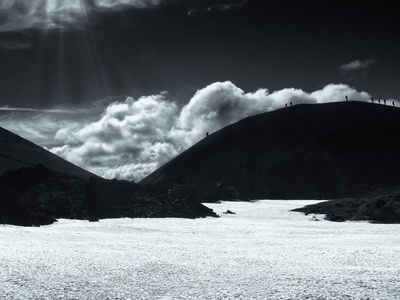
Vulcano
Vulcano’s 1888–1890 eruptions produced ash and lava; today it shows strong fumarolic activity and gas emissions. It’s notable historically (gave its name to “volcano”) and poses gas hazards and phreatic explosions for visitors and local settlements.
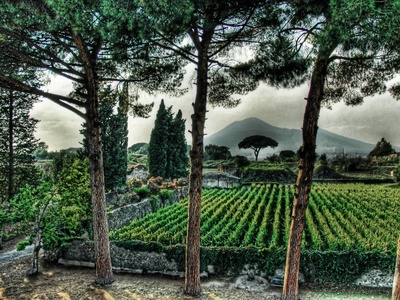
Vesuvius
Vesuvius is infamous for the AD 79 eruption that buried Pompeii and Herculaneum. Its 20th-century activity peaked in 1944; a dense population nearby makes it one of the world’s highest-risk volcanoes, with explosive eruptions and pyroclastic flows as primary hazards.

Campi Flegrei
A restless caldera west of Naples, Campi Flegrei produced Monte Nuovo in 1538 and shows recurrent uplift, seismic swarms and fumaroles. Its large caldera and history of explosive eruptions pose major regional hazards and complex eruption forecasting challenges.
Ischia
Ischia is a volcanic island with a history of explosive eruptions and strong geothermal activity; the last recorded eruption was in 1302. Hazards include phreatomagmatic blasts, landslides and thermal vents that affect residents and tourists.
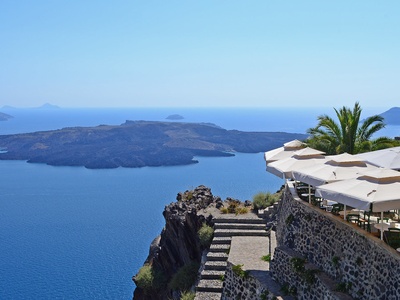
Santorini (Thera)
Santorini’s dramatic caldera is the remnant of major explosive events; Nea Kameni produced historic activity with the last vents active in 1950. Hazards include explosive eruptions, ash, pyroclastic flows and tsunamis from caldera/fault activity affecting the Aegean.
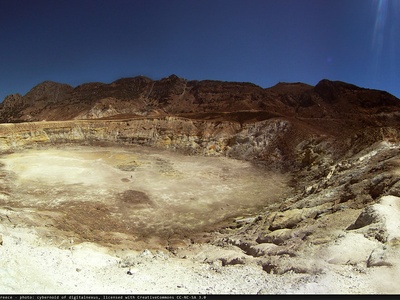
Nisyros
Nisyros hosts a large central caldera with vigorous fumaroles and hot springs. Its last recorded eruptions were in the 19th century; primary hazards are phreatic explosions, gas emissions and local ash that can affect nearby islands like Kos.
Methana
Methana is a volcanic peninsula with many small monogenetic cones and ongoing fumarolic activity. Last eruptions occurred in classical antiquity; hazards today are steam-driven explosions, local ash/fall and gas emissions near settlements and tourist sites.
Kolumbo (submarine)
Kolumbo is a submarine explosive cone that erupted catastrophically in 1650, producing tsunamis and gas-rich blasts. Its summit lies several hundred meters below sea level; monitored for hydrothermal unrest, it poses submarine eruption and tsunami hazards.
Ferdinandea (Graham Island)
Ferdinandea briefly rose as Graham Island during an 1831 eruption before subsiding to a shallow shoal. The historically confirmed eruption makes it notable; current hazards are mainly to shipping and potential short-lived resurfacing or local sea disturbances.