TLDR
South America has 12 sovereign countries and 12 capital cities. Bolivia is the one with a catch: Sucre is the constitutional capital, but the government sits in La Paz. French Guiana, whose capital is Cayenne, is an overseas department of France, so it doesn’t count as a country.
Here are the capital cities of South America in one table.
| Country | Capital | Urban population (approx.) | Altitude (approx.) | Note |
|---|---|---|---|---|
| Argentina | Buenos Aires | 15 million | 25 m | Greater Buenos Aires holds about a third of the country |
| Bolivia | La Paz (seat of government) / Sucre (constitutional) | 2 million (La Paz with El Alto) / 0.3 million | 3,640 m / 2,810 m | See the Bolivia section below |
| Brazil | Brasília | 3 million | 1,170 m | Purpose-built, inaugurated 1960 |
| Chile | Santiago | 7 million | 520 m | Congress meets in Valparaíso |
| Colombia | Bogotá | 8 million | 2,640 m | Cool plateau city near the equator |
| Ecuador | Quito | 2 million | 2,850 m | About 25 km from the equator |
| Guyana | Georgetown | 0.2 million | Sea level | Sits at or below high-tide level |
| Paraguay | Asunción | 3 million | 45 m | Founded 1537 |
| Peru | Lima | 10 million | 155 m | Rainless coastal desert capital |
| Suriname | Paramaribo | 0.25 million | 3 m | Dutch-speaking, wooden old town |
| Uruguay | Montevideo | 1.8 million | 45 m | Roughly half the country lives in its metro area |
| Venezuela | Caracas | 3 million | 900 m | Hemmed in by the Ávila mountain range |
Population figures are rounded and use the urban area where a city has sprawled past its official limits. Treat them as orders of magnitude, since sources define city boundaries differently.
Contents
- Bolivia: La Paz or Sucre?
- South America capitals map
- The Andean capitals
- The Southern Cone capitals
- Brasília
- The Guianas and French Guiana
- Capitals that aren’t the biggest city
- The highest capital city in the world
- How to remember them
- Self-check quiz
Bolivia: La Paz or Sucre?
Both, depending on what you mean by “capital.”
Sucre is the constitutional capital. It’s where Bolivia declared independence in 1825, and it’s home to the country’s Supreme Court. La Paz hosts the president, the cabinet and the legislature, which is why it works as the capital in every practical sense. The government moved there after the Federal War of 1898–1899 and never moved back. The CIA World Factbook lists them as the administrative and constitutional capitals respectively, which is the cleanest way to say it.
If a quiz asks for “the capital of Bolivia” and accepts one answer, check who wrote it. Most schoolbooks say La Paz or Sucre without explaining the split. Give both and you’ll be right under either rule.
For travel, the difference is concrete. Flights, embassies and ministries are in La Paz. Sucre is a quiet, whitewashed colonial city that most visitors treat as a place to slow down after the altitude of La Paz.
South America capitals map
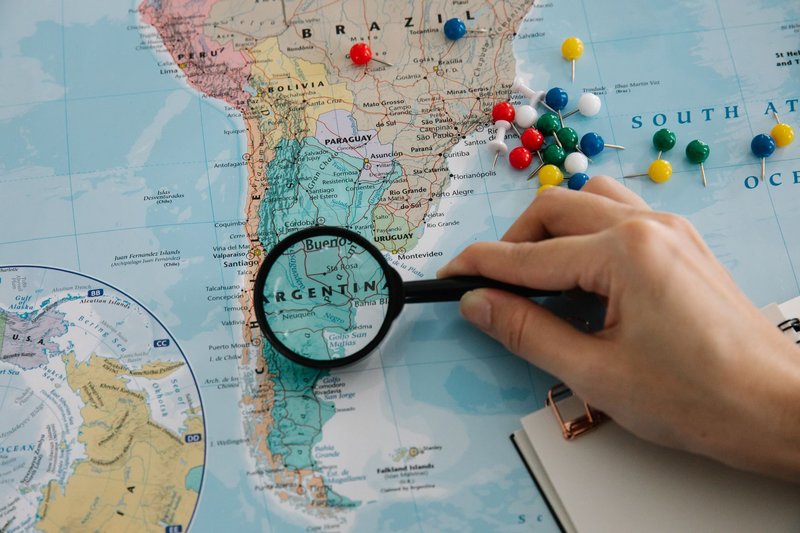
A labeled map is the fastest way to lock these in, and the layout matters more than the labels. Look at the continent as four blocks: the Andes running down the west coast, the Southern Cone at the bottom, the Brazilian bulk in the middle and east, and the three Guianas on the northeast shoulder.
Three capitals sit far from any ocean: Brasília on Brazil’s central plateau, Asunción on the Paraguay River, and La Paz in the high Andes. Bolivia is one of two landlocked countries on the continent, along with Paraguay. The sections below follow the same four blocks.
The Andean capitals
Bogotá, Colombia. At 2,640 m, Bogotá sits on a plateau called the Sabana de Bogotá, and it’s cool all year. Pack a jacket even though you’re about 4 degrees north of the equator.
Quito, Ecuador. At 2,850 m, Quito is higher than Bogotá and about 25 km south of the equator. Its colonial center was among the first sites ever inscribed on UNESCO’s World Heritage List, and UNESCO describes it as one of the best-preserved historic centers in Latin America. The altitude hits most visitors on the first night. Drink water, skip the heavy dinner.
Lima, Peru. Lima is the odd one out in the Andean group because it’s near sea level, not on a mountain. It sits on a cliff-edged desert coast that gets almost no rain, under a gray fog layer for much of the year. Francisco Pizarro founded it in 1535, and it now holds close to a third of Peru’s people.
La Paz, Bolivia. At roughly 3,640 m, it’s the highest seat of government in the world. The city fills a canyon, with the wealthier neighborhoods at the bottom where the air is thicker, and the neighboring city of El Alto perched on the plateau rim above. Cable-car lines connect them and double as public transit.
Sucre, Bolivia. At about 2,810 m, Sucre is roughly 800 m lower than La Paz, and you can feel it. The old town is a UNESCO site of white colonial buildings and is one of the more relaxed places to acclimatize.
Caracas, Venezuela. Caracas isn’t a high-altitude capital (about 900 m), but it’s a mountain-valley one. The Ávila range rises directly north of the city and separates it from the Caribbean coast, which is only about 15 km away as the crow flies. The valley’s narrowness is why the city is long and thin.
The Southern Cone capitals
Buenos Aires, Argentina. The city proper has about 3 million people, but Greater Buenos Aires has around 15 million, roughly a third of Argentina. It’s a flat river-port city on the Río de la Plata, built to look European, and it largely does.
Santiago, Chile. Santiago sits in a valley with the snow-capped Andes on one side and a lower coastal range on the other. It’s the political capital, but Chile’s National Congress meets in Valparaíso, about 120 km to the northwest. That split dates from 1990.
Asunción, Paraguay. Asunción was founded in 1537 and is one of the oldest cities in South America. It’s nicknamed the “Mother of Cities” because the expeditions that went on to found or refound other cities, Buenos Aires among them, set out from here. It’s also one of the quieter, less visited capitals on the continent.
Montevideo, Uruguay. Uruguay has about 3.4 million people, and roughly half of them live in the Montevideo metro area. That’s an unusually heavy concentration for one city. The city runs along the Río de la Plata with a long waterfront promenade called the Rambla, and locals spend evenings walking it with a thermos of mate.
Brasília
Brazil’s capital is a city that barely existed before 1956.
Rio de Janeiro had been the capital since 1763. In the late 1950s, President Juscelino Kubitschek pushed to move the capital inland, to open up the interior and pull development away from the coast. The idea had been written into Brazil’s 1891 constitution, but nobody had acted on it. Urban planner Lúcio Costa laid out the city in the shape of an airplane (or a bird, depending on who you ask) and architect Oscar Niemeyer designed the major buildings. Brasília was inaugurated on April 21, 1960.
It’s a UNESCO World Heritage Site for its modernist design, and UNESCO’s listing treats it as a landmark of 20th-century urban planning. It’s also one of three South American capitals that isn’t the biggest city in its country. São Paulo is roughly four times larger.
The Guianas and French Guiana
Georgetown, Guyana. Georgetown is the capital of the only English-speaking country in South America. The coast it sits on is at or just below high-tide level, so a seawall and drainage canals do a lot of the work. The city’s wooden colonial architecture includes St George’s Cathedral, regularly cited as one of the tallest wooden buildings in the world.
Paramaribo, Suriname. Paramaribo’s historic inner city is a UNESCO World Heritage Site, a rare Dutch colonial town built largely of wood in a tropical climate. Dutch is the official language. About 40 percent of Suriname’s population lives in or around the capital.
Cayenne, French Guiana. French Guiana is not a country. It’s an overseas department and region of France, and part of the European Union, so Cayenne is a regional prefecture, not a national capital. The CIA World Factbook profiles it separately as a French territory. Some lists count it and reach 13 “capitals,” which mixes countries with a territory. If your teacher or quiz asks for countries, the answer is 12.
Capitals that aren’t the biggest city
Most South American capitals are the largest city in their country. Three clear exceptions break the rule:
- Brazil: Brasília is the capital, but São Paulo is far larger, and Rio de Janeiro is also bigger.
- Bolivia: Neither La Paz nor Sucre is the largest city. Santa Cruz de la Sierra, in the lowlands, is.
- Ecuador: Guayaquil, the port city, has a larger population than Quito.
This is why “largest city” and “capital” questions give different answers. If a quiz asks for the biggest city in South America, the answer is São Paulo, which isn’t a capital at all.
The highest capital city in the world
La Paz, at about 3,640 m, is the highest seat of government on Earth. That’s the answer you’ll see on most “highest capital” lists.
The wrinkle is Bolivia’s two-capital setup. If you only count constitutional capitals, Sucre at 2,810 m is Bolivia’s entry, and Quito at 2,850 m takes the title of highest official capital. Bogotá, at 2,640 m, is third in South America under either rule.
How to remember them
Group them by region and the list shrinks from 12 to four small sets.
- Andes: Bogotá, Quito, Lima, La Paz/Sucre, plus Caracas at the northern end.
- Southern Cone: Buenos Aires, Santiago, Montevideo, Asunción.
- Brazil: Brasília.
- Guianas: Georgetown, Paramaribo (plus Cayenne, the territory).
A memory hook for the Andean four: Quito sits on the equator, Lima on the sea, Bogotá in the middle and La Paz on the roof.
For the Guianas, go east along the coast from Venezuela: Georgetown (English), Paramaribo (Dutch), Cayenne (French). The language order matches the geography.
Self-check quiz
Cover the table and try these. Answers are below the list.
- What is the capital of Brazil, and what year was it inaugurated?
- Which city is Bolivia’s constitutional capital?
- Which South American capital is at the highest altitude?
- Which capital is nicknamed the “Mother of Cities”?
- Name the three Guianas capitals.
- Name one of the three countries whose capital isn’t its largest city.
- Which capital city sits in a coastal desert and gets almost no rain?
- Is Cayenne the capital of a country?
Answers: 1. Brasília, 1960. 2. Sucre. 3. La Paz. 4. Asunción. 5. Georgetown, Paramaribo, Cayenne. 6. Brazil, Bolivia or Ecuador. 7. Lima. 8. No, it’s the capital of French Guiana, an overseas department of France.