Ask ten people which countries make up “Northern Europe” and you’ll get ten answers. Some stop at the Nordics. Some sweep in the entire Baltic coast and the British Isles. The UN puts the line in one place, geographers in another, and travel writers wherever it suits the article.
That fuzziness matters, because it changes who counts. So before naming a single people, the region itself needs pinning down. Then we can get to the actual question most searchers are after: who lives here, where they came from, and how the populations break down country by country.
Contents
- What Counts as Northern Europe
- Germanic and Scandinavian Peoples
- Finnic and Finno-Ugric Peoples
- Baltic Peoples
- The Sami: Europe’s Indigenous North
- Celtic Peoples of the British Isles
- Recognized Minorities and Russian-Speaking Populations
- Recent Immigrant Communities
- Population by Country: A Quick Reference
- How the Pieces Fit Together
What Counts as Northern Europe
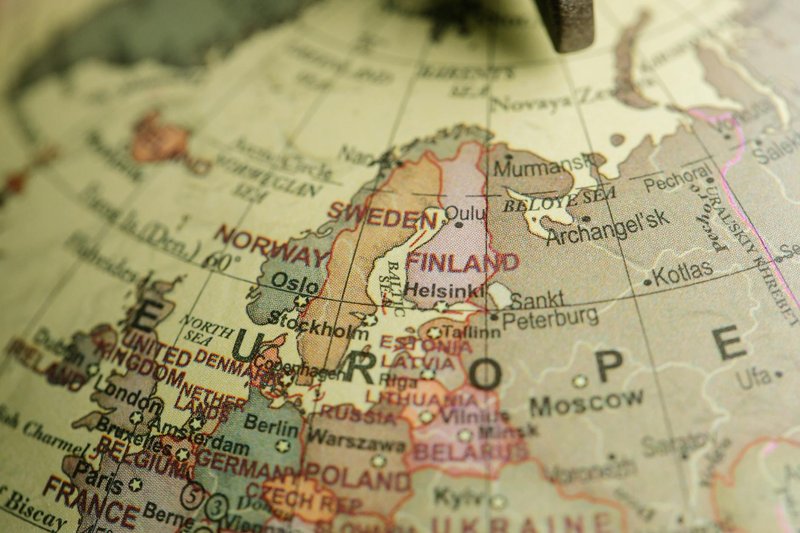
The UN Statistics Division’s geoscheme draws Northern Europe to include the five Nordic countries (Denmark, Norway, Sweden, Finland, Iceland), the three Baltic states (Estonia, Latvia, Lithuania), the United Kingdom, Ireland, and the smaller territories like the Faroe Islands, the Isle of Man, and the Channel Islands. That’s the definition this guide uses, because it’s the one statistical agencies and most reference sources actually run on.
Geographers sometimes shrink the region to just the Nordics, or stretch it to fold in parts of northern Germany and northwest Russia. Those are defensible too. But the UN grouping has the advantage of being consistent, so the numbers add up the same way every time.
What ties the region together isn’t a single ethnicity. It’s a cluster of language families and shared history: Germanic languages in the west and north, Finnic and Sami languages in the far north, Baltic languages on the eastern shore, and Celtic languages clinging to the edges of the British Isles. Map the languages and you’ve nearly mapped the peoples.
Germanic and Scandinavian Peoples
The numerical heavyweight of Northern Europe is the Germanic family, and within it the Scandinavian (North Germanic) branch.
Danes, Norwegians, Swedes, and Icelanders all descend from Old Norse speakers, which is why a Dane can read a Norwegian newspaper with only mild effort. Swedish, Danish, and the two written standards of Norwegian (Bokmål and Nynorsk) form a dialect continuum where mutual intelligibility is the rule, not the exception. Icelandic is the outlier: isolated in the North Atlantic since the Viking settlement of the 9th century, it changed so little that modern Icelanders can read the medieval sagas in something close to the original. The Faroese, on the Faroe Islands, speak the closest living relative to Old West Norse.
The West Germanic branch covers the English and the majority population of the United Kingdom, plus close historical ties to the Frisians and Dutch just across the North Sea. English is West Germanic at its core, even after centuries of French and Latin vocabulary piled on top after 1066.
Scandinavians make up the overwhelming majority in their home countries, often 85 to 90 percent or more before recent immigration is counted. This is the closest thing Northern Europe has to a demographic spine.
Finnic and Finno-Ugric Peoples
Here’s where the map stops behaving. Finland sits geographically among the Nordics and shares their politics, their flag design, and their winters. But Finnish isn’t a Germanic language at all. It belongs to the Finno-Ugric branch of the Uralic language family, making it a linguistic cousin of Estonian and a distant relative of Hungarian, not Swedish.
The Finns are the largest Finnic people, around 5.5 million strong. Across the Gulf of Finland, the Estonians speak a closely related Finnic language and are sometimes grouped with the Finns as their southern siblings. Smaller Finnic peoples scatter through the region’s history: the Karelians along the Finnish-Russian border, the nearly vanished Livonians of Latvia’s coast, and the Kvens of northern Norway, descendants of Finnish-speaking migrants.
There’s also a Swedish-speaking Finnish minority, roughly 5 percent of Finland’s population, concentrated along the southern and western coasts and in the Åland Islands. Swedish is an official language of Finland precisely because of them, a leftover from centuries of Swedish rule.
Baltic Peoples
The Baltic peoples are one of the oldest and most overlooked branches of the European family. Latvians and Lithuanians speak Baltic languages, which along with the Slavic languages form the Balto-Slavic group, but the two Baltic tongues are strikingly archaic. Lithuanian in particular preserves grammatical features so old that linguists treat it as a kind of living fossil for reconstructing the ancient Proto-Indo-European parent language.
Estonia breaks the pattern. Despite sitting on the Baltic coast and being lumped in as a “Baltic state,” Estonians are Finnic, not Baltic, by language and ancestry. So “Baltic states” is a political label, not an ethnic one: two Baltic peoples and one Finnic people sharing a coastline and a 20th-century history.
The native Baltic populations dominate Lithuania (around 84 percent ethnic Lithuanian) and form a clear majority in Latvia, though Latvia’s balance is more delicate, which brings us to the region’s minorities.
The Sami: Europe’s Indigenous North
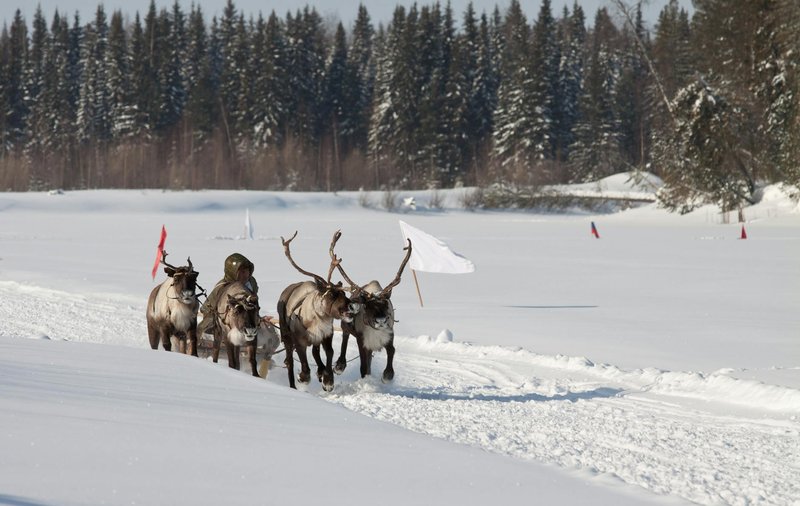
The Sami are the only people in the European Union with recognized indigenous status, and the incumbent articles on this topic barely mention them. They’ve lived across the northern reaches of Norway, Sweden, Finland, and Russia’s Kola Peninsula, a region historically called Sápmi, for thousands of years, predating the Scandinavian and Finnish populations that now surround them.
Estimates put the Sami population somewhere between 80,000 and 100,000, with the largest share in Norway. They speak not one language but a cluster of around nine living Sami languages, several of them endangered, all belonging to the same Uralic family as Finnish and Estonian. Northern Sami is the most widely spoken.
Reindeer herding remains a cultural and legal cornerstone, and in several countries only Sami are permitted to herd reindeer in traditional districts. The relationship with Nordic governments was, for most of the 20th century, ugly: forced assimilation, suppression of the languages, and land disputes that continue today. Norway, Sweden, and Finland each now have an elected Sami Parliament, a Sámediggi, though their powers are mostly advisory. If you want the single fact that separates a thorough guide from a thin one, it’s this: Northern Europe has an indigenous people, and they were here first.
Celtic Peoples of the British Isles
On the western edge of the region, the Celtic peoples hold the oldest pre-Germanic linguistic ground in the British Isles. The Irish and the Scottish Gaels speak Goidelic Celtic languages (Irish and Scottish Gaelic), while the Welsh speak a Brythonic Celtic language, Welsh, which remains the strongest surviving Celtic language with real day-to-day use, especially in northern and western Wales.
These languages were once spoken across most of Britain and Ireland before Germanic and later English expansion pushed them to the Atlantic fringe. Irish is an official language of Ireland and the EU, and Welsh has protected status in Wales, but daily-use numbers are a fraction of the populations who identify with these cultures.
It’s worth separating identity from language here. Millions identify as Irish, Scottish, or Welsh; far fewer speak the ancestral Celtic tongue fluently. The culture outlived the language’s dominance.
Recognized Minorities and Russian-Speaking Populations
The cleanest test of whether a guide to this region is serious is whether it deals with the Baltic Russian minorities, and most don’t.
After decades as Soviet republics, Estonia and Latvia ended the 20th century with very large Russian-speaking populations. In Latvia, ethnic Russians make up roughly a quarter of the population; in Estonia, around a quarter as well, concentrated in the capital regions and the industrial northeast. Citizenship policy after independence left many of these residents as “non-citizens,” a status that persists in smaller numbers and remains politically charged.
This pattern of a large minority tongue sitting beside the national language isn’t unique to the Baltics; it shows up across the continent, much as the mix of languages spoken in Romania sets Romanian alongside a sizable Hungarian-speaking community and a string of smaller minority tongues.
Other recognized minorities round out the picture:
- Irish Travellers, a distinct indigenous ethnic minority in Ireland and the UK with their own history, customs, and language (Shelta), formally recognized by the Irish state in 2017.
- Roma communities, present across the Baltics and beyond.
- Tornedalians (Kvens and Meänkieli speakers) in the Sweden-Finland borderlands.
- Jewish communities, historically significant in the Baltics before the Second World War and present today in smaller numbers.
These groups don’t show up in a simple percentage pie chart, which is exactly why the thin articles skip them.
Recent Immigrant Communities
The last few decades rewrote the demographics of several Northern European cities. Sweden took in large numbers of refugees and migrants from Syria, Iraq, Somalia, and the former Yugoslavia, and roughly a fifth of its population is now foreign-born. The United Kingdom’s largest minority communities trace to South Asia (India, Pakistan, Bangladesh) and the Caribbean, a legacy of empire and postwar labor migration. Norway and Denmark have growing communities from Poland, the Middle East, and the Horn of Africa.
These populations are real, growing, and increasingly central to any honest demographic snapshot. A guide that stops at “majority group plus historical minorities” is describing the region as it was in 1990, not as it is now.
Population by Country: A Quick Reference
This table sketches the dominant ethnic or national group and the most significant minorities per country. Figures are approximate and drawn from national census and statistics-agency data; exact percentages shift year to year and depend on whether the measure is ethnicity, ancestry, or country of birth.
| Country | Majority group | Notable minorities |
|---|---|---|
| Sweden | Swedes (~80%) | Finns, foreign-born (~20%), Sami |
| Norway | Norwegians (~83%) | Sami, Poles, foreign-born communities |
| Denmark | Danes (~86%) | Faroese, Greenlandic Inuit, foreign-born |
| Finland | Finns (~89%) | Swedish-speaking Finns (~5%), Sami, Russians |
| Iceland | Icelanders (~80%) | Poles, other foreign-born |
| Estonia | Estonians (~69%) | Russians (~24%), Ukrainians, Belarusians |
| Latvia | Latvians (~63%) | Russians (~25%), Belarusians, Poles |
| Lithuania | Lithuanians (~84%) | Poles (~6%), Russians (~5%) |
| United Kingdom | English/British (~80%+) | South Asian, Black, Welsh, Scottish, Irish |
| Ireland | Irish (~76%) | Irish Travellers, Poles, UK-born, others |
Two things jump out. First, the Nordic countries are far more homogeneous on paper than the Baltic states, where Russian minorities are large enough to shape national politics. Second, the United Kingdom and Sweden are the most diverse, with foreign-born and minority shares well into the double digits. Reading a table like this is the same exercise whatever the region; the way we break down the ethnic groups of Bolivia into population share, main regions, and primary languages follows exactly the same logic applied to a far more fragmented society.
How the Pieces Fit Together
Strip away the borders and Northern Europe resolves into a handful of overlapping layers. The indigenous Sami in the far north. A broad Germanic and Scandinavian majority across the Nordics and Britain. A Finnic belt running from Finland into Estonia. The archaic Baltic peoples of Latvia and Lithuania. The Celtic fringe on the Atlantic edge. Then, layered on top, the Russian-speaking minorities of the Baltics and the immigrant communities reshaping the cities.
No single ethnic group defines the region. What defines it is the layering, indigenous, historical, and recent, each one still visible if you know where the language lines fall. Get the languages straight and the peoples follow. That’s the thread the thin guides never pick up, and it’s the one worth holding onto.