Search for “countries with green, pink, and white flags” and you’re chasing something that doesn’t exist. No United Nations member state flies a national flag combining those three colors. Not one.
That’s not a dodge — it’s the honest starting point, and it’s worth understanding why before we get to what does exist, because the answer says something real about how flags get designed.
Table of Contents
- The quick answer
- The one flag that actually qualifies
- Why pink barely exists in flag design
- The two countries that do use pink
- Flags by rare color: pink, orange, and purple
- If you meant the common tricolor
The quick answer
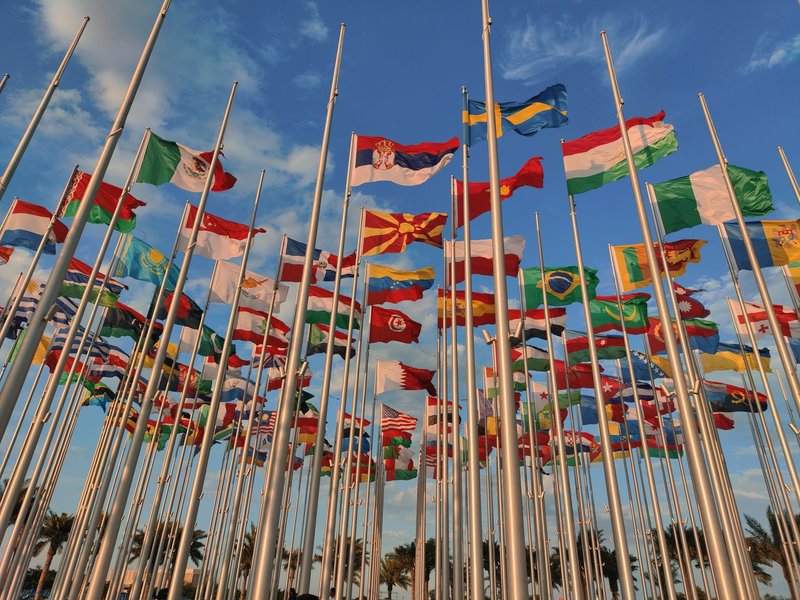
Zero sovereign countries have an official national flag in green, pink, and white. If you’re picturing a tricolor with pink in it, you’re likely thinking of one of two things: the unofficial Pink, White and Green of Newfoundland and Labrador (a Canadian province, not a country), or you’re misremembering the far more common green-white-red combination flown by Italy, Mexico, Hungary, Bulgaria, and a dozen other nations. Wikipedia’s own list of flags by color combination has no entry for a green-pink-white national flag, because there isn’t one to list.
The one flag that actually qualifies
The closest real match is the Newfoundland Tricolour — three vertical bands of green, white, and pink, in that order from the hoist. It’s flown across Newfoundland to this day, painted on porches and stitched into scarves, but it has never been the province’s official flag. That title belongs to the blue, white, and red design by artist Christopher Pratt, adopted in 1980.

The Tricolour’s own origin story is messier than the legend attached to it. Historians at Memorial University’s Newfoundland and Labrador Heritage site trace it to the Star of the Sea Association, a Catholic fishermen’s benefit society founded in St. John’s in 1871 — decades before the flag carried any political meaning. The widely repeated symbolism (green for the Irish, pink for the English, white for peace between them) was mostly assembled in the 1970s, during the province’s flag debates, as a way to make an Irish-coded design palatable to a majority-Protestant population. It’s a good story. It’s just not an old one. The Government of Newfoundland and Labrador is straightforward on this point: the Tricolour has real cultural weight, but it has never held official status.
Why pink barely exists in flag design
Pink’s near-total absence from flags isn’t an accident of taste — it’s a supply chain problem that outlived its original cause. Reliable red dye came from cochineal, a scale insect harvested from prickly pear cacti across Mexico and Central America; under the right chemical conditions, the same insect could yield pink, purple, or peach, but pink specifically faded fast and cost a fortune. Smithsonian Magazine’s history of cochineal notes the dye was valuable enough to function as tribute paid to Aztec and Inca rulers, on par with gold. Flags are functional objects first — designed to hold color at a distance, in weather, for decades — and a hue that bleaches out in a season never made the cut when deep reds and blues would do the job for less money and more permanence.
There’s a symbolic gap too. National Geographic’s reporting on the color’s cultural history traces how pink only became coded as soft, feminine, or decorative in the last couple of centuries — associations that run opposite to the authority, sacrifice, and sovereignty flags are built to project. Synthetic dyes solved the cost and fade problems a century ago. The symbolic mismatch never got solved, so pink stayed rare in national design even after it became cheap to produce.
The two countries that do use pink
Two — and only two — national flags carry pink anywhere on them, and both are technicalities.
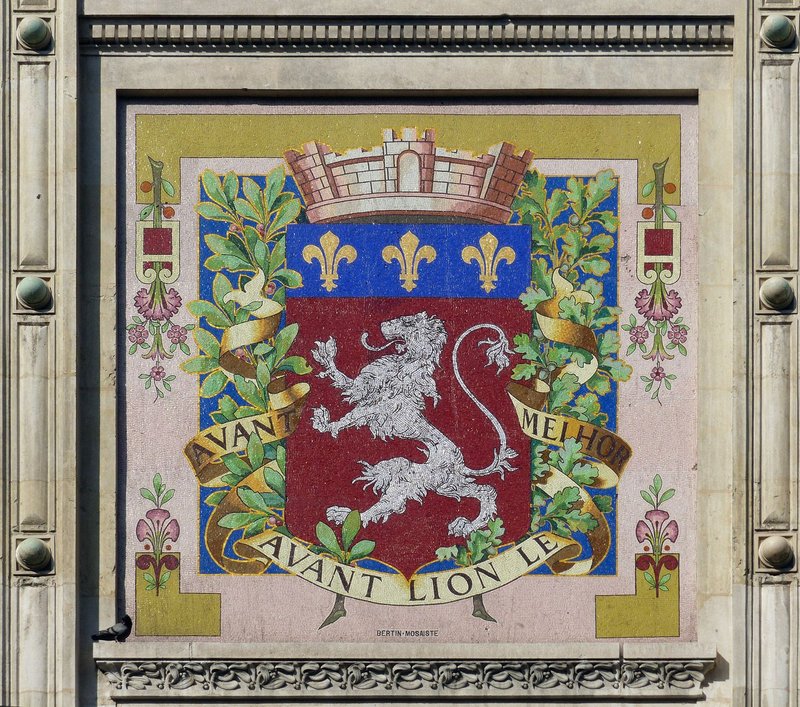
Spain: the coat of arms in the center of the flag depicts the Lion of León, historically described in heraldry as purple but commonly rendered in a color that reads as unmistakably pink against the flag’s red and yellow bands. It’s a quirk of how that specific pigment has been reproduced over centuries, not a deliberate pink design choice.
Mexico: the eagle-and-cactus emblem on the flag includes tunas — the small flowers and fruit of the prickly pear cactus — occasionally illustrated in pink or magenta tones, depending on the rendering.
Neither flag reads as “pink” to a casual viewer. Both are red, white, green, or red-yellow flags with a small pink detail buried in their central emblem. That’s the full extent of pink’s presence in national vexillology — which is exactly why a green-pink-white combination was never going to turn up.
Flags by rare color: pink, orange, and purple
Pink isn’t the only color that’s nearly absent from the world’s flags. Here’s how the rare ones stack up:
| Color | National flags featuring it | Where it appears |
|---|---|---|
| Pink | Spain, Mexico | Coat of arms details only (León lion, cactus flowers) |
| Purple | Dominica, Nicaragua (rainbow segment) | Central emblem or rainbow band |
| Orange | India, Ireland, Ivory Coast, Niger, Armenia | Full stripe or band |
| Brown | None (no current national flag) | — |
| Grey/Silver | None as a solid field | — |
Orange, despite reading as an unusual flag color, actually shows up in a handful of well-known tricolors. Pink and purple are the two true outliers — present in fewer than a handful of flags combined, and never as a dominant color. Other uncommon combinations—like blue, pink, and white—show the same pattern: no sovereign nation uses them.
If you meant the common tricolor
If green, white, and red is what you actually had in mind, that combination is a real and common one: Italy, Mexico, Hungary, Bulgaria, Iran, Belarus, and Madagascar all use some arrangement of it, among others. It’s one of the most recognizable tricolor patterns in vexillology, largely because green-white-red reads clearly at a distance and carries centuries of European flag tradition behind it. It’s a different question from the one you started with, but if a green-pink-white flag was the assumption, this is almost certainly the flag pattern you were actually picturing.