Flags tell stories about history, religion, geography and identity; color choices are rarely random. When yellow and white appear together they often point to shared symbolism — light, peace, or specific cultural ties — across very different nations and regions.
There are 46 countries with yellow and white flags, ranging from Andorra to Zimbabwe. For each entry I list Flag (emoji),Region,Meaning (max 15 words) so you can quickly compare visuals, location and symbolism; you’ll find below.
How many countries actually use yellow and white together on their national flags?
About forty-six national flags incorporate both yellow and white in some form — from small emblems to broad bands — reflecting varied traditions rather than a single design trend; the list below groups them by region and concise meaning.
Do the yellow and white color combinations share common symbolic meanings?
They often overlap — yellow for sunlight, wealth or generosity and white for peace or purity — but meanings depend on local history, religion and heraldry, so each country’s entry notes the most typical interpretation.
Countries with Yellow and White Flags
| Country | Flag (emoji) | Region | Meaning (max 15 words) |
|---|---|---|---|
| Andorra | 🇦🇩 | Europe | Yellow for the Counts of Foix; white in the coat of arms for peace. |
| Argentina | 🇦🇷 | Americas | White represents clouds and purity; the yellow “Sun of May” symbolizes the Incan sun god. |
| Belize | 🇧🇿 | Americas | Yellow figures in the coat of arms; the white circle signifies peace and unity. |
| Bolivia | 🇧🇴 | Americas | Yellow for mineral wealth; white in the coat of arms for the snow-capped Andes. |
| Bosnia and Herzegovina | 🇧🇦 | Europe | The yellow triangle symbolizes the three main ethnic groups; white stars represent Europe. |
| Brazil | 🇧🇷 | Americas | Yellow rhombus for mineral wealth; the white banner “Ordem e Progresso” signifies order. |
| Brunei | 🇧🇳 | Asia | The yellow field represents the sultan; diagonal white stripe represents a chief minister. |
| Central African Republic | 🇨🇫 | Africa | The yellow star symbolizes independence; the white stripe represents peace and dignity. |
| Costa Rica | 🇨🇷 | Americas | White for peace and wisdom; yellow in the coat of arms for “golden grain” coffee. |
| Croatia | 🇭🇷 | Europe | White represents peace; yellow in the crown’s shields symbolizes historic Croatian regions. |
| Cyprus | 🇨🇾 | Europe | The map is copper-yellow for its ancient copper deposits; on a white peace field. |
| East Timor | 🇹🇱 | Asia | Yellow for the traces of colonialism; the white star is the light that guides. |
| Ecuador | 🇪🇨 | Americas | Yellow represents agricultural wealth; white in the coat of arms for Andean snows. |
| Egypt | 🇪🇬 | Africa | White for peace and purity; the yellow Eagle of Saladin represents power. |
| El Salvador | 🇸🇻 | Americas | White for peace and concord; yellow in the coat of arms symbolizes liberty. |
| Equatorial Guinea | 🇬🇶 | Africa | White for peace; yellow seeds in the coat of arms’ silk cotton tree. |
| Eswatini | 🇸🇿 | Africa | White on the shield for racial harmony; yellow for the nation’s mineral resources. |
| Fiji | 🇫🇯 | Oceania | White in the shield represents peace; the yellow lion symbolizes its ties to Britain. |
| Guatemala | 🇬🇹 | Americas | White represents peace and purity; yellow on the scroll in the coat of arms. |
| Kiribati | 🇰🇮 | Oceania | Yellow frigatebird and sun over a blue and white sea represent its oceanic location. |
| Kosovo | 🇽🇰 | Europe | The yellow map represents the nation’s land; six white stars symbolize major ethnic groups. |
| Malaysia | 🇲🇾 | Asia | Yellow for royalty; white stripes represent integrity and purity. |
| Mexico | 🇲🇽 | Americas | White for unity; yellow in the central coat of arms, particularly the snake. |
| Moldova | 🇲🇩 | Europe | Yellow for sovereignty and joy; white details within the central coat of arms. |
| Namibia | 🇳🇦 | Africa | The yellow sun for life and energy; the white stripes for peace and unity. |
| Nauru | 🇳🇷 | Oceania | The yellow line represents the Equator; the white star represents the nation’s 12 tribes. |
| Nicaragua | 🇳🇮 | Americas | White for the nation’s territory; yellow details in the central coat of arms. |
| Paraguay | 🇵🇾 | Americas | White for peace and unity; a yellow star of May is in the national seal. |
| Philippines | 🇵🇭 | Asia | The white triangle for equality; the yellow sun and stars for main island groups. |
| Portugal | 🇵🇹 | Europe | Yellow armillary sphere for the Age of Discoveries; white is on the central shield. |
| Saint Kitts and Nevis | 🇰🇳 | Americas | Yellow stripes for year-round sunshine; the two white stars symbolize hope and liberty. |
| Saint Lucia | 🇱🇨 | Americas | Yellow for sunshine and prosperity; white borders for racial harmony. |
| San Marino | 🇸🇲 | Europe | White for the snow on Mount Titano; yellow crowns represent sovereignty. |
| Serbia | 🇷🇸 | Europe | White represents peace; yellow crowns on the eagle symbolize state sovereignty. |
| Seychelles | 🇸🇨 | Africa | Yellow for the sun giving light and life; white for social justice and harmony. |
| Slovakia | 🇸🇰 | Europe | White represents peace; the yellow crown in the emblem symbolizes sovereignty. |
| Slovenia | 🇸🇮 | Europe | White for peace; the yellow stars in the emblem represent the Counts of Celje. |
| Solomon Islands | 🇸🇧 | Oceania | The yellow stripe represents the sun’s rays; five white stars symbolize the provinces. |
| South Africa | 🇿🇦 | Africa | Yellow for natural resources like gold; white for peace and harmony. |
| South Sudan | 🇸🇸 | Africa | The yellow star represents unity; the white stripes signify peace after years of war. |
| Spain | 🇪🇸 | Europe | Yellow for generosity and riches; white is in the coat of arms’ Pillars of Hercules. |
| Togo | 🇹🇬 | Africa | Yellow stripes represent mineral wealth; the white star of hope is in the canton. |
| Uruguay | 🇺🇾 | Americas | White stripes for the original departments; the yellow “Sun of May” symbolizes independence. |
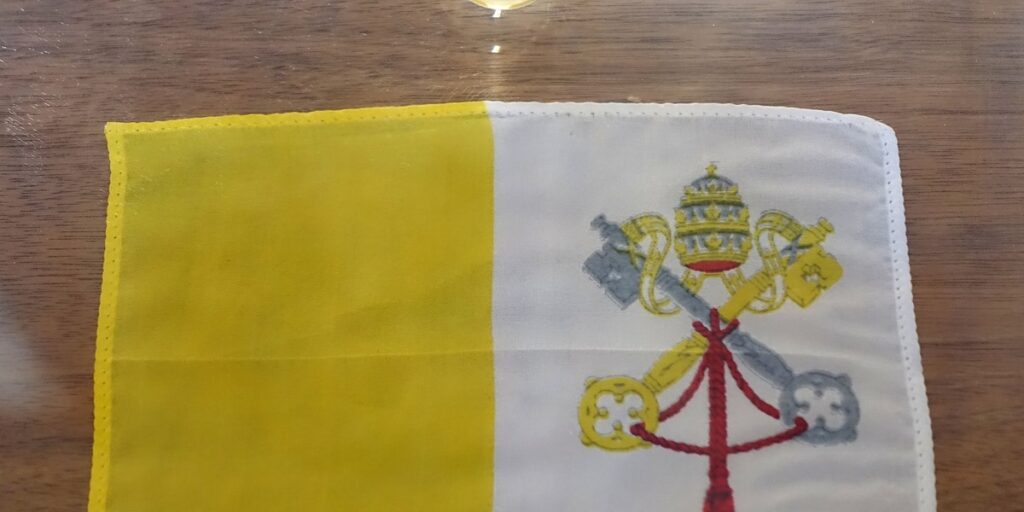
| Vatican City | 🇻🇦 | Europe | A bicolor of yellow and white, representing the pope’s spiritual and temporal authority. |
| Venezuela | 🇻🇪 | Americas | Yellow for the wealth of the land; eight white stars for the original provinces. |
| Zimbabwe | 🇿🇼 | Africa | The yellow bird represents national history; the white triangle symbolizes peace. |
Descriptions
Andorra
This tricolor features yellow and white within its detailed central coat of arms, which represents the co-princes of Andorra. The yellow field is one of several historic symbols.
Argentina
The iconic light blue and white stripes evoke the sky, with a radiant yellow “Sun of May” in the center, a powerful emblem of the nation’s independence and heritage.
Belize
The flag’s centerpiece is a white circle containing the coat of arms. Within the emblem, yellow details highlight tools and a mahogany tree, symbolizing the nation’s key industries.
Bolivia
A bold tricolor of red, yellow, and green. The nation’s coat of arms, containing white and other colors, is often centered on the yellow stripe representing mineral deposits.
Bosnia and Herzegovina
A striking design featuring a large yellow triangle against a blue field. A diagonal line of white stars cuts across the flag, symbolizing the nation’s aspiration to join Europe.
Brazil
Known as the “Auriverde,” its green field holds a yellow rhombus symbolizing wealth. A blue circle with white stars and a central white banner displaying the national motto sits at its heart.
Brunei
This unique flag has a bright yellow field, the royal color, cut by diagonal white and black stripes. In the center is the red national crest, a symbol of Islam.
Central African Republic
This colorful flag combines pan-African and French colors. It features four horizontal stripes, including white, with a vertical red stripe and a yellow “Star of Independence” in the canton.
Costa Rica
Five horizontal stripes of blue, white, and red define this flag. When the coat of arms is included, its yellow details symbolize the nation’s valuable “golden grain” coffee exports.
Croatia
A classic red-white-blue tricolor is distinguished by the “šahovnica” checkerboard shield in the center. Above it, a crown of smaller shields with yellow/gold details represents historic regions.
Cyprus
Simple and elegant, this flag features a copper-yellow map of the island nation itself on a pure white background, with two green olive branches below symbolizing peace between communities.
East Timor
A striking flag with a red field overlaid by a black triangle and a larger yellow triangle. Inside the black triangle is a single white star, symbolizing peace and guidance.
Ecuador
A dominant yellow stripe sits above smaller blue and red stripes. The national version includes the intricate coat of arms, which features white snow on Mount Chimborazo.
Egypt
This red, white, and black tricolor is a common Arab liberation design. Centered on the white band is the golden-yellow Eagle of Saladin, a powerful symbol of Arab unity.
El Salvador
A blue-white-blue triband representing the oceans and peace. The national version is centered with the coat of arms, which includes a yellow-bordered triangle and radiant Phrygian cap.
Equatorial Guinea
This flag features green, white, and red stripes with a blue triangle. The central white stripe holds the coat of arms, which includes a silk cotton tree with yellow seeds.
Eswatini
Centered on a field of blue, yellow, and crimson stripes is a large Emasotsha shield. The shield’s black and white pattern and yellow details are key cultural symbols.
Fiji
A light blue field holds the Union Jack and the national shield. The shield’s white background is quartered by a red cross, with a golden-yellow lion at the top.
Guatemala
Two sky blue stripes flank a central white stripe, which stands for peace. The national emblem, featuring the Quetzal bird on a scroll with yellow text, sits in the middle.
Kiribati
The top half depicts a yellow frigatebird flying over a rising yellow sun. The bottom half features three wavy white lines on a blue background, representing the Pacific Ocean.
Kosovo
This modern flag features a golden-yellow map of Kosovo’s territory on a deep blue field. An arc of six white stars above the map represents the country’s diverse people.
Malaysia
The “Stripes of Glory” features red and white stripes and a blue canton. The canton contains a yellow crescent and 14-point star, symbolizing Islam and the unity of its states.
Mexico
A classic green, white, and red tricolor. The central white band is charged with the national coat of arms: an eagle devouring a snake, which has prominent yellow and gold details.
Moldova
This tricolor of blue, yellow, and red is distinguished by the national coat of arms on the central yellow stripe. The emblem includes a white-detailed eagle holding an olive branch.
Namibia
A striking design with a red diagonal stripe bordered by white. A bright yellow 12-pointed sun shines from the blue upper triangle, representing the nation’s energy and people.
Nauru
A deep blue field is bisected by a thin yellow horizontal stripe, representing the Equator. Just below the stripe sits a 12-pointed white star, symbolizing the island’s location.
Nicaragua
Similar to El Salvador’s flag, it uses a blue-white-blue triband. In the center, the coat of arms features a triangle with yellow borders and rays from a Phrygian cap.
Paraguay
This unique flag has different emblems on its obverse and reverse sides. The central white stripe on both sides features seals that include a prominent five-pointed yellow star.
Philippines
This flag has blue and red horizontal bands and a white triangle at the hoist. Inside the triangle is a golden-yellow sun with eight rays and three five-pointed yellow stars.
Portugal
A green and red bicolor with the national coat of arms. The emblem features a historic white shield set upon a golden-yellow armillary sphere, celebrating Portugal’s navigational history.
Saint Kitts and Nevis
A black diagonal band with yellow edges separates a green and a red triangle. Two white five-pointed stars are located on the black band, representing the two islands.
Saint Lucia
A cerulean blue field is charged with a central emblem. The emblem is a black arrowhead, bordered in white, superimposed on a golden-yellow isosceles triangle.
San Marino
A simple bicolor of white and light blue, representing peace and liberty. The national version of the flag includes the coat of arms, featuring three towers with yellow crowns.
Serbia
A pan-Slavic tricolor of red, blue, and white. The flag is charged with the national coat of arms, which features a white double-headed eagle beneath two golden-yellow crowns.
Seychelles
Five oblique bands of blue, yellow, red, white, and green radiate from the corner. The yellow and white bands represent the sun that gives life and social justice.
Slovakia
A pan-Slavic white, blue, and red tricolor. It is distinguished by the coat of arms, which features a white double cross on a red shield, topped by a yellow crown.
Slovenia
This flag is a white, blue, and red tricolor with the coat of arms in the canton. The shield depicts Mount Triglav and two wavy lines, with three yellow stars above.
Solomon Islands
A thin yellow diagonal stripe divides the flag into blue and green triangles. In the blue canton, five white stars are arranged to represent the nation’s main island groups.
South Africa
Often called the “Rainbow Flag,” its complex design includes a “Y” shape. It is one of the world’s most colorful flags, prominently featuring both yellow and white stripes.
South Sudan
This flag has black, red, and green stripes separated by thin white fimbriations. A blue triangle at the hoist holds a single, central yellow star representing the nation’s unity.
Spain
Known as the “Rojigualda,” it features red and yellow horizontal stripes. The national coat of arms, which contains white pillars wrapped in red scrolls, is on the yellow stripe.
Togo
This flag has five alternating green and yellow horizontal stripes. A red canton in the upper hoist corner is charged with a single white five-pointed star, known as the “Star of Hope.”
Uruguay
Known as the “National Pavilion,” this flag has nine horizontal stripes of white and blue. The canton features the “Sun of May,” a national symbol, on a white square.
Vatican City
A simple yet powerful flag divided vertically into two bands: yellow (or gold) and white. The white half contains the papal keys and tiara, symbols of the Holy See.
Venezuela
A tricolor of yellow, blue, and red. The central blue stripe features an arc of eight white stars, and the national version includes the coat of arms on the yellow band.
Zimbabwe
Seven horizontal stripes fill the field. A white triangle at the hoist contains a red star and the golden-yellow Great Zimbabwe Bird, a famous archeological artifact and national symbol.