National flags often use warm tones to convey history, identity and natural features, so spotting red or orange on a banner can reveal a lot about a country’s values or landscape. Whether a hue signals revolution, courage, sunsets or harvests depends on local history and design choices.
There are 4 countries with red and orange flags, ranging from Armenia to Zambia; for each, data are organized as Flag,Colors (hex),Meaning, which you’ll find below. The brief table makes it easy to compare exact shades and quick symbolic notes you’ll find below.
How do red and orange typically differ in flag symbolism?
Red usually represents strength, sacrifice or revolution and appears across many national flags for those reasons; orange often signals energy, harvest, cultural or regional identity and is less common at the national level. Context matters—historical events, religious ties and regional symbolism determine the final meaning for each country.
Can I rely on the provided hex codes to reproduce these flag colors?
Hex codes are close digital matches useful for design and web use, but printed or fabric colors can vary by material and standard (Pantone/CMYK). Use the hex values as a starting point and consult official government specifications or professional color matching for exact reproductions.
Countries with Red and Orange Flags
| Country | Flag | Colors (hex) | Meaning |
|---|---|---|---|
| Armenia | 🇦🇲 | #D90012;#FF8200 | Red for past struggle and sacrifice; orange for national creativity and courage. |
| Bhutan | 🇧🇹 | #C8102E;#FF8C00 | Red: dragon’s jewels symbolizing sovereignty; orange: Buddhist spiritual tradition. |
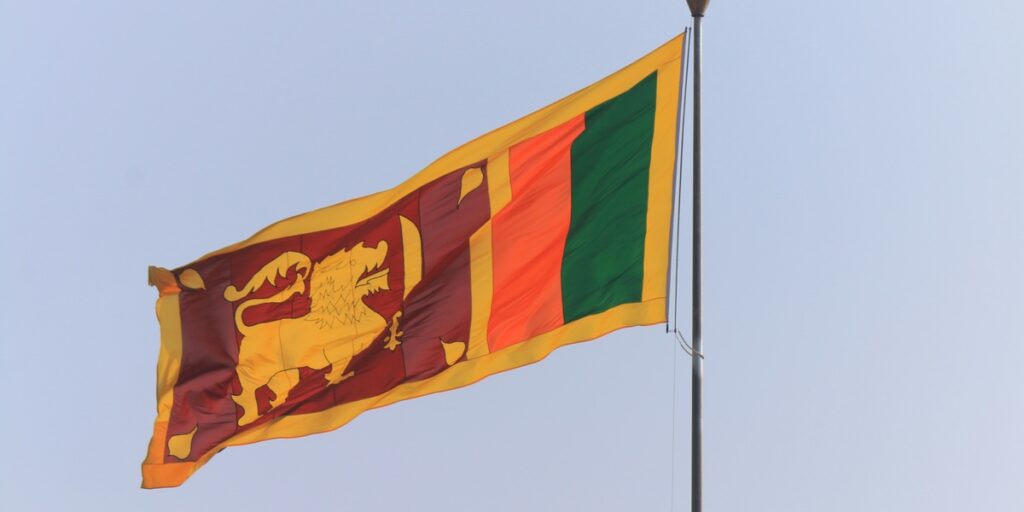
| Sri Lanka | 🇱🇰 | #8A1538;#FF9933 | Maroon (red) for Sinhalese majority; orange (saffron) for Tamil community. |
| Zambia | 🇿🇲 | #FF0000;#FF8C00 | Red for struggle for freedom; orange (copper) for mineral wealth. |
Descriptions
Armenia
Horizontal tricolor with red top, blue middle, orange bottom; adopted 1990 after independence. Red and orange are distinct (red deep; orange often called apricot), with occasional shade variations across print and digital renderings.
Bhutan
Diagonal bicolour with yellow (upper) and orange (lower) fields and a white Druk dragon holding red jewels; adopted 1969 (revised 2008). Orange denotes Buddhist heritage; small red details may vary in tone between reproductions.
Sri Lanka
Maroon field bearing a golden lion with sword, plus saffron (orange) and green vertical bands at the hoist; current design adopted 1972. Maroon reads as deep red; official saffron shade varies slightly among sources.
Zambia
Green field with three vertical stripes (red, black, orange) at the fly and an orange eagle above; adopted 1964. Red symbolizes the independence struggle; orange (often called copper) denotes national mineral resources.