Lesotho has very few dialects. Sesotho, the language of about nine in ten Basotho, sounds much the same in Maseru, Leribe and the highlands of Thaba-Tseka. The differences that exist are small: a few words, some age and class markers, and a lot of English mixed into city speech.
The confusion comes from labels. Pages on “dialects in Lesotho” often list Phuthi, Zulu and Xhosa next to Sesotho, as if they were regional flavors of one tongue. They aren’t. This post sorts out what is a dialect, what is a separate language, and what changes once you cross the border into South Africa.
Table of Contents
- TLDR
- Why Lesotho has so little dialect variation
- Sekwena, Setaung and Setlokwa: the dialect claims
- Phuthi, Zulu and Xhosa are languages, not dialects
- Sesotho in Lesotho vs. South African Sesotho
- Code-switching with English
- Word examples you can use
- The language labels at a glance
- The 2022 official-language amendment
TLDR
- Standard Sesotho is spoken almost uniformly across Lesotho. Linguistic descriptions note no strong regional dialects, only faint vocabulary differences.
- Sekwena is the form tied to Moshoeshoe I’s circle and the written standard. Setaung and Setlokwa are often named as dialects, but I found no linguistic description that backs this up.
- Phuthi, Zulu and Xhosa are separate Nguni languages spoken by minorities, mostly in the south. They are not Sesotho dialects.
- The sharper contrast is with South African Sesotho, which has its own spelling habits and urban slang.
Why Lesotho has so little dialect variation
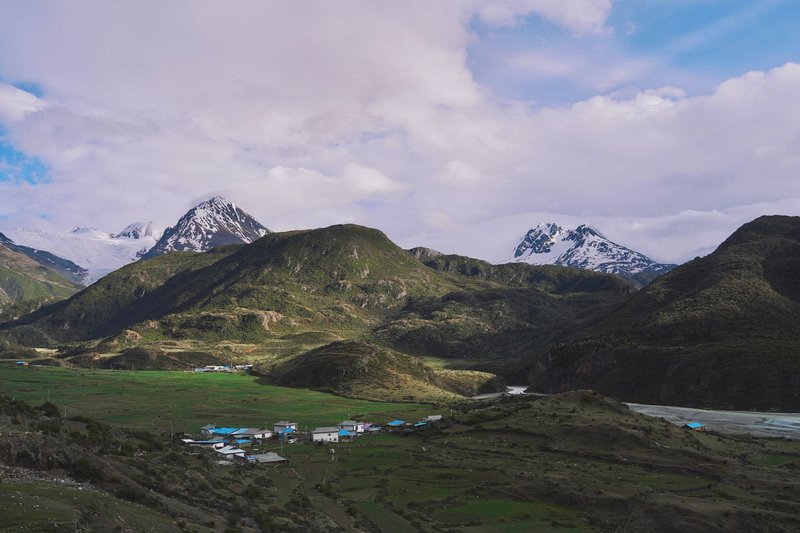
Lesotho is a small, mountainous country of roughly 2.3 million people, and Sesotho is both the national language and the first language of most of them. The written standard was shaped in the nineteenth century by French missionaries at Morija, working with the speech of King Moshoeshoe I’s court. A standard Bible, school books and later radio did the rest.
Descriptions of the language reflect this. The Wikipedia entry on the Sotho language says standard Sesotho shows essentially no discernible dialect variation beyond slight lexical differences, and that fits what you hear on the ground. A herder from Mokhotlong and a shopkeeper in Maseru will understand each other without effort.
Academic work is more nuanced. A University of Cape Town master’s thesis argues that Southern Sotho has dialects and sociolects, shaped by age, social status, sex and locality. That is a different claim from “there are regional dialects.” It says the variation runs along social lines more than geographic ones.
The country-level data points the same way. The CIA World Factbook lists Sesotho as the language of the overwhelming majority, with Zulu and Xhosa as small minorities.
A quick note on the word itself, because it helps you read signs and headlines. Sesotho uses noun-class prefixes: a Mosotho is one person, Basotho are the people, Sesotho is the language and culture, and Lesotho is the country.
Sekwena, Setaung and Setlokwa: the dialect claims
Three names come up in almost every list of Sesotho dialects.
Sekwena is the speech of the Bakwena (Bakoena) clan, the clan of Moshoeshoe I. Because the missionaries wrote down the speech of his court, Sekwena is generally treated as the base of the standard. If you learn Sesotho from a textbook, you are learning something very close to it.
Setaung and Setlokwa are the speech of the Bataung and Batlokoa clans. Both clans played major roles in nineteenth-century Basotho history. Batlokoa under their queen MaNthatisi and Bataung under Moletsane were among the groups that eventually came under Moshoeshoe’s umbrella.
Here is the problem. The claim that these are distinct dialects shows up repeatedly online, but I couldn’t find a linguistic description to support it. The most you can say is that clan names carry small differences in word choice and pronunciation, the kind of variation you’d find between families anywhere. Treat “Setaung dialect” and “Setlokwa dialect” as clan labels, not mapped dialect zones.
Phuthi, Zulu and Xhosa are languages, not dialects
This is where most “dialect” lists go wrong.
Phuthi (Siphuthi) belongs to the Nguni family, closer to Swati than to Sesotho. It is spoken mainly in southern Lesotho, around the Quthing and Mohale’s Hoek areas, and by a small community across the border. A Sesotho speaker can’t follow a Phuthi conversation without learning it. It is also one of the more vulnerable languages in the region, with Sesotho pulling speakers toward it.
Zulu and Xhosa are also Nguni languages. Both are spoken by minorities in Lesotho, with Xhosa heard mostly along the south and southeast near the Eastern Cape border. Neither is a variety of Sesotho.
Contact has left marks, though. Sesotho has click sounds, written q, c and x, which it borrowed from its Nguni neighbors. The Q at the start of Qacha’s Nek is a click. Outside southern Lesotho, most visitors never hear anything but Sesotho and English.
Sesotho in Lesotho vs. South African Sesotho
Sesotho is also an official language of South Africa, and it is the main language of the Free State and the Qwaqwa area. Here the differences are real, though still within one language.
- Spelling. Lesotho and South Africa have long used different orthographic conventions. A common example is ea and oa in Lesotho against ya and wa in South African spelling.
- Vocabulary. South African Sesotho has absorbed more Afrikaans, English and Setswana words. Dumela, the Setswana greeting, is common among South African Sesotho speakers, while Lumela is the greeting most associated with Lesotho.
- Urban speech. Free State Sesotho is conservative and rural. Johannesburg and Soweto produce urban youth speech, usually called tsotsitaal or Iscamtho, which mixes Sotho and Nguni vocabulary with Afrikaans and English. That is a mixed street variety, not a regional dialect of Lesotho.
One more trap: Sesotho sa Leboa is Northern Sotho (Sepedi), a related but separate language spoken in Limpopo. Do not mix it up with Lesotho’s Sesotho.
Code-switching with English
English is Lesotho’s other official language, and it is the language of schooling beyond the early years, government paperwork and business. In Maseru, younger speakers move between Sesotho and English mid-sentence. The result isn’t a dialect. It is code-switching, and it follows the speaker’s context more than their region.
A typical illustration, constructed here for clarity: Ke tla u call hosane (“I’ll call you tomorrow”). The grammar is Sesotho, the verb is English. Older rural speakers will use fuller Sesotho vocabulary for the same idea, which is one reason age is the variable researchers keep pointing to.
Word examples you can use
These are standard Sesotho, understood throughout Lesotho:
| Sesotho | Meaning |
|---|---|
| Lumela / Lumelang | Hello (to one person / to several) |
| Khotso | Peace, also used as a greeting |
| Ke a leboha | Thank you |
| Ntate | Sir, Mr., father |
| ‘M’e | Ma’am, Mrs., mother |
| Sala hantle | Goodbye (said to the person staying) |
| Tsamaea hantle | Goodbye (said to the person leaving) |
| Pula | Rain |
Pula sits in the national motto, Khotso, Pula, Nala (peace, rain, prosperity). The currency is the loti, plural maloti. Greeting people properly matters in Lesotho, and a Lumela, ntate to an older man gets a warmer reception than any English opener.
The language labels at a glance
| Label | What it is | Relation to Sesotho |
|---|---|---|
| Sesotho (Southern Sotho) | Main language of Lesotho | The standard |
| Sekwena | Speech of the Bakwena clan | Base of the standard |
| Setaung / Setlokwa | Clan speech labels | Called dialects, but I found no linguistic description of them |
| Phuthi | Nguni language, southern Lesotho | Separate language |
| Zulu, Xhosa | Nguni languages, minorities | Separate languages |
| South African Sesotho | Sesotho in the Free State and cities | Same language, different spelling and slang |
| Sepedi (Northern Sotho) | Language of Limpopo | Related but separate |
| Setswana | Language of Botswana, also South Africa | Related but separate |
| Tsotsitaal / Iscamtho | Urban youth speech in Gauteng | Mixed street variety |
The 2022 official-language amendment
Lesotho amended its official-language provisions in 2022. That was a legal change about the status of languages in government and public life. It did not change how people speak. For the exact current wording, check the constitution as amended, since summaries online vary.
So when someone asks about dialects in Lesotho, the honest answer is short. There is one language with minimal regional variation, a handful of clan labels without strong linguistic backing, three or so neighboring languages that get mislabeled as dialects, and a bigger contrast across the border. Learn Lumela, and you’re set for all of it.