
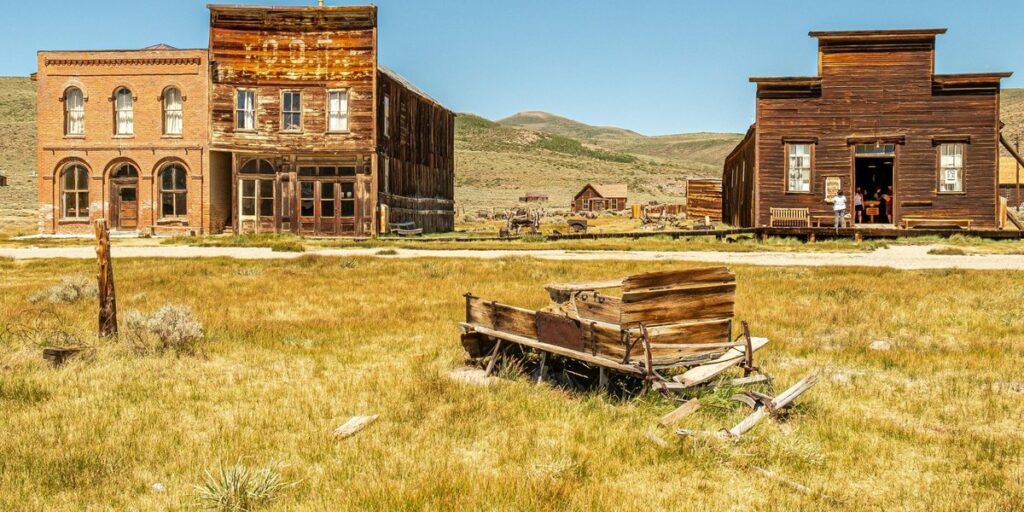
Most lists of Alabama ghost towns send you to the same five spots and then leave out the part you actually need: whether you can legally set foot there. Half the “abandoned places” floating around online are on private land, under a reservoir, or fenced off behind a gate. The other half are real, walkable, and quietly fascinating.
This is the sorted version. Below are 11 ghost towns across Alabama, each with the short story of how it died, what’s physically left to see, and the practical access detail — county, nearest town, and whether you’re walking into a state park or trespassing on someone’s hunting lease.
First, a quick definition, because “ghost town” gets thrown around loosely.
Table of Contents
- What counts as a ghost town?
- 1. Old Cahawba
- 2. Historic Blakeley
- 3. St. Stephens
- 4. Claiborne
- 5. Bellefonte
- 6. Arcola
- 7. Fort Mims
- 8. Cahaba (the mining one)
- 9. Riverton
- 10. Bladon Springs
- 11. Gainesville
- A note on access and safety
What counts as a ghost town?
Not every empty place is a ghost town. The useful distinction is between three categories.
A true ghost town is fully abandoned — no residents, structures still standing or in ruins. A semi-ghost town has a handful of people and a faded main street, often a church still in use. A historical/extinct site is one where the town is gone entirely; you’re looking at a marker, a cemetery, or a foundation in a field.
Alabama has all three. Wikipedia’s list runs past 80 entries, but most of those are extinct sites where there is genuinely nothing to see but a name on a map. This guide leans toward the ones with something left — ruins, cemeteries, parks, or at minimum a marker worth the drive.
1. Old Cahawba
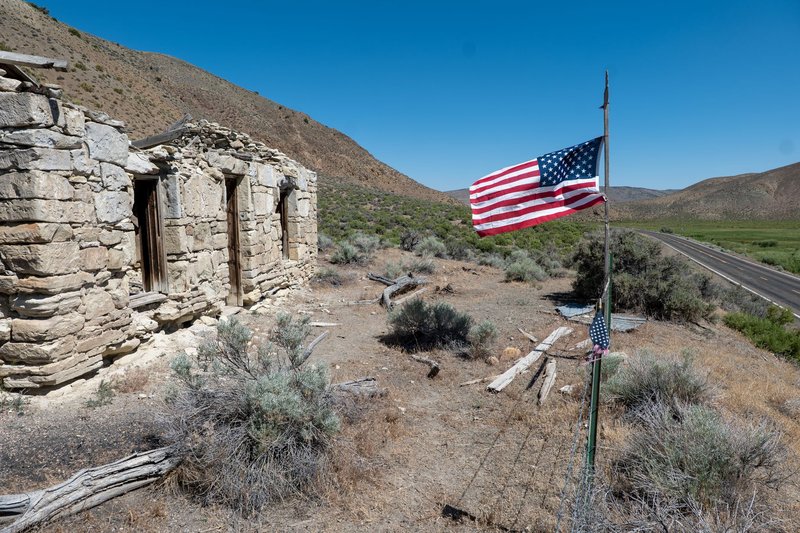
If you visit one ghost town in Alabama, make it this one. Cahawba was the state’s first permanent capital, from 1820 to 1826, sitting where the Cahaba River meets the Alabama River. Repeated flooding got it demoted — the legislature moved the capital to Tuscaloosa, and the town never recovered. A brief cotton-boom revival before the Civil War fizzled, and by 1900 it was largely empty.
What’s left is unusually rich for a place this dead: standing brick columns, a network of old streets you can walk or drive, several cemeteries, and the ghostly outlines of vanished mansions marked by surviving chimneys and gardens gone feral. The state runs it as the Old Cahawba Archaeological Park, which means interpretive signage and a welcome center rather than guesswork.
Where: Dallas County, about 9 miles southwest of Selma. It’s a public park — open daily, free, with a visitor center. This is the most visitable ghost town in the state, full stop.
2. Historic Blakeley
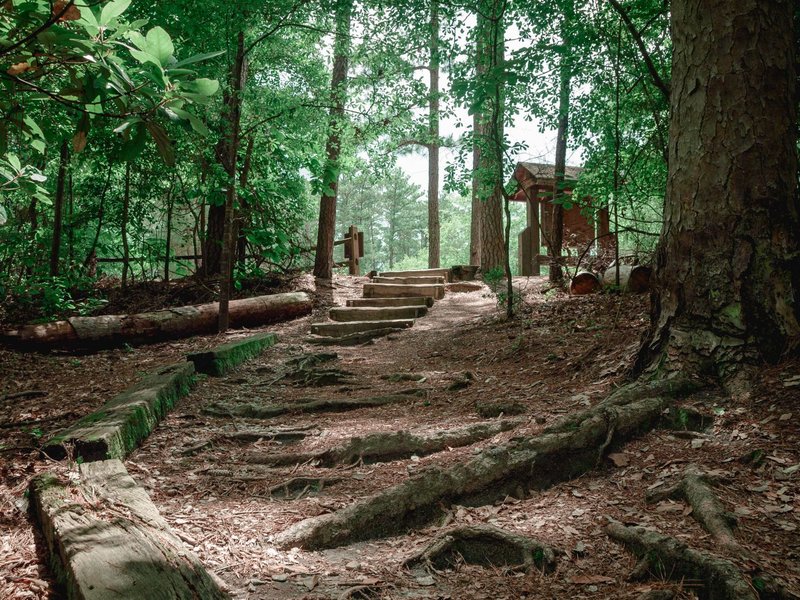
Blakeley once rivaled Mobile. Founded in 1814 on the Tensaw River, it was a busy port until yellow fever epidemics in the 1820s gutted the population. The final blow came on April 9, 1865 — the Battle of Fort Blakeley, one of the last major engagements of the Civil War, fought the same day Lee surrendered at Appomattox.
Today it’s Historic Blakeley State Park, roughly 2,000 acres of trails, preserved Civil War earthworks, and riverboat tours into the Mobile-Tensaw Delta. The town itself is gone, but the battlefield, the earthen fortifications, and the river setting make it one of the more substantial stops on this list.
Where: Baldwin County, near Spanish Fort, just across the bay from Mobile. Public park, entry fee, full visitor amenities.
3. St. Stephens
Old St. Stephens has a better claim to “first” than most: it served as the capital of the Alabama Territory from 1817 to 1819, before statehood moved everything to Cahawba. It was a real boomtown — banks, a hotel, a land office processing settlers pouring into the new territory. When the capital left, so did the money.
The site is now Old St. Stephens Historical Park, an archaeological park where excavated foundations, town streets, and a limestone quarry-turned-lake tell the story. There’s a separate, still-living community of New St. Stephens nearby, which causes some map confusion — make sure you’re routing to the historical park.
Where: Washington County, near the modern town of St. Stephens. Public park; check seasonal hours before driving out.
4. Claiborne
Claiborne sat high on a bluff over the Alabama River and, in the 1820s and 1830s, was a serious riverboat town — busy enough that the Marquis de Lafayette stopped there during his 1825 American tour and was honored at a ball in a building that still partially survives. Steamboat traffic was its lifeblood. When railroads bypassed it and river commerce declined, Claiborne emptied out.
What remains is thin compared to Cahawba: a historic cemetery, a few markers, and the famous Lafayette-associated structure (the Masonic Lodge). It’s more of a “stand here and read the sign” stop than a walkable ruin, but the bluff and the history are genuine.
Where: Monroe County, near Perdue Hill. Mostly roadside markers and a cemetery — respect any private-property boundaries around the remaining structures.
5. Bellefonte
Bellefonte was the county seat of Jackson County in the early 1800s, a courthouse town with the bustle that implies. Its decline is a classic one: when the railroad came through, it routed to nearby Scottsboro instead, and the county seat followed the rail line in 1868. Once the courthouse moved, Bellefonte had no reason to exist.
There’s not much standing now — a cemetery, scattered markers, and the empty footprint of what was a county capital. The name later got attached to a never-completed nuclear plant nearby, which muddies online searches considerably.
Where: Jackson County, near Hollywood and Scottsboro. Largely a historical site; the cemetery is the main tangible remnant.
6. Arcola
Arcola is one of those places that reminds you how thoroughly a town can disappear. A 19th-century settlement in the Black Belt, it withered as cotton agriculture mechanized and rural populations drained toward cities through the 20th century. It shows up on the Wikipedia ghost-town list, but on the ground it’s close to extinct — a name, a location, and very little structure.
It’s included here for honesty: not every Alabama ghost town is a photogenic ruin. Some are just the slow arithmetic of people leaving and nothing replacing them. If you’re a completist or a genealogy researcher tracing Black Belt families, it matters. If you want columns and ruins, start with Cahawba.
Where: Hale County, in the Black Belt region. Minimal remains — best treated as a research or driving-past stop, not a destination.
7. Fort Mims
Fort Mims isn’t a town that faded — it’s a settlement that ended violently. On August 30, 1813, during the Creek War, Red Stick Creek warriors attacked the stockade here, in one of the deadliest frontier assaults in American history. The settlement never came back the same way, and the site became a memorial rather than a living place.
Today there’s a reconstructed section of the stockade, interpretive signage, and an annual reenactment. It’s a different flavor of “ghost town” — a place defined by a single day rather than a slow decline — but it’s a real, accessible historic site with something to see.
Where: Baldwin County, near Tensaw and Stockton. Public historic site with markers and a partial reconstruction.
8. Cahaba (the mining one)
Don’t confuse this with Old Cahawba the capital — different place, different spelling people frequently mangle. Several small mining and mill communities across Alabama’s coal and iron country boomed and busted on a single industry. When the seam ran out or the company closed the mine, the company town it built emptied within a few years.
These are scattered through the Birmingham mineral district and the Cahaba coal field. Some retain mine openings, foundations, or company-store ruins; many are on land owned by mining successors or timber companies, which means access is genuinely restricted. Treat any of these as look-before-you-leap.
Where: Bibb and surrounding counties in the central mineral belt. Access varies wildly — much of it is private or industrial land. Verify before you go.
9. Riverton
Riverton was a Tennessee River community in the far northwest corner of the state, the kind of small river settlement that depended entirely on water traffic and the ferry economy. Changes to the river — navigation projects, dam construction along the Tennessee system, and shifting transport — undercut the reasons people lived there, and it dwindled.
It’s a quieter, lesser-known stop with modest remains. The appeal here is the setting near the river and the Shoals area rather than dramatic ruins. Worth folding into a trip if you’re already exploring the Muscle Shoals region.
Where: Colbert County, northwest Alabama near the Tennessee line. Small community remnants; combine with a Shoals-area itinerary.
10. Bladon Springs
Bladon Springs was a 19th-century resort town built around mineral springs, when “taking the waters” was a fashionable health pursuit and Southern spa towns drew well-off visitors for the season. A grand hotel anchored it. When mineral-spring tourism went out of fashion and the hotel era ended, the town lost its single reason for being.
The springs themselves are preserved as Bladon Springs State Park, a small, quiet day-use area. The resort is gone, but the springs, a few markers, and the surrounding park make it a peaceful, offbeat stop — and a window into a vanished style of American leisure travel.
Where: Choctaw County, near the town of Bladon Springs. State park surrounds the springs; the resort town itself is extinct.
11. Gainesville
Gainesville is technically a semi-ghost town rather than a true one — a small population hangs on. In the antebellum era it was a thriving Black Belt river port on the Tombigbee, shipping cotton and supporting banks, churches, and a sizable population. River-trade decline, the Civil War’s economic gutting of the region, and the long depopulation of the Black Belt left it a fraction of its former self.
What makes it worth a stop is that the survivors are the buildings: historic churches and antebellum structures still stand along streets that once held many times the current population. It feels less like ruins and more like a town that time forgot to finish dismantling.
Where: Sumter County, on the Tombigbee River. Living community with historic structures — be courteous; people still reside here.
A note on access and safety
Here’s the rule that keeps you out of trouble: a ghost town being abandoned does not make it public. In Alabama, plenty of “abandoned” sites sit on private timber, hunting, or mining land, and entering without permission is trespassing — which during hunting season can be genuinely dangerous, not just a legal problem.
The safe play is to stick to the ones managed as parks or historic sites: Old Cahawba, Historic Blakeley, Old St. Stephens, Fort Mims, and Bladon Springs are all set up for visitors. For everything else on this list, the tangible remains are often a cemetery or a roadside marker reachable from a public road — which is usually all you need anyway.
Cemeteries deserve a special mention. Many of these towns left their dead behind, and those cemeteries are frequently the best-preserved, most accessible remnant. They’re often maintained by descendant families or historical societies. Visit them, photograph them, but treat them as the active gravesites they still are.
If you’re routing a road trip, the cluster around the lower Alabama and Tombigbee rivers — Cahawba, Claiborne, St. Stephens, Blakeley, Fort Mims — makes the most efficient loop, and it’s the one with the most actually-standing history per mile.