
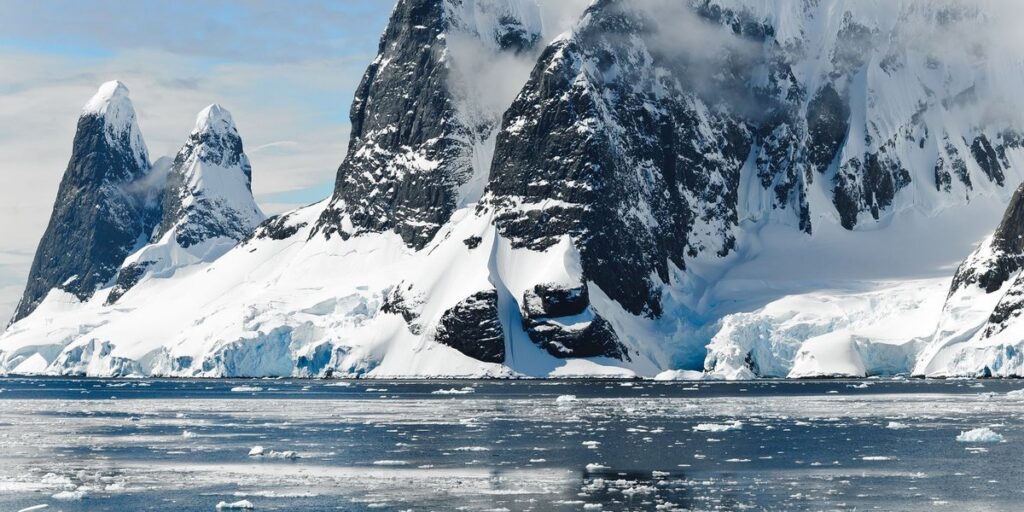
Nobody is born in Antarctica, nobody retires there, and no town has ever grown there on its own. Yet the continent and its islands hold dozens of abandoned settlements: whaling stations that processed thousands of carcasses a season, research bases that were buried or blown apart, and huts built for one winter and left standing for a century.
This list covers ten of the best documented. Seven sit south of 60°S, where the Antarctic Treaty applies. Three are on South Georgia, a sub-Antarctic island that isn’t legally part of Antarctica but is part of the same story. Each entry gives the same details: where it is, when it started, who lived there, why it was left, what’s still standing, and whether you can go.
Contents
- Why there are ghost towns in Antarctica
- 1. Whalers Bay, Deception Island
- 2. Pendulum Cove, Deception Island
- 3. Port Lockroy (Base A)
- 4. Stonington Island (Base E and East Base)
- 5. Cape Adare
- 6. Wilkes Station
- 7. Pole of Inaccessibility Station
- 8. Grytviken, South Georgia
- 9. Leith Harbour, South Georgia
- 10. Stromness, South Georgia
- Comparison table
- Sidebar: documented history vs. folklore
- How to visit Antarctica’s ghost towns
Why there are ghost towns in Antarctica
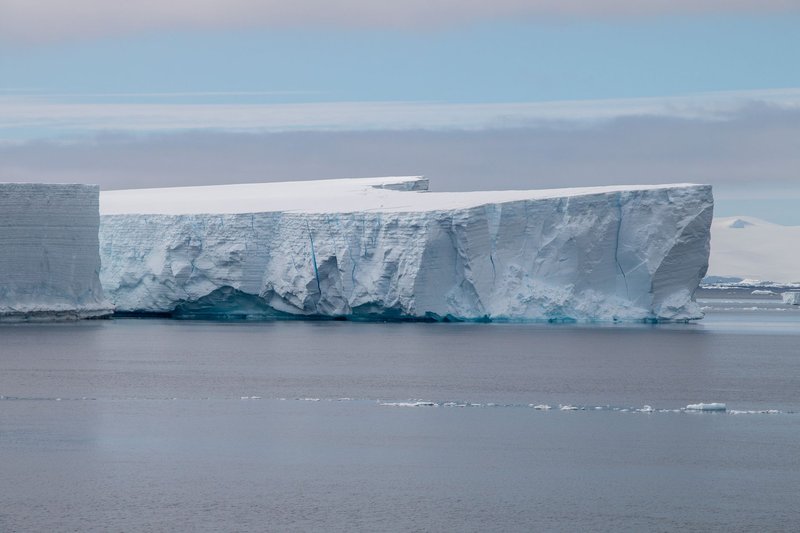
Four things empty out an Antarctic settlement.
Whaling collapsed. Shore stations on South Georgia and the South Shetland Islands existed to boil blubber into oil. From the mid-1920s, factory ships with stern slipways could haul a whale aboard and process it at sea, so a shore station with its jetties and tanks was suddenly the expensive option. Whale stocks were also crashing. By the 1960s the last stations had closed.
Removal costs more than leaving. Every steel tank and timber barracks would need a ship, a crew and a landing, in a place where the shipping window is a few summer months. For decades, abandoning a building was the cheaper answer.
The rules changed. The Antarctic Treaty came into force in 1961. Its Environmental Protocol, signed in 1991, requires parties to clean up old work sites and remove waste, unless removal would do more harm than leaving it. The same system protects the oldest sites as Historic Sites and Monuments, so some ruins are now legally untouchable.
The ground moved. Deception Island is a flooded volcanic caldera. It erupted in 1967, 1969 and 1970, and two research stations did not survive it.
One distinction matters for the rest of this list. The Antarctic Treaty covers everything south of 60°S. South Georgia sits near 54°S, so its whaling stations fall under the government of South Georgia and the South Sandwich Islands, not the Treaty. Wherever “mainland” appears below, it means the continent and the Antarctic Peninsula.
1. Whalers Bay, Deception Island
- Location: Deception Island, South Shetland Islands (about 63°S)
- Founded: 1912 as a whaling station; British Base B added in 1944
- Who lived there: Norwegian whalers employed by the Hektor company, then British scientists of the Falkland Islands Dependencies Survey
- Why it was abandoned: The whaling station closed in 1931 as floating factory ships took over. Base B was evacuated after the volcanic eruptions of 1967 and 1969
- What remains: Rusted oil tanks, boilers, collapsed timber huts, and a lone aircraft hangar that was part of the later base
- Can you visit: Yes. It’s one of the most visited landing sites in Antarctica
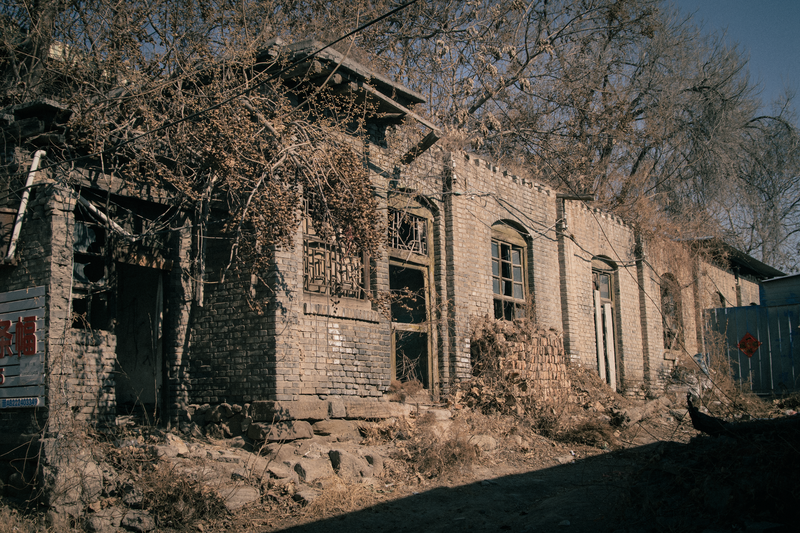
This is the one every ghost-town page leads with, and it earns it. A ship enters the caldera through a gap called Neptune’s Bellows, about 230 metres wide, and the beach inside is black volcanic sand scattered with huge iron tanks. Steam rises from the shoreline where geothermal water meets the sea.
The history is denser than the scenery suggests. In December 1928, Hubert Wilkins and Carl Ben Eielson flew a Lockheed Vega from the island, the first powered flight in Antarctica. Sixteen years later Britain built Base B here as part of a wartime programme to assert its claims on the peninsula. Then the mountain turned on it. A mudflow from the 1969 eruption swept through the base, and the British didn’t come back.
2. Pendulum Cove, Deception Island
- Location: Pendulum Cove, on the inner coast of Deception Island
- Founded: 1955
- Who lived there: A Chilean research party at the Pedro Aguirre Cerda station
- Why it was abandoned: The December 1967 eruption destroyed it. Chile didn’t rebuild
- What remains: Very little. Ash and mud buried most of the site
- Can you visit: The cove is a regular stop; the station isn’t really there to see
This is the cautionary entry. The Chilean station stood a short way along the same caldera from Whalers Bay, and the 1967 eruption opened vents close enough that the base was lost. Nobody was killed, but the staff had to be evacuated by ship.
Expedition cruises still land here, mostly because the beach is warmed from below. Passengers wade in when conditions allow, which is how an abandoned station ends up as a swimming stop.
3. Port Lockroy (Base A)
- Location: Goudier Island, off Wiencke Island, Antarctic Peninsula
- Founded: 1944, during Operation Tabarin
- Who lived there: British military and later scientific staff, up to about a dozen men through the winter
- Why it was abandoned: The Falkland Islands Dependencies Survey closed Base A in 1962
- What remains: The whole base: living quarters, radio room, instruments, tinned food from the era
- Can you visit: Yes, on most Antarctic Peninsula cruises
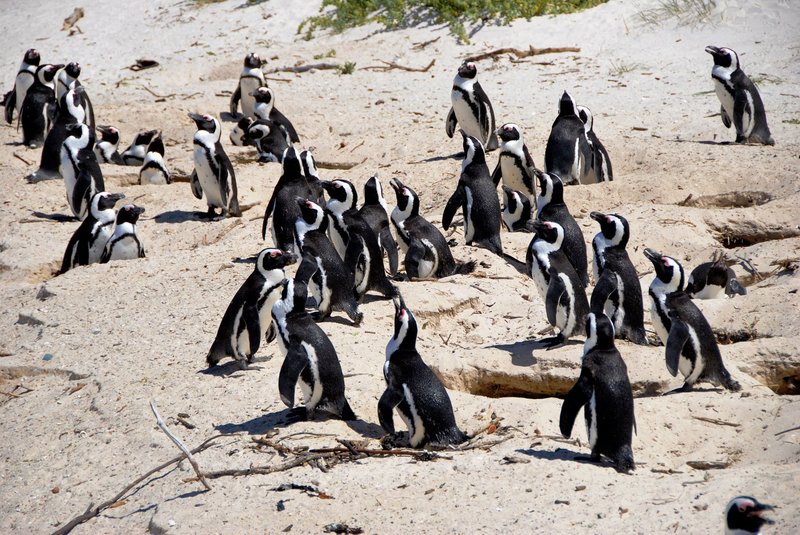
Port Lockroy is the ghost town that got a second life. It sat empty for more than thirty years until the UK Antarctic Heritage Trust restored it in 1996. The trust now staffs it each summer with a small team who run the museum, the gift shop and a working post office.
The strange part is that gentoo penguins nest between the buildings. The trust has studied how the colony does with and without human visitors, and the birds do fine either way. You walk through a 1940s kitchen and then step around a chick.
4. Stonington Island (Base E and East Base)
- Location: Marguerite Bay, western Antarctic Peninsula (about 68°S)
- Founded: 1939 (US East Base); British Base E followed in 1946
- Who lived there: US Antarctic Service staff in 1939-41, the Ronne expedition in 1947-48 and British survey teams on and off until 1975
- Why it was abandoned: The British closed Base E in 1975 after moving operations to better-supplied stations
- What remains: Timber buildings from the US and British periods, plus equipment and dog-sledging gear
- Can you visit: Rarely. Sea ice often blocks Marguerite Bay
Stonington has the best story on the list. In 1947 the American Ronne expedition shared the tiny island with a British team, and two of the 23 Americans were women: Edith “Jackie” Ronne and Jennie Darlington, the first women to spend a winter in Antarctica. The two national groups reportedly kept to separate buildings, then shared the Christmas party.
Few ships make it in. Anyone who lands is one of a small number of visitors a decade.
5. Cape Adare
- Location: Northern tip of Victoria Land, Ross Sea
- Founded: 1899
- Who lived there: Carsten Borchgrevink’s ten-man Southern Cross expedition
- Why it was abandoned: The expedition ended in 1900. The huts were never meant to be permanent
- What remains: Two prefabricated Norwegian huts and the grave of the zoologist Nicolai Hanson
- Can you visit: Yes, on Ross Sea voyages when ice allows
Borchgrevink’s party was the first to spend a winter on the Antarctic continent itself. They arrived at what is now one of the largest Adélie penguin colonies and put up two prefabricated huts among the nests. Hanson died in October 1899 and was buried on the headland, the first recorded burial on the continent.
Strictly this is a camp, not a town. It belongs on the list because the huts are still there, they have been conserved by the Antarctic Heritage Trust, and you can read the layout of a winter at the edge of the world from the floor plan.
6. Wilkes Station
- Location: Clark Peninsula, Windmill Islands, East Antarctica
- Founded: 1957 by the United States, for the International Geophysical Year
- Who lived there: US Navy personnel, then Australian expeditioners after Australia took it over in 1959
- Why it was abandoned: Drifting snow buried the buildings. Australia replaced it with Casey Station in 1969
- What remains: Snow-buried buildings, with fuel drums, machinery and waste coming to light as the ice around them melts
- Can you visit: No. It’s not on tourist itineraries
Wilkes has become the standard example of a hazard rather than a heritage site. Station buildings abandoned in 1969 sit under the ice, and as that ice retreats, old fuel, batteries and rubbish surface. Under the Environmental Protocol that becomes someone’s problem, and the Australian Antarctic Division has been assessing the site, since it took over responsibility from the Americans in 1959.
It’s a ghost town in the literal sense: it can’t be walked through, but you can track it by the contamination reports.
7. Pole of Inaccessibility Station
- Location: East Antarctica, about 82°S 55°E, at an elevation of roughly 3,700 metres
- Founded: December 1958
- Who lived there: A Soviet traverse team
- Why it was abandoned: It was built for a short observation period, and the team left within about two weeks
- What remains: The roof of a hut, and a bust of Lenin on top of it, facing Moscow
- Can you visit: Not realistically; only private overland expeditions reach it
The Pole of Inaccessibility is the point on the continent farthest from any ocean. A Soviet convoy dragged a prefabricated hut there in 1958, ran it for a handful of days, and went home. On the roof they mounted the Lenin bust, looking toward the capital.
The snow has since swallowed most of the building. The bust is still above the surface. It’s the most remote piece of Soviet statuary on Earth and probably the only one that nobody can legally knock over.
8. Grytviken, South Georgia
- Location: King Edward Cove, South Georgia (about 54°S)
- Founded: 1904 by the Norwegian Carl Anton Larsen, for the Argentine company Compañía Argentina de Pesca
- Who lived there: Hundreds of whalers a season in the peak years
- Why it was abandoned: Whale stocks collapsed, and the station closed in 1966
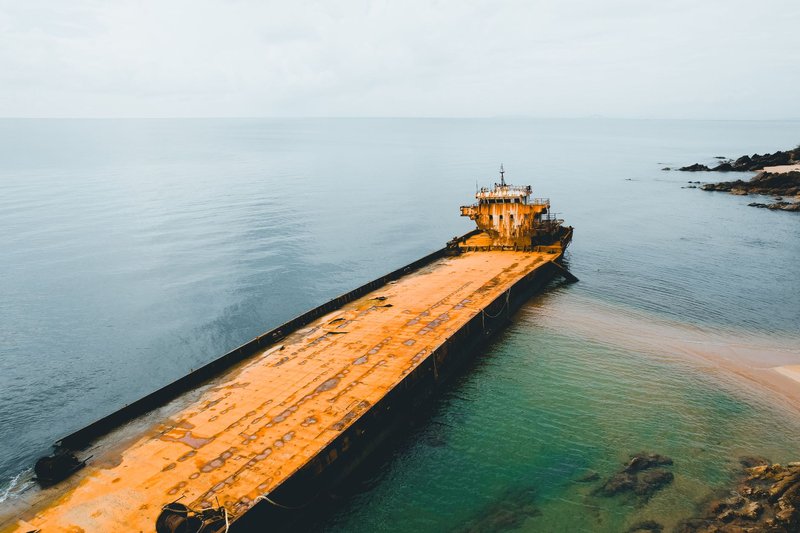
- What remains: Tanks, rusted catcher boats, the manager’s villa (now a museum), a church and Ernest Shackleton’s grave
- Can you visit: Yes, on South Georgia cruises. The island has its own visitor rules
Grytviken is the most intact ghost town on South Georgia and the only one that has been properly cleaned up. A British-funded project in the early 2000s removed asbestos and oil from the site, which is why you can walk it today. The manager’s villa houses the South Georgia Museum, and a handful of staff live nearby at King Edward Point.
Shackleton died aboard his ship in the cove in January 1922 and is buried in the whalers’ cemetery. Visitors pour whisky on the grave, which is the closest thing the town has to a tourist ritual. Check the South Georgia government’s visitor guidance before planning, since permits and biosecurity checks apply.
9. Leith Harbour, South Georgia
- Location: Stromness Bay, South Georgia
- Founded: 1909 by Christian Salvesen & Co. of Edinburgh
- Who lived there: Whalers, many of them Norwegian, in what became South Georgia’s biggest station
- Why it was abandoned: The station closed in 1965 as whaling ended
- What remains: Collapsing sheds, tanks, and loose asbestos, with the site now fenced off in practice
- Can you visit: No landing within a 200-metre exclusion zone
Leith’s last claim to history is a bad one. In March 1982 an Argentine scrap-metal contractor, Constantino Davidoff, landed workers here to dismantle the station and raised the Argentine flag. The British response helped set off the Falklands War.
Today it’s the clearest example of what happens when a site is simply left. The buildings are unsafe, the asbestos is airborne in places, and the government keeps visitors back.
10. Stromness, South Georgia
- Location: Stromness Bay, a few kilometres from Leith
- Founded: 1907
- Who lived there: Norwegian whalers, then ship-repair workers
- Why it was abandoned: Whaling ended in 1931, and the repair yard shut in 1961
- What remains: The manager’s villa, tanks and workshops, in an unsafe state
- Can you visit: Not inside the exclusion zone
Stromness is where Shackleton’s story ends. In May 1916, after crossing South Georgia on foot with Frank Worsley and Tom Crean, he walked into the station, filthy and bearded, and asked for the manager. The staff hadn’t heard anything of the Endurance since 1914.
Expedition ships still cruise past and the shoreline walk gets as close as the rules allow. That’s close enough to read the layout.
Comparison table
| Site | Region | Era | Status | Visitable |
|---|---|---|---|---|
| Whalers Bay | South Shetlands | 1912-1969 | Ruins | Yes |
| Pendulum Cove | South Shetlands | 1955-1967 | Mostly buried | Beach only |
| Port Lockroy | Antarctic Peninsula | 1944-1962 | Restored museum | Yes |
| Stonington Island | Antarctic Peninsula | 1939-1975 | Intact huts | Rarely |
| Cape Adare | Ross Sea | 1899-1900 | Conserved huts | Yes, ice permitting |
| Wilkes Station | East Antarctica | 1957-1969 | Buried, hazardous | No |
| Pole of Inaccessibility | East Antarctica | 1958 | Buried, Lenin bust visible | No |
| Grytviken | South Georgia | 1904-1966 | Cleaned up, museum | Yes |
| Leith Harbour | South Georgia | 1909-1965 | Unsafe ruins | No |
| Stromness | South Georgia | 1907-1961 | Unsafe ruins | No |
Sidebar: documented history vs. folklore
Ghost towns attract stories. These are the ones to separate.
Documented
- Deception Island erupted in 1967, 1969 and 1970, destroying or damaging several stations.
- A Lenin bust sits on the Pole of Inaccessibility hut.
- Argentine scrap workers raised a flag at Leith Harbour in 1982.
- A German expedition aboard the Schwabenland surveyed part of the continent in 1938-39 and dropped metal swastikas onto the ice to mark a claim.
Folklore
- Hidden Nazi bases under the ice. The 1938-39 flight is real. A secret base is not. No physical evidence has ever turned up.
- Haunted whalers at Whalers Bay. Ranker-style lists repeat this, but nothing in the historical record supports it.
- Antarctic towns “frozen with the dinner still on the table.” Stations were closed on schedule and stripped of anything useful first.
How to visit Antarctica’s ghost towns
Almost every accessible site on this list is reached by expedition cruise. Whalers Bay, Pendulum Cove and Port Lockroy are on most Peninsula itineraries, usually between November and March. Cape Adare means a Ross Sea voyage. Grytviken means a South Georgia and Falklands itinerary, often combined with the Peninsula.
Three practical points:
- Landings depend on weather. Operators can cancel a stop on the day, and Deception Island is more reliable than most.
- Rules are strict. Treaty rules and operator briefings cover how close you can get to penguins and what you can touch. On South Georgia, the exclusion zones at Leith and Stromness are enforced.
- Book for the ghost-town stops you want. Itineraries vary, and not every Peninsula cruise lands at Port Lockroy or Whalers Bay.
For the rest, a few of these ghost towns in Antarctica are only reachable on paper. Wilkes and the Pole of Inaccessibility exist as dots on a map and a long record of what we left behind.