Last updated: November 2026
South Africa’s history runs from fossilized human ancestors to a kingdom that traded gold with India and China, then through Dutch forts, frontier wars, diamond pits and apartheid prisons. Most of it sits within a few driving days of three cities: Cape Town, Johannesburg and Durban. This list covers 14 historical places in South Africa across every era, with the practical details (distances, how long to stay, what to book) that most lists skip.
It also gives Black and pre-colonial history the space it usually doesn’t get. Colonial forts are easy to find. Mapungubwe, Ncome and District Six take a bit more planning, and they’re some of the best stops here.
Contents
- TLDR
- Western Cape: Cape Town and the Garden Route
- Gauteng: Johannesburg, Soweto and Pretoria
- Limpopo: South Africa’s First Kingdom
- KwaZulu-Natal: The Battlefields Route
- Northern Cape: Kimberley
- Historical Places in South Africa on the UNESCO List
- How Long to Allow at Each Site
- Three Routes Through the List
TLDR
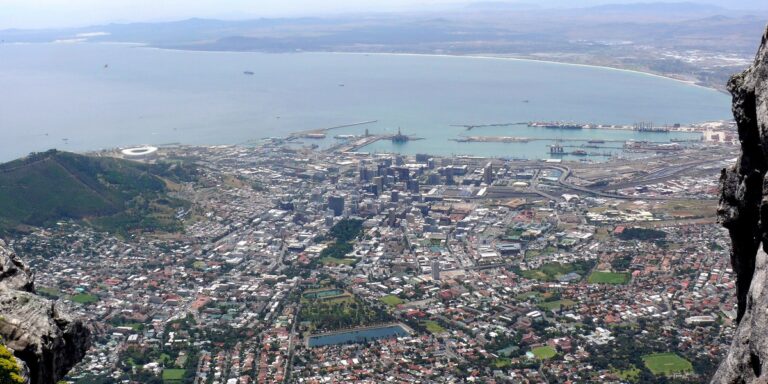
- One week, one city: Cape Town. Robben Island, the Castle of Good Hope and the District Six Museum cover 350 years of colonial and apartheid history within a few kilometers of each other.
- Best single day: Johannesburg. The Apartheid Museum in the morning, Constitution Hill and Soweto in the afternoon.
- Best for deep history: the Cradle of Humankind (millions of years) and Mapungubwe (about 1,000 years).
- Best for battlefields: Isandlwana and Rorke’s Drift, on the same day, with a local guide.
- Book ahead: Robben Island ferries sell out in peak season (December to January), and Mapungubwe’s hill tour runs by reservation.
- Rent a car for KwaZulu-Natal, Limpopo and Kimberley. Public transport doesn’t reach them in any useful way.
Western Cape: Cape Town and the Garden Route
1. Robben Island
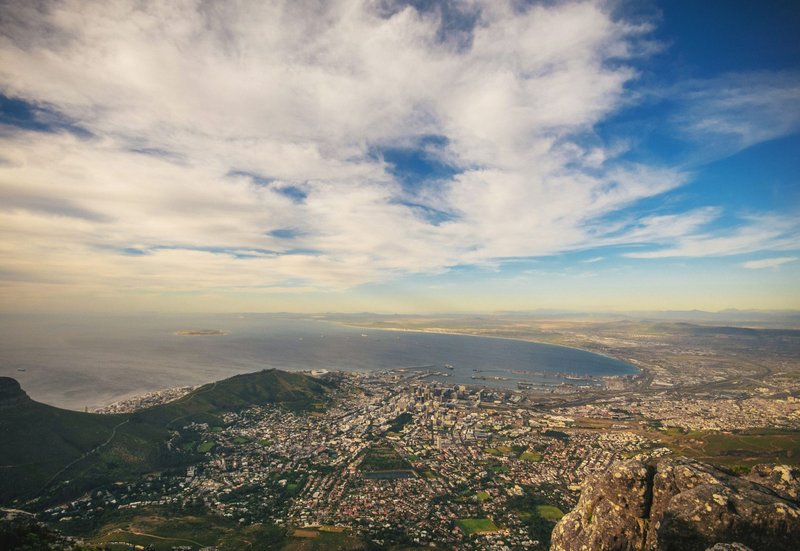
Why it matters: Nelson Mandela spent 18 of his 27 years in prison here, and the island had been a place of banishment for centuries before that. Where: Table Bay, 30 minutes by ferry from the V&A Waterfront in Cape Town (Western Cape). Plan: The ferry leaves from the Nelson Mandela Gateway. The full visit takes about 3.5 hours, including a bus loop of the island and a walking tour of the maximum-security prison, often led by a former political prisoner. Rough seas cancel sailings, so don’t put it on your last day. Book weeks ahead in summer. Combine with: The Castle of Good Hope and the District Six Museum, both a short drive from the waterfront.
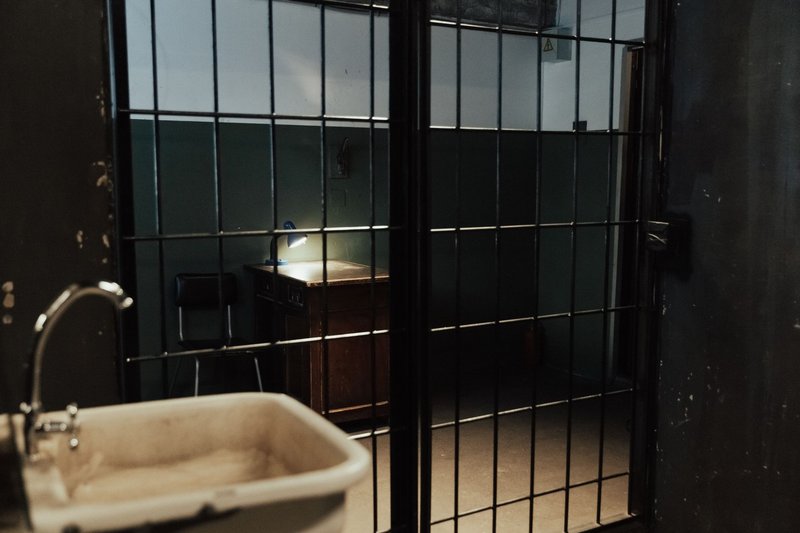
UNESCO inscribed Robben Island in 1999, and the guides’ first-hand accounts are the reason the tour hits harder than any museum panel.
2. Castle of Good Hope
Why it matters: Built by the Dutch East India Company between 1666 and 1679, it’s the oldest surviving colonial building in South Africa. Where: Darling Street, central Cape Town (Western Cape). Plan: The pentagon’s five bastions are named after the titles of the Prince of Orange, which makes the layout easier to remember than it looks. Check the schedule for the ceremonial key handover and cannon firing, and allow about two hours with the military museum and the art collection inside. Combine with: The Grand Parade next door, where Mandela addressed the crowd from the City Hall balcony on the day he was released in February 1990.
3. District Six Museum
Why it matters: In 1966 the apartheid government declared District Six a white area, and roughly 60,000 mixed-race and Black residents were forced out over the following years. The museum is the community’s own record of it. Where: Buitenkant Street, central Cape Town (Western Cape). Plan: The museum occupies a former Methodist church. A giant floor map of the old streets is covered in handwritten names and notes from former residents, and some of the guides lived in the district. Book a guided visit. Allow 1.5 to 2 hours. Combine with: The Castle of Good Hope, a five-minute walk away.
4. Pinnacle Point
Why it matters: Excavations in the caves here point to early humans eating shellfish and using pigment around 164,000 years ago, according to research published in Nature. That makes it some of the earliest evidence of modern human behavior anywhere. Where: Mossel Bay, on the Garden Route (Western Cape), about 390 km east of Cape Town. Plan: The caves are in a cliff on a coastal estate, so visits are by guided tour only. Confirm availability before you drive out. Mossel Bay’s Bartolomeu Dias Museum Complex fills a second hour with the story of the first European landing in 1488. Combine with: The Garden Route towns on the road toward Port Elizabeth (Gqeberha).
Gauteng: Johannesburg, Soweto and Pretoria
5. Cradle of Humankind
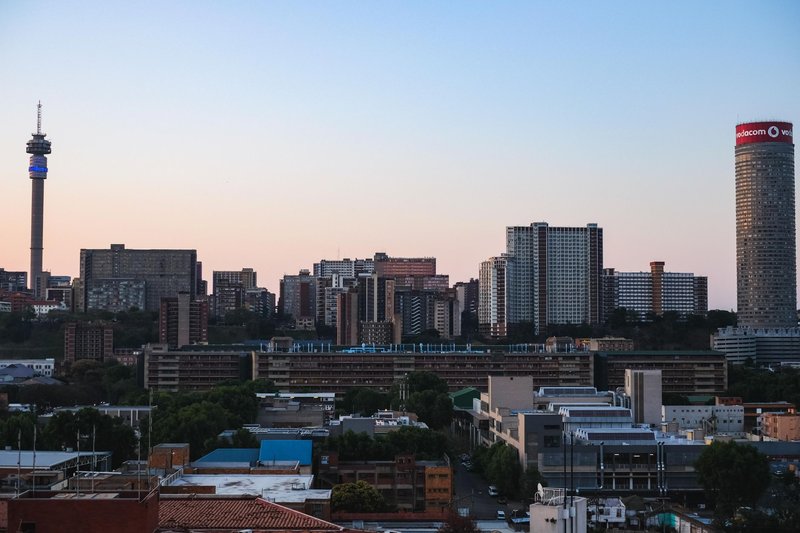
Why it matters: The fossils found in these limestone caves include “Mrs Ples” (discovered at Sterkfontein in 1947) and “Little Foot,” a nearly complete skeleton about 3.6 million years old. In 2013 explorers in the nearby Rising Star Cave found the remains that became Homo naledi. Where: About 45 km northwest of Johannesburg (Gauteng). Plan: Two sites anchor the visit. The Sterkfontein Caves have the underground tour, with some stairs and low ceilings. Maropeng, a ten-minute drive away, has the museum. A combined ticket covers both, and you’ll want a half day or a full one. The Fossil Hominid Sites of South Africa were inscribed on the UNESCO list in 1999. Combine with: A Johannesburg city day. Do the Cradle on its own morning, because the museums downtown deserve fresh attention.
6. Apartheid Museum
Why it matters: It’s the clearest single-building account of how apartheid was built, enforced and dismantled. Where: Northern Park, south of central Johannesburg, next to Gold Reef City (Gauteng). Plan: Your entry ticket randomly classifies you as “White” or “Non-White,” and you enter through the matching door. It lands the point before you reach the first exhibit. Allow at least three hours, since the film footage and the Mandela gallery slow everyone down. Combine with: Constitution Hill and Soweto, both within a 20-minute drive.
7. Constitution Hill
Why it matters: It was a fort and prison complex where Gandhi and Mandela were both held, and it now houses South Africa’s Constitutional Court. Where: Braamfontein, central Johannesburg (Gauteng). Plan: The guided tour walks through Number Four, the section where Black male prisoners were held, then the Women’s Jail, then the court itself. The court was built from bricks of the demolished awaiting-trial block. Allow 1.5 to 2 hours. Combine with: The Apartheid Museum (a short drive south) or the Origins Centre at Wits University, for rock art and Stone Age history.
8. Soweto
Why it matters: On 16 June 1976, police fired on schoolchildren protesting the use of Afrikaans in classrooms, and the uprising that followed reshaped the liberation struggle. Where: About 20 km southwest of central Johannesburg (Gauteng). Plan: Start at the Hector Pieterson Memorial and Museum in Orlando West, named for the 12-year-old whose photograph became the uprising’s defining image. Then walk Vilakazi Street, where both Mandela and Desmond Tutu lived, and visit the Mandela House museum. A local guide, on foot or by bicycle, adds context you can’t get from a car window. Combine with: Constitution Hill and the Apartheid Museum for a full liberation-history day.
9. Voortrekker Monument
Why it matters: Completed in 1949, the granite monument commemorates the Great Trek, the 1830s migration of Afrikaner settlers into the interior. It’s also an architectural record of Afrikaner nationalism, which is the reason to see it. Where: A hilltop south of central Pretoria (Gauteng). Plan: A 27-panel marble frieze inside tells the Voortrekker story from their viewpoint. Check the opening times of the cenotaph, where a ray of sunlight is designed to strike the inscription at noon on 16 December. Combine with: Freedom Park, on the next hill, which presents the same country from the opposite side and commemorates those who died in the struggles that shaped South Africa. Seeing them in the same afternoon is the point.
Limpopo: South Africa’s First Kingdom
10. Mapungubwe
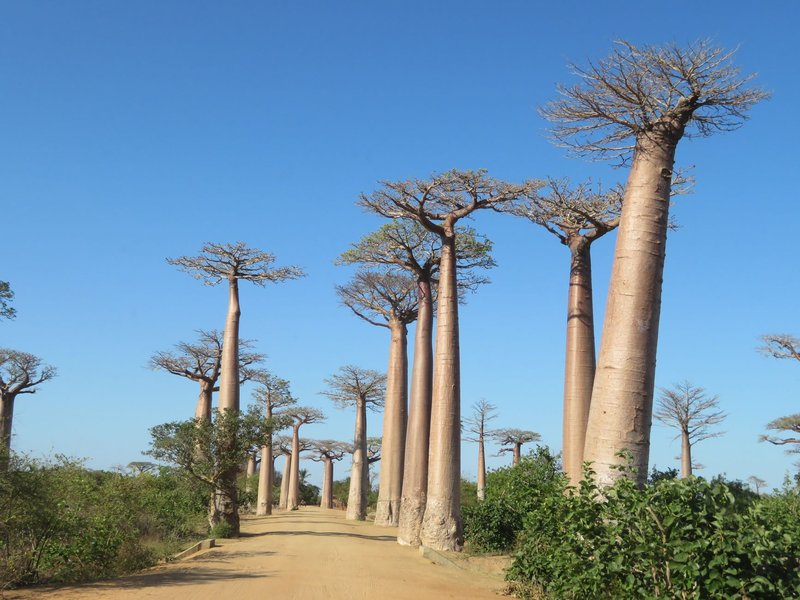
Why it matters: From about 1075 AD, a kingdom here controlled the gold and ivory trade to the Indian Ocean coast. Archaeologists have found Chinese celadon and Indian glass beads on the hill, along with the golden rhino that made the site famous after its 1933 rediscovery. UNESCO inscribed the cultural landscape in 2003. Where: Mapungubwe National Park, where the Limpopo and Shashe rivers meet on the Botswana and Zimbabwe borders (Limpopo), about 600 km north of Johannesburg. Plan: Access to the sacred hill is by guided tour only, so reserve through SANParks ahead of time. Plan for two nights in the park. Summer temperatures often exceed 40°C, so go between May and September. Combine with: Thulamela, a stone-walled settlement in the north of Kruger National Park, which belongs to the same later tradition of southern African stonework.
KwaZulu-Natal: The Battlefields Route
The KwaZulu-Natal Battlefields Route links the sites of the Anglo-Zulu War (1879), the Anglo-Boer War and earlier Boer-Zulu fighting. Base yourself in or near Dundee, roughly 4.5 hours by road from Johannesburg, and allow two full days. The three sites below are about an hour apart or less.
11. Isandlwana
Why it matters: On 22 January 1879, a Zulu army wiped out a British column on the open ground below this sphinx-shaped hill, killing more than 1,300 British and colonial troops. It remains the worst defeat the British Army suffered against an indigenous force in the 19th century. Where: Near Nqutu, KwaZulu-Natal, about an hour’s drive from Dundee. Plan: Hire a licensed local guide. From the car park you can’t see how the Zulu “horns” closed around the camp, and a guide walking the ground makes it legible. White cairns mark where soldiers fell, and a Zulu memorial of iziqu (courage necklaces) honors their dead. Combine with: Rorke’s Drift, 15 km away.
12. Rorke’s Drift
Why it matters: Hours after Isandlwana, about 150 British soldiers held a mission station against several thousand Zulu warriors through the night. Eleven Victoria Crosses were awarded for the defense, the most for a single action. Where: Near Dundee, KwaZulu-Natal. Plan: The on-site museum is small but detailed, with the original storehouse and hospital footprint. The Rorke’s Drift Art and Craft Centre, founded in 1962 and known for its weaving and printmaking, makes the stop worth a second hour. Combine with: Isandlwana on the same day. Start there in the morning.
13. Battle of Blood River (Ncome)
Why it matters: On 16 December 1838, roughly 470 Voortrekkers defended a circle of wagons against a far larger Zulu force, and an estimated 3,000 Zulu died. Three Voortrekkers were wounded. The two sides have since built separate memorials, which tell you a lot about the memory politics. Where: Between Dundee and Vryheid, KwaZulu-Natal, about an hour’s drive from Dundee. Plan: Two sites sit on opposite banks of the Ncome River. On one side stand 64 life-size bronze wagons. On the other, the Ncome Museum tells the battle from the Zulu perspective. See both. The date is now the Day of Reconciliation, a public holiday, so expect crowds on 16 December. Combine with: Dundee’s Talana Museum, set on the site of an 1899 Anglo-Boer War battle.
Northern Cape: Kimberley
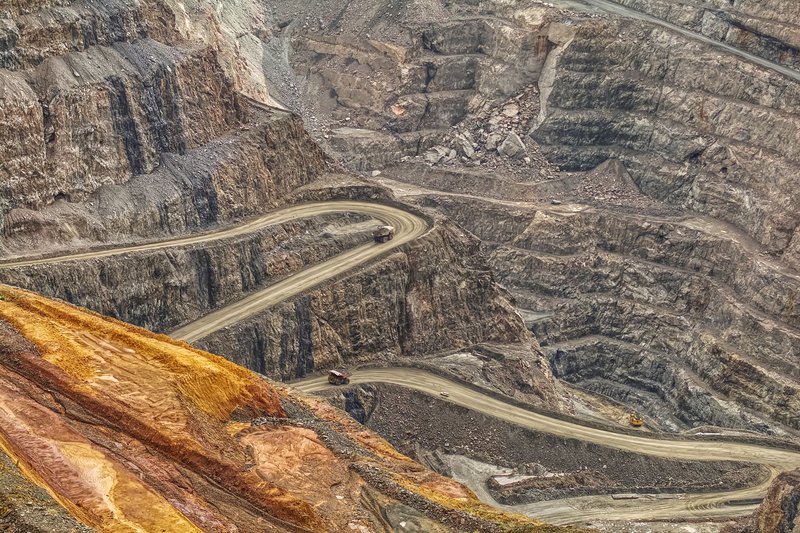
14. Kimberley Big Hole
Why it matters: Miners dug this crater almost entirely by hand between 1871 and 1914, pulling out about 2,722 kg (14.5 million carats) of diamonds. The diamond rush made Kimberley and shaped South Africa’s mining economy and its labor system. Where: Kimberley (Northern Cape), about 470 km southwest of Johannesburg, a five-hour drive. Plan: The Kimberley Mine Museum has a reconstructed street of 19th-century buildings next to the viewing platform. Allow half a day, and consider an overnight stop if you’re driving between Johannesburg and Cape Town. Combine with: Magersfontein Battlefield, about 30 km south, where Boer trenches defeated the Highland Brigade in December 1899.
Historical Places in South Africa on the UNESCO List
South Africa has more than ten UNESCO World Heritage Sites, and the history-focused ones overlap heavily with this list. Three of the 14 are inscribed in their own right: Robben Island (1999), the Fossil Hominid Sites that include Sterkfontein and Maropeng (1999) and Mapungubwe (2003). Pinnacle Point is part of a separate UNESCO listing for early modern human behavior.
The rest, including Constitution Hill, Soweto and the battlefields, aren’t inscribed, and they don’t need to be. UNESCO status mostly tells you the site is well-managed and well-signposted. It doesn’t predict which visit will stay with you.
How Long to Allow at Each Site
| Site | Province | Allow |
|---|---|---|
| Robben Island | Western Cape | Half day |
| Castle of Good Hope | Western Cape | 2 hours |
| District Six Museum | Western Cape | 1.5 to 2 hours |
| Pinnacle Point | Western Cape | 2 hours (guided tour) |
| Cradle of Humankind | Gauteng | Half to full day |
| Apartheid Museum | Gauteng | 3+ hours |
| Constitution Hill | Gauteng | 1.5 to 2 hours |
| Soweto | Gauteng | Half day |
| Voortrekker Monument | Gauteng | 2 hours (3 with Freedom Park) |
| Mapungubwe | Limpopo | 2 days |
| Isandlwana | KwaZulu-Natal | 1.5 hours |
| Rorke’s Drift | KwaZulu-Natal | 1.5 to 2 hours |
| Blood River (Ncome) | KwaZulu-Natal | 2 hours |
| Kimberley Big Hole | Northern Cape | Half day |
Entry prices vary and change, so check each site’s official page before you go. Robben Island is the most expensive item by a wide margin. The rest are modest.
Three Routes Through the List
Cape Town (3 to 4 days). Spend one day on Robben Island, one on the Castle of Good Hope and District Six, and add a Garden Route trip to Pinnacle Point if you’re driving east. Cape Town’s central sites are close enough that rideshares work well.
Johannesburg and Pretoria (4 days). Spend day one at the Cradle of Humankind, day two at the Apartheid Museum and Constitution Hill, day three in Soweto, and day four in Pretoria at the Voortrekker Monument and Freedom Park. Gauteng’s sites are spread out, so a rental car or a booked driver saves time.
KwaZulu-Natal battlefields (3 days). Drive from Johannesburg to Dundee on day one. Spend day two at Isandlwana and Rorke’s Drift, and day three at Blood River and Talana.
Add-ons. Mapungubwe needs its own two- to three-day detour into Limpopo. Kimberley fits as an overnight stop on the long road between Johannesburg and Cape Town. For the full range of historical places in South Africa, from 3.6-million-year-old fossils to Mandela’s cell, Gauteng and Cape Town together give you the widest span in the least time.