TLDR
- Kinyarwanda is Rwanda’s dominant indigenous language. Over 99% of Rwandans speak it, according to the 2022 census.
- It is one of four official languages, alongside English, French, and Swahili.
- Ethnologue counts three living indigenous languages: Kinyarwanda, Mashi (on Nkombo Island), and Rwandan Sign Language.
- English, French, and Swahili are all imported. English now dominates schools, government paperwork, and the web.
Table of contents
- The short answer
- Quick reference: indigenous languages in Rwanda
- Kinyarwanda
- Mashi on Nkombo Island
- Rwandan Sign Language
- The Twa and language
- Why sources disagree on the count
- How language policy changed
- English and the indigenous languages
The short answer
Rwanda has one indigenous language that matters for almost everyone: Kinyarwanda. The 2022 census from the National Institute of Statistics of Rwanda puts its speakers at over 99% of the population. That makes Rwanda unusual in Africa, where a typical country splits its population across dozens of mother tongues.
Kinyarwanda sits next to three official languages that arrived from outside: English, French, and Swahili. Beyond Kinyarwanda, the list of indigenous languages is short and depends on who is counting. Ethnologue’s country profile shows three living indigenous languages. The rest of this post covers each one, then explains why other sources give a different answer.
Quick reference: indigenous languages in Rwanda
| Language | Speakers | Where | Status |
|---|---|---|---|
| Kinyarwanda | About 15 million across the region; over 99% of Rwandans | All of Rwanda, plus southwest Uganda and eastern DR Congo | Official and national language |
| Mashi (Nkombo variety) | Small community; most Mashi speakers live in DR Congo | Nkombo Island in Lake Kivu | Community language, no official role |
| Rwandan Sign Language | No reliable count | Deaf communities nationwide | Used in Deaf schooling and community life; limited formal recognition |
Kinyarwanda
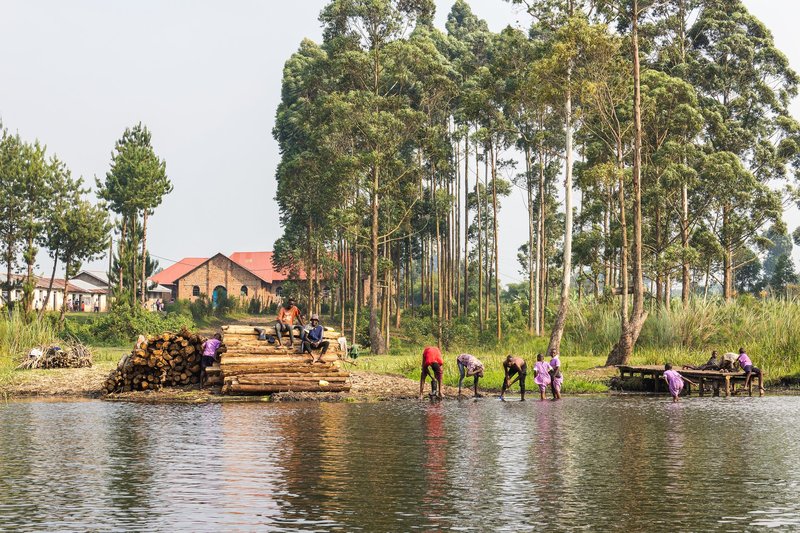
Kinyarwanda is a Bantu language, and it has what most countries would envy: a single standard that nearly everyone understands from the northern volcanoes to the shores of Lake Kivu. Regional differences exist, but they are small. Rwandans from opposite ends of the country don’t need an interpreter, and a Kigali speaker can follow the Kinyarwanda spoken across the border in Uganda’s Kisoro district, where it is called Rufumbira.
The language is also mutually intelligible with Kirundi, the national language of Burundi. Speakers on either side of the border can hold a conversation, and linguists often treat the two as close relatives or even as varieties of one language. That is why the figure of about 15 million speakers covers more than Rwanda’s own population of roughly 13 million. Indiana University’s language profile is a good place to see how the language is built, including its noun classes and tonal system.
If you’re visiting, a few words go a long way:
- Muraho: hello (the all-purpose greeting)
- Mwaramutse: good morning
- Amakuru?: how are you? The usual answer is Ni meza, “it’s good”
- Murakoze: thank you
- Yego and Oya: yes and no
- Murabeho: goodbye
Rwandans notice the effort, and a mangled “Murakoze” still gets a smile. In Kigali you can get by in English or French, but outside the capital, Kinyarwanda is what people use to haggle at the market, talk to the bus driver, and run a meeting.
Mashi on Nkombo Island
Nkombo is a small island in Lake Kivu, close to the Rwandan town of Kamembe on the Congolese border. Its residents speak a variety of Mashi, also called Shi, which is mainly a language of South Kivu across the lake in DR Congo. This is the language that gives Rwanda its second entry on Ethnologue’s list.
Mashi is related to Kinyarwanda but is a separate language, with its own vocabulary and sound patterns. Islanders typically speak Kinyarwanda too, because school, local government, and mainland trade all run through it. That makes Nkombo a good example of how a minority language survives in Rwanda: at home and in the community, while Kinyarwanda handles everything official. Reliable speaker numbers for the Rwandan side are hard to find, so treat any precise figure with suspicion.
Rwandan Sign Language
The third entry on Ethnologue’s list is Rwandan Sign Language, the language of the country’s Deaf community. It developed within Rwanda’s Deaf schools and associations and is not a signed version of Kinyarwanda, English, or French. It has its own grammar.
No source gives a trustworthy speaker count, and formal recognition has lagged behind everyday use. Advocates have pushed for sign language interpreters in schools, courts, and public broadcasts. If you read a source that lists only “spoken” languages, this is the one that gets dropped.
The Twa and language
The Twa are a small minority in Rwanda, historically forest dwellers and potters, and they are often described as the country’s first inhabitants. People searching for “indigenous languages” sometimes expect a separate Twa language. There isn’t one in current use. Twa communities speak Kinyarwanda as their first language, and there is no documented, separate Twa language spoken in Rwanda today.
That points to the second meaning of “indigenous,” which matters in the next section. The Twa are an Indigenous people in the international sense, but their language is the same one as everyone else’s.
Why sources disagree on the count
Ethnologue says three. UNESCO’s World Atlas of Languages, in its Kinyarwanda entry, has an “indigenous” field, and the answer listed for Kinyarwanda is “No.” Both can be read as correct, because they appear to use different definitions.
- Native to the region. A language that originated in the area and isn’t a colonial import. Under this definition, Kinyarwanda is clearly indigenous, and it is how Ethnologue-style counts work.
- Language of an Indigenous people. A language tied to a minority group that has distinct rights and history within a state, as in the UN usage. Under this definition, Kinyarwanda is the national majority language, not the language of an Indigenous minority, so it can be marked “No.”
A third factor is whether a count includes sign languages and small varieties like Nkombo’s Mashi. Include them and you get three. Leave them out and you get one. Neither is wrong, but only one of them tells you what you’d hear on the street.
How language policy changed
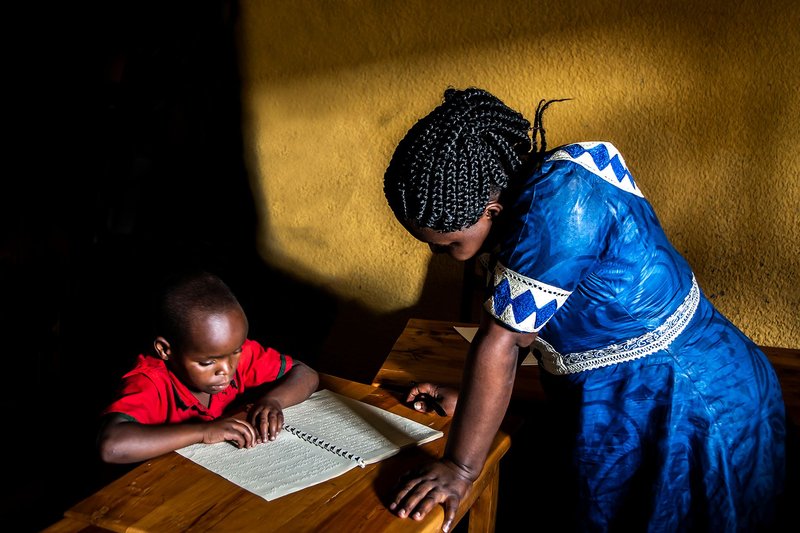
Rwanda’s language list reads like a record of who ran the country.
- Colonial period. Germany ruled first, then Belgium took over after World War I. Under Belgian rule, French became the language of administration and higher education, while Kinyarwanda remained the language of daily life.
- After independence (1962). Kinyarwanda and French were the official languages.
- 2003 constitution. English was added as a third official language, alongside Kinyarwanda and French. Kinyarwanda was also kept as the national language.
- 2008. The government moved the language of instruction in schools from French to English.
- 2017. Swahili became the fourth official language, a move tied to trade and regional ties in East Africa.
The 2008 switch was the sharpest break. Teachers trained in French had to teach in English, often while still learning it themselves. Primary schools now begin with Kinyarwanda in the early grades before shifting to English.
English and the indigenous languages
Kinyarwanda is not in danger in the way many African languages are. When 99% of a country speaks one language at home, it isn’t going anywhere soon. The pressure shows up in specific places: classrooms, government forms, business, and the internet.
The web is the clearest example. One survey of web content found that 96.9% of .rw websites are in English. A Rwandan teenager can speak Kinyarwanda all day and still read, search, and type almost entirely in English. Over time, that tilts the prestige of a language toward the one that gets used for jobs and screens.
The smaller languages face a different problem. Mashi on Nkombo and Rwandan Sign Language have few speakers, little written material, and almost no place in formal institutions. They survive through families and communities, not policy.
For a traveler, this makes the picture simple. You’ll hear Kinyarwanda everywhere, English in hotels and offices, French in older institutions, and Swahili in border towns and markets with East African traders. The indigenous languages of Rwanda come down to one that everybody speaks and two that very few people outside their communities have ever heard.