
Table of Contents
- Quick Answer
- The Official Language: English (and “Zambian English”)
- Zambia’s Seven National Languages
- Nyanja vs. Chewa: Clearing Up the Confusion
- So, How Many Languages Does Zambia Actually Have?
- Where Each Language Dominates: A Region-by-Region Guide
- Zambian Sign Language: The One Everyone Forgets
- A Few Phrases Worth Knowing Before You Go
Quick Answer
English is Zambia’s official language, but almost nobody learns it as a first language — it’s the language of government, schools, and business, not the kitchen table. Below that sits a tier of seven government-recognized regional languages (Bemba, Nyanja, Tonga, Lozi, Lunda, Kaonde, and Luvale), and below that, a long tail of local languages and dialects that different sources count as anywhere from 30 to 70-plus, depending on where you draw the line between “language” and “dialect.” All but English belong to the Bantu family. Bemba is the country’s most widely spoken home language by a wide margin, at roughly a third of the population.
The Official Language: English (and “Zambian English”)
Zambia inherited English from British colonial rule, and it never left. It’s the language of Parliament, the courts, university lectures, and pretty much every road sign and menu you’ll see. Fewer than 2% of Zambians grow up speaking it at home — but as a second language, it’s the closest thing the country has to a lingua franca that crosses ethnic and regional lines, which matters in a country with dozens of mother tongues and no single indigenous language that everyone shares.
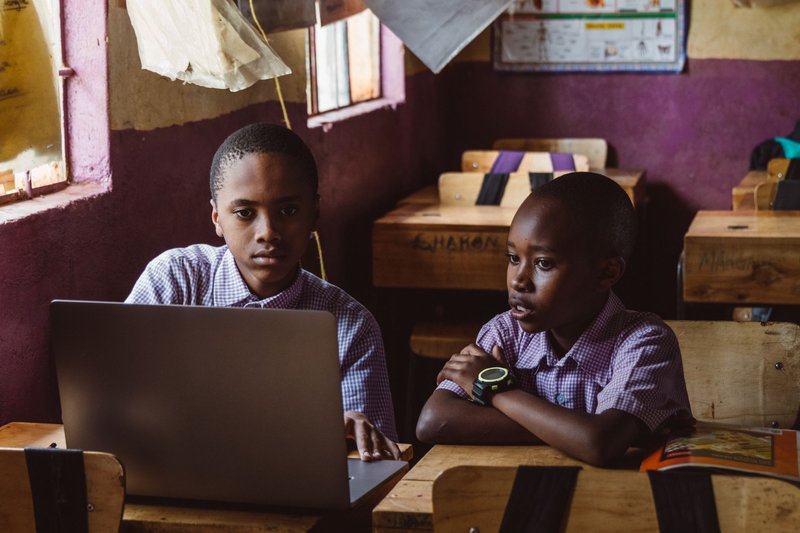
What you’ll actually hear, though, isn’t textbook British English. Zambian English has its own vocabulary, shaped by decades of local use. “Colgate” means toothpaste, whatever brand is in the tube. “Surf” means laundry detergent. Ask someone the time and you might hear “what do you make it?” instead of “what time is it?” Tell a Zambian you’re confused and they might say “I can’t get you,” meaning they don’t follow what you’re saying — not that they’ve lost track of your location. None of this is broken English. It’s a settled, internally consistent dialect that linguists classify alongside Nigerian English and Indian English as its own variety, not a deviation from one.
Zambia’s Seven National Languages
Below English, Zambia’s 1996 constitution and language policy recognize seven national languages — the ones used in regional radio broadcasts, primary school instruction in the early grades, and government messaging outside the capital. According to Zambia’s 2022 census, here’s how the numbers break down for people who speak each one as a first language:
| Language | Share of population | Primary region |
|---|---|---|
| Bemba | 34.0% | Northern, Luapula, Muchinga, Copperbelt |
| Tonga | 12.8% | Southern Province |
| Nyanja | 11.4% | Lusaka, Eastern Province |
| Chewa | 6.7% | Eastern Province |
| Lozi | 5.4% | Western Province |
| Kaonde | 2.3% | North-Western Province |
| Lunda | 2.1% | North-Western Province, Luapula |
| Luvale | 1.6% | North-Western Province |
Those eight rows aren’t a typo against “seven languages” — Chewa and Nyanja are counted separately in census data despite being treated as one recognized national language in practice, which is exactly the kind of inconsistency that trips people up. More on that below.
Bemba’s dominance is worth sitting with for a second: at 34%, more Zambians speak it as a first language than speak Tonga, Nyanja, and Lozi combined. It started as the language of the Copperbelt’s mining towns and Northern Province, but decades of internal migration for work turned it into something closer to an unofficial second lingua franca, especially in urban areas like Lusaka and Kitwe.
Nyanja vs. Chewa: Clearing Up the Confusion
This is the question that trips up more people than any other, and most sites don’t bother answering it directly. Nyanja and Chewa are mutually intelligible — a Chewa speaker from Eastern Province and a Nyanja speaker from Lusaka can hold a conversation without much friction. Linguistically, they’re dialects of the same base language.
The split is administrative and geographic, not really linguistic. “Chewa” is the term used in Eastern Province, closer to its roots among the Chewa people who also live across the border in Malawi. “Nyanja” is the urbanized, somewhat simplified version that spread through Lusaka and became one of the capital’s dominant everyday languages — partly through radio, partly through decades of use as a lingua franca in government and commerce. Zambia’s census counts them as separate entries because that’s how people self-identify, even though a linguist would file them under one language with two names.
So, How Many Languages Does Zambia Actually Have?
You’ll see wildly different numbers thrown around: 30, 40, 70, 72. None of them are wrong, exactly — they’re answering slightly different questions.
The lower figures (30–40) usually come from counting distinct, established languages with their own grammar and literature — the number Ethnologue, the standard linguistic reference for cataloguing the world’s languages, uses when it tallies Zambia’s language inventory. The higher figures (70-plus) come from counting every named dialect and regional variant separately, including small, closely related tongues spoken by a few thousand people in a single district. If you want a more exhaustive breakdown, the Indigenous Languages in Zambia: The Complete List provides detailed information on the full spectrum of languages and dialects spoken across the country. Neither approach is more “correct” — it’s the same problem you run into asking how many languages are spoken in, say, Italy, where distinguishing a dialect from a separate language is as much a political question as a linguistic one.
What’s not in dispute: every indigenous language spoken in Zambia belongs to the Bantu family, a group of related languages spoken across most of sub-Saharan Africa. That shared ancestry is part of why a Bemba speaker can often pick up rough meaning from a Nyanja conversation even without formal study — the grammar patterns and a meaningful chunk of vocabulary overlap.
Where Each Language Dominates: A Region-by-Region Guide
Zambia’s language map roughly follows its provincial borders, which makes it easier to predict what you’ll hear than the raw percentages suggest.

- Northern Province, Luapula, Muchinga, and the Copperbelt: Bemba dominates, and you’ll hear it as a practical second language even among people whose first language is something else — it’s the working language of the mining towns.
- Southern Province: Tonga is the majority home language, spoken widely around Livingstone and the Victoria Falls corridor, so it’s the one most tourists on a classic safari-and-falls itinerary will actually hear.
- Lusaka and Eastern Province: Nyanja and Chewa, respectively — with Nyanja functioning as Lusaka’s default street language regardless of a person’s ethnic background.
- Western Province: Lozi, tied closely to the Lozi (Barotse) monarchy and the Zambezi floodplain communities around Mongu.
- North-Western Province: Kaonde, Lunda, and Luvale share this region, along with parts of Luapula for Lunda speakers — the most linguistically layered corner of the country.
If you’re traveling and want one phrase that travels with you regardless of province, English still gets you further than any single local language — but greeting people in the regional language, even badly, tends to land better than English ever will.
Zambian Sign Language: The One Everyone Forgets
Every rundown of “languages in Zambia” focuses on spoken ones and skips Zambian Sign Language (ZSL) entirely, which is a real gap given how many deaf Zambians rely on it daily. ZSL has no official constitutional status — it isn’t one of the seven recognized national languages, and proposals to formally elevate it have come up in Parliament without passing. But it isn’t ignored, either: Section 99 of Zambia’s Education Act requires schools to use sign language as the medium of instruction for learners who depend on it, and in 2022 the National Assembly began incorporating ZSL interpretation into parliamentary broadcasts. It occupies an odd middle ground — practically necessary, legally unrecognized.
A Few Phrases Worth Knowing Before You Go
Nobody expects fluency, but a handful of words in the local language of whatever province you’re visiting tends to open doors that English doesn’t. A few starting points, by language:
- Bemba: Mwapoleni (hello, to more than one person), natotela (thank you)
- Nyanja: Muli bwanji? (how are you?), zikomo (thank you)
- Tonga: Mwabuka buti? (good morning), twalumba (thank you)
- Lozi: Mu zuhile cwang? (good morning), ni itumezi (thank you)
Pronunciation won’t be perfect on the first try, and that’s fine — the attempt itself is the point. In a country where the “national” language most people actually grew up speaking often isn’t English, a few words of Bemba, Nyanja, or Tonga tend to get you a bigger smile than a fluent sentence of English ever will.