
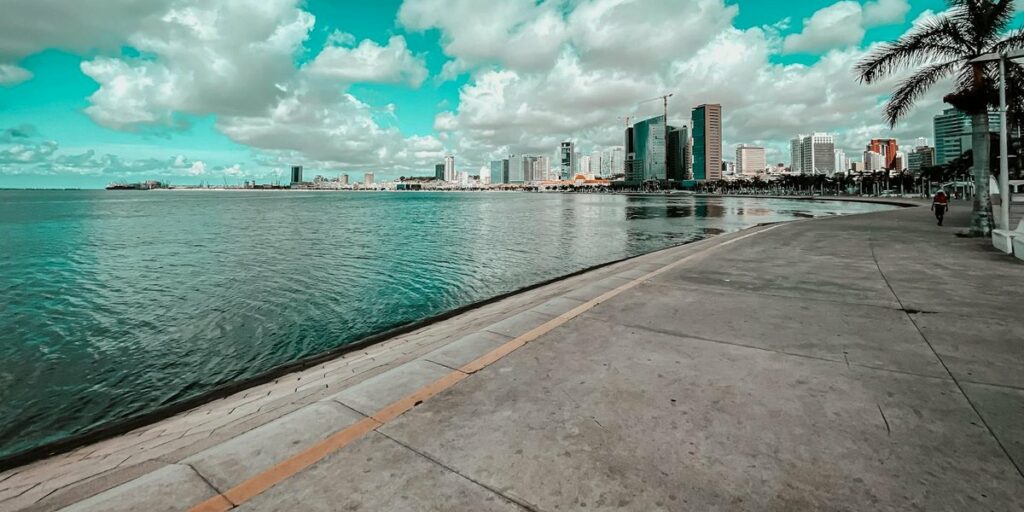
Here’s the thing about Angola that breaks most people’s brains: Luanda, the capital, has spent years ranked the single most expensive city on Earth for foreign workers. A bottle of imported water can run several dollars. A modest apartment in the right neighborhood costs more than one in Manhattan. And yet roughly half the people living in that same city are below the poverty line, packed into informal settlements with no running water.
That paradox is the headline everyone writes about. It’s also where most articles stop. So let’s actually do the work nobody else does: rank the poorest cities and provinces in Angola, with real numbers, and explain what’s actually going on in each.
A quick note on the data. Angola measures poverty two ways. The income poverty line (people living below a set daily income) and the Multidimensional Poverty Index, or MPI, which counts deprivations across health, education, and living standards (no clean water, no electricity, no schooling). The MPI tends to paint the harsher, more honest picture, and it’s what most of the recent national figures lean on. Where the gap between the two matters, I’ll flag it.
Table of Contents
- The Quick Answer
- The Luanda Paradox
- The Poorest Provinces, Ranked
- Why Rural Angola Is So Much Poorer
- The Richest Cities, for Contrast
- What This Means If You’re Visiting
The Quick Answer
If you want the bottom line without the deep read:
- By province, the poorest places in Angola are rural and inland — Cunene, Moxico, Cuando Cubango, Bié, Uíge, and Huíla, where multidimensional poverty hits at least 70% of the population. In several, it’s closer to 90%.
- The poorest “cities” in any meaningful sense are the provincial capitals of these regions — Menongue (Cuando Cubango), Luena (Moxico), Kuito (Bié) — plus the vast informal musseques ringing Luanda itself.
- Nationally, about 54% of Angolans live in multidimensional poverty, but that average hides a brutal split: roughly 88% of rural Angolans are poor versus about 35% in urban areas, per the Angola Multidimensional Poverty Index reporting.
- Luanda is the richest city by income and the lowest-poverty province (around 23.7% multidimensionally poor), and simultaneously one of the most expensive cities on the planet. Both things are true. That’s the whole story of Angola in one sentence.
The Luanda Paradox
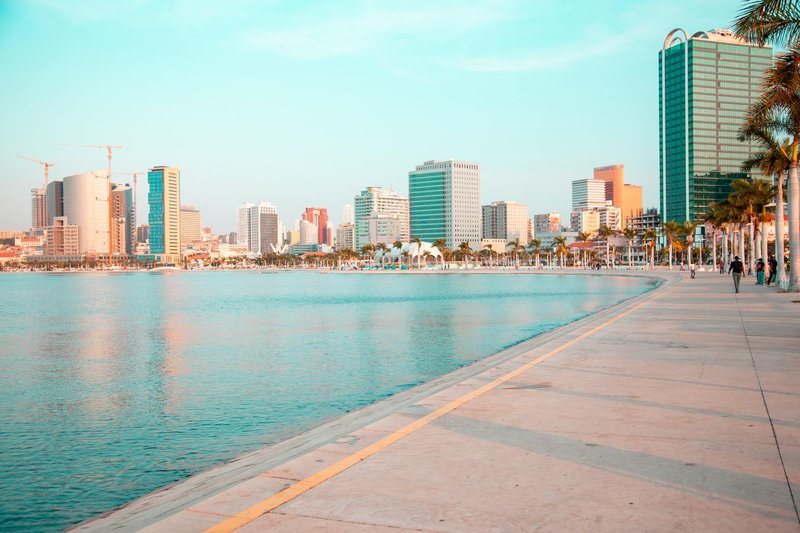
Start with the city everyone’s heard of, because it explains everything that follows.
Luanda topped Mercer’s cost-of-living ranking for expatriates repeatedly through the 2010s, and it kept showing up near the top for years after. The reason isn’t that Angola is wealthy. It’s that Angola imports almost everything. Decades of civil war wrecked domestic agriculture and manufacturing, and the oil boom that followed gave the country dollars to buy food and goods from abroad rather than rebuild the capacity to make them. When you import your groceries, your construction materials, and your appliances, prices climb fast. Add a tiny supply of Western-standard housing and a flood of oil-company expats willing to pay anything for it, and you get $10,000-a-month apartments in a country where most people earn a few dollars a day.
Now the other half. Luanda’s population exploded from a few hundred thousand at independence to well over four million, much of it driven by people fleeing the war in the countryside. They landed in the musseques — the informal shantytowns that now ring the colonial-era core and house a huge share of the city’s residents. No piped water, intermittent or no electricity, open sanitation. By most estimates around 53% of greater Luanda still lives below the poverty line, as The Conversation has reported in its coverage of the city’s missing oil riches.
So when a list says “Luanda is the most expensive city in the world,” it means for expats buying imported goods and luxury housing. For the family in a musseque hauling water by jerrycan, Luanda is something else entirely. Two cities stacked on the same map.
The Poorest Provinces, Ranked
Angola doesn’t publish a clean “poorest cities” leaderboard, so the honest way to rank poverty is by province, using the multidimensional poverty share. Here’s where the deprivation is deepest. (Figures are multidimensional poverty incidence — the share of people deprived across multiple dimensions.)
| Province | Capital city | MPI poverty (share of population) | Defining deprivation |
|---|---|---|---|
| Cunene | Ondjiva | ~90%+ | Water, sanitation, schooling |
| Moxico | Luena | ~70–90% | Water, electricity, cooking fuel |
| Cuando Cubango | Menongue | ~70–90% | Remoteness, basic services |
| Bié | Kuito | ~70%+ | War legacy, infrastructure |
| Uíge | Uíge | ~70%+ | Rural isolation, schooling |
| Huíla | Lubango | ~70%+ | Rural water and sanitation |
| Lunda Norte | Dundo | ~70%+ | Inequality despite diamonds |
| Cuanza Sul | Sumbe | ~70%+ | Agriculture, services |
| Luanda | Luanda | ~23.7% | Civil registration, nutrition, schooling |
Sources cluster around the national MPI reporting and the World Bank’s Angola Poverty and Equity Brief. A few of these deserve a closer look, because the reason each is poor differs.
Cunene (capital: Ondjiva). The single worst province on most measures, with multidimensional poverty above 90%. It’s a dry, southern border region that’s been hammered by repeated drought, and pastoralist communities here lose livestock and crops in cycles that keep families from ever building a buffer. Water and sanitation deprivation are nearly universal.
Moxico (capital: Luena). Enormous, remote, and emptied out by the war, Moxico’s poverty is the living-standards kind. The reporting is specific here: the main deprivations are lack of water, lack of electricity, and lack of cooking fuel. This is a place where the problem isn’t a missing document — it’s a missing power line.
Cuando Cubango (capital: Menongue). Often nicknamed “the land at the end of the earth” by Angolans, and the name fits. It’s vast, thinly populated, and the last province to get almost anything — roads, clinics, electricity. Distance itself is the poverty driver.
Bié (capital: Kuito). Kuito was one of the most destroyed cities of the entire civil war, fought over street by street in the 1990s. The recovery has been slow and uneven, and the province still carries the infrastructure scars decades on.
Lunda Norte (capital: Dundo). Worth singling out because it’s a diamond-mining province — real wealth comes out of the ground here. Yet roughly 70% of residents live in multidimensional poverty. The mineral money doesn’t reach the people standing on top of it, which is the Angola pattern in miniature.
Why Rural Angola Is So Much Poorer
The single most important number in this whole topic is the gap: about 88% multidimensional poverty in rural areas versus roughly 35% in urban areas, according to the national MPI figures. Nearly nine in ten rural Angolans are poor.
Three things drive it.
First, the war. Angola’s civil conflict ran from 1975 to 2002, and it was concentrated in the interior. It destroyed roads, bridges, schools, and farms, and it pushed millions toward the relative safety of cities — which is exactly why the countryside is both poorer and emptier than it was a generation ago.
Second, oil geography. Angola’s economy runs on offshore oil, and that revenue flows through Luanda and a handful of coastal hubs. It doesn’t naturally circulate into a village in Moxico. The benefits of the resource are physically and economically concentrated far from where most poor people live.
Third, basic services follow population density and political weight. It’s expensive to run a power line or a piped-water system to a scattered rural population, so it doesn’t happen. That’s why a remote province’s deprivation profile is dominated by infrastructure (water, electricity, fuel), while Luanda’s poor are more likely to be tripped up by things like missing civil registration and low schooling — a subtler poverty, but poverty all the same.
The Richest Cities, for Contrast
You can’t really understand the poorest places without the other end of the scale.
Luanda is, by income, far and away the wealthiest — its sub-10% income poverty rate is a different planet from Cunene’s. The coastal oil and port cities do better than the interior almost without exception: Lobito and Benguela on the central coast, with their port economy and the revived Benguela railway, and Cabinda, the oil-rich exclave to the north that produces a large share of national output. Soyo, near the mouth of the Congo River, anchors the offshore gas industry.
The pattern is impossible to miss. Wealth in Angola is coastal, urban, and tied to oil or ports. Poverty is inland, rural, and far from the pipeline. Draw a line and the country sorts itself almost cleanly. It’s a dynamic that repeats across Portuguese-speaking Africa; the same coastal-versus-interior divide shows up in the poorest cities in São Tomé and Príncipe, where the wealthier districts cluster near the ports and the rest of the island lags behind.
What This Means If You’re Visiting
Most travelers to Angola land in Luanda and may never see the interior, so a few honest expectations.
Luanda is genuinely expensive — budget accordingly, because the import-driven prices that punish expats hit visitors too. A casual meal and a hotel night will cost more than you’d guess for a sub-Saharan capital. At the same time, the inequality is visible and immediate; the gap between the marble waterfront and the musseques a short drive inland is not subtle.
If you head into provinces like Moxico, Cuando Cubango, or Bié, understand that infrastructure thins out fast. Reliable electricity, clean water, and paved roads stop being guarantees. That’s not a warning to stay away — these regions have landscapes and a frontier character you won’t find on the coast — but it’s the reality the poverty numbers are describing in the abstract. The 88% rural poverty figure isn’t a statistic out there. It’s the village you’ll drive through.
The takeaway worth carrying: Angola isn’t a poor country that happens to have an expensive capital. It’s a country whose wealth is real but caught in a few square miles of coastline, while most of the map waits for it to arrive.