
The South Carolina–North Carolina line runs 334 miles across two states, and it carves through ski-resort foothills in the west and exurban Charlotte sprawl in the east. People search for the towns along it for two very different reasons: a weekend road trip through the Blue Ridge, or a serious look at buying a house in South Carolina while keeping a job in North Carolina. This guide covers both.
What you won’t find anywhere else in one place: an actual list of the towns, how close each one sits to the line, and a straight answer on whether it’s worth visiting, worth moving to, or both.
Table of Contents
- The quick list
- Foothills border towns (the western end)
- Charlotte-metro border towns (the eastern end)
- Why people move to the SC side of the line
- Best for visiting vs. best for living
- The geography, briefly
The quick list
Here are the towns that sit on or within a short drive of the state line, grouped by which side they’re on and roughly how far from the border they fall.
| Town | State | County | Approx. distance to line | Why it matters |
|---|---|---|---|---|
| Landrum | SC | Spartanburg | ~1.5 mi | Closest foothills town to NC; equestrian country |
| Tryon | NC | Polk | ~1 mi | Walkable arts town, Nina Simone’s birthplace |
| Saluda | NC | Polk | ~3 mi | Tiny mountain village atop the Saluda Grade |
| Columbus | NC | Polk | ~5 mi | County seat, quiet and cheap |
| Chesnee | SC | Spartanburg/Cherokee | ~2 mi | Rural crossroads, Cowpens battlefield nearby |
| Kings Mountain | NC | Cleveland | ~4 mi | Revolutionary War battlefield, casino town now |
| Clover | SC | York | ~3 mi | Small-town SC, easy Lake Wylie access |
| Lake Wylie | SC | York | ~1 mi | Lakefront community straddling the water border |
| Fort Mill | SC | York | ~2 mi | Booming suburb, top-rated schools |
| Tega Cay | SC | York | ~3 mi | Planned lake city, peninsula on Lake Wylie |
| York | SC | York | ~10 mi | Historic county seat (“the white rose city”) |
| Rock Hill | SC | York | ~12 mi | Largest town near the line, full-service city |
The two clusters do not feel like the same place at all. The western group is mountain-and-horse country. The eastern group is Charlotte’s overflow.
Foothills border towns
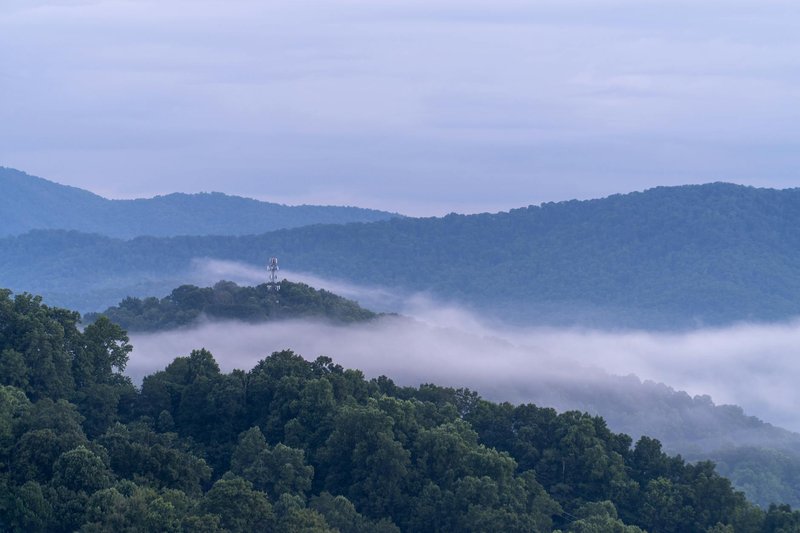
The western end of the line runs through the Blue Ridge foothills, and the towns here are small, old, and built around the railroad that once hauled freight up the brutally steep Saluda Grade.
Landrum, SC is the South Carolina anchor. The downtown is a few walkable blocks of antique shops and a couple of restaurants, and the surrounding county is thick with horse farms. Exit 1 off I-26 puts you about 1.26 miles from the North Carolina line via a back road, which makes Landrum arguably the closest incorporated SC town to NC on this stretch.
Tryon, NC sits roughly a mile north of the border and is the cultural heavyweight of the group. It’s the birthplace of Nina Simone, it has a genuinely good little arts scene, and the equestrian world knows it as the home of the Tryon International Equestrian Center, which hosted the 2018 World Equestrian Games. Landrum and Tryon function as one community split by a state line; locals shop across it without thinking about it.
Saluda, NC is higher up, smaller, and quieter, perched at the top of the Saluda Grade, once the steepest standard-gauge mainline railroad grade in the United States. The whole historic district is on the National Register. There’s not much to do, which is the point.
Columbus, NC is the Polk County seat, a few miles in from the line, and mostly serves as the practical, affordable neighbor to its showier siblings. On the South Carolina side, Chesnee is a rural crossroads near the Cowpens National Battlefield, where the Continental Army won a decisive 1781 victory.
Charlotte-metro border towns
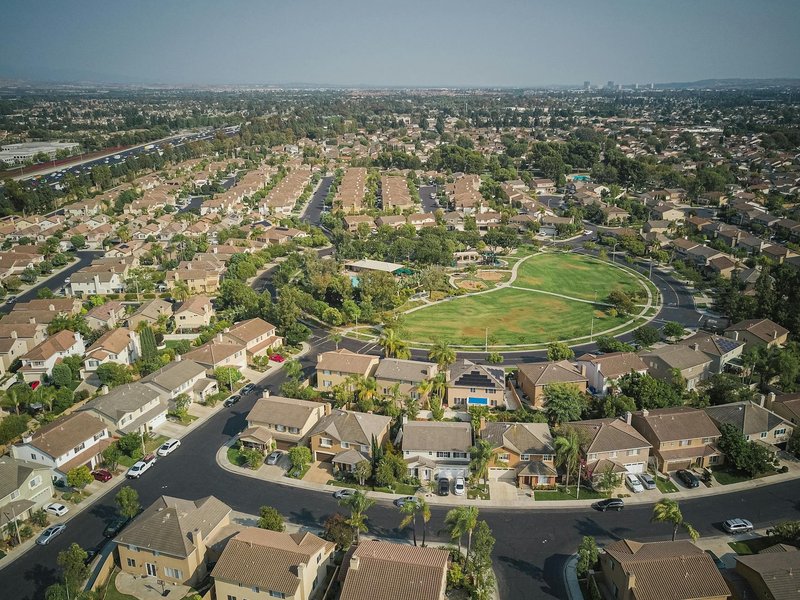
The eastern cluster is a completely different animal. These towns exist, in their current form, because Charlotte got expensive and people noticed that the South Carolina line was a 20-minute drive south of uptown.
Fort Mill, SC is the headliner. It’s grown fast, the schools rank among the best in the state, and it’s stacked with the kind of new construction and corporate offices that follow young families with money. The town sits about 20 miles south of uptown Charlotte.
Tega Cay, SC is right next door, built as a planned community on a peninsula jutting into Lake Wylie. It bills itself as “a good place to live,” leans heavily on the lake lifestyle, and runs pricier than its neighbors.
Lake Wylie, SC is technically an unincorporated community, but it’s worth listing because the lake itself forms part of the actual state border. You can be in a boat with one shoreline in each state.
Clover, SC is the holdout small town of the bunch, less polished and cheaper than Fort Mill, with quick access to the lake. Further from the line but still firmly in commuter range, York is the historic county seat with a well-preserved downtown, and Rock Hill is the largest town in the area, with the hospitals, big-box retail, and university (Winthrop) that the smaller towns lean on.
Why people move to the SC side
This is the search that drives a huge share of border-town interest, and the answer is mostly taxes.
South Carolina taxes owner-occupied homes far more gently than North Carolina does. SC assesses a primary residence at 4% of its value, versus 6% for investment property, and the resulting effective property tax rate in York County runs roughly half of what Mecklenburg County (Charlotte) charges. On a $450,000 home, that’s commonly a difference of $2,000 to $2,500 a year. Local real estate analysts in the Charlotte metro break the math down by county for buyers weighing the move.
The catch is income tax. South Carolina’s top income tax rate has historically run higher than North Carolina’s flat rate, so if you live in SC and work in NC, you can end up filing in both states. For retirees and people whose income is mostly from a paid-off house, SC usually wins. For high earners, the math gets closer, and it’s worth running your own numbers rather than trusting a forum thread.
Gas has long been cheaper on the South Carolina side too, thanks to a lower fuel tax, though SC has been raising it. The South Carolina Municipal Association has documented how border cities actively market these cost differences to pull residents and businesses across the line.
Best for visiting vs. best for living
The two clusters sort cleanly.
Best for visiting:
- Tryon, NC — the most to actually do: galleries, the equestrian center, a real downtown.
- Saluda, NC — for a quiet mountain weekend and the Green River nearby.
- Landrum, SC — antiquing and horse-country drives, with Tryon a five-minute hop away.
- Kings Mountain, NC — the Revolutionary War battlefield (a National Park Service site) plus a large casino that’s reshaped the town.
Best for living:
- Fort Mill, SC — schools and amenities, if you can stomach the growth and traffic.
- Tega Cay, SC — lake life, higher price tag.
- Clover / York, SC — small-town feel and lower cost, longer commute.
- Rock Hill, SC — the most self-sufficient, least dependent on Charlotte.
The foothills towns are where you go for a weekend. The Charlotte-metro towns are where you go for a mortgage.
The geography, briefly
The state line itself has a strange history. The Carolinas were one colony until 1729, and surveying the boundary between them dragged on for most of the 18th century. The job wasn’t truly finished until 2017, when the two states ratified a re-survey that corrected the line using GPS and moved a handful of homes and businesses from one state to the other overnight. A few families went to bed in North Carolina and woke up South Carolinians. You can read the resolved boundary’s history through the North Carolina Secretary of State.
The same pattern of twinned communities and surveyed-and-resurveyed lines plays out on every side of both states. South Carolina’s southern edge produces its own set of paired towns along the river, and if you’ve worked your way through the Carolina line you’ll recognize the rhythm in the towns straddling the SC–Georgia border. North Carolina’s northern boundary tells a similar story, with eighteen municipalities scattered along the Virginia–North Carolina line, each shaped by which side of an old survey it happened to land on.
That’s the thing about these towns. The line on the map looks clean and old. On the ground, it’s a recent, negotiated, and occasionally weird thing, and the people who live along it cross it more times in a week than they could count.