Scotland has some of the most beautiful landscapes in Europe — and some of the deepest pockets of poverty in the United Kingdom. The two things coexist without much contradiction. The Highlands can be stunning and economically hollowed out. Glasgow can have a world-class arts scene and a neighborhood where male life expectancy is lower than in parts of sub-Saharan Africa.
The Scottish Index of Multiple Deprivation (SIMD) is Scotland’s official measure of area deprivation. It ranks every data zone in Scotland across seven domains: income, employment, health, education, housing, crime, and geographic access to services. The most recent full release is SIMD 2020 (with updates drawing on 2022–2023 data). Every ranking below draws from that framework.
This isn’t a list of the poorest individual postcodes — those tend to be housing estates rather than whole cities. This is a city-level picture: which urban areas have the highest concentration of deprived data zones, and why.
Table of Contents
- Glasgow
- Greenock and Inverclyde
- Dundee
- Paisley
- Motherwell and North Lanarkshire
- Kilmarnock
- Ayr
- Coatbridge and Airdrie
- Aberdeen: The Outlier
- How Things Have Changed
Glasgow
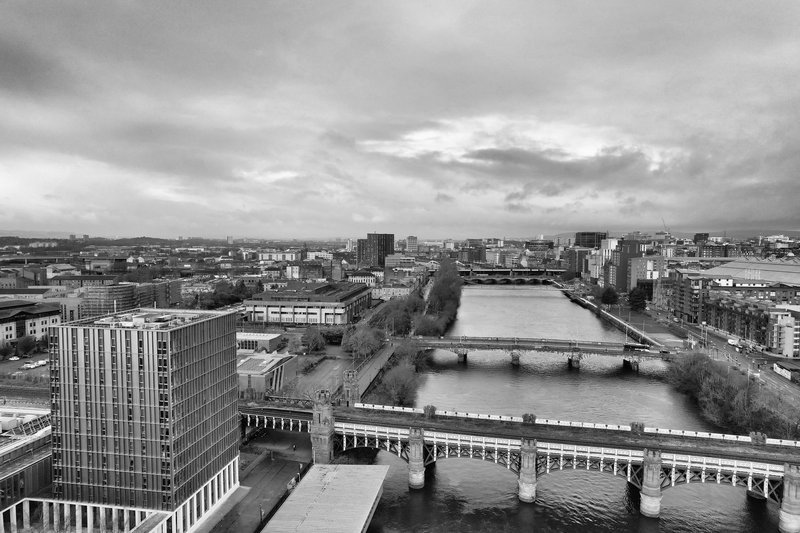
No list of deprived Scottish cities starts anywhere else. Glasgow consistently has the highest concentration of SIMD data zones in the bottom 20% nationally — areas like Drumchapel, Parkhead, Shettleston, and Govan have appeared in the most deprived decile across multiple SIMD releases.
The reasons trace back to deindustrialisation. When the Clyde shipyards collapsed in the 1970s and 1980s, Glasgow lost its economic engine without much to replace it. Unemployment, low wages, and poor health outcomes embedded themselves into specific postal codes and stayed there.
Glasgow’s deprivation isn’t evenly spread. The city has genuine wealth — the West End, Bearsden, parts of the South Side. But the East End tells a different story. Male life expectancy in Calton, one of Glasgow’s most deprived wards, was famously cited at around 54 years — lower than the Gaza Strip at the time the statistic circulated. More recent NHS data shows improvement, but the underlying inequality hasn’t been resolved.
Glasgow also ranks poorly on health outcomes independent of income — a pattern researchers call the “Glasgow Effect,” a mortality premium that persists even after controlling for deprivation and socioeconomic factors. It remains one of the more studied and debated anomalies in public health.
Greenock and Inverclyde
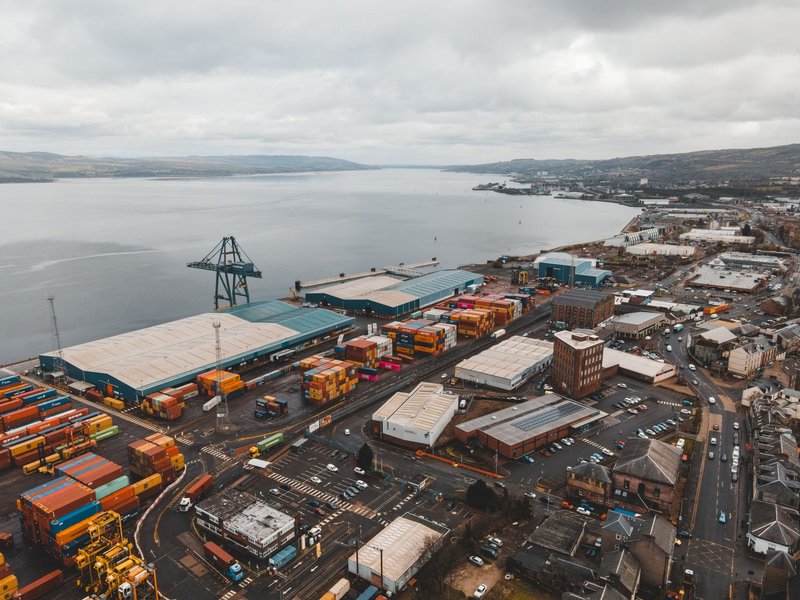
Inverclyde sits on the south bank of the Clyde estuary, and Greenock is its largest town. It’s the council area with the highest overall deprivation rate in Scotland by SIMD data zone concentration — meaning a greater share of its population lives in a deprived area than anywhere else, including Glasgow.
That’s a significant distinction. Glasgow has more total deprived zones, but Greenock is a smaller place where deprivation is harder to escape. Job losses in sugar refining, shipbuilding, and electronics manufacturing (IBM had a major plant there) left the area without replacement industries. Employment rates are low, wages are suppressed, and outmigration has drained the population over decades.
The Inverclyde waterfront has seen some regeneration investment, but it hasn’t reversed the headline statistics. Greenock remains one of the bleakest economic stories in Scotland.
Dundee
Dundee has been in a transitional state for about twenty years. The old economy — jute, jam, and journalism, as the old slogan went — has been largely replaced by biomedical research, game design (Rockstar North developed GTA here), and the V&A Dundee museum, which opened in 2018 and drew significant press.
But the regeneration is concentrated in the waterfront and certain sectors. Large parts of the city, particularly in the north and west — Lochee, Whitfield, Kirkton, Hilltown — remain among Scotland’s most deprived communities. Dundee’s poverty rate is the third highest of any Scottish council area, and the city has persistently high rates of drug-related deaths, a problem the Scottish Government has acknowledged as a national public health emergency.
The contrast is visible. The waterfront gleams. A few kilometers away, communities are dealing with food insecurity, unemployment, and the highest drug mortality rate in Western Europe.
Paisley
Paisley is technically in the Renfrewshire council area rather than Glasgow, but it sits in the Greater Glasgow urban zone and shares many of the same economic problems. It was once the global center of thread and textile manufacturing — Coats and Clark built an empire there. By the time those industries contracted, Paisley was left with little to fall back on.
Several Paisley neighborhoods rank in the bottom 15% of Scottish data zones. The town’s bid for UK City of Culture in 2021 was unsuccessful, but it drew attention to both the area’s cultural heritage and its economic need. Unemployment rates remain above the Scottish average, and household income levels sit well below it.
Motherwell and North Lanarkshire
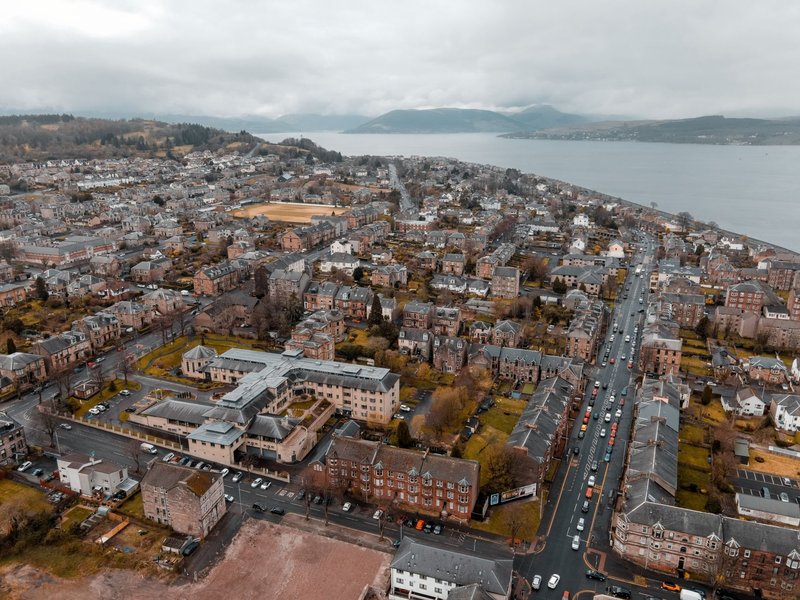
North Lanarkshire is the council area just east of Glasgow, and it contains some of the most concentrated pockets of deprivation in central Scotland. Motherwell, Wishaw, and Coatbridge are its largest towns.
Motherwell’s identity was shaped by Ravenscraig steelworks, which was once the largest hot strip steel mill in Europe. It closed in 1992. The site sat largely derelict for years — a physical symbol of industrial abandonment that’s become almost a cliché in writing about Scottish poverty. Regeneration has progressed slowly, but North Lanarkshire as a whole still has unemployment rates and income figures that lag behind Scotland’s national average.
Kilmarnock
Kilmarnock in East Ayrshire has one of the highest deprivation rates in Scotland outside the Glasgow conurbation. The town’s manufacturing base — whisky bottling, engineering, footwear — largely disappeared between the 1980s and 2000s. Johnny Walker’s bottling plant, which employed around 700 people, closed in 2012. The closures stacked up faster than new employment could arrive.
Several Kilmarnock data zones sit in the bottom 5% nationally for income and employment. East Ayrshire is consistently among the three or four most deprived council areas in Scotland.
Ayr
Ayr has a better image than its SIMD data would suggest. It’s a coastal town with a racecourse, Robert Burns associations, and day-trippers from Glasgow. But the economy is thin. Tourism doesn’t create the density of stable, year-round employment that manufacturing once did.
Parts of Ayr, particularly in the north of the town, rank in the bottom 20% nationally. South Ayrshire as a council area is less deprived than its northern counterpart (East Ayrshire), but Ayr itself has identifiable deprived communities that the tourism economy doesn’t reach.
Coatbridge and Airdrie
These two towns in North Lanarkshire deserve mention separately from Motherwell because they have their own economic profile. Both were heavily industrial — Coatbridge was nicknamed “Iron Burgh” in the 19th century. Both shed jobs faster than alternatives arrived.
Coatbridge in particular has several data zones in the bottom decile for employment deprivation. The town is now largely residential, with a significant share of the working population commuting to Glasgow — which is fine when jobs exist, but doesn’t build local economic resilience.
Aberdeen: The Outlier
Aberdeen doesn’t make a deprivation list the way the others do, but it earns a mention for a different reason. The city has high average income figures driven by the North Sea oil and gas sector. But when oil prices dropped after 2014, pockets of Aberdeen — particularly in the city’s north — slid significantly up the deprivation rankings. Communities that had been masked by headline wealth became visible.
It’s a reminder that city-level averages conceal as much as they reveal. Aberdeen looks prosperous on paper. Some of its neighborhoods are not.
How Things Have Changed
Comparing SIMD 2016 and SIMD 2020, the picture is mixed. Some areas improved — parts of Glasgow saw measurable gains as regeneration investment filtered through. Ayrshire towns like Kilmarnock showed little movement. Inverclyde remained stubbornly near the top of the deprivation ranking.
The structural problem is that deprivation in Scottish cities is geographically concentrated and self-reinforcing. Low income means poor health outcomes. Poor health outcomes reduce employment. Reduced employment means lower household income. Without intervention that addresses multiple domains at once, the rankings don’t shift much between SIMD releases.
Scotland has invested heavily in the Fairer Scotland agenda, including specific targeting of deprived data zones through its Community Empowerment Act. Progress has been real but uneven. The gap between Scotland’s wealthiest and poorest communities remains one of the widest in Western Europe.
The cities on this list didn’t become poor overnight, and they won’t recover overnight either. But understanding where deprivation is concentrated — and why — is the starting point for any honest conversation about Scotland’s economic geography.