

TLDR
Detroit, Cleveland, and Camden anchor the list of America’s poorest cities, all clustered in the Rust Belt and post-industrial Northeast. Median household incomes in these places run well under half the national average, and poverty rates regularly clear 30%. The through-line isn’t bad luck — it’s decades of manufacturing flight, shrinking tax bases, and populations that dropped faster than housing stock could adjust. A few cities on this list are also, quietly, turning a corner.
Table of Contents
- How We Ranked These Cities
- The 15 Poorest Cities in the US
- Richest vs. Poorest: The Gap in Numbers
- Why Some of These Cities Are Improving
- FAQ
How We Ranked These Cities
Every “poorest cities” list on the internet uses a slightly different yardstick, which is why you’ll see Detroit and Camden on some lists and not others. We used median household income from the U.S. Census Bureau’s American Community Survey 5-year estimates, the same dataset most researchers treat as the gold standard because it smooths out year-to-year noise in smaller cities. We included incorporated places with populations above 65,000 — lower than the 100,000 cutoff some sites use, because that threshold quietly excludes Camden, Gary, and East St. Louis, three of the most consistently poor cities in the country.
Poverty rate is listed alongside income because the two don’t always move together. A city can have a moderate median income and still carry a poverty rate above 25% if its wealth is unevenly distributed.
The 15 Poorest Cities in the US
1. Detroit, Michigan
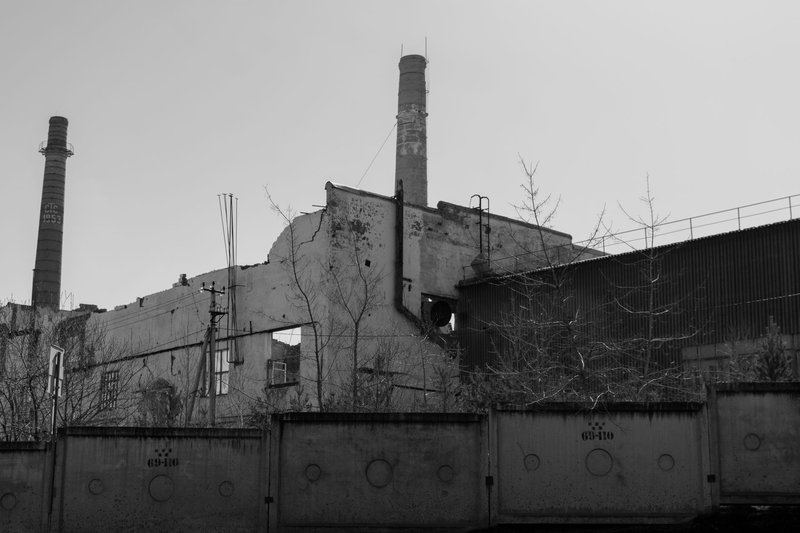
Median household income sits around $36,000, with a poverty rate hovering near 30%. Detroit’s population peaked at 1.8 million in 1950 and has since fallen below 640,000 — the auto industry that built the city automated and relocated faster than the workforce could pivot. The city exited municipal bankruptcy in 2014, and downtown investment has been real, but that recovery has mostly skipped the neighborhoods where most residents actually live. Our map of the areas to avoid in Detroit shows how violent crime varies across those neighborhoods.
2. Cleveland, Ohio
Cleveland’s median household income runs close to $34,000. Steel and manufacturing jobs left the Cuyahoga River corridor decades ago, and the city’s population has dropped by more than half since 1950. Cleveland Clinic and the healthcare sector now employ more people than any factory once did, but those jobs require credentials a lot of longtime residents don’t have.
3. Camden, New Jersey
Camden’s poverty rate is among the highest of any US city, with median income under $30,000. It sits directly across the Delaware River from Philadelphia, which makes the contrast stark — you can see the Philly skyline from parts of Camden that have some of the lowest property values on the East Coast. The city dissolved its police department and rebuilt it under county control in 2013, a move credited with cutting violent crime substantially.
4. Youngstown, Ohio
Youngstown lost its steel industry almost overnight on what locals still call “Black Monday” in September 1977, when Youngstown Sheet and Tube shut down and cut 5,000 jobs in a single announcement. The city’s population has fallen from 170,000 to under 60,000 since. Median household income is roughly $32,000.
5. Flint, Michigan
Flint’s economic story predates its water crisis — General Motors employed 80,000 people here in the 1970s and fewer than 10,000 today. Median household income is around $34,000. The 2014 water contamination crisis compounded existing poverty by driving down home values in a city where equity was already thin.
6. Gary, Indiana
Gary was built entirely around U.S. Steel’s Gary Works, once the largest steel mill in the world. Automation cut the plant’s workforce from 30,000 to under 5,000 while it kept producing similar output. Median household income in Gary sits near $33,000, and the city has lost over half its peak population.
7. Rochester, New York
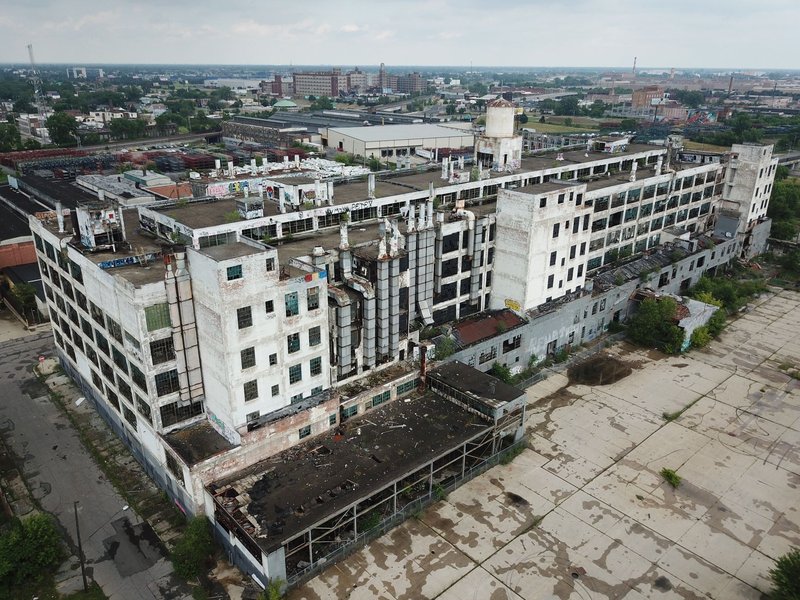
Rochester’s decline tracks the collapse of Eastman Kodak, which once employed over 60,000 people locally before digital photography gutted the film business. Median household income is roughly $37,000, with poverty concentrated heavily on the city’s east and northeast sides.
8. Reading, Pennsylvania
Reading briefly held the unwanted title of poorest city in America (population over 65,000) according to Census data from the early 2010s. It has since improved slightly, but median household income remains under $35,000. The city’s former hosiery and textile mills sit largely vacant along the Schuylkill River.
9. Newark, New Jersey
Newark’s median household income is around $38,000, but the city’s poverty rate stays elevated because wealth from its finance and insurance sector — Prudential’s headquarters is downtown — doesn’t reach most residents. Newark Liberty International Airport and the port generate enormous regional economic activity that largely bypasses city coffers.
10. Hartford, Connecticut
Hartford is an unusual case: it sits inside one of the wealthiest metro areas per capita in the country, home to insurance giants like Aetna and The Hartford, yet the city itself has a median household income near $37,000. The disparity between Hartford proper and its suburbs is one of the largest income gaps of any US metro.
11. Dayton, Ohio
Dayton lost National Cash Register’s manufacturing base and much of its auto-parts supply chain over the last 40 years. Median household income is roughly $38,000. The city has leaned into aerospace and defense work tied to Wright-Patterson Air Force Base, which has slowed the decline without reversing it.
12. Toledo, Ohio
Toledo’s glass and auto-parts industries shed thousands of jobs starting in the 1980s. Median household income sits around $39,000. The city has diversified into solar panel manufacturing in recent years, a genuine bright spot on an otherwise familiar Rust Belt trajectory.
13. Birmingham, Alabama
Birmingham’s steel industry — the reason the city was nicknamed “the Pittsburgh of the South” — collapsed through the late 20th century. Median household income is close to $38,000. UAB (the University of Alabama at Birmingham) is now the city’s largest employer, a shift from heavy industry to healthcare and education mirrored across several cities on this list.
14. Fresno, California
Fresno is the outlier on this list geographically, but its economics rhyme: heavy dependence on seasonal agricultural labor keeps wages and hours unpredictable for a large share of the workforce. Median household income runs around $57,000 — notably higher than the Rust Belt cities here — but California’s cost of living erodes that gap, and the poverty rate still exceeds 22%.
15. Memphis, Tennessee
Memphis has a median household income near $44,000 with a poverty rate above 21%. Logistics — FedEx is headquartered here and the city is a major freight hub — provides steady blue-collar work, but wages in warehousing and distribution haven’t kept pace with the cost of raising a family in the metro area.
Richest vs. Poorest: The Gap in Numbers
The contrast is jarring when you put it next to the other end of the list. Cities like San Jose and Fremont in California post median household incomes above $130,000 — more than triple Detroit’s or Cleveland’s. That’s not a cost-of-living illusion, either: even after adjusting for regional price differences, the purchasing power gap between America’s richest and poorest cities has widened over the past two decades, driven largely by the tech sector’s concentration in a handful of coastal metros while manufacturing employment nationwide kept shrinking.
Why Some of These Cities Are Improving
Not every city on this list is stuck. Detroit’s population decline has slowed to its smallest rate in decades, and downtown vacancy has dropped sharply since the mid-2010s. Camden’s violent crime rate fell by more than 40% after its 2013 police restructuring, which has started attracting modest new investment along the waterfront. Toledo’s solar manufacturing push has added several thousand jobs in a sector that didn’t exist locally ten years ago.
The pattern among the cities showing real improvement is specific: they’ve replaced a single collapsed industry with two or three smaller, more diversified ones — healthcare, logistics, advanced manufacturing — rather than waiting for one new employer to replicate what the old one provided. Places still betting on a single-industry comeback tend to be the ones still declining.
FAQ
What is the poorest city in the United States? By median household income among cities with populations over 65,000, Camden, New Jersey and Detroit, Michigan consistently rank at or near the bottom in Census ACS data.
Which region has the most poor cities? The Rust Belt — Ohio, Michigan, Pennsylvania, and Indiana — accounts for the majority of cities on most poorest-cities rankings, a direct legacy of manufacturing job losses since the 1970s.
Are these cities getting poorer or improving? Mixed. Detroit, Camden, and Toledo show measurable improvement in recent years. Youngstown and Gary have continued losing population and haven’t found a replacement industry at comparable scale.