
Table of Contents
- TLDR
- How “Richest” Gets Measured (and Why It’s Confusing)
- 1. Vienna
- 2. Kitzbühel
- 3. Salzburg
- 4. Innsbruck
- 5. Graz
- 6. Linz
- 7. Klagenfurt
- 8. Zell am See
- 9. Wels
- FAQ
TLDR
There’s no single “richest city in Austria” — it depends on what you’re measuring. Vienna wins on raw economic output, sitting on roughly a quarter of the country’s entire GDP. Salzburg and its surrounding state post the highest GDP per capita in the country, driven by tourism, cross-border commuters, and salt-and-cement industry money that’s been compounding for a century. And if you’re talking about where the actual rich people live — as in, who owns the property — Kitzbühel blows every city on this list out of the water, with ski chalets trading for prices that make Vienna’s 1st District look affordable. Read the entries below for the full picture, city by city.
How “Richest” Gets Measured
Three different numbers get thrown around under the same headline, and conflating them is where most “richest city” articles go wrong.
GDP (total economic output) measures everything produced within a city’s borders — corporate headquarters, factories, hospitals, government spending. Vienna dominates this metric simply because it’s home to most of Austria’s federal institutions, its biggest banks, and a disproportionate share of national companies. It doesn’t tell you what an average resident earns.
GDP per capita divides that output by population, which is why small, industry-dense regions can outrank the capital. Salzburg’s state-level GDP per capita has topped Vienna’s in several recent years because of a concentrated pharmaceutical, tourism, and salt-mining economy spread across a much smaller population.
Property value and personal wealth is the number tourists actually care about, and it’s the least correlated with the other two. Kitzbühel has a population smaller than a mid-size Vienna neighborhood, but its real estate trades at prices closer to Monaco than to anywhere else in Austria, because it’s where old European money and new ski-industry money have parked itself since the 1960s.
Keep those three lenses in mind as you go through the list — a city can top one and barely register on another.
1. Vienna
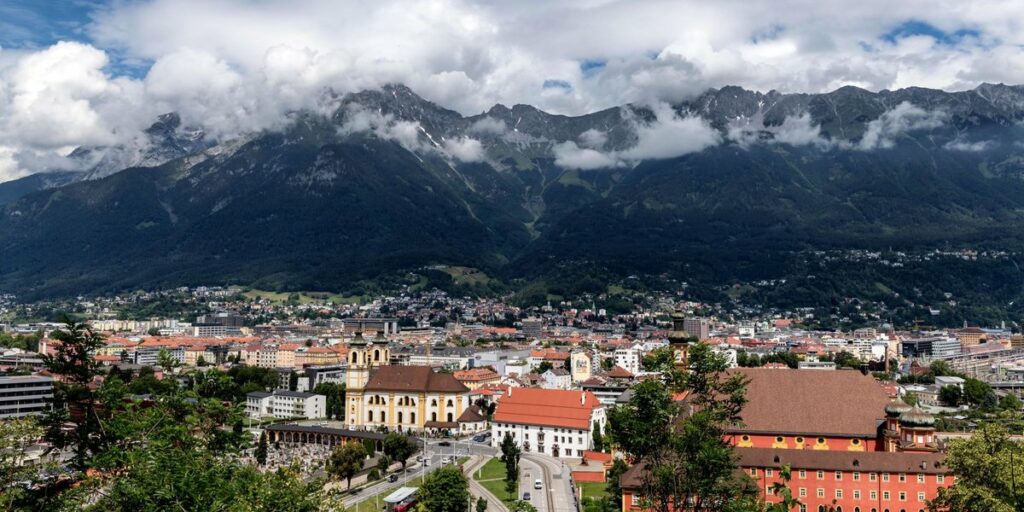
Vienna is Austria’s economic engine by sheer volume: it generates close to a quarter of national GDP from a population that’s just over a fifth of the country’s total. That’s not an accident. Vienna houses the headquarters of nearly every major Austrian bank, insurer, and energy company, plus a UN office complex that pulls in a permanent international diplomatic and NGO workforce.
Average household net income in Vienna runs higher than the national average, but the real wealth concentration shows up in real estate — the 1st District (Innere Stadt), the 13th (Hietzing), and the 19th (Döbling) contain some of the most expensive residential streets in the German-speaking world, with palais-style apartments near the Ringstrasse regularly listing north of €15,000 per square meter.
Stat box: Largest absolute GDP in Austria · Home to the Vienna Stock Exchange and most national corporate headquarters · Highest-value real estate concentrated in Districts 1, 13, and 19.
2. Kitzbühel
Kitzbühel has a resident population under 9,000 and, on paper, no business being on a “richest city” list at all — until you check the property register. Chalets on the Streif ski run’s lower slopes, and estates around the Schwarzsee lake, routinely sell for figures that would buy a city block in Graz. German industrialists, Dutch banking families, and a rotating cast of ski-week regulars have been buying in since the postwar boom, and supply hasn’t meaningfully grown because the town limits new construction to protect the alpine skyline.
The Hahnenkamm downhill race week each January turns the town into a temporary concentration of European wealth that outpaces almost anywhere else in the country for those seven days.
Stat box: Among the highest price-per-square-meter residential real estate in Austria · Population under 9,000 · Wealth driven by tourism and legacy property, not local GDP output.
3. Salzburg
Salzburg the city, and the state it anchors, consistently posts the highest GDP per capita of any region in Austria — sometimes edging out Vienna depending on the year’s figures. The driver isn’t tourism alone, though the Sound of Music circuit and the summer Festspiele pull serious money into the local economy every year. It’s a dense cluster of pharmaceutical manufacturing, specialty construction materials, and cross-border commuter income from residents who work in nearby Bavaria and bring German salaries home.
Property in the Altstadt and the Nonntal district has climbed steadily for a decade, pushed in part by second-home buyers who want a baroque city center without Vienna’s scale.
Stat box: Highest regional GDP per capita in several recent years · Major pharmaceutical and specialty manufacturing base · Significant cross-border commuter income from Bavaria.
4. Innsbruck
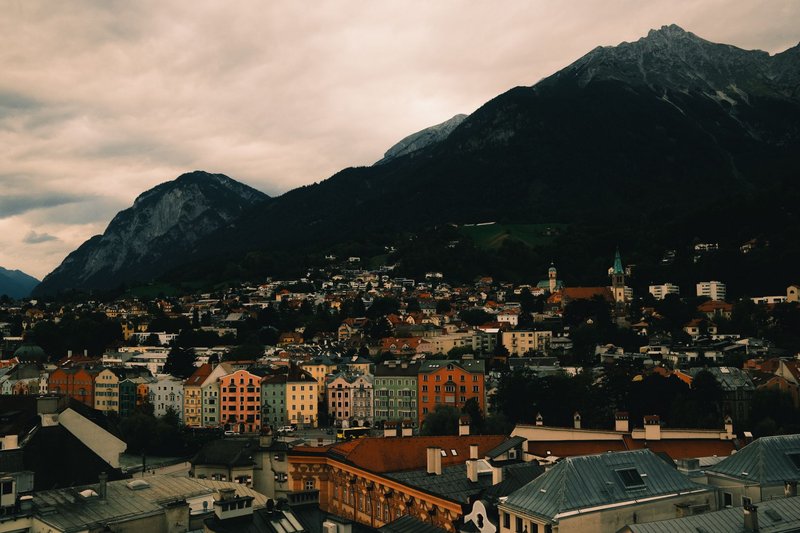
Innsbruck’s wealth is quieter than Kitzbühel’s and less headline-grabbing than Vienna’s, but it’s real: the city sits at the center of a Tyrolean economy built on winter tourism, a growing tech and medical-research sector around the University of Innsbruck and its associated hospital, and a steady flow of Alpine second-home money from Germany and Italy.
What sets Innsbruck apart from other university cities is that it never developed a purely blue-collar industrial base to offset its tourism income — the local economy skews toward higher-margin services, which shows up in above-average household earnings for a city its size.
Stat box: Home to a major university hospital and research cluster · Tourism economy weighted toward high-end winter sports · Strong second-home demand from German and Italian buyers.
5. Graz
Graz is Austria’s automotive and engineering town, anchored by Magna Steyr’s contract manufacturing plant — one of the largest of its kind in Europe — along with a dense cluster of tech startups spun out of the city’s four universities. It’s Austria’s second-largest city by population, and its wealth is more evenly distributed than Vienna’s or Kitzbühel’s, built on salaried engineering and manufacturing jobs rather than legacy fortunes or tourism spikes.
Real estate has risen fast here over the past decade specifically because it was, for a long time, the cheap alternative to Vienna for young professionals — that gap has been closing.
Stat box: Home to Magna Steyr’s flagship European manufacturing plant · Second-largest city in Austria by population · Fast-rising, engineering-driven middle-class wealth.
6. Linz
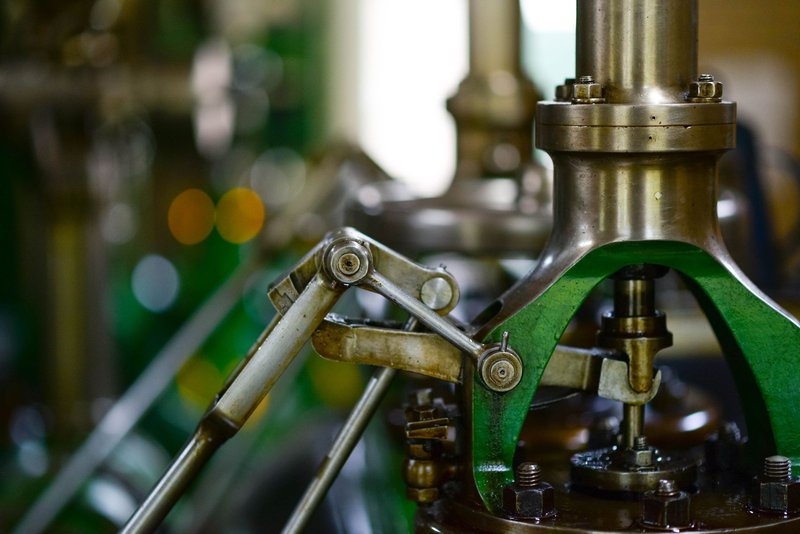
Linz built its wealth on heavy industry — voestalpine, the steel giant, is headquartered here and remains one of the largest single employers in Upper Austria. That industrial base gives Linz a different wealth profile than the tourism-and-tech cities on this list: fewer ultra-high-net-worth residents, but a deep, stable middle-class income floor tied to manufacturing wages and a strong regional supply-chain economy.
The city has also invested heavily in cultural infrastructure — the Ars Electronica Center and Linz09 European Capital of Culture legacy — partly to shed its old reputation as a purely industrial river town.
Stat box: Headquarters of voestalpine, one of Europe’s largest steel producers · Strong manufacturing and logistics wage base · Upper Austria’s economic and cultural anchor.
7. Klagenfurt
Klagenfurt anchors Carinthia’s economy and carries meaningfully lower cost of living than Vienna or Salzburg, which skews how its wealth numbers read — average incomes aren’t the country’s highest, but purchasing power stretches further, and lakeside property around the Wörthersee has attracted a steady stream of Austrian and German buyers for decades.
Electronics and semiconductor manufacturing, led by Infineon’s regional operations, gives the city an industrial income base that most people don’t associate with Carinthia’s tourism-heavy reputation.
Stat box: Regional hub for semiconductor and electronics manufacturing · Lakeside Wörthersee property draws steady second-home demand · Lower cost of living stretches income further than in Vienna.
8. Zell am See
Zell am See is smaller than a proper city by most definitions, but it belongs on this list for the same reason Kitzbühel does: lakefront and ski-adjacent property here trades at prices disconnected from the local wage economy. The town sits on a lake with direct views of the Kitzsteinhorn glacier, and its dual-season appeal — summer lake tourism, winter skiing — means demand for property never really has an off-season.
Old Austrian industrial families have held estates around the lake for generations, and new buyers are increasingly international, particularly from the Gulf and Northern Europe.
Stat box: Dual-season tourism economy (lake summers, ski winters) · High-demand lakefront property with limited new supply · Increasingly international buyer pool.
9. Wels
Wels is the quieter entry here — Upper Austria’s second-largest city, built on a genuinely diversified economy that includes agricultural technology (it hosts one of Austria’s largest agricultural trade fairs), engineering, and logistics thanks to its position on major rail and highway routes. It won’t out-earn Vienna or out-price Kitzbühel, but its per-capita income sits comfortably above the national median, with far less volatility than tourism-dependent towns.
Stat box: Upper Austria’s second-largest city · Diversified base in agri-tech, engineering, and logistics · Above-median per-capita income with low volatility.
FAQ
Is Vienna actually the richest city in Austria? By total economic output, yes — Vienna generates more GDP than any other city or region in the country by a wide margin. But per-capita income and per-capita GDP tell a different story, where Salzburg’s state economy has outranked Vienna’s in several recent years, and property wealth concentrates even more narrowly in resort towns like Kitzbühel.
What’s the difference between the richest region and the richest city? Regional rankings (like Wikipedia’s GDP-per-capita tables) measure Austria’s nine federal states, not individual cities — so “Salzburg” in those tables refers to the entire state, including rural areas, not just Salzburg city. That’s a common source of confusion, since a state can post a high average while its capital city and its ski towns pull the number in opposite directions.
Does cost of living cancel out these income differences? Partially. Vienna’s higher average wages are offset by housing costs that have climbed steadily for over a decade, while cities like Klagenfurt or Wels post lower raw income but retain more purchasing power because rent and property stay cheaper. Judging “richest” purely by income without factoring in local prices gives a skewed picture, especially for expats comparing where to actually live.
Where do Austria’s wealthiest residents actually own property? Kitzbühel and Zell am See lead by a wide margin for peak residential property values, driven by ski-town scarcity and international demand rather than local wages. Vienna’s most exclusive districts — the 1st, 13th, and 19th — compete at the top end too, but the sheer number of high-value listings in the capital is larger even if the per-property ceiling is lower than in the Tyrolean resort towns.
Is Kitzbühel really wealthier than Vienna? Not by economic output or population-wide income — Kitzbühel is a town of under 9,000 people, and its GDP doesn’t come close to Vienna’s. But if you’re measuring concentrated personal wealth and property value per resident, Kitzbühel’s numbers are in a different league entirely, which is exactly why it keeps showing up in “richest places” conversations despite its size.