Most lists of Chad’s “cultural landmarks” bury the ruins under a dozen other topics — national parks, festivals, cuisine — and give each site a single paragraph. That’s backwards. Chad has one of the least-visited concentrations of ancient sites on the continent, spanning three million years and at least four distinct civilizations, and almost none of it gets a proper write-up on its own.
This is that write-up. Four sites, what’s actually left standing at each one, and the permit and safety reality that no travel blog wants to lead with because it’s not the fun part.
Table of Contents
- Ouara: the Wadai Empire’s abandoned capital
- Koro Toro: the oldest thing here isn’t a ruin
- Tié and the fired-brick cities of Kanem-Bornu
- Ennedi and Tibesti: rock art older than writing
- Getting there: permits, safety, and reality
- Where everything sits, roughly
- FAQ
Ouara: the Wadai Empire’s abandoned capital
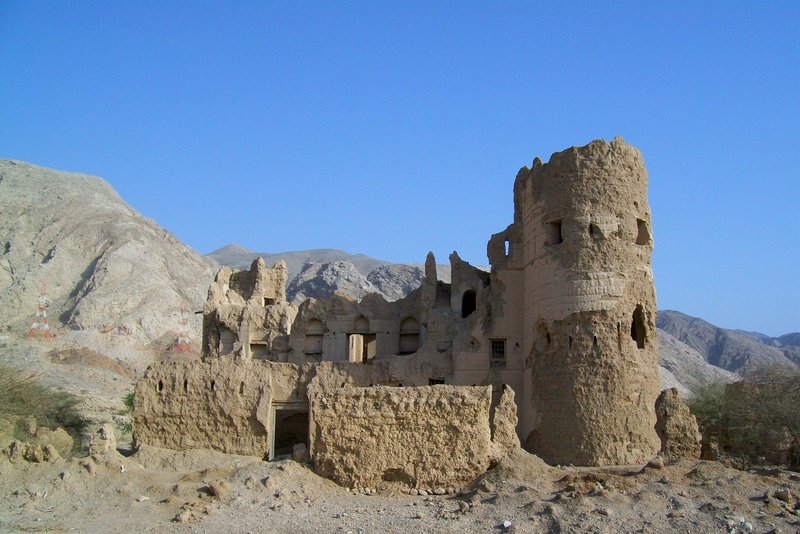
Ouara sits in scrubland near Abéché in eastern Chad, and for almost two hundred years it was the seat of an empire most people have never heard of. The Wadai Sultanate ran the trans-Saharan trade routes east of Lake Chad from the 1600s until the French arrived in 1912, and Ouara was its capital from roughly 1635 until the sultan relocated to Abéché around 1850 — not from conquest, but because the town’s wells ran dry.
What’s left is the palace of Sultan Abdel-Kerim Ibn Djamé, built in fired brick by an Egyptian architect the sultan is said to have specifically recruited, since local builders worked in mud and thatch. The compound still shows its walled layout: the sultan’s residence, a watchtower tall enough to see raiders coming across open ground, and separate quarters for his wives and concubines. A mosque stands just outside the wall. No roof survives anywhere on site — what you’re looking at is brick skeleton, room outlines, and enough standing wall to tell you where the doorways were.
Chad nominated Les ruines d’Ouara for UNESCO’s tentative World Heritage list in 2005, under the cultural category. Tentative is the operative word — nineteen years later, it hasn’t advanced to full inscription, which tells you something about how much conservation attention the site actually gets versus how much it deserves.
Koro Toro: the oldest thing here isn’t a ruin
Koro Toro isn’t a ruin in the architectural sense, and if you came here expecting walls, skip ahead. What it has is older than every wall on this list combined: in January 1995, a Franco-Chadian team led by paleontologist Michel Brunet found a partial lower jawbone in the Bahr el-Ghazal basin, about 2,500 kilometers west of the Rift Valley where every other Australopithecus find had turned up. It got a name — Australopithecus bahrelghazali — a nickname, Abel, and a publication in Nature the same year. Later dating put the fossil at roughly 3.5 to 3 million years old.
That distance matters more than the age does. Every textbook account of human origins before 1995 assumed the Rift Valley was the cradle and everything else was periphery. Koro Toro moved the map. The Australian Museum’s overview of the discovery is worth reading before you go, because there’s genuinely nothing to see on the ground beyond eroded sediment beds — this is a site you visit for what it proved, not what it shows.
Tié and the fired-brick cities of Kanem-Bornu
Northwest of Lake Chad, in the Kanem region, sits Tié — a fired-brick enclosure covering about 3.2 hectares, believed to be the largest structure of its kind built entirely from fired brick anywhere in the region. Excavations at Mound 1 uncovered a multi-roomed building with plastered interior walls, constructed sometime in the mid-1100s to mid-1200s and still occupied through the early 1400s. That construction window lines up with the Kanem-Bornu Sultanate, the empire that controlled trade around Lake Chad from roughly the 9th century until the 19th, making it one of Africa’s longest-lived states.
Tié isn’t Kanem-Bornu’s only site — more than 350 archaeological locations tied to the earlier Sao civilization dot the Chad basin across Chad and Cameroon, most of them earthen mounds rather than brick structures, holding bronze work, terra cotta figures, and decorated pottery from a culture that predates Kanem-Bornu by over a thousand years. Almost none of these sites have been excavated to modern standards, and fewer still have any signage or path for a visitor. This is the least-documented tier of Chad’s ruins, and also the one most likely to still be revealing new things — Russian and Chadian teams have continued fieldwork here into the 2020s.
Ennedi and Tibesti: rock art older than writing
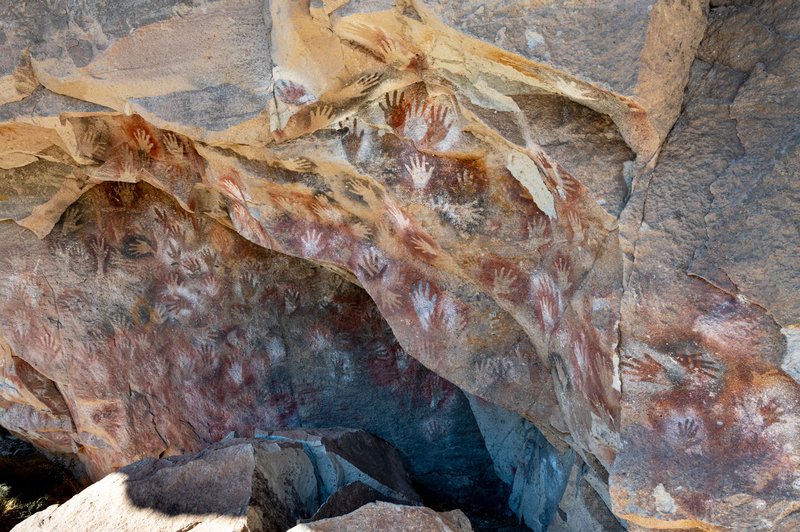
North of the ruins, in the Ennedi Plateau and Tibesti Mountains, the record shifts from brick and bone to paint and stone. More than 650 rock art sites cluster across the Ennedi region alone, with the earliest examples in the “Round Head” style predating the 7th millennium BC — possibly the oldest Neolithic art anywhere in the Sahara. Later panels get more literal: riders on camels and horses, cattle herds, groups of figures around huts, a visual record of the Sahara actually being green before it wasn’t.
The Ennedi Massif cleared a higher bar than Ouara ever has: UNESCO inscribed it as a full World Heritage Site in 2016, recognized under both cultural and natural criteria — the rock art sits alongside sandstone arches, canyons, and a permanent pool at Guelta Archei that still holds a surviving population of Nile crocodiles, landlocked and isolated for thousands of years since the desert closed in around them. The Trust for African Rock Art, a nonprofit dedicated to documenting and preserving the continent’s rock art before it erodes or gets vandalized, has done much of the fieldwork cataloging these panels — worth a look before you go, since not every panel is publicly mapped for a reason.
Getting there: permits, safety, and reality
Here’s the part the enthusiast blogs skip. The U.S. State Department’s Chad advisory is currently a blanket “do not travel,” citing crime, terrorism, civil unrest, kidnapping risk, and landmines left over from decades of conflict — with northern Chad specifically named, including the Tibesti, Borkou, and Ennedi provinces where the rock art sites sit. That’s not scare-mongering for clicks; it’s the baseline you need before booking anything. For those who proceed anyway, 10 Reasons to Visit Chad explains what draws travelers there.
In practice, travelers who do reach Ennedi or Ouara go through a specialized tour operator with existing government contacts, not independently. Permits for the northern regions are arranged in advance, usually through the operator, and typically require a police or military escort once you’re past Faya-Largeau or into Ennedi proper. Abéché, the gateway to Ouara, is more accessible and doesn’t carry the same landmine risk as the far north, but it’s still remote enough that “flight delayed a week” is a realistic contingency, not a joke. Budget flexible dates, a satellite communication option, and a guide who’s made the specific trip before — not just “worked in Chad.”
Where everything sits, roughly
Picture Chad as a rough rectangle. Lake Chad anchors the southwest corner, and that’s where Tié and the Sao mound sites cluster, close enough to N’Djamena to be the most reachable stop on this list. Koro Toro sits north-central, out in the Bahr el-Ghazal sediment basin — remote, flat, and visually unremarkable, which is exactly why nobody found the fossil there for 3.5 million years. Ouara is due east, near Abéché, close to the Sudanese border. Ennedi and Tibesti occupy the far north, hard against the Sahara proper, roughly 800 kilometers from the capital by the most direct route and considerably more by the roads that actually exist. No two of these are convenient to combine on the same trip — this is a country where “let’s see two sites” often means two separate expeditions.
FAQ
Is Chad safe to visit? Officially, no — the U.S. government advises against all travel there, and several European governments issue similar warnings for the north. Some travelers do visit with specialized operators and heavy logistical planning, mostly to Ennedi and the south, but this isn’t a solo backpacking destination and shouldn’t be treated as one.
What are the oldest ruins in Chad? If you count architecture, Tié’s fired-brick structures date to the 12th and 13th centuries, and earlier Sao mound sites push back further, potentially to the first millennium BC. If you count evidence of human presence generally, Koro Toro’s Australopithecus fossil predates all of it by roughly three million years — though it’s a fossil site, not a built structure.
Can tourists visit Ouara? Yes, in principle, and it’s considerably more accessible than the northern sites since it sits near Abéché rather than deep in landmine territory. In practice, “can visit” still means arranging a guide and local permissions rather than showing up independently, and current travel advisories apply to the whole country regardless of which region you’re headed to.
Chad’s ruins don’t reward a quick weekend the way a lot of travel content pretends every destination does. What they reward is knowing, before you land, that you’re looking at four unconnected chapters of history — a lost sultanate, a fossil bed, a fired-brick trading empire, and rock art older than the pyramids — and that seeing more than one of them means treating this like an expedition, not a stop on an itinerary.