
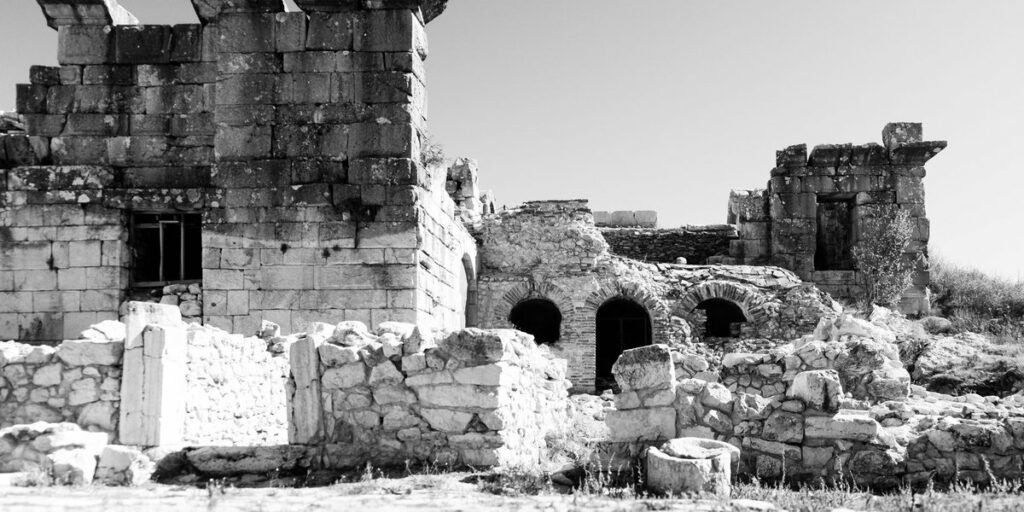
Most “historical places in Australia” lists give you the same ten stops shuffled into a new order: Opera House, Harbour Bridge, Port Arthur, repeat. They’re not wrong, exactly — those places earned their spot. But they also skim past the fact that Australia holds some of the oldest continuously practiced culture on Earth, tucked into rock shelters most tourists never hear about.
This list groups 17 sites into four clusters that actually make sense for trip planning: Aboriginal rock art and cultural sites that predate the pyramids by tens of thousands of years, convict-era prisons and barracks that built the colony by force, colonial architecture and gold-rush towns, and the 20th-century landmarks everyone already recognizes. Each entry has the hours, the entry fee, and the one detail that explains why the place matters — not just that it’s “must-visit.”
TLDR
- Rock art and Country: Kakadu’s Ubirr and Nourlangie galleries, the 42,000-year-old burials at Mungo National Park, the million-plus petroglyphs at Murujuga, and Uluru-Kata Tjuta’s Cultural Centre.
- Convict history: Port Arthur and Fremantle Prison anchor the UNESCO-listed Australian Convict Sites, alongside Hyde Park Barracks, Cockatoo Island, and Old Melbourne Gaol.
- Colonial architecture and historic towns: Elizabeth Farm, the Royal Exhibition Building, Sovereign Hill, The Rocks, and the copper-mining town of Burra in South Australia.
- Landmarks everyone knows, for reasons worth knowing: Sydney Opera House, Sydney Harbour Bridge, and the Australian War Memorial in Canberra.
- Building a trip: pair the Northern Territory rock art cluster with a separate Sydney–Tasmania–Melbourne convict-and-colonial loop rather than trying to chain both in one visit — see the itinerary notes at the end.
Table of Contents
- Aboriginal Rock Art and Cultural Heritage
- Convict History Sites
- Colonial Architecture and Historic Towns
- Landmarks Everyone Recognizes, For Reasons Worth Knowing
- Building These Into an Actual Trip
Aboriginal Rock Art and Cultural Heritage
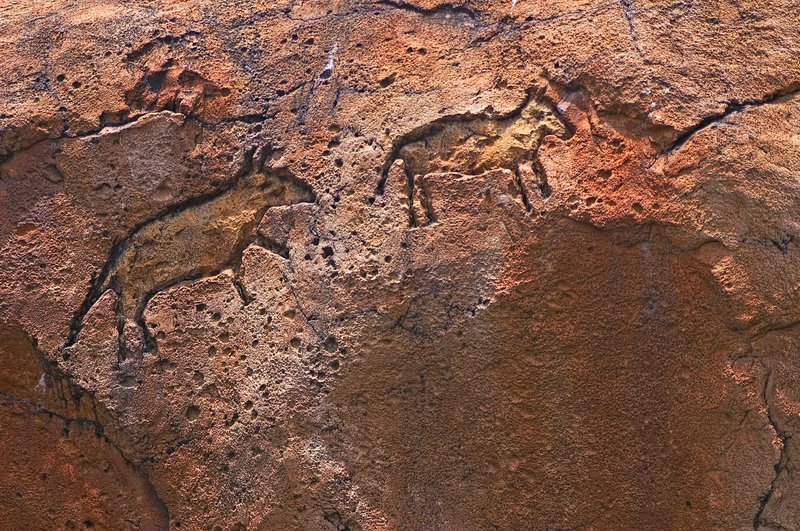
Every general “historical places” roundup mentions Aboriginal culture in a sentence and moves on to the Opera House. That’s backwards. The rock art in this cluster represents the longest continuous cultural tradition documented anywhere on the planet, and it’s viewable, not roped off behind glass.
1. Kakadu National Park — Ubirr and Nourlangie (Burrungkuy)
Ubirr’s rock shelter holds paintings layered on top of each other across generations — X-ray-style barramundi and turtles from more recent centuries painted directly over older ochre work, because Bininj/Mungguy artists kept using the same walls for thousands of years rather than starting fresh elsewhere. Nourlangie’s Anbangbang gallery includes Namarrgon, the Lightning Man, a figure tied directly to the wet-season storms that shape the region’s calendar.
A Kakadu National Park pass costs $40 for seven days during the dry season (15 May–31 Oct) and less in the wet. Ubirr is open 8:30am–sunset from May through November, then 2pm–sunset December through April, when roads can flood. Nourlangie’s 1.5km loop runs 7am–sunset year-round. Go dry season if you want reliable access; go just after the wet if you want the waterfalls at full flow and don’t mind checking road conditions daily.
2. Mungo National Park — Walls of China and Willandra Lakes
Mungo Man and Mungo Lady, discovered meters apart on the shore of a dry lakebed, were buried more than 42,000 years ago — the oldest ritual cremation and ochre burial found anywhere in the world. That single fact rewrote the timeline of human ceremonial practice outside Africa, which is part of why the Willandra Lakes Region carries UNESCO World Heritage status.
Entry runs $8 per vehicle, paid by self-registration envelope at the visitor centre. The park stays open year-round barring fire or flood closures. Drive or cycle the Zanci Pastoral loop past the crescent-shaped lunette locals call the Walls of China, or book an NPWS Aboriginal-guide walk for context you won’t get from a signpost. Outback New South Wales means extreme summer heat — April through October is the workable window.
3. Murujuga National Park, Burrup Peninsula
Murujuga holds an estimated one to two million individual rock engravings, making it one of the densest concentrations of petroglyphs anywhere on Earth, with imagery spanning an estimated 47,000 years — including what researchers believe may be the world’s oldest known depiction of a human face. Entry to the national park itself is free.
Guided 90-minute Rock Art and Cultural Experience tours run Tuesdays and Thursdays at 8am and 2pm from the Nganjarli (Deep Gorge) car park, led by Murujuga Rangers who cover bush tucker and traditional land management alongside the carvings themselves. The main trail is a wheelchair- and pram-accessible 700 meters. Bring your own water and a hat — shade is scarce on the Pilbara coast.
4. Uluru-Kata Tjuta National Park and Cultural Centre
Uluru isn’t just a rock formation; it’s Tjukurpa — ancestral law and story that the Anangu traditional owners still hold and teach. The park’s joint-management model, where 25% of pass revenue funds Anangu homelands and training, is one of the more concrete examples in Australia of Indigenous co-governance actually working rather than being a plaque on a wall.
A national park pass costs $38 for adults, valid three days and extendable to five at no extra charge; visitors under 18 enter free. Start at the Cultural Centre, open 7am–5:45pm daily, before you do anything else in the park — the Tjukurpa Tunnel display explains why climbing was never appropriate and has been banned since 2019. Visit May through September for cooler daytime temperatures; summer heat here is dangerous, not just uncomfortable.
Convict History Sites
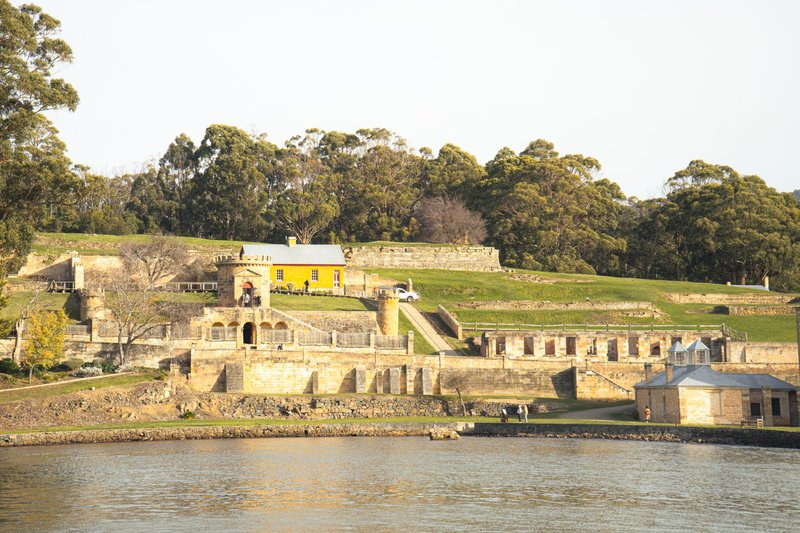
Around 166,000 men, women, and children were transported to Australia as convicts between 1787 and 1868. Eleven of the surviving penal sites — spread from Fremantle to Norfolk Island — now form the Australian Convict Sites UNESCO World Heritage listing, inscribed in 2010 for showing both the brutality of the system and the forced labor that literally built the colony’s infrastructure.
5. Port Arthur Historic Site, Tasmania
Port Arthur opened in 1830 as a secondary punishment station — the place convicts were sent after reoffending in the colony, which meant a harsher regime than most transportation sites. The separate prison block used total silence and hooded isolation as punishment, a psychological approach considered progressive at the time and now recognized as its own form of cruelty.
Site entry runs $53 adult / $41 concession / $26 child / $127 family, and the ticket covers two consecutive days — worth using, since the grounds cover 100+ buildings and ruins. Open daily 9am–5pm (closed Christmas Day). Give yourself at least half a day; the harbor cruise past the Isle of the Dead adds real context for another hour.
6. Fremantle Prison, Western Australia
Convicts built Fremantle Prison themselves between the 1850s and 1886 — nearly 10,000 men were transported to Western Australia specifically to construct it and the roads, bridges, and buildings around it, making the prison as much a monument to forced infrastructure labor as to incarceration. It’s the only World Heritage-listed building in Western Australia.
The Gatehouse, Convict Depot, and gift shop are free to enter, open daily 9am–5pm. The Convict Prison guided tour, which covers the building’s construction through the end of transportation in 1886, costs $22 adult / $12 child / $62 family. Closed Good Friday and Christmas.
7. Hyde Park Barracks, Sydney
Convict-architect Francis Greenway — himself transported for forgery — designed Hyde Park Barracks in 1819 to house convict men who’d previously slept wherever they could find space around the colony. The building’s role as a housing depot rather than a punishment block makes it a useful counterpoint to Port Arthur: not every convict site was about suffering as the point.
General entry is free (booking ahead recommended), open 10am–5pm daily except Good Friday and Christmas. The self-guided audio tour runs about 90 minutes and uses first-person convict testimony recovered from the building’s own floor cavities during restoration.
8. Cockatoo Island, Sydney Harbour
Cockatoo Island cycled through three distinct identities: convict gaol from 1839, reformatory and industrial school from 1888, then a shipbuilding dockyard that operated until 1992 — a working history that spans more than 150 years on one island. It’s the only Sydney Harbour island where you can spend the night, camping directly on the old wharf apron.
Sydney Ferries run to the island from Circular Quay via the Parramatta River route. Entry to explore the island is free; guided history tours and overnight camping cost extra and should be booked ahead in summer.
9. Old Melbourne Gaol
Ned Kelly, Australia’s most mythologized bushranger, was hanged at Old Melbourne Gaol on 11 November 1880 after his last stand at Glenrowan — his death mask is still on display in the building where he died. The gaol operated from 1845 to 1929 and processed more executions than any other site in the state.
General admission costs $38 adult / $30 concession / $22 child, open daily 10am–5pm except Good Friday and Christmas. The themed “Ned Kelly’s Last Stand” evening tour ($45 adult) goes further into the trial and hanging than the daytime visit does.
Colonial Architecture and Historic Towns
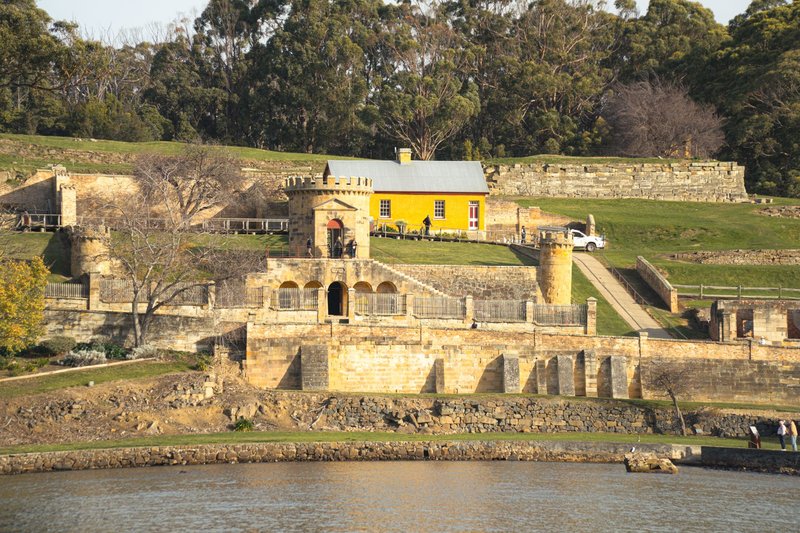
This is where the content gap actually is — most lists mention Sydney and Melbourne’s greatest hits and skip the regional towns that show colonial Australia at working scale, not showcase scale.
10. Elizabeth Farm, Parramatta
Elizabeth Farm contains the oldest surviving European building in Australia, begun in 1793 by wool pioneers John and Elizabeth Macarthur. The wide, low verandahs that define the “Australian colonial” architectural style you’ll see copied across the country actually started here, adapted from Indian bungalow design the Macarthurs had seen on their travels.
Open 9:30am–4pm Friday to Sunday (daily during January and NSW school holidays), closed Good Friday and Christmas. Entry costs $15 adult / $12 concession / $38 family. Budget an hour — it’s compact, but the furnished rooms are original, not reproductions.
11. Royal Exhibition Building, Melbourne
Built for the 1880 Melbourne International Exhibition, this is Australia’s first UNESCO World Heritage-listed building and one of the last remaining 19th-century exhibition halls left standing anywhere in the world — most of its European contemporaries burned down or were demolished. It also hosted the opening of Australia’s first Parliament in 1901.
Guided 60-minute tours, including the Dome Promenade, run at 10am and 2pm on weekdays and more frequently on weekends. Tickets cost $29 adult / $23 senior, and general admission to Melbourne Museum is included.
12. Sovereign Hill, Ballarat
Gold was discovered at Ballarat in 1851, triggering what’s still considered the richest alluvial gold rush in recorded history — richer, ounce for ounce, than California’s. Sovereign Hill recreates the boomtown on the actual former mining site, and you can pan for real gold flakes still present in the creek.
Open Tuesday to Sunday, 10am–5pm (closed Mondays and Christmas Day). Admission costs $52.50 adult / $43.50 concession / $33 child / $145.50 family. Plan a full day — there are 18-plus scheduled activities, from musket demonstrations to candle-dipping, running throughout it.
13. The Rocks, Sydney
The Rocks was Sydney’s first European settlement, built by convict labor starting in 1788, and its narrow sandstone laneways still follow the original 18th-century footprint rather than a later planned grid. It also housed some of Sydney’s worst 19th-century slum conditions before the 1900 bubonic plague outbreak triggered mass demolition and rebuilding.
No entry fee — it’s a neighborhood, not an attraction — but the Sydney Harbour Bridge views from Susannah Place Museum’s era-accurate terrace houses (open select days, check ahead) are worth timing your visit around. The Saturday and Sunday Rocks Markets add another reason to go on a weekend.
14. Burra, South Australia
Copper found near Burra Creek in 1845 turned Burra into Australia’s largest inland town by 1851 and, for a stretch, one of the biggest copper-mining operations on the planet — a boom the general “historical Australia” lists almost never mention, because South Australia rarely makes the cut.
The self-guided Burra Heritage Passport ($ – check current pricing on site) unlocks 11 historic sites with one physical key, including Redruth Gaol and the underground Miners Dugouts where families lived rather than pay rent. The key is valid for two days and the full 11km trail takes anywhere from one hour at a sprint to six with lunch stops.
Landmarks Everyone Recognizes, For Reasons Worth Knowing
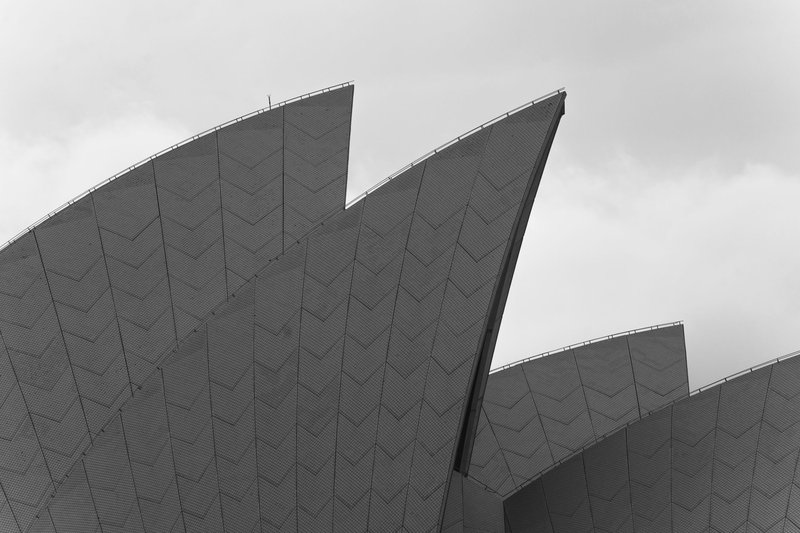
These two are on every list for good reason. The difference here is the actual history behind the icon, not just the photo op.
15. Sydney Opera House
Danish architect Jørn Utzon won the design competition in 1957, then resigned in 1966 over cost overruns and political interference before ever seeing the building finished — he never returned to Australia to see it completed in 1973, and never saw it in person again before his death in 2008. UNESCO added it to the World Heritage List in 2007, unusually young for a listed building.
Guided one-hour tours run daily at 11:15am, 12pm, 1:30pm, 2pm, 3pm, and 3:30pm, from $50. The tour covers roughly 2.5km of walking and 300 stairs, so it’s not a passive stroll — a mobility-access version exists for anyone who needs it.
16. Sydney Harbour Bridge
Locals call it “the Coathanger,” and it opened in 1932 after eight years of construction that killed 16 workers — a toll rarely mentioned on the postcards. At the time, it was the widest long-span bridge in the world, a title it held for decades.
BridgeClimb tours run daily, essentially 24 hours a year except for two days, with daytime summit climbs starting around $264 and night climbs from $229, each taking about three hours door to door. If that’s outside budget, the free pedestrian walkway across the bridge deck gets you comparable harbor views for the cost of your own legs.
17. Australian War Memorial, Canberra
Opened in 1941, the Memorial holds more than 7,000 objects across its permanent galleries and functions simultaneously as shrine, museum, and archive — a combination that’s unusual internationally, where war memorials and war museums are typically separate institutions.
Entry is free, no ticket required, galleries open daily 10am–5pm (closed Christmas Day, with sections progressively closing from 4pm). The Last Post ceremony, held daily at closing, is free and worth timing your visit to catch — it’s a genuinely moving five minutes, not a tourist gimmick.
Building These Into an Actual Trip
Most guides stop at the list. Two practical notes that actually change how you’d plan this:
Split the trip geographically, not thematically. Kakadu, Uluru, and Murujuga are thousands of kilometers from Sydney, Tasmania, and Melbourne — trying to chain the rock-art cluster to the convict-and-colonial cluster in one loop means unnecessary long-haul flights. Do a dedicated Northern Territory/WA trip for Indigenous heritage sites (dry season, May–October, for both comfort and access), and a separate southeastern loop — Sydney, Tasmania, Melbourne, Ballarat — for the convict and colonial sites, which work fine most of the year outside peak summer heat.
Book Port Arthur, Sovereign Hill, and BridgeClimb ahead, especially in Australian school holiday periods (mid-April, late June to mid-July, late September, and December–January) — these three sell out on weekends and public holidays well before the date. Everything else on this list takes walk-ups without much of a wait.