Contents
- Why there are so few ruins in Finland
- The 10 ruins at a glance
- Medieval castle ruins
- Church and convent ruins
- Fortress and war ruins
- Prehistoric and early medieval sites
- A south-to-north route
- Which ruin suits what
- Summary
Finland has ruins, just fewer than its neighbors, and almost none of them are signposted from the highway. The ones that survive are low walls, cellar vaults and earthworks on islands, riverbanks and hilltops. A few sit in the middle of towns. Others take a ferry.
This list covers ten genuine ruins in Finland, not castles that have been restored and furnished. Each entry has what happened there, what you can still see, and the practical details: where it is, how you get in, what it costs and when to go.
Why there are so few ruins in Finland
Finland was a farming country built of timber. Farmhouses, churches and whole towns were made of wood, and wood burns or rots. Vaasa’s old town burned to the ground in 1852, and what’s left of it is a street plan and a church shell.
Stone was for the state. Finland belonged to Sweden until 1809, and the Swedish crown and the Catholic bishops built the stone castles, mostly along the southern and western coast and later at the eastern frontier. Those castles then died in wars, by order of kings, or by accident. Gustav Vasa had a bishop’s fortress pulled down in 1528 because he didn’t want it falling into the wrong hands. Russian armies blew up another in 1716.
So the ruins in Finland tell you about three things: Swedish-era power, the Baltic wars between Sweden and Russia, and the 20th-century defence of the eastern border. That’s also how this list is sorted.
The 10 ruins at a glance
| Ruin | Type | Region | Dating from | Best season | Entry |
|---|---|---|---|---|---|
| Raseborg Castle | Medieval castle | Uusimaa | 1370s | May to September | Open grounds |
| Kuusisto Castle | Bishop’s castle | Southwest Finland | Medieval | Year-round | Open grounds |
| Kajaani Castle | Swedish crown castle | Kainuu | 1604 | Summer | Open grounds |
| Kökar Franciscan convent | Convent | Åland | 15th century | Summer | Open grounds |
| Old Vaasa church | Church and town ruins | Ostrobothnia | Burned 1852 | Year-round | Open grounds |
| Svartholm Fortress | Sea fortress | Uusimaa | 1740s | Summer (boat) | Boat fare |
| Bomarsund | Russian fortress | Åland | 1832 | May to September | Open grounds |
| Salpa Line | Bunkers and tank barriers | Kymenlaakso | 1940 to 1944 | Summer | Museum fee |
| Rapola | Iron Age hillfort | Pirkanmaa | Iron Age | May to October | Open hillside |
| Ravattula Ristimäki | Archaeological site | Southwest Finland | Iron Age and early medieval | Summer | Open hillside |
“Open grounds” means no ticket booth at the site itself. Staffed attractions, ferries and guided tours do charge, and seasons shift from year to year, so check the operator before you leave.
Medieval castle ruins
1. Raseborg Castle
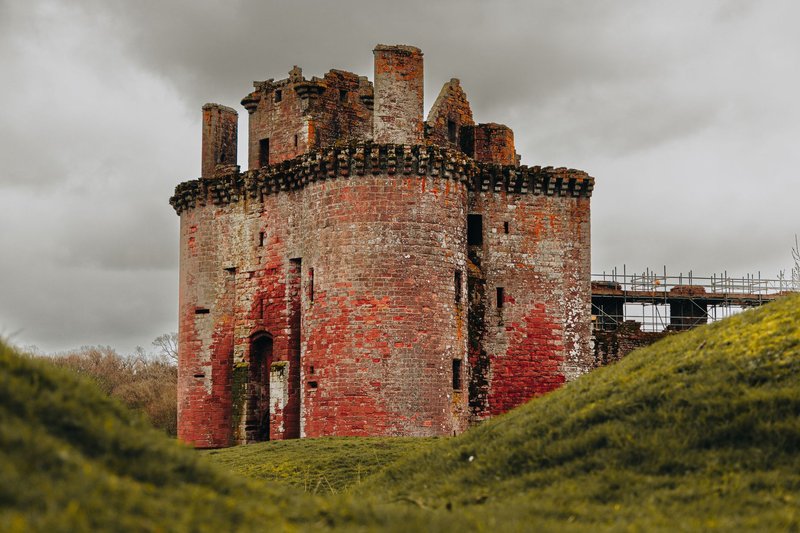
Raseborg is the name everyone starts with, and it earns it. The castle was built in the 1370s on what was then a seaside promontory. Land uplift has since pushed the shore away, so the fortress now sits inland among fields and forest. It fell out of use by the 16th century and the walls were left to the weather.
What remains is substantial for Finland: thick granite and brick walls, gate towers, a courtyard you can stand in and the outline of the rooms. In summer the ruin doubles as a stage for Raseborg’s summer theatre, which is one of the better ways to see it, with the sun going down behind the walls. Metsähallitus, the state agency that manages the site, publishes the current season and tour details.
- Where: Snappertuna, in Raseborg municipality, on Finland’s south coast.
- Nearest town: Ekenäs (Tammisaari) and Karis. Allow about an hour and a half from Helsinki by car.
- Access: Walk in from the car park. Public transport is thin, so drive.
- Season: Summer is when tours, the café and the theatre run. The ruin can be visited outside the season, with less on offer.
2. Kuusisto Castle
Kuusisto was the fortress of the bishops of Turku, who needed a defensible home outside the city. Gustav Vasa ordered it demolished in 1528, and it was not rebuilt. It makes a good contrast with Raseborg, because here the destruction was deliberate and thorough.
You’ll find the foundations of the main building, parts of the wall and moat, and cellar spaces, spread across a small island that’s reached on foot by a short walk from the car park. Paths and information boards explain the layout. It’s a quiet place on a weekday and a popular local walk on a nice weekend.
- Where: Kuusisto, in Kaarina, east of Turku.
- Nearest town: Turku, a short drive away.
- Access: Walkable year-round. Winter visits work if you have boots, since the paths aren’t a priority for ploughing.
- Season: Spring and autumn are the quiet times, with the bare trees showing the full outline of the walls.
3. Kajaani Castle
Kajaani is the northernmost of the three castle ruins and the most unusual. The Swedish crown built it from 1604 on a rock in the Kajaani river rapids to guard the trade routes of the north. During the Great Northern War, Russian forces took the castle and blew it up in 1716, and it was never rebuilt.
Today the ruin stands in the middle of town, next to the rapids, and you reach it across a bridge from the town centre. The walls are low, but the setting is the point: rushing water on both sides, a town around you, and a fortress that used to be a very long way from anywhere. The ruin isn’t maintained in winter, so plan a summer or early autumn visit.
- Where: The centre of Kajaani, Kainuu.
- Nearest town: You’re in it.
- Access: Short walk from the centre. No winter maintenance.
- Season: June to September.
Church and convent ruins
4. Kökar Franciscan convent
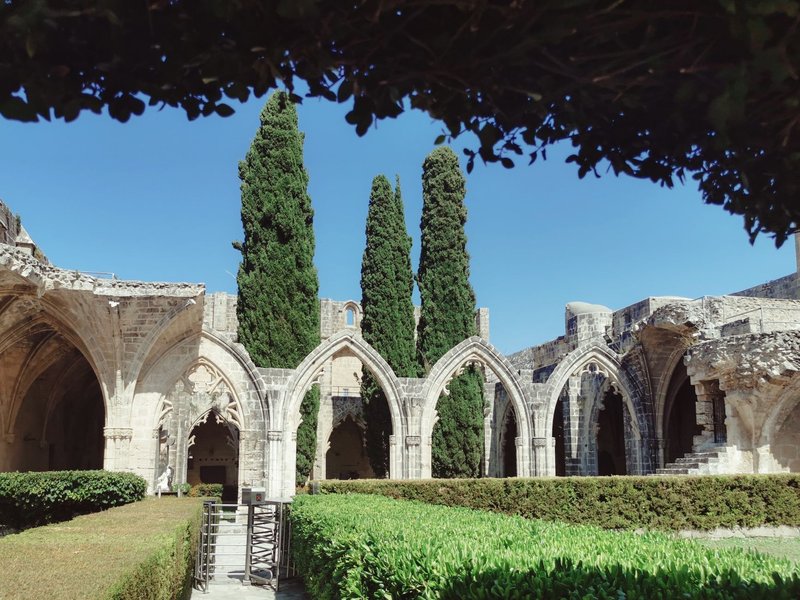
Kökar is a small island community at the far southern edge of Åland, and the ruins of its Franciscan convent are on the island of Hamnö. It dates to the 15th century, which makes it one of the very few traces of a monastic house in Finland. The Reformation ended its life, as it did all the others.
What you see is stone wall remnants in a landscape of rock, juniper and sea. There’s no grand structure here. The pull is the journey, because you get here by ferry, and the island has the kind of silence that makes small ruins feel bigger. Ferries run from the Åland main island and from Korpo on the Finnish mainland side, so check the timetable and book your return.
- Where: Hamnö, Kökar, Åland.
- Nearest town: Kökar village, then Mariehamn by ferry.
- Access: Ferry, then a walk or bike ride. Plan a night on the island.
- Season: Summer, when the ferries and local services run most often.
5. Old Vaasa
Vaasa’s story is a ruin story with a twist. In 1852 a fire destroyed the town. Rather than rebuild, the authorities moved the city closer to the coast and planned a new one, which is today’s Vaasa. The old town was left in Mustasaari (Korsholm), where you can still walk around the stone shell of its church and trace the old street layout.
It’s a rare Finnish ruin that shows you a town rather than a castle, and one where the cause was fire, not war. Interpretation boards help, and there are other old sites in Mustasaari, including the remnants of Korsholm castle, if you want to build a half-day around it.
- Where: Old Vaasa, Mustasaari, a short drive from central Vaasa.
- Nearest town: Vaasa.
- Access: Drive or cycle. It’s flat and easy.
- Season: Year-round, though summer is better for the walk.
Fortress and war ruins
6. Svartholm Fortress
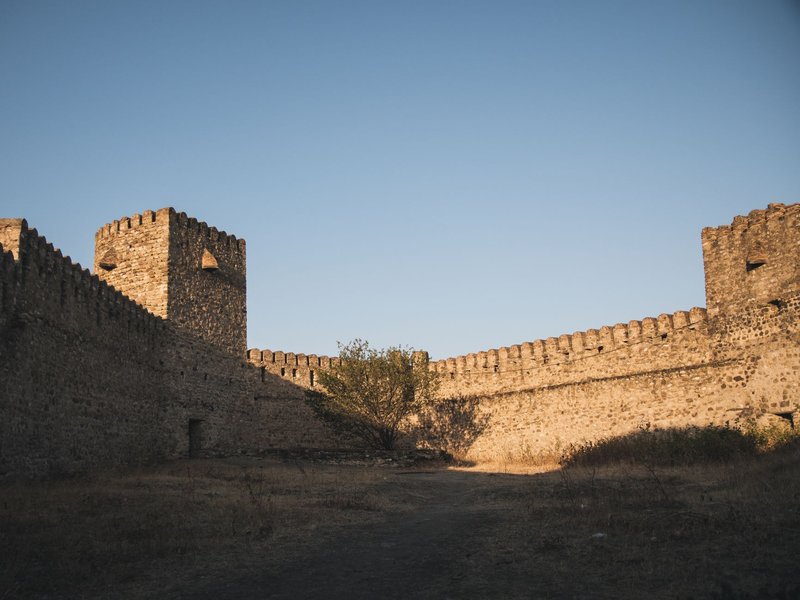
Svartholm sits on an island off Loviisa, built in the 1740s after Russia took the area from Sweden. It was designed to guard the coast and the approach to the old Kymenkartano area. The fortress was damaged during the Crimean War and then left to decay, which is why it’s now a maze of broken brick walls, gun positions and underground passages covered in moss.
You get here by boat from Loviisa, usually a short ride, so it’s a half-day trip rather than a walk-in. The boat is part of the appeal: you arrive at a fortress that has been resisting the sea for 270 years and mostly lost.
- Where: An island off Loviisa, on the Gulf of Finland.
- Nearest town: Loviisa.
- Access: Boat from the harbour in summer. Ice closes the route in winter.
- Cost: A boat fare, and possibly a guided tour fee.
- Season: Summer.
7. Bomarsund
Bomarsund is the biggest war ruin in Finland and one of the most dramatic. The Russians started building a huge fortress here in 1832 to command the Åland Sea, and it was never finished. In August 1854, during the Crimean War, a British and French force bombarded it, and the Russian garrison surrendered. The attackers then blew up what was left, so the whole thing lies in massive stone fragments.
You can walk among the ruins at Notvik, Tzee and the other forts on the strait, and there’s a Russian cemetery nearby. Fort Brännklint’s tower has survived better than most. The scale surprises people, because the fortress was designed to hold thousands.
- Where: Sund, Åland, on the Bomarsund strait.
- Nearest town: Mariehamn, about half an hour by car or bus.
- Access: Free access to the main ruins, with signed paths. A bike works well.
- Season: May to September. The paths are passable in winter, with fewer services.
Nearby Kastelholm Castle is also on Åland, but it’s mostly restored and open as a museum, so it belongs on a castle list, not here.
8. The Salpa Line
After the Winter War, Finland built a fortified line along its eastern border to defend against another attack. Work ran from 1940 to 1944. It’s called the Salpa Line and it stretches roughly 1,200 km, from the Gulf of Finland towards the north. The bunkers, trenches and rows of granite tank barriers are mostly in forests, and many have not been touched since the war.
This is the entry that gets Finnish history close up. At Miehikkälä in the southeast, the Salpa Line Museum shows the line in a preserved section, with bunkers you can look inside, and sections of the barriers you can walk along. Elsewhere along the line, signed trails take you past concrete positions that people have hiked past for decades without thinking much about them.
- Where: Miehikkälä, Kymenlaakso, and sections along the eastern border.
- Nearest town: Kotka or Kouvola, with Hamina close to the southern end.
- Access: Drive. The museum area has paths, and the wider line is mostly reached on forest trails.
- Cost: Museum fee. Open-air sections are free.
- Season: Summer for the museum. In winter the trails are quiet, with snow on the tank barriers.
Prehistoric and early medieval sites
9. Rapola hillfort
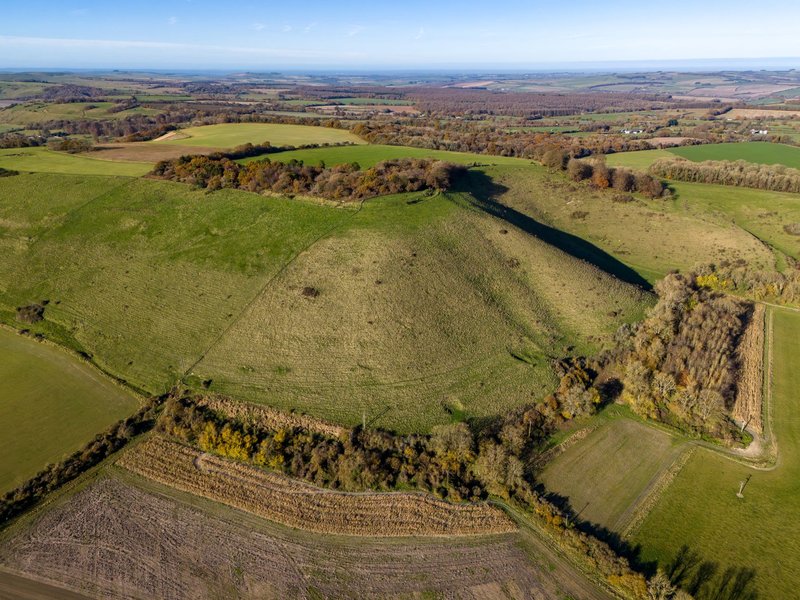
Rapola is much older than any castle on this list. It’s an Iron Age hillfort on a ridge in Sääksmäki, near Valkeakoski, where stone ramparts follow the natural slopes. The people who used it lived here a thousand or more years ago, and what you see is the outline of defences rather than any building.
It’s a good hike for the effort. A trail leads up the hill, with views over the lakes, and the forest has taken back most of the fort. It’s the quietest entry here and the one with the least interpretation, so read up beforehand.
- Where: Sääksmäki, Valkeakoski, Pirkanmaa.
- Nearest town: Valkeakoski, with Tampere within day-trip distance.
- Access: Drive to the trailhead, then walk up the hill.
- Season: May to October. Snow and ice make the climb harder in winter.
10. Ravattula Ristimäki
Ravattula is an archaeological site near Turku where research has uncovered traces of settlement from the Iron Age and the early Middle Ages, the period when Christianity arrived in Finland. It’s among the best-studied sites from that era in the country.
This is the least visual ruin on the list. Little stands above ground, so go for the context: information boards, a hill with a view and the sense of standing on a place that mattered before there was a Finland. Pair it with Kuusisto for an easy Turku-area day, and read the site’s information boards on arrival to make sense of what you see.
- Where: Ravattula, near Turku.
- Nearest town: Turku.
- Access: Drive or take a bike from the Turku area.
- Season: Summer.
A south-to-north route
You can’t see all ten on one trip, but you can link them in clusters.
- South coast, east to west: Salpa Line at Miehikkälä, then Svartholm from Loviisa, then Raseborg. Give this three days if you’re driving from the border.
- Turku and the archipelago: Kuusisto and Ravattula in one day from Turku. Add the ferry to Kökar if you have time to stay overnight.
- Åland: Bomarsund and Kökar, with Mariehamn as the base and Kastelholm as a restored contrast.
- Inland and west coast: Rapola near Valkeakoski, then Old Vaasa.
- North: Kajaani, which fits a trip to Kainuu and the eastern lakes.
Southwest Finland and Åland give you the most ruins per kilometre, so start there if you only have a few days.
Which ruin suits what
- Children: Kuusisto and Bomarsund. Both are open ground where children can run and climb. Svartholm adds a boat ride.
- Photography: Raseborg in the evening, Kajaani with the rapids running, and Bomarsund when the light is low.
- Events: Raseborg, for the summer theatre.
- Winter: Kuusisto and Old Vaasa are easy to reach. Kajaani isn’t maintained in winter, Svartholm needs a boat, and Åland’s ferries and services thin out.
- History enthusiasts: The Salpa Line and Bomarsund, for 19th and 20th century war.
- Quiet: Rapola and Ravattula.
Summary
The ruins in Finland are less spectacular than those in Italy or Greece, and that’s the reason to visit: they’re quiet, free to approach, and set in forest, river rapids or open sea. Raseborg, Kuusisto and Kajaani give you the medieval castle story. Kökar and Old Vaasa show what happened to churches and towns. Svartholm, Bomarsund and the Salpa Line cover the wars. Rapola and Ravattula go back before any of them.
Start with Raseborg if you have one day, add Kuusisto and Bomarsund if you have a week, and check the season before you set out. Most of these sites run on summer timetables, and winter is a different trip.