Table of Contents
- TLDR
- The Full Ranking
- 1. Suriname
- 2. Guyana
- 3. Uruguay
- 4. Paraguay
- 5. Bolivia
- 6. Ecuador
- 7. Venezuela
- 8. Chile
- 9. Peru
- 10. Argentina
- 11. Colombia
- 12. Brazil
- Why Are Some South American Countries So Sparsely Populated?
- What About Territories?
TLDR
Suriname is the least populated sovereign country in South America, with roughly 640,000 people — a population smaller than most mid-sized cities. Guyana comes in second at about 800,000. The full ranking covers all 12 sovereign nations, from Suriname at the bottom to Brazil at the top with 215+ million.
The Full Ranking
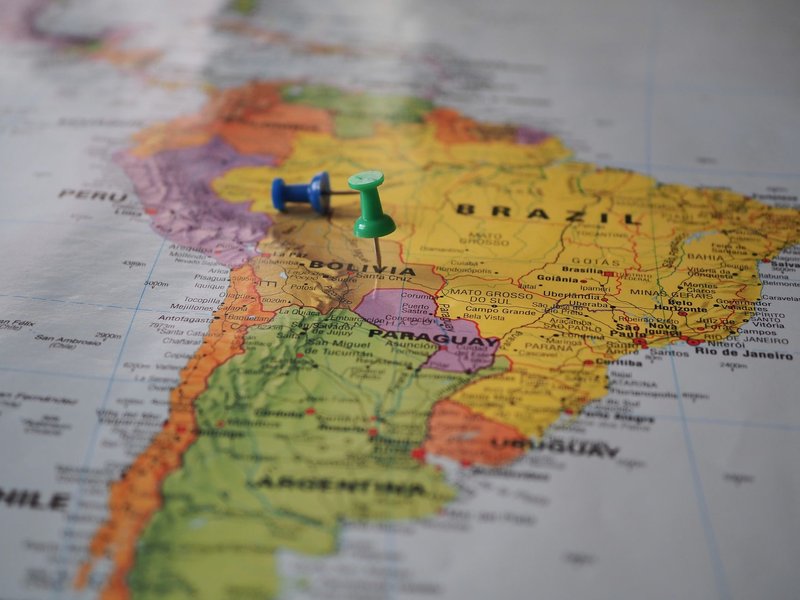
Here’s every sovereign nation in South America ranked from smallest to largest population, with key data at a glance. If you want a broader overview of the continent’s makeup, the complete list of countries in South America covers each nation’s flag, capital, and other essentials.
| Rank | Country | Population (approx.) | Capital | Official Language |
|---|---|---|---|---|
| 1 | Suriname | 640,000 | Paramaribo | Dutch |
| 2 | Guyana | 800,000 | Georgetown | English |
| 3 | Uruguay | 3.5 million | Montevideo | Spanish |
| 4 | Paraguay | 7.5 million | Asunción | Spanish, Guaraní |
| 5 | Bolivia | 12.1 million | Sucre / La Paz | Spanish + 36 indigenous |
| 6 | Ecuador | 18.4 million | Quito | Spanish |
| 7 | Venezuela | 28.3 million | Caracas | Spanish |
| 8 | Chile | 19.5 million | Santiago | Spanish |
| 9 | Peru | 33.4 million | Lima | Spanish, Quechua, Aymara |
| 10 | Argentina | 46.4 million | Buenos Aires | Spanish |
| 11 | Colombia | 52.2 million | Bogotá | Spanish |
| 12 | Brazil | 215.3 million | Brasília | Portuguese |
Now the details.
1. Suriname
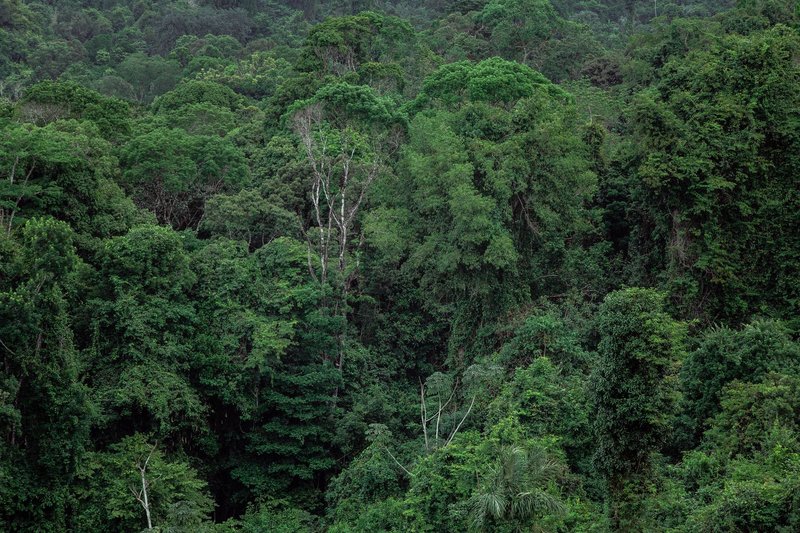
Population: ~640,000 Capital: Paramaribo Official language: Dutch (the only Dutch-speaking country in South America) Area: 163,820 km²
Suriname wins the bottom spot by a wide margin. Roughly 90% of the country is covered by Amazon rainforest, leaving almost no usable agricultural land and creating a natural barrier to large-scale settlement. Most of the population lives in a narrow coastal strip around Paramaribo — the vast interior is essentially empty.
The colonial history plays a role too. Suriname was a Dutch colony, and the Dutch relied heavily on enslaved and indentured labor from West Africa and South Asia rather than encouraging mass European migration. The result is a remarkably diverse country (Hindustanis, Javanese, Creoles, and Maroons all form significant communities) but a small one. After independence in 1975, a significant wave of Surinamese emigrated to the Netherlands — an option that remains available today through Dutch citizenship ties — which has kept population growth in check.
The country also holds the record for the highest percentage of forest coverage of any nation on Earth: over 93% of its land is forested, according to National Geographic, making it both a biodiversity hotspot and a geography lesson in why sparse populations happen.
2. Guyana
Population: ~800,000 Capital: Georgetown Official language: English Area: 214,969 km²
Guyana sits just west of Suriname and shares a lot of its demographic DNA. Similar colonial history (British this time), similar rainforest coverage, similar coastal concentration. The vast majority of the population lives along the Atlantic coast — a narrow strip of land that sits below sea level in places, protected by a Dutch-built seawall the British inherited and maintained.
What makes Guyana notable right now is what’s happening offshore: the country discovered massive oil reserves in 2015, and production has been ramping up fast. Guyana’s per capita GDP has shot up dramatically, which may drive population growth and internal migration over the coming decades. It’s one of the fastest-growing economies in the world, growing at over 62% in 2022 according to World Bank data, though its total population remains tiny.
3. Uruguay
Population: ~3.5 million Capital: Montevideo Official language: Spanish Area: 176,215 km²
Uruguay is the smallest country in South America by area that still qualifies as medium-sized by population — but at 3.5 million people, it still ranks third-smallest overall. The country is almost entirely urbanized: roughly half the population lives in Montevideo alone.
What keeps Uruguay’s population modest is a combination of low birth rates (one of the lowest in Latin America), steady emigration over the 20th century during periods of political instability, and the country’s relatively small landmass. The grassland interior (the Pampas) supports livestock farming rather than labor-intensive crops, so it never drew the waves of agricultural settlers that countries like Argentina or Brazil did.
Uruguay is also notable as the smallest Spanish-speaking country in South America by both area and population — a distinction that often comes up in geography trivia.
4. Paraguay
Population: ~7.5 million Capital: Asunción Official languages: Spanish and Guaraní Area: 406,752 km²
Paraguay is landlocked, which historically limited both trade and immigration. The country sits between Argentina, Brazil, and Bolivia — all significantly larger — and was devastated by the War of the Triple Alliance (1864–1870), one of the deadliest conflicts in South American history. By some estimates, Paraguay lost over half its population in that war, including the majority of its adult male population. The demographic effects took generations to recover from.
What makes Paraguay linguistically unusual is that Guaraní — an indigenous language — is a genuine co-official language, not a symbolic one. Around 90% of Paraguayans speak it, and many speak it at home alongside or instead of Spanish. That’s a rarity in the Americas.
5. Bolivia
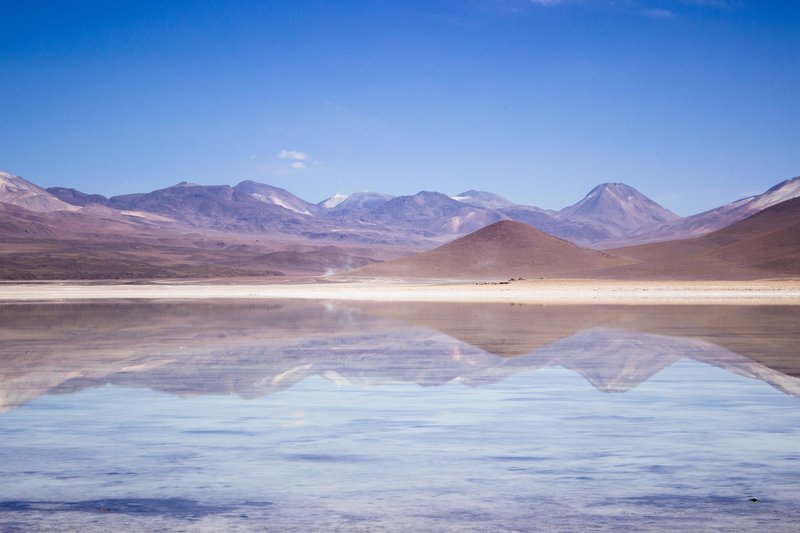
Population: ~12.1 million Capital: Sucre (constitutional) / La Paz (seat of government) Official languages: Spanish plus 36 recognized indigenous languages Area: 1,098,581 km²
Bolivia has the second-largest land area of countries in the bottom half of this list, but its population density is low because much of the country is extremely difficult to inhabit. The Altiplano — the high-altitude plateau where La Paz sits at over 3,600 meters — limits agricultural productivity and historically discouraged large-scale European settlement. The Amazon lowlands to the north and east are remote and sparsely populated.
Bolivia also remains one of the most indigenous-majority countries in the Americas: a majority of the population identifies as indigenous or of mixed indigenous descent, and the 36 officially recognized languages reflect that reality.
6. Ecuador
Population: ~18.4 million Capital: Quito Official language: Spanish Area: 283,561 km²
Ecuador packs relatively dense urban populations into Quito and Guayaquil but remains mid-sized overall. It’s notable for including the Galápagos Islands as a province — home to roughly 30,000 people and, more famously, the ecosystems that informed Darwin’s theory of evolution.
7. Venezuela
Population: ~28.3 million Capital: Caracas Official language: Spanish Area: 916,445 km²
Venezuela’s current population number deserves an asterisk. The country has experienced one of the largest emigration waves in Latin American history since 2015 — an estimated 7–8 million Venezuelans have left the country due to economic collapse and political crisis. The peak population was likely higher; the current figure reflects ongoing outflow.
8. Chile
Population: ~19.5 million Capital: Santiago Official language: Spanish Area: 756,102 km²
Chile’s narrow, 4,300-kilometer-long shape is one of geography’s more unusual configurations. The country stretches from tropical desert in the north to sub-Antarctic islands in the south, but most of the habitable land is concentrated in the central valley. Around 40% of the population lives in Santiago.
9. Peru
Population: ~33.4 million Capital: Lima Official languages: Spanish, Quechua, Aymara Area: 1,285,216 km²
Peru has a large area but much of it is either high-altitude Andes or dense Amazon jungle, both of which limit population density. Lima, sitting on the Pacific coast, holds roughly a third of the country’s entire population.
10. Argentina
Population: ~46.4 million Capital: Buenos Aires Official language: Spanish Area: 2,780,400 km²
Argentina is the second-largest country in South America by area but only tenth by population — a sign of how much empty space exists in Patagonia, the Pampas, and the Andes. Buenos Aires and its metro area account for roughly a third of the total population.
11. Colombia
Population: ~52.2 million Capital: Bogotá Official language: Spanish Area: 1,141,748 km²
Colombia is one of only two South American countries with coastline on both the Atlantic and Pacific — a geographical advantage that made it a historically significant trade corridor and is part of why it’s also among the countries that border the Atlantic Ocean. It’s also the most populous Spanish-speaking country on the continent, narrowly ahead of Argentina.
12. Brazil
Population: ~215.3 million Capital: Brasília Official language: Portuguese Area: 8,515,767 km²
Brazil isn’t just the largest country in South America — it’s the fifth-largest country on Earth by both area and population. São Paulo alone has more people than all of Suriname, Guyana, Uruguay, and Paraguay combined. Brazil’s population is the anchor point that makes the continent’s demographic spread so extreme: the gap between #1 (Suriname) and #12 (Brazil) is more than 330-fold.
Why Are Some South American Countries So Sparsely Populated?
The pattern across the bottom of this list isn’t random. A few consistent factors explain why certain countries stayed small:
Geography as a barrier. Suriname, Guyana, and Bolivia all have large swaths of land that are simply hard to live in at scale — dense rainforest with no infrastructure, or high-altitude plateau where crops don’t grow easily. Populations concentrated where conditions allowed and never spread far beyond that.
Colonial settlement patterns. The Spanish and Portuguese empires prioritized extracting resources (silver, sugar, rubber) over building permanent agricultural settler populations. Countries that served as mining or plantation hubs drew labor when needed and lost it when the boom ended. Suriname’s Dutch colony is the extreme case: it relied on imported enslaved and indentured workers, not settlers, so no self-sustaining colonial population ever took root.
Post-independence emigration. Several of the smaller nations — Suriname, Uruguay, Paraguay — experienced significant emigration after independence, during economic crises, or following devastating wars. Paraguay’s population was so badly reduced by the War of the Triple Alliance that historians still debate the exact scale of the demographic collapse.
Low birth rates in Uruguay’s case. Uruguay industrialized and urbanized early by South American standards, which brought fertility rates down sooner than its neighbors. It’s followed a Western European demographic trajectory rather than a Latin American one.
What About Territories?
The ranking above covers the 12 sovereign nations only. South America also includes non-sovereign territories — French Guiana (an overseas department of France), the Falkland Islands (a British overseas territory), and South Georgia — that are worth knowing about if your interest is geographic rather than strictly political.
French Guiana has a population of around 300,000, which would place it at #1 on this list ahead of Suriname if it were an independent state. But it’s constitutionally part of France, uses the euro, and sends representatives to the French National Assembly in Paris — so it doesn’t count as a sovereign South American country.
The Falkland Islands have around 3,500 permanent residents, making them the least-populated territory in the South Atlantic by a wide margin.