
Table of Contents
- Why Microstates Exist
- The 20 Smallest Countries by Population
- Shrinking vs. Growing: Population Trends
- Quick-Reference Data Table
The world has 195 recognized sovereign nations. Most of them you’ve heard of. But tucked into that count are a handful of countries so small that they fit inside a mid-size city — and some that you could walk across in an afternoon.
These aren’t territories or dependencies. They’re fully sovereign states with their own governments, passports, and UN seats. What they lack is people. Some have fewer residents than a small American suburb. A few have fewer than a large concert venue.
Here’s the full breakdown of the world’s least populated sovereign nations — what makes each one tiny, and what keeps it that way.
Why Microstates Exist
Before the list: it’s worth knowing that the world’s smallest countries didn’t shrink. They were always small, and they stayed that way for specific, structural reasons.
Geographic isolation is the biggest factor. Island nations like Nauru, Tuvalu, and Palau sit in remote corners of the Pacific with limited arable land and no obvious incentive for large-scale settlement. You can’t build a city on a coral atoll that’s three feet above sea level.
Treaty-state origins account for another cluster. San Marino, Vatican City, and Monaco weren’t carved out by war — they survived through careful political positioning, becoming protected enclaves within larger states. San Marino claims to be the world’s oldest republic; Vatican City is the seat of the Catholic Church. Neither had any reason to expand.
Post-colonial geography explains some Pacific and Caribbean cases, where colonial powers drew borders around whatever they happened to control, leaving small island populations as sovereign entities when independence came.
And emigration keeps several of these countries small even when their land could theoretically support more people. Niue, Palau, and the Marshall Islands all lose residents to New Zealand and the United States at a faster rate than they replace them through births.
The 20 Smallest Countries by Population
1. Vatican City — ~800 people
The smallest country on earth by both area and population is also the only one where citizenship is functionally a job. You’re a citizen of Vatican City because you work there — as a priest, a Swiss Guard, or a Vatican administrator. Retire or resign, and you lose citizenship. It’s less a demographic fact and more an HR policy.
The ~800 residents live inside 44 hectares (about 110 acres) on the west bank of the Tiber in Rome. The population has stayed roughly constant for decades, not because of births, but because the Church maintains a more or less fixed institutional headcount.
2. Nauru — ~10,000 people
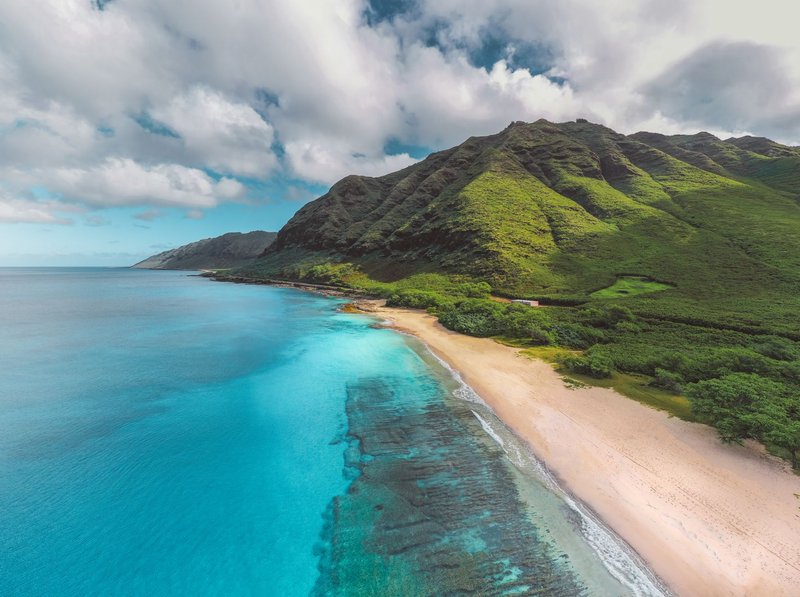
Nauru is a 21 km² island in the central Pacific that became one of the wealthiest per-capita nations on earth in the 1970s — and then spent that wealth so fast it barely left a trace. The boom came from phosphate mining; the bust came when the deposits ran out in the 1990s.
Today roughly 10,000 people live on the island, making it the smallest sovereign nation by population outside of Europe. The economy now leans heavily on Australian foreign aid and, notoriously, the operation of an offshore detention center.
3. Tuvalu — ~11,000 people
Tuvalu sits in the Pacific about halfway between Hawaii and Australia, spread across nine atolls, none of which rises more than 4.5 meters above sea level. That last detail matters: Tuvalu is one of the countries most directly threatened by rising sea levels, and its government has been actively negotiating climate migration agreements with Australia and New Zealand.
The country earns a surprising amount of revenue from an unlikely source: the .tv internet domain extension. Because Tuvalu’s country code happened to align with the television industry’s preferred shorthand, licensing that domain has brought in millions of dollars — a genuine windfall for a country of 11,000.
4. Palau — ~18,000 people
Palau is an archipelago of over 500 islands in the western Pacific, but only about nine of them are permanently inhabited. The population is small and has been declining, primarily because Palauans emigrate to Guam, Hawaii, and the U.S. mainland at a steady rate. Palau has a Compact of Free Association with the United States, which means Palauans can live and work in the U.S. without a visa — and many do.
For a country with 18,000 people, Palau punches above its weight environmentally: it was the first country in the world to establish a shark sanctuary (2009) and later created one of the largest marine protected areas in the Pacific.
5. San Marino — ~34,000 people
San Marino is a landlocked republic entirely surrounded by Italy, sitting on and around Mount Titano in northeastern Italy. It claims to be the world’s oldest constitutional republic, founded (according to tradition) in 301 AD by a Christian stonemason fleeing Roman persecution.
The country has no airport, no railway, and no coastline — but it does have a functioning economy built on tourism, banking, and the sale of postage stamps and coins to collectors worldwide. Its population has been relatively stable for decades, held in check more by limited territory than emigration.
6. Liechtenstein — ~39,000 people
Liechtenstein is one of only two doubly landlocked countries in the world (the other is Uzbekistan — meaning surrounded entirely by landlocked countries). It sits between Switzerland and Austria on the Rhine Valley and is, per capita, one of the wealthiest countries on earth.
The country’s economy is dominated by financial services and precision manufacturing, and its unemployment rate is consistently among the lowest in Europe. Citizens can request an audience with the ruling Prince — this is a real, ongoing tradition, not a historical curiosity.
7. Monaco — ~39,500 people
Monaco is 2.1 km² on the French Riviera, which makes it the most densely populated country on earth. The ~39,500 residents are packed into a space smaller than many suburban shopping malls.
What keeps the population small isn’t land scarcity as much as real estate prices: Monaco is the most expensive property market in the world, which functions as a very effective demographic filter. The country has no income tax, which draws wealthy residents — but the actual birth rate is modest, and the population is propped up partly by immigration from wealthy foreigners seeking tax residency.
8. Saint Kitts and Nevis — ~47,000 people
The smallest sovereign nation in the Western Hemisphere by both area and population, Saint Kitts and Nevis is a two-island federation in the Eastern Caribbean. Nevis, the smaller island, has roughly 12,000 residents and a complicated relationship with the federation: a 1998 referendum on Nevis independence failed to reach the required two-thirds majority, but secession sentiment hasn’t entirely disappeared.
The country runs one of the world’s oldest citizenship-by-investment programs, launched in 1984, which has influenced dozens of similar programs launched by other small nations since.
9. Marshall Islands — ~42,000 people
The Marshall Islands is a Pacific nation of 29 coral atolls and 5 islands, with a total land area of about 181 km² spread across nearly 2 million km² of ocean. Like Palau, it has a Compact of Free Association with the U.S., and like Palau, it loses residents to that arrangement: a significant Marshallese diaspora lives in Hawaii and Arkansas (particularly Springdale, Arkansas, which has the largest Marshallese community outside the Pacific).
The country also carries the weight of U.S. nuclear testing conducted in the Marshall Islands between 1946 and 1958. Bikini Atoll, used for 23 nuclear tests, remains uninhabited today.
10. Saint Vincent and the Grenadines — ~100,000 people
Saint Vincent and the Grenadines sits at the southern end of the Windward Islands in the Caribbean, and it’s the first country on this list that breaks the six-figure population mark. The Grenadines are a chain of small islands that stretch toward Grenada, and while some (like Mustique and Bequia) are well known to wealthy sailors and tourists, most are sparsely populated or uninhabited.
The country made global news in 2021 when the La Soufrière volcano erupted for the first time since 1979, prompting a large-scale evacuation of the northern part of the island.
11. Dominica — ~72,000 people
Not to be confused with the Dominican Republic, Dominica is a volcanic island in the Lesser Antilles known for its dense rainforest and geothermal activity. It has one of the largest Carib Indigenous populations in the Caribbean, known as the Kalinago, who live in a designated territory on the island’s eastern coast.
The population has declined slowly over recent decades, primarily through emigration to Guadeloupe, Martinique, and the United Kingdom. Hurricane Maria (2017) caused significant displacement, though most residents returned.
12. Kiribati — ~120,000 people
Kiribati (pronounced “Kiribas”) is an equatorial Pacific nation made up of 33 atolls spread across more than 3.5 million km² of ocean — one of the widest geographic footprints of any country, nearly all of it water. Its land area totals just 811 km².
The country straddles the International Date Line, which was redrawn in 1995 so that all of Kiribati would share the same calendar day. Like Tuvalu, Kiribati faces an existential threat from sea level rise; the government has purchased land in Fiji as a contingency.
13. Micronesia — ~115,000 people
The Federated States of Micronesia covers four island states in the western Pacific — Pohnpei, Chuuk, Yap, and Kosrae — across 702 islands. The population is concentrated on the main islands, with dozens of outer islands either uninhabited or home to only a few hundred people.
Chuuk Lagoon, one of the country’s states, is famous among divers for containing the wrecks of over 60 Japanese ships sunk during World War II’s Operation Hailstone in 1944.
14. Tonga — ~100,000 people
Tonga is a Polynesian kingdom — the only remaining monarchy in the Pacific — consisting of 169 islands, about 36 of them inhabited. The current king is Tupou VI, and the country only began moving toward a constitutional monarchy in 2010 when the king transferred most executive power to a parliamentary government.
In January 2022, the Hunga Tonga–Hunga Ha’apai submarine volcano erupted in one of the largest volcanic explosions recorded in the modern era, triggering a tsunami and temporarily cutting the island nation off from the rest of the world when its undersea communications cable was severed.
15. Samoa — ~220,000 people
Samoa (formerly Western Samoa) is a two-island country in the South Pacific that shares a name, but not a government, with American Samoa to its east. The population is young and emigration-heavy: large Samoan communities exist in New Zealand, Australia, and the United States, particularly in California and Hawaii.
In 2011, Samoa skipped a day — literally. The country moved the International Date Line to its west side, jumping from Thursday, December 29 directly to Saturday, December 31, to align its calendar with its main trading partners Australia and New Zealand.
16. Vanuatu — ~330,000 people
Vanuatu is a Pacific archipelago of 83 islands with one of the highest densities of languages per capita in the world: roughly 113 indigenous languages for a population of 330,000, or about one language per 3,000 people. The national language, Bislama, is a creole that evolved as a trade language during colonial times.
The country was jointly administered by Britain and France as a “condominium” — locally called the “pandemonium” — until independence in 1980.
17. Barbados — ~285,000 people
Barbados is the easternmost Caribbean island and one of the region’s most stable democracies. In November 2021, it became a republic after 55 years as a constitutional monarchy under the British Crown, removing Queen Elizabeth II as head of state and installing its first president, Dame Sandra Mason.
The island’s population is dense relative to its 430 km² and has grown modestly over recent decades, bolstered in part by immigration from other Caribbean nations.
18. Saint Lucia — ~180,000 people
Saint Lucia is a Windward Island with a population that’s grown steadily since independence in 1979. It’s best known for the twin volcanic plugs of the Pitons, which are a UNESCO World Heritage Site, and for a tourism-driven economy that makes it one of the more prosperous Eastern Caribbean nations.
The island has produced two Nobel laureates — economist W. Arthur Lewis and poet Derek Walcott — a remarkable per-capita figure for a country of 180,000.
19. Grenada — ~125,000 people
Grenada is the southernmost of the Windward Islands, known as the “Spice Isle” for its production of nutmeg, mace, and cinnamon. It was the site of a U.S. military intervention in 1983 — Operation Urgent Fury — following a coup that installed a Marxist government aligned with Cuba.
The country runs a citizenship-by-investment program that has attracted significant interest because it offers visa-free access to China, one of the few Caribbean programs with that feature.
20. Antigua and Barbuda — ~100,000 people
Antigua and Barbuda is a two-island nation in the northern Leeward Islands. Barbuda, the smaller island, was almost entirely evacuated after Hurricane Irma in 2017 caused catastrophic damage, and resettlement has been slow. The country is heavily dependent on tourism, with Antigua’s English Harbour — a former British naval base — serving as one of the Caribbean’s top sailing destinations.
Shrinking vs. Growing: Population Trends
Not all small countries are getting smaller, and the direction matters.
Shrinking microstates include Niue (a New Zealand-associated state with fewer than 2,000 people, not covered above as it’s not fully sovereign), Palau, the Marshall Islands, and Tuvalu. In each case, emigration outpaces births. The pull is straightforward: Compact of Free Association agreements with the U.S. or close ties to Australia and New Zealand give residents legal pathways to wealthier economies, and many take them.
Stable microstates include Vatican City (structurally fixed), Monaco (self-selecting wealthy population), and San Marino (limited land, limited emigration pressure). These aren’t growing either, but they’re not hollowing out. Europe’s microstates follow a pattern explored in more depth in the smallest countries in Europe by population, where geographic and political constraints have kept these states stable for centuries.
Growing microstates are harder to find in the very-small category, but Barbados, Saint Lucia, and Grenada have all seen modest population growth driven by immigration from elsewhere in the Caribbean and returning diaspora.
The most precarious situation belongs to the Pacific atolls — Tuvalu, Kiribati, and the Marshall Islands — where the question isn’t just emigration rates but physical habitability. According to NASA research, global sea levels are rising at roughly 3.6 mm per year, and that rate is accelerating. For countries that sit a meter or two above the ocean, this isn’t a distant policy problem. Tuvalu has already secured a formal agreement with Australia that grants Tuvaluans a pathway to permanent residency — an acknowledgment that some portion of the country’s population may eventually need to leave permanently.
Quick-Reference Data Table
| Country | Est. Population (2026) | Land Area (km²) | Region |
|---|---|---|---|
| Vatican City | ~800 | 0.44 | Europe |
| Nauru | ~10,000 | 21 | Pacific |
| Tuvalu | ~11,000 | 26 | Pacific |
| Palau | ~18,000 | 459 | Pacific |
| San Marino | ~34,000 | 61 | Europe |
| Liechtenstein | ~39,000 | 160 | Europe |
| Monaco | ~39,500 | 2.1 | Europe |
| Marshall Islands | ~42,000 | 181 | Pacific |
| Saint Kitts and Nevis | ~47,000 | 261 | Caribbean |
| Dominica | ~72,000 | 751 | Caribbean |
| Micronesia | ~115,000 | 702 | Pacific |
| Kiribati | ~120,000 | 811 | Pacific |
| Grenada | ~125,000 | 344 | Caribbean |
| Saint Lucia | ~180,000 | 616 | Caribbean |
| Barbados | ~285,000 | 430 | Caribbean |
| Vanuatu | ~330,000 | 12,189 | Pacific |
| Tonga | ~100,000 | 747 | Pacific |
| Samoa | ~220,000 | 2,842 | Pacific |
| Saint Vincent and the Grenadines | ~100,000 | 389 | Caribbean |
| Antigua and Barbuda | ~100,000 | 443 | Caribbean |
Population estimates are rounded approximations based on UN World Population Prospects data and recent national census figures. For a parallel look at the smallest countries in Asia by population, which follows similar patterns of island geography and emigration pressure, see the complete ranked list of Asia’s least populated nations.
A few things stand out when you look at this list as a whole. Europe’s microstates are stable or growing. The Pacific atolls are under existential pressure. The Caribbean islands are mid-sized by this list’s standards but tiny by any other measure. And Vatican City remains in its own category — a country where the population is less a demographic fact than a staffing decision.
If you’re planning to visit any of these, the Pacific ones require real effort to reach. Nauru has limited flights and no tourist infrastructure to speak of. Tuvalu has one functioning airport and accommodation that reflects its isolation. But that inaccessibility is part of what kept them small in the first place — and what makes them interesting.