
Table of Contents
- The Language Most Visitors Never Think About
- Jordanian Arabic: Three Dialects, One Country
- The Circassians: A Language Carried Across Empires
- Chechen Speakers in Jordan
- Armenian: A Community That Held On
- The Extinct Languages Beneath the Soil
- Ammonite: The Language of Amman’s Namesake
- Language Preservation in Jordan Today
- At a Glance: Jordan’s Languages
The Language Most Visitors Never Think About
Jordan’s official language is Modern Standard Arabic, and nearly everyone you’ll meet speaks a version of Jordanian Arabic. That part’s obvious. What’s less obvious is what else has been spoken on this land — and by whom, for how long, and whether any of it is still alive.
Jordan sits at a crossroads that was never quiet. Nabataean traders, Ammonite kings, Byzantine monks, Ottoman administrators, and waves of refugees from the Caucasus all passed through or settled here. Each group left traces, and some left more than traces. The linguistic history of Jordan isn’t a single thread — it’s several overlapping ones, some cut short, some still running.
Jordanian Arabic: Three Dialects, One Country
Arabic in Jordan isn’t one thing. Linguists typically split Jordanian Arabic into three main dialect groups, and they genuinely sound different from each other.
Urban Jordanian Arabic is what you’ll hear in Amman, Irbid, and Zarqa. It’s been leveled toward Modern Standard Arabic more than the others — a product of education, media, and Palestinian influence following the 1948 and 1967 population movements. Around half of Jordan’s current population traces roots to Palestinian families, and that’s shaped how city Arabic sounds.
Rural Jordanian Arabic comes from settled agricultural communities, particularly in the Jordan Valley and the highlands. It retains older phonological features that the urban dialect has shed, including the pronunciation of the Arabic letter qaf as a hard “g” sound — something that immediately marks a speaker’s background to other Jordanians.
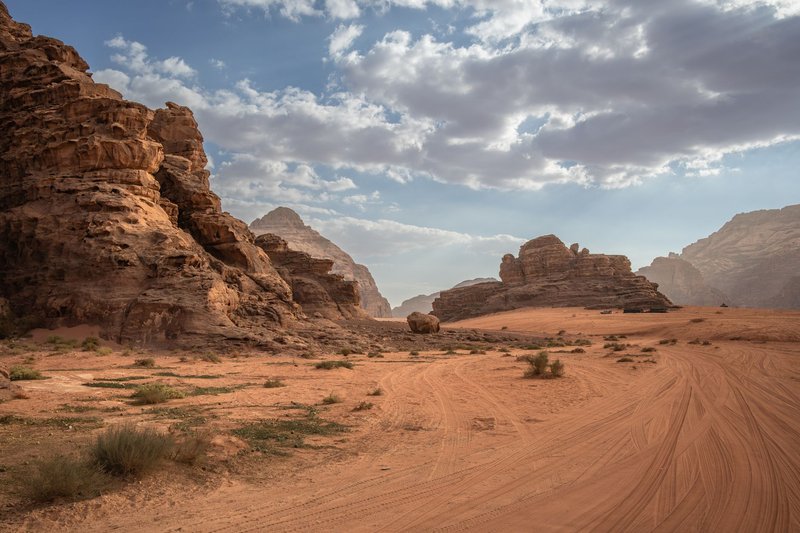
Bedouin Arabic is the dialect of Jordan’s nomadic and semi-nomadic tribal communities, spoken across the eastern steppe and desert regions. It’s considered by some linguists to preserve features closer to Classical Arabic than either urban or rural varieties. The Bani Sakhr and Howeitat tribes, among others, have maintained distinct speech patterns across generations of settled and semi-settled life.
These aren’t just accent differences — vocabulary, idiom, and certain grammatical structures diverge enough that Jordanians can identify each other’s regional and tribal background from a few sentences.
The Circassians: A Language Carried Across Empires
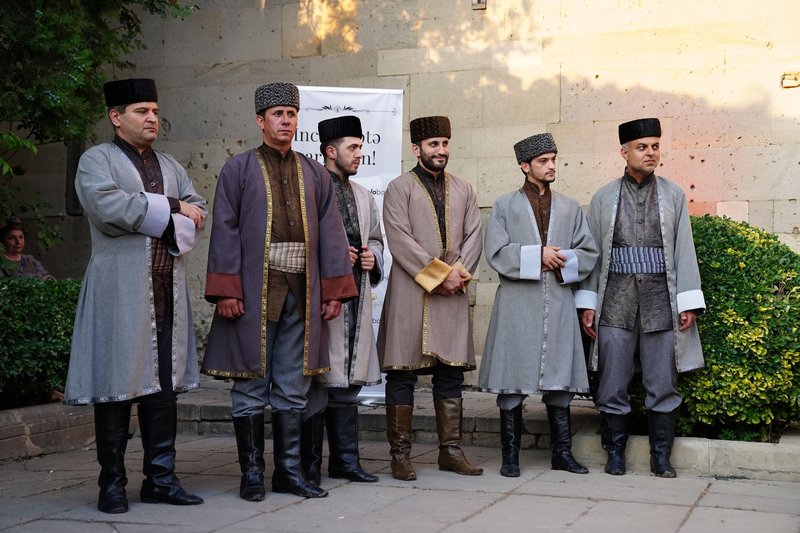
The Circassian community in Jordan is one of the most historically significant non-Arab populations in the country, and also one of the most overlooked in standard travel writing. Circassians are a Northwest Caucasian people whose presence in Jordan is a direct consequence of the Russo-Circassian War of the 19th century.
After Russia’s conquest of the Caucasus was completed in 1864, an estimated 600,000 to over a million Circassians were expelled or fled their homeland. The Ottoman Empire resettled many of them across its territories — including in what is now Jordan. Circassians arrived in the Amman area (then nearly uninhabited) in 1878, making them among the founders of modern Amman.
Today, Jordan’s Circassian population is estimated at around 160,000, concentrated mostly in Amman, Zarqa, Jerash, and Wadi Sir. The language — Adyghe, a member of the Northwest Caucasian family — has no connection to Arabic or any Indo-European language. Its phonological system is famously complex, with consonant clusters and sounds that have no equivalent in Arabic or English.
Adyghe in Jordan is under real pressure. Most younger Circassians speak Arabic as their dominant language, and Adyghe fluency has been declining with each generation. Community organizations, including the Circassian Charity Association in Amman, have pushed for cultural and language preservation, with mixed results. The language survives, but its future in Jordan is uncertain.
Chechen Speakers in Jordan
The Chechen community arrived through a similar historical path: displacement during conflicts with the Russian Empire in the 19th century led the Ottoman authorities to resettle Chechen families across the Levant. Jordan’s Chechen population is smaller than the Circassian one — estimates put it at roughly 10,000 to 15,000 — and is largely concentrated in the city of Zarqa.
Chechen belongs to the Northeast Caucasian family, which makes it linguistically unrelated to Circassian despite the parallel histories of the two communities. Like Adyghe, Chechen in Jordan is a minority language under demographic pressure. Intermarriage with Arab Jordanians and the dominance of Arabic in education and public life have eroded fluency across generations.
Armenian: A Community That Held On
Jordan’s Armenian community is smaller still — perhaps 5,000 to 10,000 people — and arrived primarily in two waves: refugees from the 1915 Armenian Genocide and later migrants from Lebanon. Most are concentrated in Amman, particularly in neighborhoods like Sweileh.
Armenian is an Indo-European language, but it forms its own independent branch — it’s not closely related to Arabic, Greek, or Persian despite centuries of geographic proximity to all three. The community has maintained cultural institutions and a degree of language use, partly through the Armenian Apostolic Church, which conducts services in Classical Armenian.
The Extinct Languages Beneath the Soil
Jordan’s territory hosted several ancient civilizations that left written records before their languages disappeared entirely. Understanding them requires archaeology as much as linguistics.
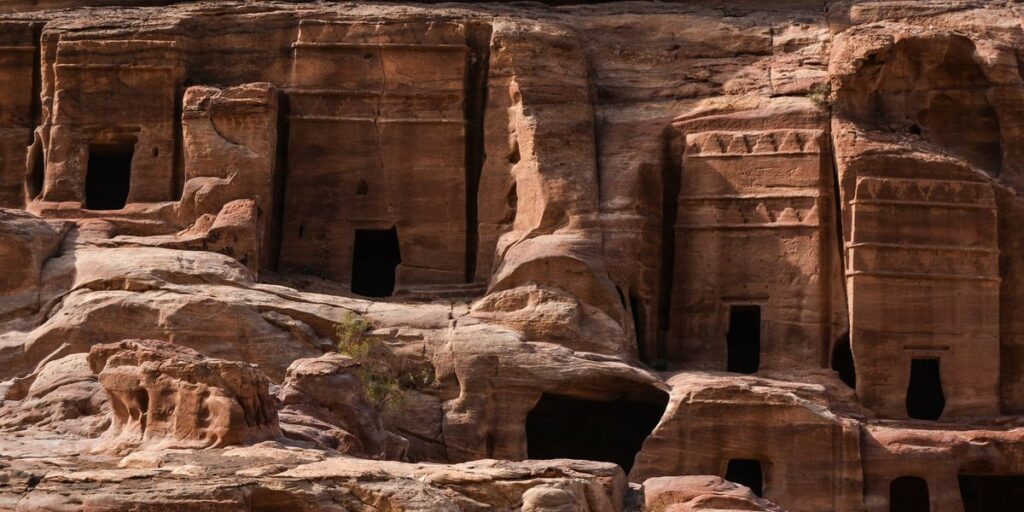
Nabataean Aramaic was the language of the Nabataean Kingdom, centered at Petra. Nabataean was a dialect of Aramaic written in a distinctive script that directly evolved into the modern Arabic alphabet — so in a real sense, every Arabic letter has a Nabataean ancestor. The Nabataean language died out around the 4th century CE as the population shifted to Arabic. Thousands of Nabataean inscriptions survive across southern Jordan and the Negev.
Moabite was a Semitic language spoken in the territory east of the Dead Sea, closely related to Biblical Hebrew. The Mesha Stele, discovered in Dhiban in 1868 and now held in the Louvre, is one of the longest Moabite inscriptions ever found — it records King Mesha’s military victories in the 9th century BCE. The language died out in the Persian period.
Ammonite: The Language of Amman’s Namesake
Ammonite is the ancient language most directly tied to Jordan’s geography, because the Ammonite capital was Rabbath-Ammon — the city now called Amman. The connection isn’t just etymological; the land under Amman’s streets was the center of an Ammonite-speaking kingdom from roughly the 13th to the 6th centuries BCE.
Ammonite was a Semitic language closely related to Hebrew and Phoenician. The surviving corpus is small — mainly inscriptions on seals, pottery, and statuary — but enough to establish it as a distinct language rather than a Hebrew dialect. The Citadel Museum in Amman holds artifacts from this period, though the site’s interpretive materials don’t always foreground the linguistic dimension.
The language disappeared following the Babylonian conquest and subsequent population movements. By the Hellenistic period, Aramaic had replaced it entirely.
Language Preservation in Jordan Today
Jordan has no formal national policy on minority language protection comparable to what some European countries have developed. Arabic is the sole official language, and the education system operates entirely in Arabic (with English as a mandatory second language). Circassian and Chechen are not taught in state schools.
The preservation burden falls on community organizations, family transmission, and diaspora networks. The Circassian community has been the most active, operating cultural centers and folk dance troupes that keep the language visible even as fluency declines. There’s also a growing interest in Circassian identity among younger Jordanians of Circassian descent — partly driven by the global Circassian diaspora’s use of social media to connect across countries.
UNESCO classifies Adyghe as “definitely endangered” globally, noting that the main viable population of fluent speakers remains in Russia’s Adygea republic. The Jordanian community, while culturally active, is linguistically downstream of that.
At a Glance: Jordan’s Languages
| Language | Family | Status | Approximate Speakers in Jordan |
|---|---|---|---|
| Jordanian Arabic (urban) | Semitic | Thriving | Majority |
| Jordanian Arabic (rural) | Semitic | Stable | Hundreds of thousands |
| Jordanian Arabic (Bedouin) | Semitic | Stable but shrinking | Tens of thousands |
| Adyghe (Circassian) | Northwest Caucasian | Endangered | ~160,000 (declining fluency) |
| Chechen | Northeast Caucasian | Severely endangered | ~10,000–15,000 |
| Armenian | Indo-European (Armenian branch) | Vulnerable | ~5,000–10,000 |
| Nabataean Aramaic | Semitic | Extinct | — |
| Moabite | Semitic | Extinct | — |
| Ammonite | Semitic | Extinct | — |
Jordan’s linguistic story is a reminder that the Middle East’s present-day language map is recent and contested. The Arabic dominance you hear across the region today is historically shallow — a thousand years old in some places, four hundred in others. Beneath it lie Aramaic, ancient Semitic languages with no living descendants, and Caucasian languages that arrived with refugees and stayed.
If you’re visiting Amman, the Citadel gives you the Ammonite layer. The neighborhoods of Wadi Sir and Sweileh give you something else — communities still navigating what it means to speak a different language in a country that doesn’t have a word for what they are.