
Type “national parks in Minnesota” into Google and you’ll get lists with wildly different counts, because most of them are answering a different question than the one you asked. Minnesota has exactly one national park: Voyageurs. It also has five other sites managed by the National Park Service that aren’t technically “national parks” — a monument, a recreation area, a scenic riverway, and a trail that just happens to pass through. All six are worth knowing about. Only one gets the official title.
Table of Contents
- How many national parks are actually in Minnesota
- The Quick Answer
- 1. Voyageurs National Park
- 2. Mississippi National River and Recreation Area
- 3. St. Croix National Scenic Riverway
- 4. Grand Portage National Monument
- 5. Pipestone National Monument
- 6. North Country National Scenic Trail
- Minnesota State Parks vs. National Parks
- FAQ
How many national parks are actually in Minnesota
One. Voyageurs, up on the Canadian border near International Falls, is the only site in the state carrying the “National Park” designation. The other five are legitimate National Park Service units — same agency, same rangers, same brown-and-gold signage — but they fall under different categories because of how they were established or what they protect. A national monument (Pipestone, Grand Portage) usually preserves a specific cultural or historic site. A national river or riverway (the Mississippi corridor, the St. Croix) protects a waterway rather than a bounded piece of land. A national scenic trail (North Country) is a footpath, not a destination you visit and leave.
None of that makes them lesser stops. Grand Portage protects one of the most important fur-trade sites in North American history. The Mississippi River corridor through the Twin Cities gets more annual visitors than most actual national parks. The distinction is bureaucratic, not a ranking of what’s worth your time.
The Quick Answer
If you only read one section: Voyageurs is the destination trip, worth a full weekend built around a houseboat or a guided boat tour of the lake system. The Mississippi and St. Croix units are the easy adds — both sit within an hour of the Twin Cities and work as a half-day detour. Grand Portage and Pipestone reward the drive if you care about Native American and fur-trade history specifically; skip them if you’re just chasing scenery. The North Country Trail is for people who already hike, not people picking a first destination.
1. Voyageurs National Park
Voyageurs sits on the Canadian border, about 285 miles north of Minneapolis-St. Paul near International Falls — call it 4.5 to 5 hours by car. There’s no entrance fee, partly because there’s barely a road-accessible entrance: roughly a third of the park’s 218,000 acres is open water, and most visitors arrive by boat rather than by trail.
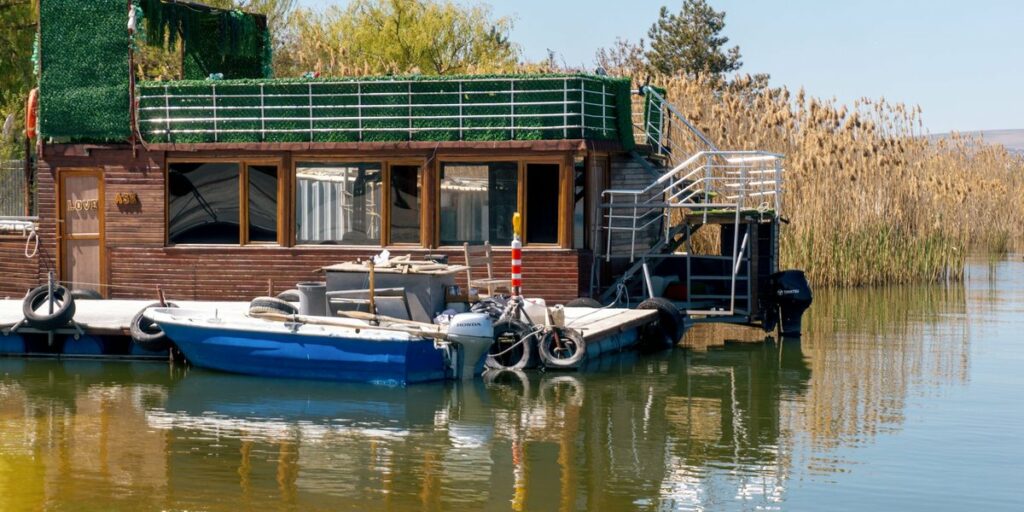
The park spans four connected lakes — Rainy, Kabetogama, Namakan, and Sand Point — carved by glaciers into a maze of islands and channels that voyageur fur traders paddled through in the 1700s, which is where the name comes from. Houseboating is the signature activity; several outfitters in Ely and International Falls rent boats that sleep up to a dozen people, and you can anchor in a different bay every night for a week without repeating one. Summer (June through early September) is the window for that. Come winter, the lakes freeze solid enough to drive a truck across, and the park turns into one of the more accessible places in the Lower 48 to see the northern lights, since there’s almost no light pollution for fifty miles in any direction.
If you’re not renting a boat, the Ash River and Rainy Lake visitor centers run narrated boat tours that cover the highlights in a few hours, which is the move for a shorter trip.
2. Mississippi National River and Recreation Area
This is the one most Twin Cities residents don’t realize is a national park unit at all. It runs 72 miles along the Mississippi River, from Ramsey and Dayton in the north down through downtown Minneapolis and St. Paul to Hastings in the south — meaning if you’ve biked the West River Parkway or kayaked past the Stone Arch Bridge, you’ve already visited an NPS site.
There’s no entrance fee and no single visitor center that captures the whole thing; instead there are access points scattered along the corridor, with the park’s main visitor center at the Science Museum of Minnesota in St. Paul. Biking the paved trails along both riverbanks is the default activity, and fall is the best season for it — the river bluffs through St. Paul turn color about two weeks before the rest of the metro does. It’s the only site on this list you can visit on a lunch break.

3. St. Croix National Scenic Riverway
The St. Croix forms the border between Minnesota and Wisconsin for about 200 of its 252 protected miles, and it’s the closest thing on this list to a straightforward day trip from the Twin Cities — Taylors Falls, the main put-in point, is under an hour from downtown St. Paul.
Canoeing and tubing are the reasons people come, and they’re among the most adventurous things to do in Minnesota. The upper stretch near Taylors Falls runs through basalt gorges called the Dalles of the St. Croix, tight enough in spots that it feels more like a canyon than a Midwestern river. No entrance fee applies to the riverway itself, though some access points run through Minnesota or Wisconsin state parks that charge their own day-use fee. Late June through August is peak season, when water levels are low enough for tubing without being too low to paddle.
4. Grand Portage National Monument
Grand Portage sits on Lake Superior’s North Shore near the Canadian border, close enough to Thunder Bay, Ontario that a lot of visitors combine the two. From Minneapolis it’s roughly 300 miles and 6 hours, most of it along Highway 61 hugging the lake.
The monument preserves a reconstructed 18th-century fur-trade depot — the actual “grand portage,” an 8.5-mile trail that voyageurs used to bypass unnavigable rapids on the Pigeon River, still exists and can be hiked. It’s built and staffed in partnership with the Grand Portage Band of Lake Superior Chippewa, whose reservation surrounds the monument, which makes it one of the more collaboratively-run sites in the whole park system. There’s a small entrance fee, waived with an America the Beautiful pass. Go in August if you can time it around Grand Portage Rendezvous Days, an annual reenactment where costumed interpreters recreate the fur-trade summer gathering that once brought hundreds of traders and Ojibwe families to this exact spot.
5. Pipestone National Monument
Pipestone is the outlier on this list geographically — it’s in the southwest corner of the state, near the South Dakota border, about 190 miles and 3 hours from Minneapolis, in flat prairie country with none of the lakes-and-pines scenery the rest of the list trades on.
What it protects is a set of quarries where Native Americans have carved pipestone, also called catlinite, for ceremonial pipes for centuries — and still do. Quarrying rights are reserved for enrolled members of federally recognized tribes, and on a typical visit you can watch quarriers working the same stone by hand that’s been worked since before European contact. Entrance runs a modest per-person fee, and the visitor center includes demonstrations of pipe-carving that aren’t staged for tourists — it’s the actual craft, done by people who do it outside the park too, as the Minnesota Historical Society documents in its broader coverage of the site’s history. Spring and early fall bring the mildest prairie weather; summer can hit the 90s with no tree cover for shade.
6. North Country National Scenic Trail
The North Country Trail is the longest of America’s eleven National Scenic Trails, running roughly 4,800 miles from central North Dakota to Vermont — and about 875 of those miles cross Minnesota, threading through the Chippewa National Forest and near Itasca State Park before continuing east toward Wisconsin.
This isn’t a destination you drive to and spend an afternoon at; it’s a long-distance footpath, and most people experience it in day-hike segments rather than end to end. The stretch through the Chippewa National Forest, a few hours north of the Twin Cities, is one of the more accessible entry points and passes through old-growth pine stands that never got logged. No fee applies to hiking the trail itself. Fall is the strongest season here for the obvious reason — the maple and birch cover through north-central Minnesota turns hard in late September and early October.
Minnesota National Parks Comparison
| Site | Type | Size | Drive from Minneapolis | Top Activity |
|---|---|---|---|---|
| Voyageurs | National Park | ~218,000 acres | ~4.5–5 hrs | Houseboating |
| Mississippi NRRA | Recreation Area | 72-mile corridor | 0 (in metro) | Biking |
| St. Croix Riverway | Scenic Riverway | 252 protected miles | ~45 min–1 hr | Canoeing/tubing |
| Grand Portage | National Monument | ~710 acres | ~6 hrs | Historic fort tour |
| Pipestone | National Monument | ~301 acres | ~3 hrs | Pipestone quarry visit |
| North Country Trail | Scenic Trail | ~875 mi in MN | Varies by trailhead | Day hiking |
Minnesota State Parks vs. National Parks
Minnesota’s state park system is a different animal entirely, and a much bigger one — 75-plus state parks compared to six NPS sites. State parks like Itasca (source of the Mississippi River), Gooseberry Falls, and Split Rock Lighthouse tend to be smaller, closer together, and cheaper to visit; a Minnesota State Parks annual pass runs a fraction of what national park passes cost elsewhere in the country, and most state parks charge a simple day-use vehicle fee rather than a per-person entrance fee.
The practical difference for trip planning: if you want waterfalls, lighthouses, and swimming beaches within a couple hours of the Cities, state parks cover that better and in higher density. If you want the specific historical or ecological significance that earns federal protection — a fur-trade depot, a sacred quarry, the actual U.S.-Canada border lake system — that’s what the NPS sites are for. Most serious Minnesota trip itineraries mix both.
FAQ
Is Voyageurs the only national park in Minnesota? Yes. It’s the sole site in the state carrying the official “National Park” designation. The other five NPS sites are monuments, a recreation area, a riverway, and a trail.
How many National Park Service sites are in Minnesota total? Six: Voyageurs National Park, Mississippi National River and Recreation Area, St. Croix National Scenic Riverway, Grand Portage National Monument, Pipestone National Monument, and the Minnesota segment of the North Country National Scenic Trail.
What’s the closest national park site to Minneapolis? The Mississippi National River and Recreation Area runs directly through the Twin Cities — no drive required. The St. Croix Riverway is the closest option outside the metro, under an hour away.
When is the best time to visit Voyageurs National Park? Summer, from June through early September, for houseboating and the lakes being fully accessible by boat. Winter (January–February) is the better window if you’re specifically chasing the northern lights, since the park’s remoteness means minimal light pollution.
Do you need a pass to visit these sites? Voyageurs, the Mississippi NRRA, the St. Croix Riverway, and the North Country Trail don’t charge entrance fees. Grand Portage and Pipestone charge modest per-person fees, both waived with an America the Beautiful annual pass.