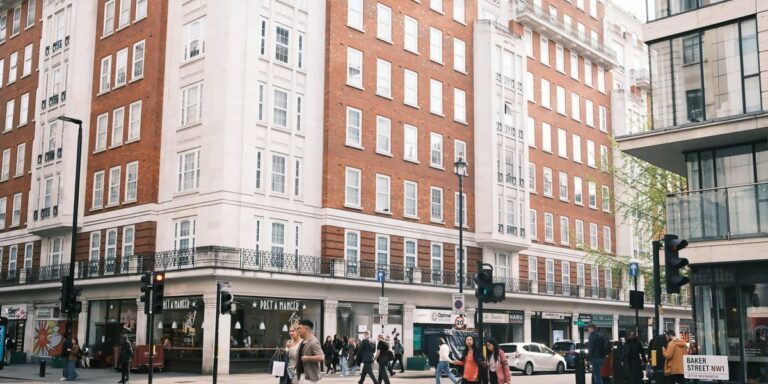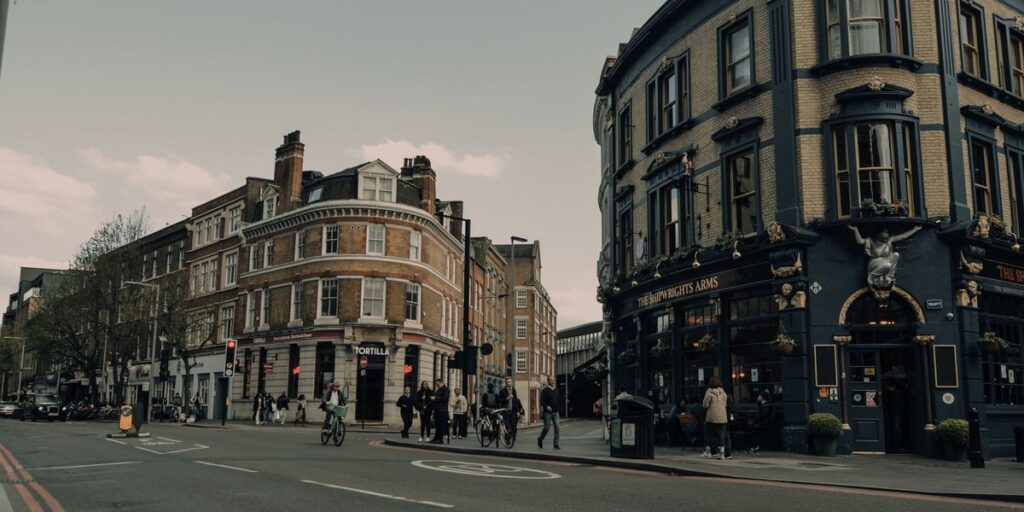
You already speak the language, and that’s the trap. In the United Kingdom, the words are familiar and the meanings are sometimes not. A waiter asks “are you alright?” and doesn’t want a medical update. A friendly stranger says your plan is “quite good” and means it’s mediocre. Someone says “cheers” when you hold a door, and nobody is toasting anything.
This guide covers the useful phrases for tourists in the United Kingdom, organized by what you’ll be doing: landing, drinking, riding trains, paying, getting lost, and needing help. Each entry has a plain meaning, a US equivalent, and a note on when to say it. Slang trivia like “bob’s your uncle” is mostly left out. You’ll hear it maybe once.
Table of Contents
- Arriving and greeting people
- Pubs and restaurants
- Trains, buses, and the Tube
- Shopping and paying
- Directions
- Emergencies and getting help
- Politeness, queues, and apologies
- Phrases that confuse visitors
- Wales, Scotland, and Northern Ireland
- Cheat sheet: useful phrases for UK tourists
Arriving and greeting people
The UK greeting system runs on understatement. Nobody expects a detailed answer to “how are you,” and nobody gives one.
| Phrase | Meaning | US equivalent | When to say it |
|---|---|---|---|
| You alright? | Hello, how’s it going | “Hey, how’s it going?” | Said in passing. Answer “Yeah, you?” and keep walking. |
| Alright? / Hiya | Hi | “Hi” / “Hey” | Greeting shop staff, neighbors, hostel roommates. |
| Cheers | Thanks (also goodbye, also a toast) | “Thanks” | When someone holds a door, hands you change, or pours a drink. |
| Ta | Thanks, casual | “Thanks” | Quick, low-effort thanks. Common in the north and Midlands. |
| Lovely | Good, fine, agreed | “Great” / “Sounds good” | Replying to nearly any arrangement. |
| Mate | Friend, or anyone | “Buddy” / “man” | Friendly. Said to strangers too. |
| Pardon? / Sorry? | Say that again | “Excuse me?” / “What?” | When you missed something. Plain “What?” sounds blunt. |
The big one is “you alright?” It’s a greeting, not a question about your wellbeing. The correct reply is a greeting back: “Alright, you?” If you start explaining your jet lag, you’ve broken the script.
Pubs and restaurants
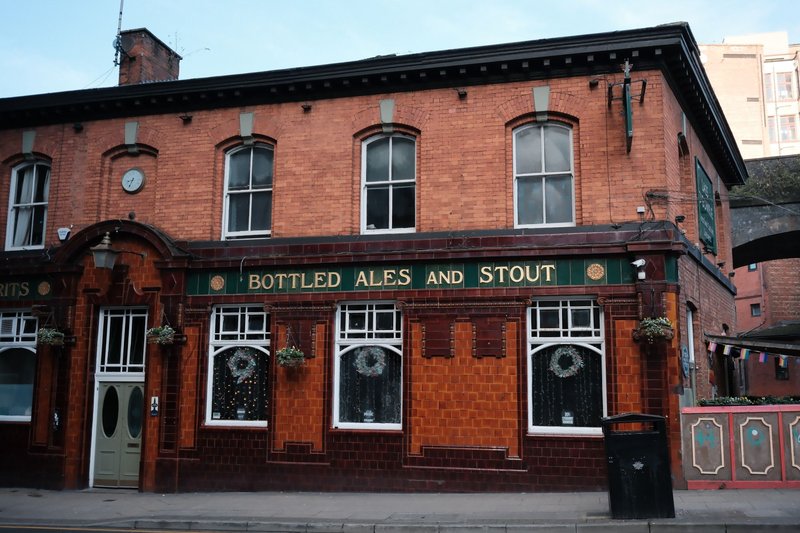
The first pub rule: there’s usually no table service. You find a seat, then go to the bar and order. You pay when you order, not at the end. Tabs exist, but they’re opened at the bar with a card.
| Phrase | Meaning | US equivalent | When to say it |
|---|---|---|---|
| What can I get you? | What would you like to order | “What can I get you?” | The bartender’s opener. Have your order ready. |
| A pint of lager, please | About 568 ml of beer | A large draft beer | A UK pint is bigger than a US pint (473 ml). |
| A half | Half a pint | A small beer | When you want to pace yourself. Nobody judges. |
| Whose round is it? | Whose turn to buy drinks | “My turn or yours?” | In a group, people take turns buying for everyone. Skipping your round is a real social mistake. |
| Last orders | Final chance to buy a drink | “Last call” | Called by staff before closing. A bell often rings. |
| Table for two, please | Request a table | Same | At restaurants. “Have you booked?” means “Do you have a reservation?” |
| Could we have the bill, please? | Request the check | “Check, please” | Servers won’t bring it unprompted. Lingering is polite. |
| Is service included? | Is a tip already on the bill | “Is gratuity included?” | Many restaurants add 10 to 12.5% service charge. If it’s on the bill, you don’t need to tip again. |
| Takeaway | Food to go | “Takeout” | Ordering to eat elsewhere. |
| Chips / crisps | Fries / potato chips | “Fries” / “chips” | “Chips” are thick fries. “Crisps” come in a bag. |
On tipping: about 10% is normal at a sit-down restaurant if there’s no service charge. In pubs, nobody tips for a pint. You can say “and one for yourself” to the bartender when ordering, which tells them to add the price of a drink for their own use. It’s a respected old gesture.
Trains, buses, and the Tube
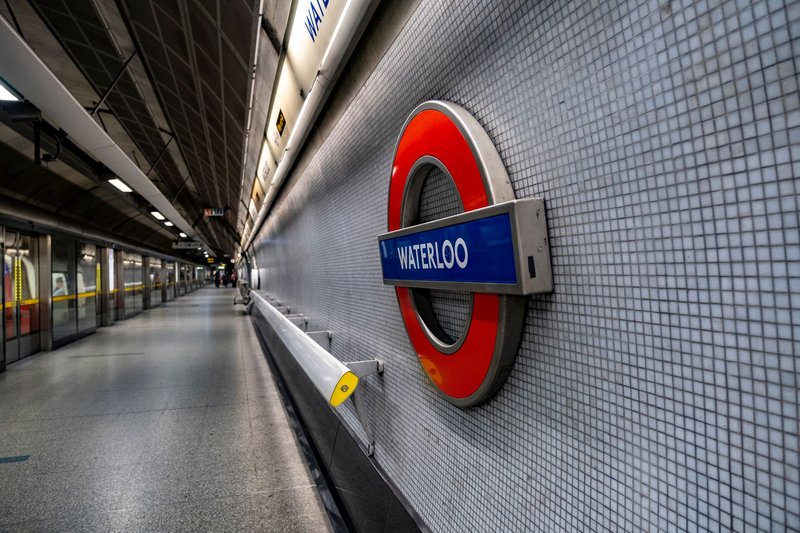
Transit vocabulary is where Americans lose the most time. The Tube is London’s underground metro, “the Underground” is the same thing, and “the Overground” is a separate surface-rail network. The names matter when you’re buying a ticket.
| Phrase | Meaning | US equivalent | When to say it |
|---|---|---|---|
| Single / return | One-way / round trip | “One-way” / “round trip” | At ticket counters and machines. “A day return to Brighton, please.” |
| Which platform? | Which track | “Which track?” | The word is always “platform.” Check the departure board. |
| Mind the gap | Watch the space between train and platform | Same | You’ll hear it constantly on the Tube. It’s a real safety announcement. |
| Stand on the right | Leave the left side of escalators free | Same | Escalators on the Tube. People walking up use the left. |
| Alight here | Get off here | “Exit here” | Printed on buses and trains. |
| Is this seat taken? | Is anyone sitting here | Same | Asking is considered polite, but most people just nod. |
| Delayed / cancelled | Late / not running | Same | The board says “Delayed” far more often than anyone wants. |
| Railcard | Discount card for rail fares | No direct equivalent | Ask about one if you’re staying a while. They can cut about a third off fares. |
| Contactless | Pay by tapping a card or phone | “Tap to pay” | On London transport and many buses. |
For visitors in London, you can tap a contactless card or phone at the gate instead of buying a paper ticket. Use the same card each time so the fares cap correctly.
Shopping and paying
| Phrase | Meaning | US equivalent | When to say it |
|---|---|---|---|
| How much is this? | Price question | Same | Anywhere. Prices already include VAT (sales tax). |
| Do you take card? | Can I pay by card | “Do you take cards?” | Small cafes and market stalls. |
| Can I have a carrier bag? | Plastic bag | “Can I get a bag?” | Shops charge for bags, usually 10p or more. |
| Do you have this in a different size? | Size inquiry | Same | Clothing shops. UK sizes differ from US sizes, so try things on. |
| Fiver / tenner | £5 note / £10 note | “A five” / “a ten” | When someone quotes a price. “Quid” means pounds, as in “twenty quid.” |
| Till | Cash register | “Register” | “Pay at the till.” |
| Queue | Line | “Line” | “Where’s the queue?” is better than “Where’s the line?” |
| You’re alright, thanks | No thanks, I’m fine | “I’m good, thanks” | Declining a bag, receipt, or offer of help. |
Prices are listed with tax included, so the tag is what you pay. Visitors can’t claim VAT refunds on most purchases now, since the UK ended its tax-free shopping scheme for tourists in 2021.
Directions
| Phrase | Meaning | US equivalent | When to say it |
|---|---|---|---|
| Excuse me, how do I get to…? | Asking directions | Same | Safe and polite opener. |
| Is it far? | Distance question | Same | Locals say “ten minutes’ walk” and mean it. |
| Straight on | Continue forward | “Straight ahead” | You’ll hear this constantly. |
| Take the second left | Turn left at the second street | “Make the second left” | Counting streets, not blocks. |
| Roundabout | Traffic circle | “Rotary” / “traffic circle” | Used as a landmark in directions. |
| Zebra crossing | Marked crosswalk with stripes | “Crosswalk” | Drivers are required to stop for you. |
| Pavement | Sidewalk | “Sidewalk” | “Pavement” in the UK means the walkway. |
| Car park | Parking lot | “Parking lot” | When you’re driving. |
| Turning / junction | Side street / intersection | “Intersection” | Directions on the road. |
Pavement matters. In American English “pavement” is the road surface. In the UK, tell someone to “get off the road and back on the pavement” and they’ll go to the sidewalk, which is what you meant.
Emergencies and getting help
Most phrase guides skip this section. It’s the one you hope not to use, so learn it first.
Call 999 for police, fire, ambulance, or coastguard. The NHS says to call 999 in a life-threatening emergency, such as chest pain, difficulty breathing, or severe bleeding. 112 also works from any phone, including without a SIM. The call is free.
If you need medical advice that isn’t life-threatening, NHS 111 is the non-emergency service, available online or by phone. For a non-urgent police matter, you call 101 in most areas.
| Phrase | Meaning | US equivalent | When to say it |
|---|---|---|---|
| I need an ambulance. | Request for paramedics | Same | When the operator asks “which service?” |
| A&E | Accident and Emergency | “ER” | You walk into A&E at a hospital. |
| Chemist / pharmacy | Drugstore | “Drugstore” / “pharmacy” | Minor ailments. Pharmacists can advise without an appointment. |
| I’ve lost my passport. | Passport lost | Same | Police station first, then your embassy. |
| I’ve been pickpocketed. | Robbery by theft | Same | Report to police. In London, tourist areas are common spots. |
| Is there a loo? | Where’s the toilet | “Restroom” | The common word. “Toilet” is fine and not rude. “Bathroom” can confuse people in public places. |
On trains and stations, the British Transport Police run a text line, 61016, for reporting incidents discreetly. Their guidance explains how to use it. The slogan is “See it. Say it. Sorted.”
Politeness, queues, and apologies
British politeness has a code, and the code is worth learning.
“Sorry” is a punctuation mark. People say it when you step on their foot. They say it when they bump into you. They say it when they need to get past. It means “excuse me” or “hello, I’m here” far more often than it means an apology. If you bump into someone, say “sorry” even when it’s their fault.
“Please” and “thank you” are constant. Dropping them makes you sound rude. Say “thank you” to the bus driver as you get off. You’ll hear everyone else do it.
Queues are close to law. Join at the back. Don’t ask “is this the line?” Ask “are you in the queue?” Cutting in gets silence, then a loud sigh, then a muttered “unbelievable.”
| Phrase | Meaning | US equivalent | When to say it |
|---|---|---|---|
| Sorry, could I just squeeze past? | Let me by | “Excuse me” | Crowded Tube, pubs, markets. |
| Thanks very much | Polite thank you | “Thank you so much” | After service. |
| No worries | It’s fine | “No problem” | When someone apologizes. |
| After you | You go first | Same | At doors and queues. |
| Mustn’t grumble | Things are okay, I won’t complain | “Can’t complain” | Reply to “how are you?” from older people. |
Phrases that confuse visitors
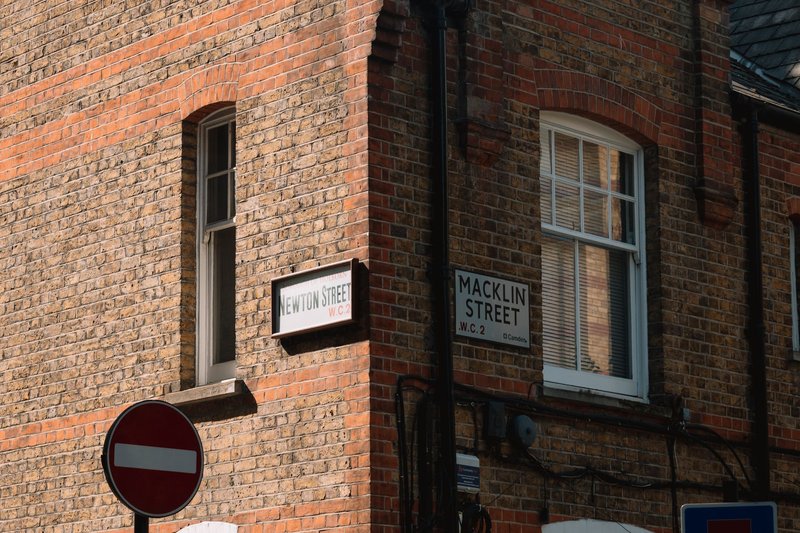
These are the false friends: words you recognize that mean something different.
| Phrase | What you might think | What it means |
|---|---|---|
| Pants | Trousers | Underwear. Trousers are “trousers.” |
| Biscuit | A fluffy bread roll with gravy | A cookie or a plain cracker. |
| Jumper | A dress | A sweater. |
| Trainers | People who coach you | Sneakers. |
| Rubber | A condom | An eraser. Don’t ask a schoolchild for a rubber in a loud voice. |
| Bum bag | Something rude | A fanny pack. Never say “fanny pack” in the UK. “Fanny” is vulgar slang there. |
| Quite good | Very good | Fairly good, so a bit less than you hoped. |
| Not bad | Mediocre | Often means good. |
| I’ll bear it in mind | I’ll consider it | Probably not. |
| With the greatest respect | They respect you | They think you’re wrong. |
| Pudding | Custard-like dessert | Any dessert, as in “What’s for pudding?” |
| Fortnight | Not a game | Two weeks. |
The rule underneath all of these: British speakers soften bad news and downplay good news. “Not bad” is praise. “A bit of a problem” can mean disaster. “Quite interesting” can mean boring. Listen for tone, not just words.
Wales, Scotland, and Northern Ireland
You can get through England in English alone. Elsewhere, you’ll see other languages on signs and menus, and attempting a word or two is appreciated.
Wales
Road signs are bilingual, with Welsh often listed first. Welsh is spoken daily in the north and west especially. Pronunciation looks scary but follows consistent rules: “w” can be a vowel, “dd” sounds like “th” in “this,” and “ll” is a breathy “l” made by putting your tongue against the roof of your mouth and blowing around the sides.
| Welsh | Say it | Meaning |
|---|---|---|
| Diolch | DEE-olkh | Thank you |
| Bore da | BOH-reh dah | Good morning |
| Nos da | nohs dah | Good night |
| Croeso | KROY-so | Welcome |
| Iechyd da | YEH-chid dah | Cheers |
| Cymru | KUM-ree | Wales |
| Araf | AH-rav | Slow (painted on roads) |
| Ar agor / Ar gau | ar AH-gor / ar guy | Open / Closed |
Scotland
Scots English has its own vocabulary, and Scottish Gaelic appears on signs, especially in the Highlands and islands. Most visitors will hear more Scots than Gaelic.
| Phrase | Say it | Meaning |
|---|---|---|
| Tapadh leat | TAH-puh LAHT | Thank you (Gaelic) |
| Slàinte mhath | SLAHN-chuh VAH | Cheers, good health (Gaelic) |
| Fàilte | FAHL-chuh | Welcome (Gaelic) |
| Aye | eye | Yes |
| Wee | wee | Small |
| Bairn | bairn | Child |
| Braw | braw | Good, fine |
| Loch | lokh | Lake or sea inlet |
| Glen | glen | Valley |
| Brae | bray | Hillside or slope |
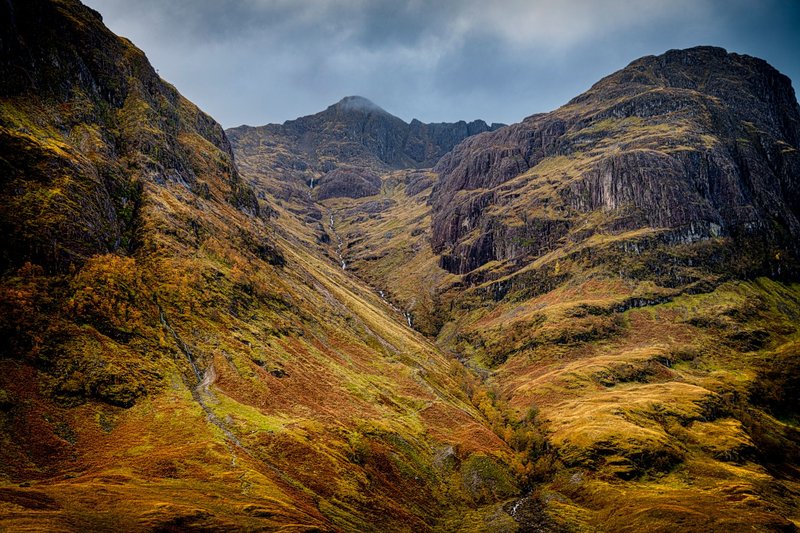
Learn the place-name vocabulary and maps start making sense. A “loch” is water, a “glen” is the valley, a “ben” is a mountain, and a “brae” is a slope. The Ben Nevis and Loch Ness names say it all.
Northern Ireland
English is the everyday language. You’ll hear Ulster Scots and Irish in places, but you won’t need either. The word that matters is “craic” (pronounced “crack”), meaning fun, news, or good company.
| Phrase | Meaning | When to say it |
|---|---|---|
| What’s the craic? | What’s up, what’s new | Greeting. Answer “Not much, yourself?” |
| Grand | Fine, good | Reply to nearly everything. |
| Wee | Small | Used about everything: “a wee drink,” “a wee while.” |
| Sláinte | Cheers (Irish) | With a drink. |
| Ulster fry | Full cooked breakfast | On menus. Order it. |
Cheat sheet: useful phrases for UK tourists
Screenshot this table. It covers the useful phrases for tourists in the United Kingdom that you’ll need in the first 48 hours.
| Situation | Say this | It means |
|---|---|---|
| Greeting | “Alright?” / “You alright?” | Hello. Reply with the same. |
| Thanks | “Cheers” / “Ta” / “Thanks very much” | Thank you |
| Pub order | “A pint of [beer], please” | Order at the bar and pay then. |
| Pub group | “My round” | I’m buying this time |
| Restaurant | “Could we have the bill, please?” | Request the check |
| Tipping | “Is service included?” | Check before adding a tip |
| Train ticket | “A single / return to [place]” | One-way / round trip |
| Tube | “Stand on the right” | Escalator rule |
| Directions | “Straight on, then second left” | Go ahead, then turn |
| Restroom | “Where’s the loo?” | Where’s the toilet |
| Emergency | “999” (or 112) | Police, fire, ambulance |
| Non-urgent health | “NHS 111” | Medical advice |
| Bumped someone | “Sorry” | Say it even when it isn’t your fault |
| Wales | “Diolch” | Thank you |
| Scotland | “Tapadh leat” | Thank you |
| Northern Ireland | “What’s the craic?” | What’s new |
Most of what you need comes down to a handful of habits: say “cheers” and “sorry” often, order at the pub bar, check whether service is included, and treat “quite good” as a mild compliment. With those, you’ll understand most of what’s said to you across the United Kingdom, and you’ll be understood back.