Ask “what’s the biggest city in Asia?” and you’ll get three confident, contradictory answers. Chongqing, if you count everyone inside the municipal border. Tokyo, if you count the whole metro sprawl. Shanghai, if you mean the densely built-up city itself. None of them is wrong. They’re just answering different questions.
That’s the trap with city population rankings, and it’s worse in Asia than anywhere else, because this is where the world’s true giants live. Of the planet’s ten most populous urban areas, nine are Asian. So before we hand you the table, let’s settle which number actually means what.
Contents
- First, which “city” are we counting?
- The 20 largest cities in Asia (metro area, 2026)
- City profiles: the top 12
- The Chongqing asterisk
- How we counted
First, which “city” are we counting?
There are three ways to measure a city, and they can differ by tens of millions of people for the same place.
City proper is the legal administrative boundary. Useful for governance, useless for comparison, because where the line gets drawn is a political decision. Chongqing’s “city” includes farmland the size of Austria.
Urban area (or built-up area) is the continuous patch of lights you’d see from a plane at night, regardless of borders. This is the fairest apples-to-apples measure, and it’s what most demographers reach for.
Metropolitan area adds the commuter belt: the suburbs and satellite towns economically tied to the core, even with a gap of fields in between. Bigger numbers, fuzzier edges.
Population is only one lens, too. Rank the same places by land area instead of headcount and the order scrambles completely, with sprawling administrative giants leaping ahead of denser, more crowded cities. For the ranking below we use the metropolitan / urban agglomeration figure, the standard the United Nations uses in its World Urbanization Prospects, because it’s the most consistent way to compare a Japanese megalopolis to an Indian one. Under that lens, Tokyo wins. Under “city proper,” Chongqing wins. We’ll cover that fight at the bottom.
The 20 largest cities in Asia (metro area, 2026)
Figures are 2026 estimates for the metropolitan/urban agglomeration, rounded. Treat them as well-sourced approximations, not census-day precision.
| Rank | City | Country | Metro population |
|---|---|---|---|
| 1 | Tokyo | Japan | ~37.0 million |
| 2 | Delhi | India | ~34.7 million |
| 3 | Shanghai | China | ~30.5 million |
| 4 | Dhaka | Bangladesh | ~24.7 million |
| 5 | Mumbai | India | ~22.1 million |
| 6 | Beijing | China | ~22.6 million |
| 7 | Osaka | Japan | ~18.9 million |
| 8 | Karachi | Pakistan | ~18.1 million |
| 9 | Chongqing | China | ~18.2 million |
| 10 | Istanbul | Turkey | ~16.2 million |
| 11 | Kolkata | India | ~15.6 million |
| 12 | Manila | Philippines | ~15.2 million |
| 13 | Guangzhou | China | ~14.9 million |
| 14 | Tianjin | China | ~14.5 million |
| 15 | Shenzhen | China | ~13.5 million |
| 16 | Jakarta | Indonesia | ~12.5 million |
| 17 | Bangalore | India | ~14.0 million |
| 18 | Seoul | South Korea | ~10.0 million (city), ~25M metro |
| 19 | Chennai | India | ~12.1 million |
| 20 | Bangkok | Thailand | ~11.2 million |
A few honest caveats baked into that table. Istanbul straddles Europe and Asia, but its core and population center sit on the European side, so some lists exclude it; we keep it because most of the city’s residents would tell you they live in Asia’s largest country-spanning metropolis. Seoul is the trickiest entry on the list: the city proper is around 9.5 million, but the Seoul Capital Area, the commuter region that includes Incheon and Gyeonggi, holds roughly half of South Korea’s entire population. By that metro measure it would sit near the top five.
City profiles: the top 12
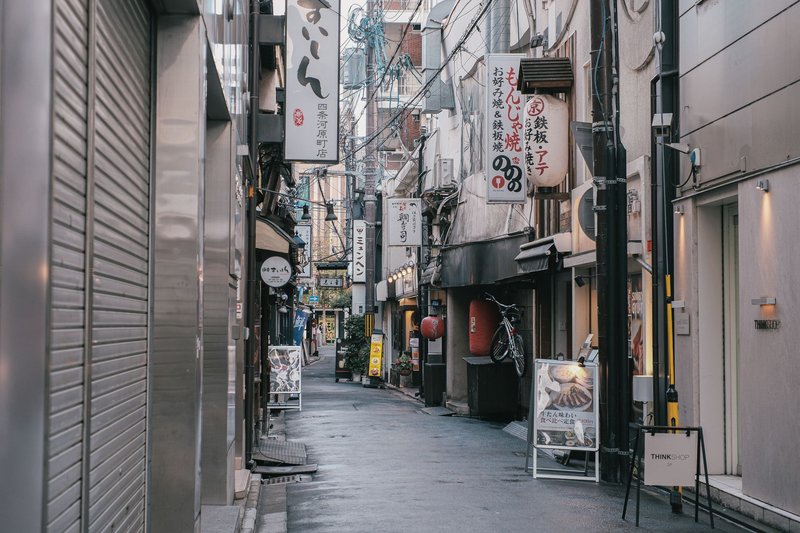
1. Tokyo, Japan
The reigning champion, and it isn’t close on the metro measure. Greater Tokyo packs roughly 37 million people into a region anchored by the world’s busiest train station, Shinjuku, which moves over 3.5 million passengers a day. What makes Tokyo strange among megacities: it’s shrinking. Japan’s birth rate means the metro peaked years ago and is now slowly drifting down, so Delhi is expected to overtake it within a decade.
2. Delhi, India
The heir apparent. Delhi’s metro region is growing fast enough that demographers expect it to become the most populous urban area on Earth before 2030. The contrast with Tokyo is total: where Tokyo ages and contracts, Delhi adds the population of a mid-size city every year. Its challenge is no longer counting people but breathing, with winter air-quality crises that regularly close schools.
3. Shanghai, China
China’s financial engine and its most populous city proper at roughly 24.8 million residents. Shanghai is the city China shows off: the Pudong skyline went from farmland to the world’s third-tallest building in three decades. Growth has cooled sharply as China’s overall population starts to decline, but the Yangtze River Delta around it remains the densest concentration of economic muscle on the continent.
4. Dhaka, Bangladesh
The densest major city in the world, full stop. Dhaka crams nearly 25 million people into a fraction of the footprint of Tokyo or Delhi, which is why it tops global density charts. It’s also one of the fastest-growing megacities anywhere, drawing hundreds of thousands of rural migrants a year into a delta that climate scientists flag as acutely vulnerable to sea-level rise.
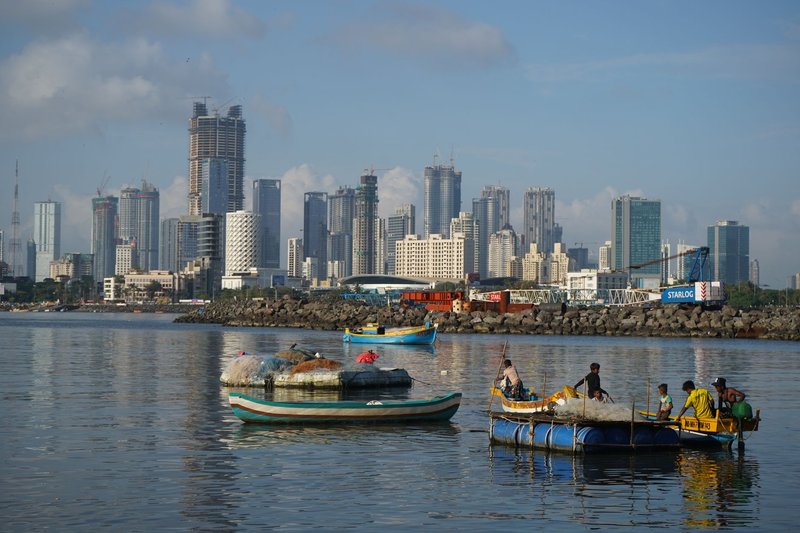
5. Mumbai, India
India’s financial capital and the engine room of Bollywood. Mumbai’s geography is its destiny: a narrow peninsula that can only grow north, which forces an extraordinary vertical density and gives the city both luxury high-rises and Dharavi, one of Asia’s largest informal settlements, often within sight of each other.
6. Beijing, China
The political and cultural capital, around 21.8 million in the city proper. Beijing deliberately tries not to grow: the government has capped its population and pushed industry and even some government functions out to the new Xiong’an district to relieve pressure. It’s a rare case of a megacity actively trying to shrink its core.
7. Osaka, Japan
Japan’s second metro, the commercial heart of the Kansai region, and famously the country’s food capital, the birthplace of takoyaki and okonomiyaki. Like Tokyo, Osaka is aging and slowly declining, a preview of the demographic future facing much of East Asia.
8. Karachi, Pakistan
Pakistan’s largest city, main port, and economic core, and one of the fastest-growing megacities in the world. Karachi’s metro has roughly doubled in a generation, an explosion that’s outpaced its infrastructure and water supply.
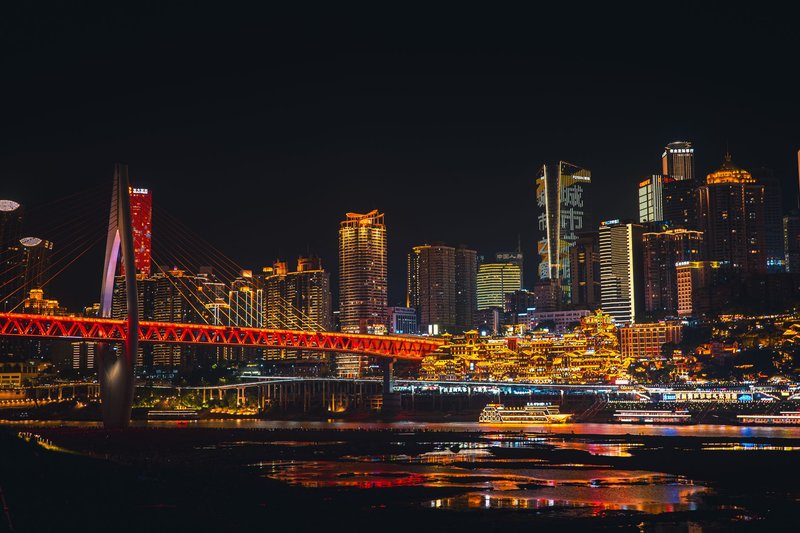
9. Chongqing, China
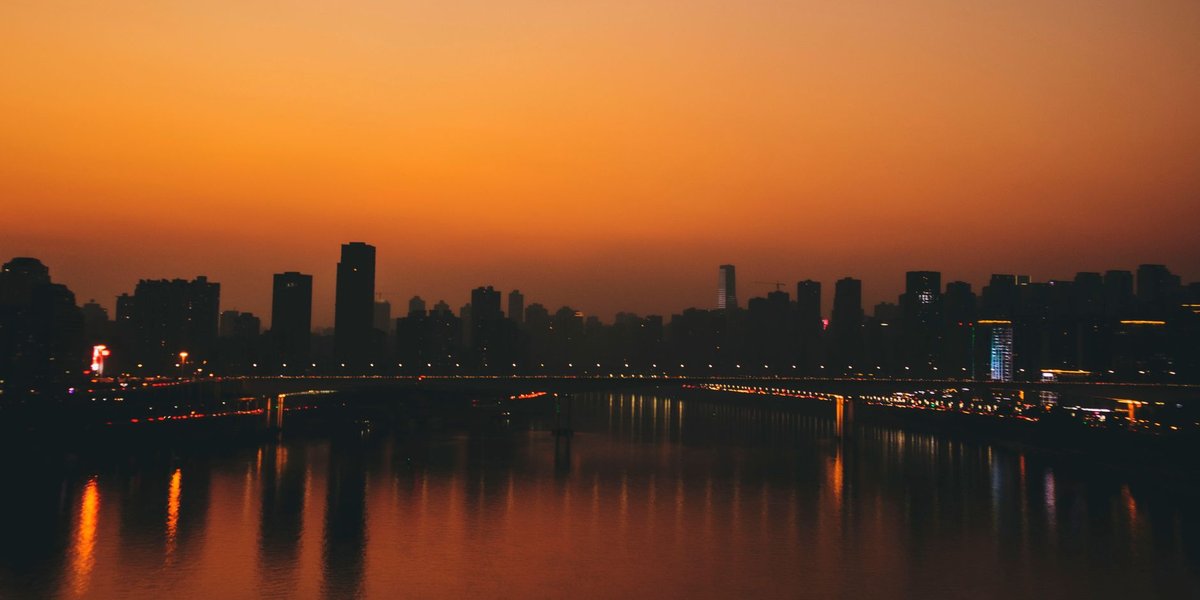
The asterisk that breaks every ranking (see below). On a fair urban-area basis, Chongqing’s actual built-up city is around 18 million, a steep, foggy metropolis stacked on hills above the Yangtze. Its official “city” number is far higher, and that’s the source of the famous confusion.
10. Istanbul, Turkey
The bridge between continents, with most of its 16-plus million residents living on the European bank of the Bosphorus but the city’s identity rooted in its role as Asia’s western gateway. The only entry on this list that you can stand in and look across the water at another continent during your commute.
11. Kolkata, India
The former British colonial capital and cultural heavyweight of eastern India. Kolkata grows slower than Delhi or Mumbai, which has eased some of the crush, but it remains one of the most densely settled places on the subcontinent.
12. Manila, Philippines
If you measure by density of the core city, Manila proper is arguably the most crowded city on Earth, with over 40,000 people per square kilometer. The wider metro spreads across 16 cities, a polycentric sprawl that makes the “where does Manila end” question genuinely hard to answer.
The Chongqing asterisk
Here’s the headline you’ve probably seen: “Chongqing is the largest city in the world, with 32 million people.” It’s technically printed on government documents, and it’s also misleading.
Chongqing isn’t really a city in that count. It’s a municipality, a province-level administrative unit roughly the size of South Carolina, that happens to be governed as one unit. That 32 million figure includes vast rural counties, farmland, mountains, and dozens of towns that nobody would call part of the same city. The actual continuous urban core is closer to 18 million, which is where we ranked it.
So the truth is layered:
- Largest city proper / municipality: Chongqing (~32 million on paper)
- Largest urban agglomeration / metro area: Tokyo (~37 million)
- Densest major city: Dhaka (people per square kilometer)
- Largest city proper that’s actually one continuous city: Shanghai (~24.8 million)
All four statements are correct. They’re just answering different questions, which is exactly why the internet can’t agree on a single number.
How we counted
The ranking above uses metropolitan / urban agglomeration estimates for 2026, drawn from UN World Urbanization Prospects projections cross-checked against WorldPopulationReview’s continent data and national statistical figures. Where a country reports an oversized administrative “city” number, like China’s Chinese municipalities, we used the built-up urban area instead to keep the comparison fair.
Two things to keep in mind. First, no two sources will hand you identical numbers; methodology and survey timing move the figures by millions. Second, the order at the very top is stable, but ranks 13 through 20 shuffle constantly depending on whether you measure the core or the metro. Use these as a clear, well-sourced map of the giants, not a tape measure.
One trend cuts across the whole list, though: the future of the human city is being written in Asia, and increasingly in South Asia. Tokyo’s reign is ending not because it’s failing but because it’s aging, while Delhi, Dhaka, and Karachi keep adding people at a pace the rest of the world hasn’t seen since China’s boom. Check back in 2035 and the top of this table will likely have a new name on it.