São Tomé and Príncipe shares no land borders with any country, because it’s an island nation sitting alone in the Gulf of Guinea. That’s the whole answer to the question, and it surprises almost everyone who asks it.
The assumption makes sense. Most countries touch at least one neighbor, so the brain fills in the blank. But São Tomé and Príncipe is two volcanic islands floating off the western coast of Central Africa, with open ocean on every side. No fences, no border crossings, no land you can walk across into another nation.
What you probably actually want to know is which countries are closest — the ones you’d reach first if you sailed in a straight line. So let’s settle both questions: the technical one (land borders: none) and the practical one (nearest neighbors, ranked).
Table of Contents
- The short answer
- Nearest countries, ranked by distance
- Why people think it has land borders
- The maritime borders nobody mentions
- A quick geography primer
- Common questions
The short answer
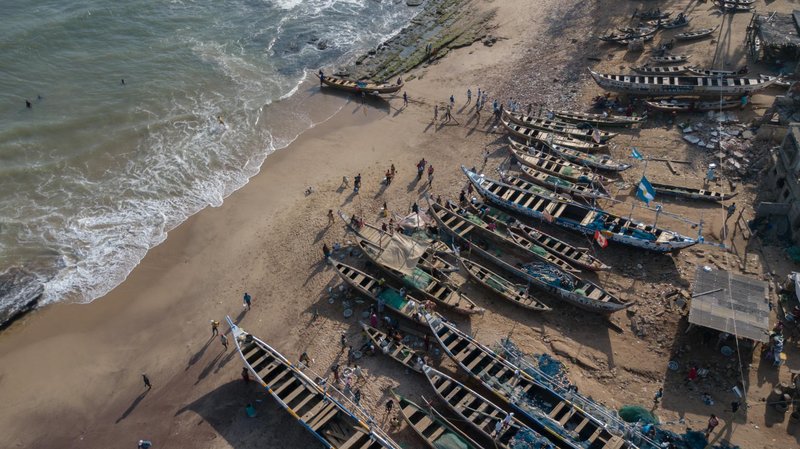
Zero land borders. São Tomé and Príncipe is an archipelago — two main islands plus a scattering of islets — in the Gulf of Guinea, roughly straddling the equator. The nearest landmass is the African mainland, and even that is hundreds of kilometers of open water away.
For comparison, this puts it in the same category as countries like Iceland, Madagascar, or Sri Lanka: island states whose only “neighbors” are the nearest coastlines across the sea, not anything they physically touch.
So if a quiz asks “what countries border São Tomé and Príncipe,” the correct answer is none. If a traveler asks “what’s near São Tomé and Príncipe,” that’s a different and more useful question.
Nearest countries, ranked by distance
Here are the closest countries, measured roughly from São Tomé island outward. Distances are approximate straight-line (great-circle) figures and vary a little depending on which point you measure from.
| Country | Approx. distance | Direction | Notes |
|---|---|---|---|
| Equatorial Guinea | ~270 mi (435 km) | East-northeast | Closest country; its islands of Annobón and Bioko sit on the same volcanic line |
| Gabon | ~350 mi (565 km) | East | Closest point on the African mainland for many measurements |
| Cameroon | ~370 mi (595 km) | Northeast | Home to Mount Cameroon, the high end of the same volcanic chain |
| Nigeria | ~430 mi (690 km) | North-northeast | Shares a Joint Development Zone with São Tomé (more on that below) |
Equatorial Guinea takes the top spot, and it’s worth pausing on why. Equatorial Guinea isn’t just close — parts of it are geological cousins. Its island of Annobón lies relatively near São Tomé, and both islands sit along the Cameroon volcanic line, the same crack in the Earth that built the whole archipelago.
Gabon is the answer most people give for “nearest mainland,” and depending on the measurement point it’s often the closest continental coast. If you’ve seen the frequently repeated figure of “about 250 to 300 kilometers off the coast of Gabon,” that’s where it comes from — measured from the southern islets rather than São Tomé town. Gabon is also a surprisingly well-connected passport for the region, with dozens of visa-free destinations open to Gabonese travelers.
Why people think it has land borders
A few things conspire to create the confusion.
It’s tiny and easy to overlook. São Tomé and Príncipe is the smallest country in Africa by population and second-smallest on the continent by area. Many people couldn’t place it on a map, so they default to the assumption that any country has neighbors.
The phrasing of the question. Searching “countries that border São Tomé and Príncipe” presupposes the answer exists. The question itself plants the idea that there’s a list to find.
Bad data online. Some reference sites genuinely make this worse. At least one popular flags-and-facts site lists “border countries” for São Tomé and Príncipe and then, a few lines later, admits it has none — contradicting itself in the same article. When sources can’t keep their own story straight, readers come away more confused, not less.
The “nearby countries” tables. Plenty of geography databases publish tables of nearest countries with distances and directions. Skim one quickly and “nearby” reads as “bordering.” They’re not the same thing, but the layout encourages the mistake.
The fix is simple: borders require shared land (or, in some legal contexts, a shared boundary line). Proximity across open ocean is not a border.
The maritime borders nobody mentions
Here’s the nuance that separates a real answer from a lazy one. São Tomé and Príncipe has no land borders, but it does have agreed maritime boundaries — lines drawn through the ocean that divide who controls which stretch of water and seabed.
Under the UN Convention on the Law of the Sea, every coastal state gets an Exclusive Economic Zone (EEZ) extending up to 200 nautical miles from shore. Because São Tomé and Príncipe sits in a crowded gulf, its EEZ bumps up against those of its neighbors, and those overlaps have to be negotiated.
São Tomé and Príncipe has settled maritime boundaries or arrangements with:
- Nigeria — including a formal Joint Development Zone
- Gabon
- Equatorial Guinea
The headline item is the Nigeria–São Tomé and Príncipe Joint Development Zone (JDZ). Rather than fight over a contested patch of seabed in the Gulf of Guinea, the two countries agreed in 2001 to jointly manage it, splitting revenue 60/40 in Nigeria’s favor. It’s a textbook example of two states turning an overlapping claim into a shared-revenue partnership instead of a dispute. The Gulf of Guinea is a significant offshore oil region, so the stakes here are real money, not just lines on a chart.
This is the part most of the thin, copy-paste articles skip entirely. If you’re researching the country for a report, an exam, or genuine curiosity, the maritime story is the interesting half — and it’s where São Tomé and Príncipe actually does “share borders,” just not the kind you can stand on.
A quick geography primer
A little context makes the “no borders” fact click into place.
São Tomé and Príncipe is made of two main inhabited islands — São Tomé (the larger, southern one) and Príncipe (smaller, to the northeast) — plus several uninhabited islets. The country straddles the equator; an islet called Ilhéu das Rolas sits almost exactly on the 0° line, and you can stand with one foot in each hemisphere there.
Both islands are volcanic, formed along the Cameroon volcanic line, a chain of volcanoes and high ground that runs from inland Cameroon out into the Atlantic. Mount Cameroon anchors the continental end; Bioko and Annobón (both Equatorial Guinea) sit along it; and São Tomé and Príncipe form the offshore tail. That shared geological origin is why the islands feel “related” to Equatorial Guinea even though water separates them. Like every other coastline on this side of the continent, the archipelago counts among the countries that border the Atlantic Ocean, even if its only neighbors are the waves.
The terrain is dramatic — steep, jungle-clad volcanic peaks dropping toward the coast — and the climate is tropical and humid year-round. Portuguese is the official language, a legacy of colonial rule until independence in 1975.
Common questions
Does São Tomé and Príncipe have any land borders? No. It’s an island nation in the Gulf of Guinea with open ocean on all sides. Land borders: zero.
What is the nearest country to São Tomé and Príncipe? Equatorial Guinea is generally the closest country, at roughly 270 miles to the east-northeast. Gabon is often the closest point on the African mainland.
How far is São Tomé from Gabon? Roughly 350 miles (about 565 km) from São Tomé island, though figures of 250–300 km appear when measured from the southern islets to the nearest Gabonese coast.
So does it share any borders at all? Only maritime ones. It has agreed sea boundaries with Nigeria, Gabon, and Equatorial Guinea, including the Joint Development Zone with Nigeria. None of those are land borders.
Where exactly is it? In the Gulf of Guinea, off the west coast of Central Africa, straddling the equator a few hundred kilometers from Gabon and Equatorial Guinea.
The clean takeaway: São Tomé and Príncipe borders no country by land, sits closest to Equatorial Guinea and Gabon, and quietly shares oil-rich waters with its neighbors through negotiated maritime boundaries. That last part is the answer the quiz never asks for — and the one actually worth knowing.