Most lists of the best bays in New Zealand stop at the Bay of Islands and call it a day. Fair enough — it’s the headline act. But New Zealand has roughly 15,000 kilometres of coastline folded into more bays, coves, and sounds than any single trip could cover, and a lot of the best ones sit hours away from the famous name everybody Googles first.
This is a sorted guide. The bays are grouped by region so you can match them to your route, and there’s a comparison table near the top if you just want to know which bay is best for swimming, fishing, scenery, or hauling kids around. Lead with the Bay of Islands if you must. Then keep reading, because the South Island is hiding the ones photographers actually fight over.
Table of Contents
- How to choose a bay
- Quick comparison: which bay for what
- Northland
- Coromandel
- Bay of Plenty
- Marlborough Sounds
- Abel Tasman & Golden Bay
- The Catlins
- When to go
How to choose a bay
The trap with New Zealand bays is treating them as interchangeable scenery. They’re not. A subtropical Northland bay in February is a different planet from a Catlins bay where sea lions outnumber people and the water never really warms up.
Three questions sort it fast. First, which island and roughly which leg of your route? Driving the length of both islands eats days, so pick bays that cluster near where you already are. Second, what do you actually want to do — float in warm water, land a snapper, shoot a sunrise, or wear out three children before lunch? Third, when are you travelling? The north rewards summer; the deep south is moody and gorgeous year-round but cold.
Get those three right and the list below mostly picks itself.
Quick comparison: which bay for what
| Bay | Region | Best for | Water temp feel |
|---|---|---|---|
| Bay of Islands | Northland | Boat trips, dolphins | Warm (summer) |
| Matauri Bay | Northland | Snorkelling, scenery | Warm |
| Cathedral Cove | Coromandel | Scenery, photos | Mild–warm |
| Hahei Beach | Coromandel | Families, swimming | Mild–warm |
| Mount Maunganui | Bay of Plenty | Surf, walking | Mild |
| Ohope Beach | Bay of Plenty | Long swims, families | Mild |
| Kaiteriteri | Abel Tasman | Families, golden sand | Mild |
| Wainui Bay | Golden Bay | Quiet, kayaking | Mild |
| Totaranui | Abel Tasman | Camping, swimming | Mild |
| Endeavour Inlet | Marlborough | Sailing, walking | Cool |
| Ship Cove | Marlborough | History, hiking | Cool |
| Curio Bay | Catlins | Wildlife, fossils | Cold |
| Porpoise Bay | Catlins | Rare dolphins | Cold |
Northland
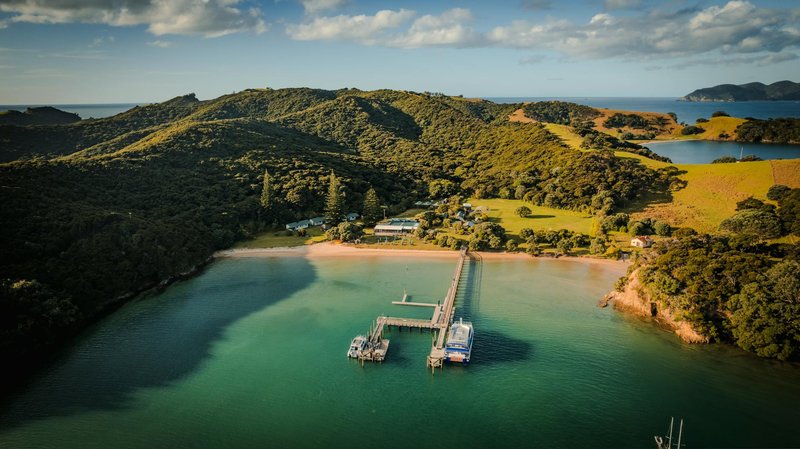
Northland is the warm end of the country, and its bays show it — clear water, pohutukawa trees flowering red over the sand in December, and a subtropical climate that makes February swimming genuinely pleasant.
Bay of Islands. The name is literal: 144 islands scattered across a sheltered patch of ocean near Paihia and Russell. You don’t really “visit” the Bay of Islands from one beach; you get on a boat. Day cruises run out to the Hole in the Rock at Cape Brett, and the resident bottlenose dolphins show up often enough that operators build trips around them. This is also the cradle of New Zealand’s modern history — the Treaty of Waitangi was signed here in 1840, and the Waitangi Treaty Grounds sit right on the bay. Base yourself in Paihia, take the short ferry to Russell for the better dinner.
Matauri Bay. Forty minutes north and a world quieter. Matauri Bay is a curved white beach looking out at the Cavalli Islands, and just offshore lies the wreck of the Rainbow Warrior — the Greenpeace ship bombed in 1985, now an artificial reef thick with fish. It’s one of the better snorkel and dive spots in the north, and the climb to the memorial above the beach gives you the postcard shot everyone else missed. If a coastline this varied is exactly why you’re booking the trip, it’s worth browsing the wider list of reasons to visit New Zealand before you lock in your route.
Coromandel
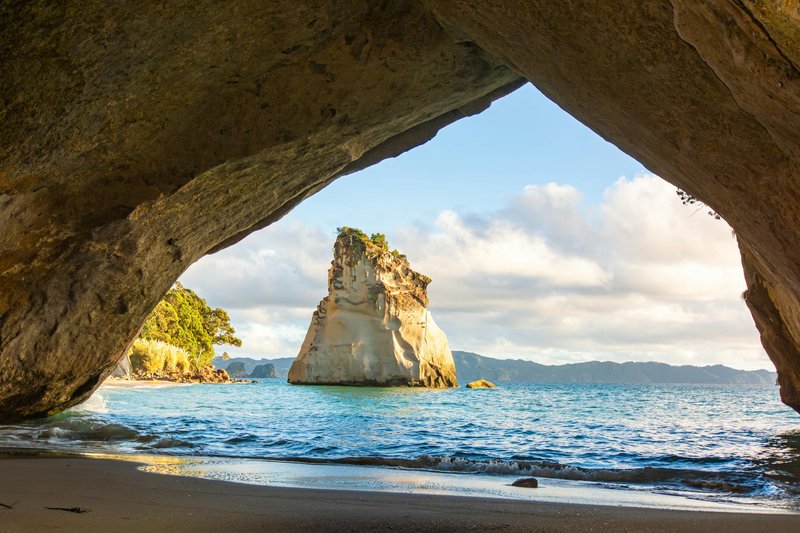
The Coromandel Peninsula juts off the upper North Island like a thumb, close enough to Auckland for a long weekend and dense with bays per kilometre of coast.
Cathedral Cove. The arched rock cavern you’ve seen on every New Zealand tourism poster, and yes, in the opening of a Narnia film. You reach it on foot — a 45-minute walk from the nearest car park, or by kayak and water taxi from Hahei. The walk thins the crowd just enough. Go early; by mid-morning in summer the cove fills up. Note that storm damage has closed and reopened the track in recent years, so check the Department of Conservation track status before you commit.
Hahei Beach. The family-friendly anchor for this stretch. Hahei is a gentle pink-tinged crescent — the colour comes from crushed shell — with calm water, a campground, and a coffee cart that runs in season. It’s also the launch point for Cathedral Cove kayak tours and a short drive from Hot Water Beach, where you dig your own thermal spa in the sand at low tide.
Bay of Plenty
Captain Cook named this stretch the Bay of Plenty because local Māori resupplied his ship here, and the name stuck across a whole sunny region. The bays are long, open, and built for swimming.
Mount Maunganui. “The Mount” is a beach town wrapped around a 232-metre extinct volcanic cone. The ocean side is one of New Zealand’s best surf beaches; the harbour side is flat and calm. The move is the walk — a loop track circles the base of the Mount in about 45 minutes, and the steep climb to the summit pays out a 360-degree view over the whole bay and Tauranga harbour.
Ohope Beach. Eleven kilometres of uninterrupted sand near Whakatāne, regularly voted New Zealand’s most-loved beach by locals. It’s the kind of place where you can actually walk for an hour and lose the crowd. Gentle surf, a good holiday-park scene, and Ōhiwa Harbour at the far end for kayaking and cockle gathering.
Marlborough Sounds
Cross to the South Island and the geography changes shape. The Marlborough Sounds are drowned river valleys — a maze of deep, sheltered inlets where forested ridges drop straight into still green water. There are more “bays” here than have names. None of them rank among the deepest bays in the world, but the way these flooded valleys plunge from ridge to waterline gives them their own kind of drama.
Endeavour Inlet. A long, calm arm of Queen Charlotte Sound, threaded by the Queen Charlotte Track. You can walk in, kayak in, or arrive by water taxi from Picton. The water is too cool for casual swimming most of the year, but for sailing, paddling, and waking up to absolute quiet, it’s hard to beat. Lodges dot the shoreline, many reachable only by boat.
Ship Cove (Meretoto). The northern trailhead of the Queen Charlotte Track and the most historically loaded spot in the Sounds — Captain Cook anchored here five times in the 1770s, longer than anywhere else in New Zealand. There’s a monument, dense native bush loud with birdsong, and usually a few weka strutting around your feet hoping you’ll drop a sandwich.
Abel Tasman & Golden Bay
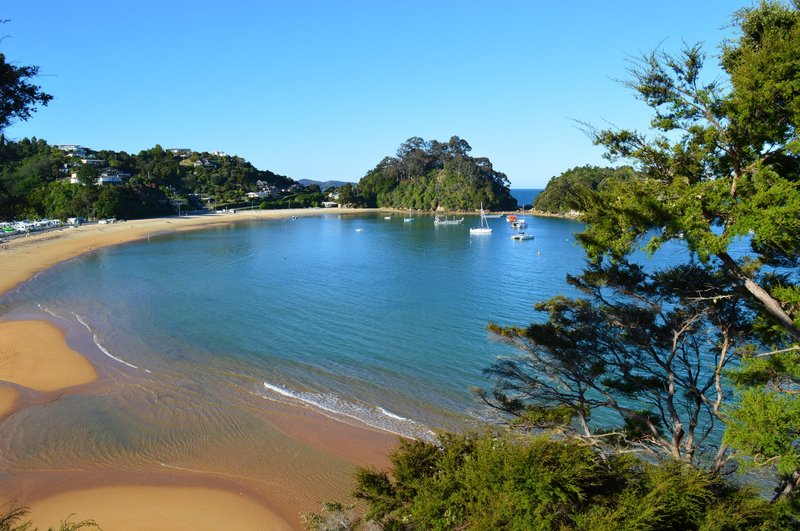
The top corner of the South Island holds the bays photographers rank highest: golden-orange sand, water that turns turquoise on a clear day, and the granite headlands of Abel Tasman National Park.
Kaiteriteri. The gateway beach. Kaiteriteri’s sand really is gold, the water is sheltered, and it’s the main departure point for Abel Tasman boat and kayak trips. It gets busy in January — this is peak Kiwi holiday territory — but the beach is broad enough to absorb it, and the side coves a short walk away stay quiet.
Totaranui. Deep inside the national park, reachable by a long gravel road or by boat along the coast track. Totaranui is a wide golden beach backed by one of the country’s most sought-after campgrounds, where you book months ahead for summer. Clear water, fur seals on the nearby rocks, and the kind of stillness that makes the drive worth it.
Wainui Bay. Over the hill in Golden Bay proper, Wainui sits at the quieter northern edge of Abel Tasman. Estuary at low tide, calm water at high, and a launch point for kayakers heading into the park’s less-trafficked northern beaches. Golden Bay generally rewards people willing to drive over Tākaka Hill’s switchbacks — fewer crowds, a slower pace, and the otherworldly clarity of Te Waikoropupū Springs nearby, among the clearest freshwater ever measured.
The Catlins
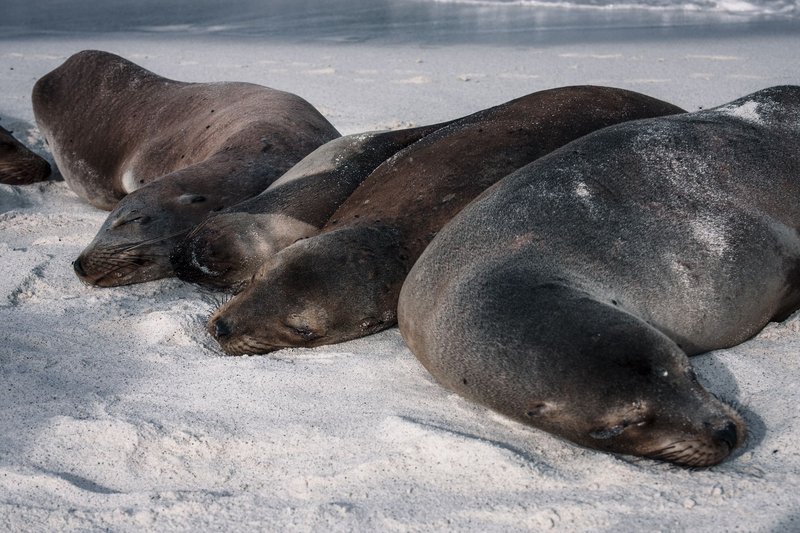
Down in the far southeast, the Catlins coast is where the crowds finally vanish and the wildlife takes over. The water is cold and the weather flips fast, but these bays deliver something the north can’t.
Curio Bay. At low tide you can walk across a 180-million-year-old petrified forest — fossilised tree stumps from the Jurassic, exposed in the rock platform. The same stretch is one of the few places to see yellow-eyed penguins (hoiho), among the rarest penguins on earth, waddling ashore at dusk. Keep your distance; this is a critical breeding site.
Porpoise Bay. Right next door, and home to a resident pod of Hector’s dolphins — the world’s smallest and rarest marine dolphin, found only in New Zealand waters, listed as endangered by the IUCN. In summer they come into the surf zone close to shore. Sea lions haul out on the sand, full stop on the beach like they own it, which they more or less do. Give them room and you’ve got the best wildlife bay in the country — the kind of encounter that lands New Zealand on every list of what the country is known for.
When to go
For warm-water swimming, aim for December through March, and tilt north — Northland and the Coromandel hit their stride in summer. For the South Island bays, the same window gives you the best weather, but pack layers regardless; the Catlins can serve all four seasons in an afternoon.
Shoulder seasons (November and April) are the quiet sweet spot. The Bay of Islands boat trips still run, Abel Tasman’s golden beaches lose their January queues, and accommodation drops in price. The wildlife bays of the Catlins don’t really have a bad season — penguins and dolphins are there year-round, just dressed for colder weather than you’ll want.
Pick the two or three bays that fit your route and your reason for going, and skip the urge to see them all. New Zealand’s best bays reward depth over a checklist — one slow morning at Totaranui beats three rushed photo stops, every time.