Table of Contents
- Two Borders, Not One
- The Delaware River Towns (Northern NJ)
- Lambertville
- Frenchtown
- Stockton
- The Actual NJ–Delaware State Line (Southwestern NJ)
- Pennsville
- Salem
- Carneys Point
- How to Cross Between States
- Getting There from Major Cities
Most searches for “New Jersey–Delaware border towns” pull up the same five river towns on the Delaware River — and those are actually on the New Jersey–Pennsylvania border, not New Jersey–Delaware. Both are worth visiting. They’re just different trips, in different corners of the state, with almost nothing in common.
This guide covers both: the charming river towns in the northwest where NJ meets PA across the water, and the quieter, largely overlooked towns in the southwest where NJ and Delaware actually share a state line.
Two Borders, Not One {#two-borders}
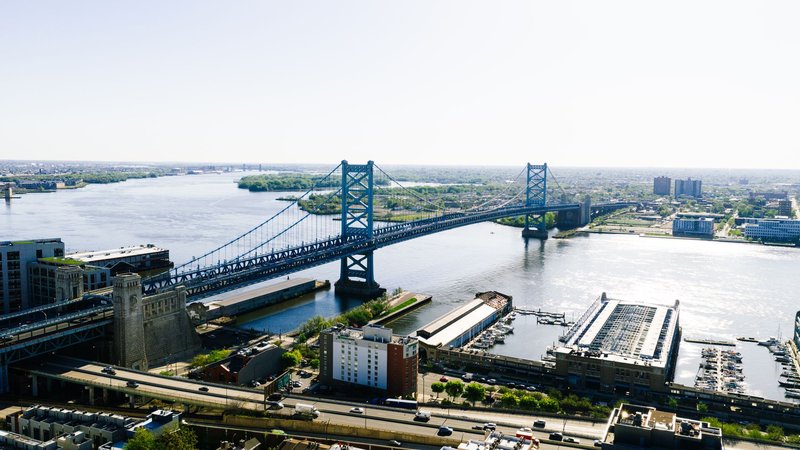
Here’s the geographic reality that confuses most people: New Jersey borders Delaware along a short land-and-river boundary in the state’s southwestern tip, anchored by the Delaware Memorial Bridge near Pennsville. But New Jersey also runs along the Delaware River for its entire western edge — and that stretch borders Pennsylvania, not Delaware.
The towns most people mean when they search this topic (Lambertville, Frenchtown, New Hope on the PA side) are along that river corridor. They’re fantastic, and they get covered constantly. The actual NJ–Delaware border? Almost nobody writes about it. Both sections are below.
The Delaware River Towns (Northern NJ) {#northern-towns}
These towns sit on the New Jersey bank of the Delaware River, each connected to a Pennsylvania town by a bridge or ferry crossing. They’re within driving distance of Philadelphia and New York, which is why they get crowded on fall weekends.
Lambertville {#lambertville}
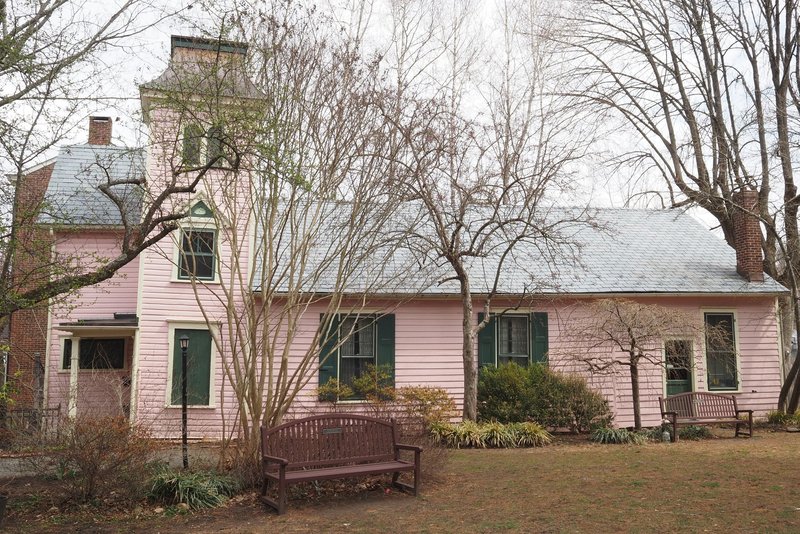
Lambertville is the flagship river town — walkable, dense with antique shops and galleries, and genuinely pretty in a way that doesn’t feel manufactured. The town grew as a canal and railroad hub in the 1800s, and the restored 19th-century commercial district still runs along Bridge Street down to the river.
The big draw is the antiques market. The Golden Nugget Antique Flea Market operates year-round on weekends and is one of the largest outdoor antique markets on the East Coast — over 200 dealers, everything from Victorian furniture to mid-century ceramics. The indoor Golden Nugget Market runs alongside it.
Walk across the free pedestrian bridge and you’re in New Hope, Pennsylvania. That town runs more commercial and tourist-facing than Lambertville — galleries, boutiques, a live music scene. Cross back when it gets loud.
Eating: Lambertville Station occupies a converted 1867 train station right on the river and does solid mid-range American. For something more interesting, Stella Luna Ristorante is a tight, well-regarded Italian spot a block off the main drag.
Frenchtown {#frenchtown}
Frenchtown is about 12 miles north of Lambertville and has managed to stay quieter despite being equally photogenic. The main street runs perpendicular to the river and has a handful of independent shops, a used bookstore, a couple of good restaurants, and a weekend farmer’s market.
The Bridge Street Bridge connects to Uhlerstown, Pennsylvania — a tiny hamlet that sees almost no tourist traffic. The Pennsylvania side here is farmland and canal towpath. Cross it and walk the towpath south for a few miles; you’ll mostly have it to yourself.
Frenchtown is a better bet than Lambertville on a peak fall foliage weekend if crowds put you off. The dynamic is the same — old buildings, river views, antique dealers — but the scale is smaller and the foot traffic is noticeably lighter.
Stockton {#stockton}
Stockton barely qualifies as a town by population (under 600 residents), but it earns a mention for the Stockton Inn, a Federal-style building from 1710 that served as inspiration for the Rodgers and Hart song “There’s a Small Hotel.” The inn closed, reopened, and has had a complicated ownership history — worth checking current status before making the trip specifically for it.
The more reliable reason to visit is the Bulls Island Recreation Area just north of town, a small state park with a pedestrian footbridge to Pennsylvania. The footbridge is free, the walk is scenic, and the surrounding area has trails through river floodplain forest that see almost no crowds even in high season.
The Actual NJ–Delaware State Line (Southwestern NJ) {#southwestern-nj}
The southwestern corner of New Jersey is Salem County — flat, agricultural, historically significant, and almost entirely absent from travel coverage. The actual NJ–Delaware border runs from the Delaware Memorial Bridge area near Pennsville up through the Delaware River. If your search was specifically about where New Jersey meets Delaware, this is it.
Pennsville {#pennsville}
Pennsville sits directly at the foot of the Delaware Memorial Bridge and is the closest New Jersey town to the Delaware state line. The twin-span bridge opened in 1951 (north span) and 1968 (south span), and is one of the longest suspension bridges in the world spanning a navigable river.
The town itself is small and working-class. There’s no polished downtown or antique district. What it does have is direct access to Fort Mott State Park, a Civil War-era fortification on the Delaware River that was part of a three-fort defense system alongside Fort Delaware (on an island in the river) and Fort DuPont in Delaware. The ferry from Fort Mott to Pea Patch Island — where Fort Delaware sits — runs seasonally, and the combination of the two forts makes for a legitimate half-day history itinerary that almost no one does.
Salem {#salem}
Salem is about 12 miles northeast of Pennsville and is one of the oldest European settlements in New Jersey, predating Philadelphia. The Quaker community established here in 1675 left behind the Salem Oak — a white oak in the Friends Burial Ground reputed to be over 500 years old. The tree is accessible, and the burial ground holds the graves of some of the earliest English settlers in the colony.
Salem has a significant number of 18th-century buildings in various states of repair. The Salem County Courthouse, built in 1817, is still in use. Drive around the residential streets and you’ll find Federal and Georgian architecture that in a different city would anchor a heritage tourism industry. Here it’s just the neighborhood.
The Alexander Grant House (circa 1721) operates as a local history museum. Salem is not a destination you build a weekend around, but if you’re driving through the county, it rewards an hour of slow walking.
Carneys Point {#carneys-point}
Carneys Point Township is adjacent to Pennsville and sits near the southern terminus of the New Jersey Turnpike. It’s primarily a residential community, but it’s also the location of a massive DuPont gunpowder manufacturing site that operated from the Civil War era through World War II. The site is largely gone, but it’s part of why this corner of Salem County has a different character than the agrarian towns further north — industrial heritage runs through it.
For visitors, Carneys Point is mainly a waypoint near the Delaware Memorial Bridge. There’s little here in the way of tourism infrastructure, but that’s part of the point: this is the actual NJ–Delaware border area, and it looks nothing like the romanticized river-town version.
How to Cross Between States {#crossings}
Northern (NJ to PA) crossings:
- Lambertville–New Hope: free pedestrian bridge plus a separate auto bridge (Bridge Street)
- Frenchtown–Uhlerstown: Route 12 auto bridge
- Stockton–Center Bridge: Route 29 bridge
- Bulls Island–Lumberville: free pedestrian footbridge
Southwestern (NJ to DE) crossings:
- Delaware Memorial Bridge: I-295/US-40, toll southbound ($5 cash, $4 E-ZPass as of 2025). The only road crossing between New Jersey and Delaware.
- The Cape May–Lewes Ferry crosses the Delaware Bay further south, connecting Cape May, NJ to Lewes, DE — not technically a border crossing but it’s the alternative if you want to avoid the bridge tolls on a longer road trip.
Getting There from Major Cities {#getting-there}
Lambertville / Frenchtown from New York City: About 75–80 miles via I-78 West or Route 202 South. Plan 90 minutes without traffic; two hours on a Friday afternoon.
Lambertville / Frenchtown from Philadelphia: Under 40 miles via I-95 North or Route 202 North. An easy 45–60 minute drive.
Pennsville / Salem from Philadelphia: 35–40 miles via I-295 South to the Delaware Memorial Bridge or Route 322. About 45 minutes. This is the easiest drive in this entire guide.
Pennsville / Salem from New York City: 120 miles via the New Jersey Turnpike to Exit 1, then local roads. About two hours. Not a natural day trip from the city — better paired with a Cape May visit or a longer South Jersey swing.
The northern river towns and the southwestern border area are about 90 miles apart from each other. You’re not doing both in a single day unless you’re really committed to covering ground. Pick one corner or plan an overnight.
The river towns are well worth the trip — Lambertville especially holds up even with the weekend crowds. But if you’ve already done that circuit and want to see what the actual New Jersey–Delaware border looks like, Pennsville and Salem County reward a different kind of traveler: one who’s interested in history that hasn’t been polished into a tourist product yet.