Table of Contents
- A Country of 193 Peoples, One Dominant Language
- The Language Families at a Glance
- Major Indigenous Languages: Who Still Speaks What
- How Government Policy Killed Languages
- Languages on the Edge: The Most Endangered
- Revitalization: What’s Actually Happening
- What Travelers and Researchers Should Know
A Country of 193 Peoples, One Dominant Language {#a-country-of-193-peoples}
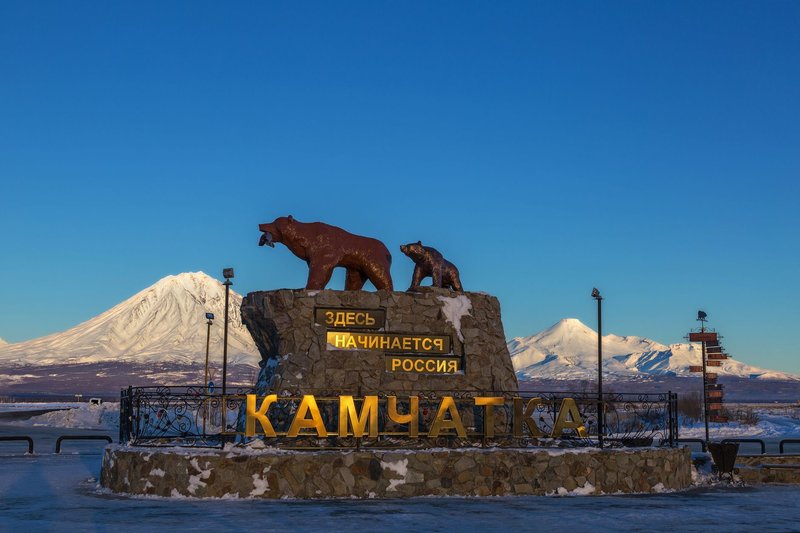
Russia’s 2010 census recorded 193 distinct ethnic groups within its borders. Each of those groups has a linguistic identity — and in many cases, that identity is disappearing within living memory.
Russian has roughly 137 million native speakers inside Russia. The next most widely spoken language, Tatar, has around 4 million. After that, the numbers drop fast. Many indigenous languages of Siberia and the Russian Far North have speaker populations in the hundreds — or fewer. A handful are down to a single fluent elder.
This isn’t coincidence. It’s the result of decades of deliberate policy, mass displacement, and the structural pressure that comes with living inside a state that has one official language and isn’t particularly interested in cultivating others.
Russia is officially multilingual — the constitution recognizes the right of ethnic groups to use their native languages. In practice, the gap between policy text and lived reality is enormous, and the languages are paying the price.
The Language Families at a Glance {#language-families}
Russia’s indigenous languages don’t form a single family. They spread across a dozen distinct lineages, some of which have no relationship to each other at all.
Turkic languages are the most widely spoken group after Russian. They include Tatar, Bashkir, Chuvash, and Yakut (Sakha) — all spoken by communities ranging from tens of thousands to several million. These languages have the best survival odds.
Mongolic and Tungusic languages span Siberia and the Far East. Buryat and Kalmyk are the most prominent Mongolic languages. Tungusic languages — Evenki, Even, Nanai — are dramatically more fragile, with speaker counts that have collapsed over the 20th century.
Uralic languages include the Finno-Ugric family (Komi, Mari, Udmurt, Mordvin/Erzya, Moksha, Karelian) and the Samoyedic group (Nenets, Selkup, Nganasan). Nenets has around 44,000 speakers and is considered relatively stable. Nganasan, spoken on the Taymyr Peninsula, has fewer than 100. The same Uralic family extends westward into Scandinavia, where indigenous languages in Sweden such as Northern Sámi and Meänkieli face their own survival pressures — with very different levels of state support.
Chukotko-Kamchatkan languages are spoken at the northeastern edge of Siberia. Chukchi has about 5,000 speakers. Yupik, spoken in Russia’s Chukotka region, is also spoken in Alaska — which has actually helped with documentation and revitalization resources.
Caucasian languages form their own dense cluster in the North Caucasus, including Chechen, Avar, and dozens of smaller languages. The Caucasus is the most linguistically dense region per square kilometer anywhere on the continent.
Language isolates — languages with no known relatives — also exist. Ket, spoken along the Yenisei River, is one of the most studied isolates in the world; it’s thought to be distantly related to Yeniseian languages that crossed into North America, and from there into the Na-Dené family including Navajo. Around 200 people still speak it fluently.
Major Indigenous Languages: Who Still Speaks What {#major-indigenous-languages}
| Language | Family | Est. Speakers | UNESCO Status |
|---|---|---|---|
| Tatar | Turkic | ~4,000,000 | Vulnerable |
| Bashkir | Turkic | ~1,200,000 | Vulnerable |
| Chuvash | Turkic | ~1,000,000 | Vulnerable |
| Yakut / Sakha | Turkic | ~450,000 | Safe |
| Chechen | Nakh-Daghestanian | ~1,400,000 | Safe |
| Buryat | Mongolic | ~265,000 | Vulnerable |
| Komi | Uralic (Finno-Ugric) | ~170,000 | Vulnerable |
| Mari | Uralic (Finno-Ugric) | ~430,000 | Vulnerable |
| Nenets | Uralic (Samoyedic) | ~44,000 | Vulnerable |
| Evenki | Tungusic | ~5,000 | Severely Endangered |
| Even | Tungusic | ~5,600 | Severely Endangered |
| Karelian | Uralic (Finno-Ugric) | ~25,000 | Severely Endangered |
| Ket | Yeniseian (isolate) | ~200 | Critically Endangered |
| Nganasan | Uralic (Samoyedic) | <100 | Critically Endangered |
Speaker counts are estimates and vary across censuses and academic sources. The general trend — collapse from the mid-20th century onward — is consistent across all sources.
How Government Policy Killed Languages {#how-policy-killed-languages}
The story of language loss in Russia can’t be told without talking about policy. These languages weren’t simply outcompeted. They were systematically displaced.
Soviet-era boarding schools were the primary mechanism. Indigenous children, particularly in Siberia and the Far North, were sent to state boarding schools where instruction was in Russian and speaking native languages was discouraged or actively punished. This practice severed language transmission across entire generations. A child who grows up speaking Evenki but sends their own children to a boarding school where Evenki earns mockery doesn’t usually pass the language on.
Collectivization destroyed the communities where indigenous languages were embedded. Nomadic reindeer herders in the Far North were forced into sedentary collective farms. The social structures that carried linguistic knowledge — seasonal practices, oral traditions, specialist vocabulary for environments those communities navigated — collapsed along with the economies they were part of.
The 2009 unified state exam (EGE) was a turning point in the post-Soviet era. The federal exam was Russian-only, and schools began aligning their curriculum to it. Any time a school spent teaching in a minority language was time not spent on exam preparation. Minority language instruction didn’t disappear overnight, but funding and institutional support quietly evaporated.
2017: The law that changed everything. That year, Russia’s government changed the law governing regional language requirements. Previously, ethnic republics like Tatarstan and Bashkortostan could require children to study the titular language of their region. After 2017, that was made voluntary — no child could be required to study a non-Russian language. Putin explicitly framed this as protecting Russian children from being forced to learn languages not their own. The effect in practice: schools dropped minority language classes; parents stopped requesting them because the institutional pressure to comply was gone; and communities that had maintained teaching infrastructure for decades began losing it.
Languages on the Edge: The Most Endangered {#languages-on-the-edge}
A few cases illustrate how close the line is.
Ket is one of the most linguistically remarkable languages in the world — an isolate with verb morphology so complex it defeated Soviet linguists for decades, and a probable ancient connection to Native American languages across the Bering Strait. Around 200 people may still speak it with fluency, most of them elderly. Children in Ket communities speak Russian as their first language.
Nganasan, spoken on Taymyr in Russia’s far north, may have fewer than 100 fluent speakers left. Documentation work has been ongoing since the 1990s, but the community is tiny and geographically isolated.
Karelian is spoken near Finland, and you might expect that proximity to boost its survival — but Karelian and Finnish, while related, are different enough that Finnish infrastructure doesn’t simply transfer. The University of Colorado’s research on Karelian documents a language under pressure from multiple directions: emigration, urbanization, and the absence of any formal official status in Russia.
Chulym, a Turkic language spoken in Western Siberia, had around 44 speakers recorded in the early 2000s. That number has likely dropped further since.
What these languages share: all are spoken by communities that were already small, then underwent the full sequence of 20th-century disruption — boarding schools, collectivization, industrial development of their territories — without any institutional support for language maintenance.
Revitalization: What’s Actually Happening {#revitalization}
The picture isn’t uniformly bleak. Some languages have community movements behind them, and a few are genuinely pushing back.
Yakut (Sakha) is the standout case. With around 450,000 speakers and official status in the Sakha Republic, it’s one of the few indigenous languages in Russia that functions in administrative and media contexts. There’s a Sakha-language film industry — legitimately notable, not a footnote — and the language is actively taught in schools. The Republic’s relative political weight within Russia has helped.
Tatar has maintained a substantial speaker base and institutional infrastructure. Tatarstan is one of Russia’s wealthiest and most politically assertive republics, and Tatar has benefited from that. The 2017 law hurt — Tatar mandatory instruction was dropped — but the speaker community is large enough that natural intergenerational transmission continues in many families.
Digital efforts are where the most interesting activity is happening, and where the current gap in coverage is biggest. Several endangered languages now have active Wikipedia editions — Chuvash, Buryat, Yakut, Bashkir all have sizable article counts. Community linguists have built online dictionaries for Evenki and Even. YouTube channels in minority languages exist, built by individual speakers who decided documentation mattered.
UNESCO’s Atlas of the World’s Languages in Danger documents many of Russia’s endangered languages and has become a reference point for activist communities arguing for official recognition and support.
NGOs and academic linguists have been doing fieldwork documentation — recording, transcribing, building reference materials — for the most critically endangered cases. The work is often race-against-time: a language with 80 speakers, average age 65, has a hard deadline.
What Travelers and Researchers Should Know {#what-travelers-should-know}
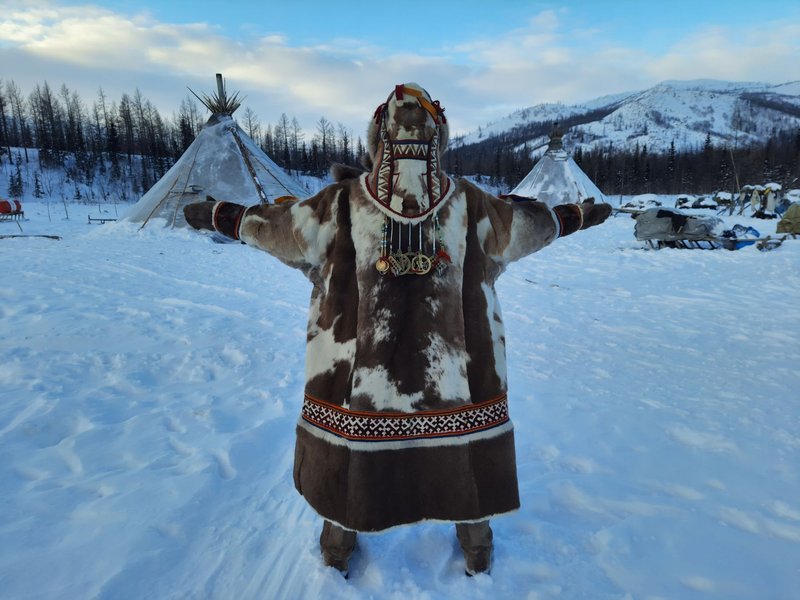
If you’re traveling to any of Russia’s ethnic republics — Tatarstan, Sakha, Buryatia, Tuva, Chuvashia — you’ll encounter the weight of this history in small ways. Signs in two languages. A regional broadcaster that runs a few programs in the local language. Younger people who understand the language their grandparents use but answer in Russian.
For students of linguistics or human rights, Russia is one of the world’s most consequential case studies in how state policy shapes language survival. The comparison to Soviet-era minority language policies in other post-Soviet states — Ukraine, Kazakhstan, the Baltic countries — is instructive: different states made very different choices about linguistic pluralism after 1991, and the outcomes reflect those choices.
For travelers with specific interest in indigenous cultures, destinations like Yakutsk (capital of the Sakha Republic) or the Buryatia region near Lake Baikal offer some of the most intact indigenous cultural infrastructure in Russia — though “intact” is relative, and the communities there would be the first to say how much has been lost.
The fate of Russia’s 100-plus indigenous languages isn’t a side story about obscure linguistic curiosities. These are living systems that encode environments, histories, and ways of understanding the world that exist nowhere else. When Ket disappears, the evidence it carries about ancient human migration across the Bering Strait disappears with it. That’s not a metaphor — it’s a specific research loss that linguists have documented in detail.
Whether those languages survive the next two generations depends on choices that are being made right now: by state governments, by communities, by individual families deciding what language they use at dinner.